What is a Raft Foundation?

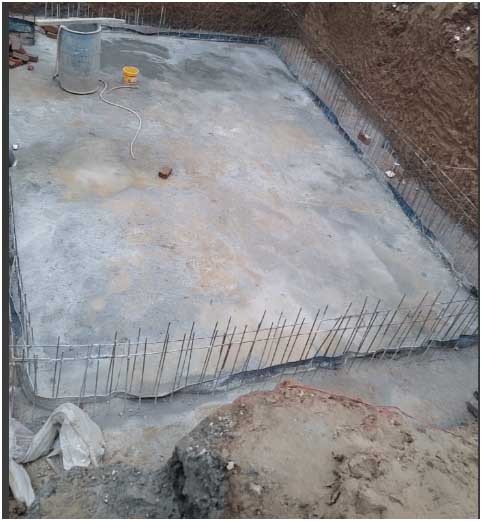
A Raft Foundation (also called Mat Foundation) is a shallow foundation that consists of a large, thick concrete slab spread across the entire footprint of a building or a significant portion of it. It supports the structure by distributing its load evenly over a large area.

When is Raft Foundation Used?

It is used when:

  1. The soil is weak and has a low bearing capacity.

  2. The building has heavy loads that need uniform support.

  3. The ground conditions are uneven, meaning some areas are hard while others are soft.

  4. The structure includes a basement, requiring a solid foundation underneath.

Advantages of Raft Foundation

✔ Distributes the building load evenly, reducing the risk of differential settlement.
✔ Works well in waterlogged areas when properly waterproofed.
✔ Provides stability in earthquake-prone regions.
✔ Often more cost-effective than deep foundations, like pile foundations.

Types of Raft Foundations

  1. Flat Plate Raft – Used for small buildings with light loads.

  2. Thickened Plate Raft – Designed for heavier structures.

  3. Beam and Slab Raft – Includes beams for additional strength.

  4. Cellular Raft – Used in high-rise buildings for extra support.

Mostly used for the basemnet 

  • Provides Uniform Support – Since the entire basement area carries a load, a large concrete slab evenly distributes the weight across the ground.

  • Water Resistance – If the basement is near groundwater, the raft foundation can be waterproofed to prevent water infiltration.

  • Reduces Settlement Risk – By spreading the load over a large area, it minimizes the chances of uneven settlement, which could otherwise cause structural issues.

Benefits of Using Raft Foundation in Basements

  1. Stronger Structural Support – It provides a solid base for the entire building, ensuring stability, especially in multi-story structures.

  2. Prevents Uneven Settlement – By distributing the load evenly, it reduces the risk of one part sinking more than another, which helps maintain structural integrity.

  3. Waterproofing Capability – Raft foundations can be designed with waterproofing layers to protect basements from groundwater seepage.

  4. Cost-Effective for Large Areas – Compared to deep foundations like piles, a raft foundation can be a more economical solution for basement construction.

  5. Earthquake Resistance – It enhances the building’s ability to withstand seismic forces by spreading loads over a wider area.

  6. Reduces Excavation Depth – Unlike deep foundations, a raft requires less digging, making construction faster and easier

Quick Links

Contact Us Information 

443 J3 Johar Town Lahore near Expo Center Lahore

Urban planning and zoning

Urban Planning and Zoning Table of Contents Introduction to City Development What is Urban Planning and Zoning? Major Benefits of Urban Planning and Zoning Material Options in Urban Planning and Zoning Climate Suitability for Urban Planning and Zoning The Global...

Landscape architecture

Landscape Architecture Table of Contents Introduction to Outdoor Planning What is Landscape Architecture? Core Styles of Landscape Design Major Benefits of Landscape Architecture Essential Materials in Landscape Architecture Climate Suitability for Landscape...

Interior design trends

Interior Design Trends Table of Contents Introduction to Modern Interior Design Trends Defining the Core Style of Interior Design Trends Major Benefits of Embracing Interior Design Trends Material Options for Popular Interior Design Trends Climate Suitability for Top...

Smart home architecture

Smart Home Architecture Table of Contents Introduction What is Smart Home Architecture? Key Benefits of Smart Home Architecture Material Options for Intelligent Home Design Advanced Glass and Glazing Innovative Insulation Materials Sustainable Wood and Composites...

Precast concrete elements

Precast Concrete Elements Table of Contents Introduction Defining Precast Concrete Elements Key Benefits of Using Precast Concrete Elements in Construction Essential Material Options for Precast Concrete Elements Climate Suitability of Precast Concrete Elements The...

Adhesives and sealants for construction

Adhesives and Sealants for Construction Table of Contents Introduction Defining Adhesives and Sealants for Construction Key Benefits of Using Adhesives and Sealants in Construction Essential Material Options Available Today Climate Suitability of Construction Sealants...

Sustainable building designs

Sustainable building designs A Complete Guide to Sustainable Building Designs Table of Contents Introduction What Defines Sustainable Building Designs? Key Benefits of Sustainable Building Designs Best Material Options for Sustainable Building Designs Climate...

Space optimization in small areas

Space optimization in small areas Master Space Optimization in Small Areas Table of Contents Introduction Defining Space Optimization in Small Areas Key Benefits of Space Optimization Best Material Options for Space Optimization Climate Suitability for Space...
WhatsApp chat