
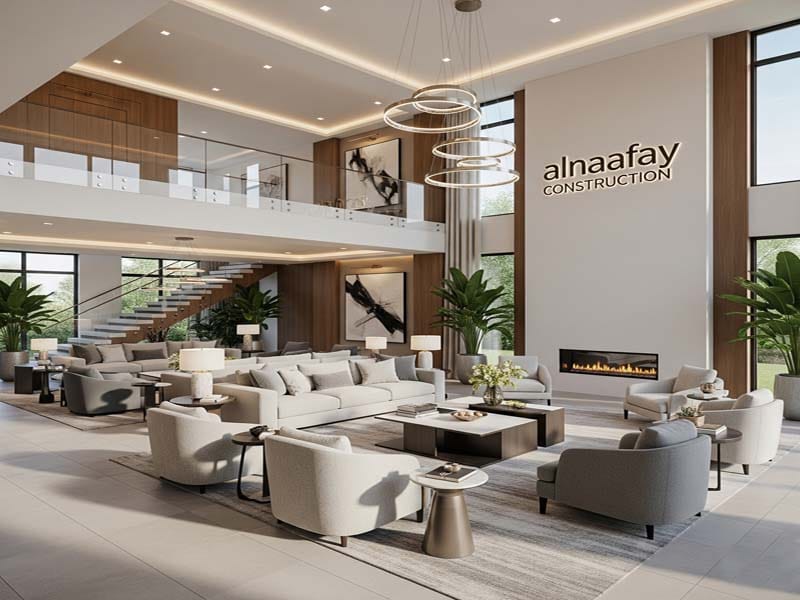
Double Height Space Design
Advantages, Disadvantages, and Costing
When we talk about modern house design, one concept that is getting very popular is double height space design. This style is often seen in stair halls, drawing rooms, or sometimes even in dining areas. It looks very attractive and gives the house a modern and luxurious feel. At the same time, it also comes with some challenges such as higher construction cost and more use of labor.
In this blog, we will explain what double height design is, its plus points, negative points, costing factors, and where it is commonly used in houses.
What is Double Height Space Design?
Normally, a house has a ceiling height of around 10 feet to 12 feet. But in a double height design, the ceiling is made much higher, almost double, which means 18 feet to 22 feet or more. It is basically two floors’ height combined into one open space.
This design removes the slab of one portion of the house and keeps that area open up to the roof of the next floor. For example, if you stand in a double height drawing room, you can see the ceiling of the first floor directly, without any slab cutting the space.
This gives a grand look and makes the house feel bigger, brighter, and more luxurious.
Where is Double Height Space Design Used?
Architects usually choose special locations for double height spaces to maximize beauty and comfort. Some common areas include:
Stair Hall
The most common place for double height design is the stair hall.
It creates a wide and open look when you move up or down the stairs.
Natural light can also be added with large windows near the staircase.
Drawing Room
Many people prefer double height drawing rooms.
It gives a very luxurious and welcoming feeling to guests.
When decorated with chandeliers or tall curtains, the space looks like a five-star hotel.
Dining Area
Some architects also design the dining area as double height.
This makes family dinners and gatherings more open and airy.
It looks very elegant, especially with modern lighting and wall designs.
Each location gives a different experience, but in every case, the house looks more modern and stylish.
Advantages of Double Height Space Design
There are many plus points of double height spaces. Let’s discuss them one by one:
1. Luxurious Look
The biggest advantage is the luxury factor. A double height space looks very grand and modern. Whether it is the stair hall, drawing room, or dining area, it instantly creates a “wow” effect for anyone who enters the house.
2. Better Natural Light
Double height spaces allow larger windows, which bring in more natural light. This makes the house look brighter during the day and reduces the need for artificial lighting.
3. Better Air Circulation
Because of the open vertical space, air moves more freely. This helps keep the room cool in summer and gives a fresh environment.
4. Spacious Feel
Even if the house is not very big, a double height space can make it feel much larger. The openness of the design gives the impression of more area and volume.
5. Interior Decoration Options
Tall walls provide a big opportunity for decoration. You can install large paintings, tall shelves, or beautiful wall cladding. Hanging chandeliers and tall curtains add more charm to the interior.
6. Connection Between Floors
In some designs, you can see the upper floor balcony from the lower double height space. This creates a visual connection between family members upstairs and downstairs, making the home feel more united.
Disadvantages of Double Height Space Design
Along with the benefits, double height spaces also have some negative points. It is very important to understand them before planning your house.
1. Higher Cost
The biggest disadvantage is the cost. Since you are not building a slab for that portion, you lose one complete room on the upper floor. This means less usable covered area but higher construction expenses for walls, windows, and finishes.
2. More Labor Requirement
Labor cost is higher in double height design because extra work is needed for tall walls, plaster, paint, scaffolding, and interior finishing.
3. Difficult Temperature Control
Large open spaces can be harder to cool in summer and harder to keep warm in winter. Air conditioning bills can be higher.
4. Noise Issues
Since the space is open, sound easily travels from one floor to another. For example, if someone is talking on the ground floor, the noise can easily be heard upstairs.
5. Cleaning and Maintenance
Tall walls, chandeliers, and big curtains require extra effort for cleaning and maintenance. Normal cleaning tools may not be enough, and you might need ladders or special equipment.
6. Less Privacy
In areas like stair halls and dining rooms, double height space can reduce privacy because people from the upper floor can see or hear easily what is happening downstairs.
Costing of Double Height Design
Double height spaces look beautiful, but the cost factor must be considered.
Labor Cost
Labor cost is higher compared to normal rooms.
Plastering, painting, and wall finishes require extra time and more workers because of the height.
Material Cost
You save on one slab, but you spend more on wall construction, large windows, tall curtains, and sometimes special lighting.
The overall cost mostly becomes higher than a normal room.
Interior Decoration Cost
Since the walls are very tall, decoration costs are higher.
Large chandeliers, big curtains, or tall wall designs are expensive compared to normal-sized rooms.
Cooling and Heating Cost
The bigger space requires more powerful air conditioning and heating systems, which increases both installation and electricity bills.
In short, while double height spaces look stunning, they are not very budget-friendly. They are best for people who want a luxurious house design and are comfortable with slightly higher expenses.
How to Make Double Height Design More Effective
If you want to go for a double height design, here are some tips to make it more useful and cost-effective:
Use in Limited Areas
Don’t make every room double height. Use it only in one or two special areas like stair hall or drawing room.
Add Skylights or Large Windows
This will reduce electricity bills by bringing in more natural light.
Proper Insulation
Use insulation in walls and ceilings to control temperature and reduce electricity costs.
Smart Interior Design
Choose tall curtains, modern chandeliers, and decorative wall panels to highlight the beauty of the space.
Easy Maintenance Planning
Install lighting and fans in a way that they can be cleaned or repaired without too much difficulty.
Quick Links
Social Icons
Contact Us Information
443 J3 Johar Town Lahore near Expo Center Lahore
