
Cracks in Walls After Construction
Introduction
One of the most common problems in houses is the appearance of cracks in walls after construction. This issue worries many homeowners because cracks can look ugly and sometimes even be dangerous.
In Pakistan, especially in 5 marla and 10 marla houses, people often see cracks just a few months after construction. Some cracks are minor and only affect the plaster, while others are serious and show weakness in the structure.
In this blog, we will explain:
Why cracks appear in walls after construction
The main causes such as weak foundation, poor brick quality, and underground pipes
Different types of cracks and how to identify them
Simple solutions and prevention tips
How to maintain your house to avoid future cracks
Our main keyword is “cracks in walls after construction”, and by the end of this article, you will understand everything about this topic in very simple English.
Why Do Cracks in Walls Appear After Construction?
When a house is newly built, it should look strong and perfect. But after a few months or years, cracks often start to appear. The main reason is that a house is not just walls and roof, it is a combination of foundation, soil, bricks, cement, water, and steel. If even one element is weak, cracks can appear.
Cracks can be:
Structural cracks: These affect the strength of the house.
Non-structural cracks: These are small and mostly affect appearance.
Understanding the difference is very important.
Major Causes of Cracks in Walls After Construction
1. Weak Foundation
The foundation is the base of the house. If the foundation is not strong or the soil is not compacted properly, the house will settle unevenly. This leads to cracks in walls.
Reasons for weak foundation:
Poor soil (clay soil or loose soil).
Foundation not dug deep enough.
Use of low-quality concrete.
No proper curing during foundation work.
Signs of foundation cracks:
Cracks starting from the corners of windows and doors.
Long vertical cracks in walls.
Uneven floors inside the house.
2. Poor Brick Quality
Bricks play a very important role in wall strength. If bricks are weak or not burnt properly, they absorb too much water and create cracks.
How poor bricks cause cracks:
Bricks expand and shrink with water.
Weak bricks cannot handle wall load.
Bricks break easily under pressure.
Signs of brick-related cracks:
Small cracks across the wall surface.
Hollow sound when you tap the wall.
Powder or dust coming out of bricks.
3. Underground Pipes and Plumbing Issues
Sometimes cracks in walls are linked to water leakage from underground pipes. When water seeps into the soil under the foundation, the soil becomes weak and shifts. This movement creates cracks in the walls above.
Causes of pipe-related cracks:
Broken water supply pipes.
Leakage from drainage pipes.
Poor plumbing during construction.
Signs of pipe-related cracks:
Cracks near bathrooms, kitchens, or water tanks.
Damp patches on the walls.
White salt marks (efflorescence) on the surface.
4. Weather and Temperature Changes
In Pakistan, extreme weather changes affect construction materials. In summer, walls expand due to heat, and in winter, they contract due to cold. This repeated expansion and contraction leads to small cracks.
Typical weather cracks:
Thin hairline cracks on plaster.
Cracks appearing after summer or winter season.
5. Material Shrinkage
After construction, cement plaster, concrete, and mortar shrink as they dry. If curing is not done properly, this shrinkage creates fine cracks.
Example:
Plaster cracks in a newly built wall.
Lines appearing just a few weeks after plastering.
6. Poor Workmanship
If masons and workers do not follow proper methods, cracks are guaranteed. Wrong mixing ratio of cement, less curing, or fast work without quality control are common mistakes.
7. Settlement of Soil
After construction, the soil under the house continues to settle. This is normal, but if the soil is weak or filled with water, cracks become bigger.
8. Heavy Load and Structural Stress
If you build extra floors without proper design, walls get overloaded and cracks appear.
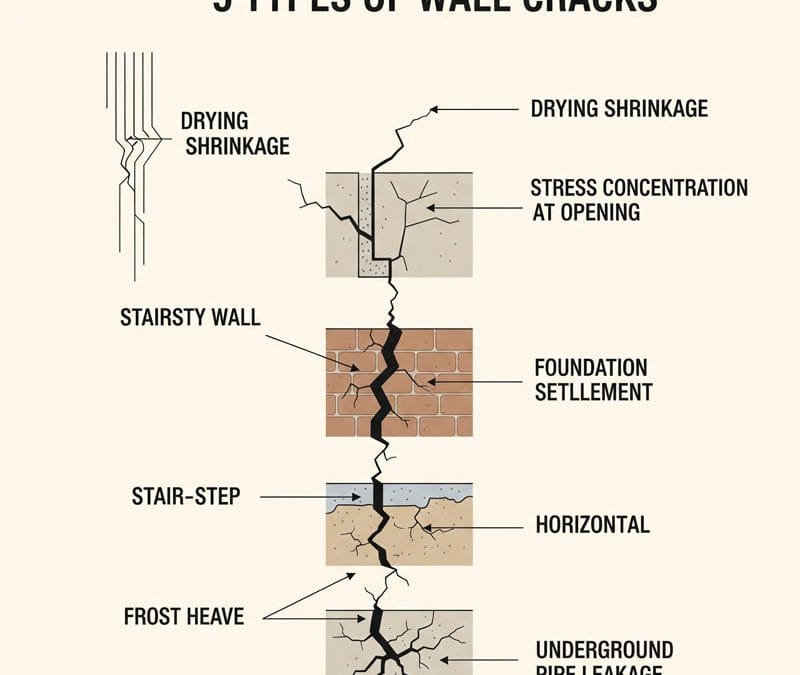
Types of Cracks in Walls After Construction
Vertical cracks – Usually due to foundation settlement.
Horizontal cracks – Often due to water pressure or soil movement.
Diagonal cracks – Indicate structural weakness.
Hairline cracks – Small, thin cracks usually due to plaster shrinkage.
Step cracks – Cracks following the line of bricks, usually due to weak material.
How to Identify Dangerous Cracks
Not every crack is dangerous. Some are only cosmetic. You should worry if:
Crack is more than 3 mm wide.
Crack is getting longer or wider with time.
Crack appears near windows, doors, or roof beams.
Crack allows water to seep inside.
Solutions for Cracks in Walls
1. For Minor Cracks
Use wall putty and paint.
Seal with plaster or crack filler.
Ensure proper curing during repair.
2. For Moderate Cracks
Remove weak plaster.
Replaster with good cement mortar.
Check for hidden leakage.
3. For Major Cracks
Consult a structural engineer.
Strengthen the foundation if required.
Replace weak bricks.
Fix broken underground pipes.
Prevention Tips During Construction
Always check soil quality before starting construction.
Make sure foundation depth is proper.
Use good quality bricks and cement.
Ensure correct curing after plastering and concreting.
Install proper waterproofing near bathrooms and kitchens.
Do not overload walls with extra floors without a structural design.
Maintenance Tips After Construction
Regularly check walls for dampness.
Repair small cracks immediately before they get bigger.
Clean drainage pipes to avoid leakage.
Repaint walls with waterproof paint after a few years.
Quick Links
Social Icons
Contact Us Information
443 J3 Johar Town Lahore near Expo Center Lahore
