Ordinary Portland Cement (OPC)
Introduction
Cement is one of the most important materials in the construction industry. Without cement, we cannot imagine modern buildings, bridges, or roads. It works like a binding material that holds together sand, gravel, and other aggregates to form strong concrete. Among different types of cement, the most widely used is Ordinary Portland Cement (OPC).
Ordinary Portland Cement (OPC) is called “ordinary” because it is a general-purpose cement. It is the most common type of cement used all over the world. From small houses to large buildings, from simple plastering to strong reinforced concrete structures, OPC is the first choice of engineers and builders.
In this blog, we will understand what OPC is, how it is made, its types, properties, advantages, disadvantages, and how it is used in Pakistan. We will also compare it with other types of cement and explain how to check its quality.
History of Ordinary Portland Cement
The story of cement goes back hundreds of years. Ancient Romans used a form of cement made from volcanic ash and lime. But the cement we use today was developed in the 19th century.
In 1824, a British mason named Joseph Aspdin invented Portland Cement by heating limestone and clay together. He named it “Portland” because its color and strength were similar to the stones found in the Isle of Portland in England.
Since then, cement production has improved, and Ordinary Portland Cement (OPC) has become the standard cement used globally. In Pakistan, cement production started soon after independence, and now the country has a strong cement industry with many leading companies producing OPC.
Manufacturing Process of OPC
The manufacturing of OPC is a step-by-step process. It requires raw materials, high temperatures, and grinding to make the final product.
1. Raw Materials
The main raw materials for OPC are:
Limestone (Calcium Carbonate) – Provides lime.
Clay or Shale – Provides silica, alumina, and iron.
Gypsum – Added later to control setting time.
2. Process Steps
Crushing and Grinding – Limestone and clay are crushed into small particles.
Mixing and Proportioning – Raw materials are mixed in correct ratios.
Heating in Kiln – The mixture is heated in a rotary kiln at around 1400–1500°C. This forms clinker (hard grey balls).
Cooling and Grinding – Clinker is cooled and ground into fine powder.
Adding Gypsum – Around 3–5% gypsum is added to control setting.
Packing – The final product is packed in bags or supplied in bulk.
This process ensures that OPC has consistent quality and strength.
Grades of Ordinary Portland Cement
OPC is classified into three main grades based on compressive strength:
OPC 33 Grade
Compressive strength: 33 MPa after 28 days.
Mostly used in plastering, flooring, and low-rise construction.
Not very common now.
OPC 43 Grade
Compressive strength: 43 MPa after 28 days.
Used in general construction, residential buildings, and small RCC works.
Very popular in Pakistan for house construction.
OPC 53 Grade
Compressive strength: 53 MPa after 28 days.
Used for high strength projects like bridges, high-rise buildings, and heavy RCC structures.
Gains strength faster than 43 grade.
In Pakistan, OPC 43 and 53 grades are mostly available in the market.
Properties of OPC
Color – Grey powder.
Fineness – Very fine, passes through 90-micron sieve.
Specific Gravity – Around 3.15.
Setting Time
Initial: Around 30 minutes.
Final: Around 10 hours.
Strength – High compressive strength (33, 43, or 53 MPa).
Heat of Hydration – Produces moderate to high heat.
Durability – Strong and long-lasting for most constructions.
Applications of OPC
OPC is widely used in almost every type of construction:
Residential Buildings – Houses, apartments, walls, plaster, flooring.
Commercial Buildings – Offices, malls, complexes.
Infrastructure Projects – Roads, bridges, flyovers, underpasses.
Water Structures – Water tanks, culverts, drainage works.
RCC Structures – Columns, beams, slabs, foundations.
Finishing Works – Tiles fixing, flooring, plastering.
Advantages of OPC
High Strength – Gains strength quickly.
Versatile – Suitable for many types of construction.
Widely Available – Easily available all over Pakistan.
Economical – Cost-effective compared to special cements.
Consistency – Uniform quality in every batch.
Disadvantages of OPC
Not Sulphate Resistant – Weak in salty or coastal areas.
High Heat of Hydration – Not suitable for dams or massive concrete pours.
Less Environment-Friendly – Produces more CO₂ compared to blended cements.
Cracks Risk – Fast setting may cause cracks if not cured properly.
OPC vs PPC (Portland Pozzolana Cement)
| Feature | OPC | PPC |
|---|---|---|
| Setting Time | Faster | Slower |
| Strength | High early strength | Long-term strength |
| Durability | Less in sulphate areas | More durable |
| Heat of Hydration | Higher | Lower |
| Cost | Slightly higher | Economical |
How to Check Cement Quality
Before using cement, quality testing is very important. There are two ways:
On-Site Tests (Quick Checks)
Check Manufacturing Date – Cement should be fresh (within 3 months).
Color Test – Grey with greenish shade.
Feel Test – Smooth when rubbed between fingers.
Float Test – Small cement should sink in water.
Lump Test – No hard lumps in the bag.
Lab Tests
Fineness Test
Standard Consistency Test
Setting Time Test
Compressive Strength Test (Cube Test)
Chemical Analysis
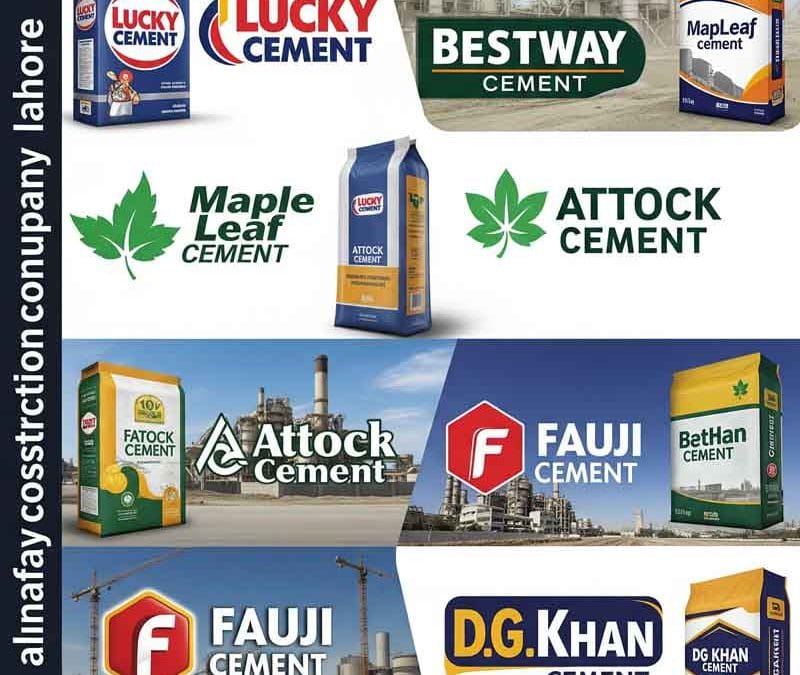
Top OPC Cement Brands in Pakistan
Bestway Cement
DG Khan Cement
Maple Leaf Cement
Lucky Cement
Fauji Cement
Cherat Cement
Askari Cement
These brands produce high-quality OPC available across Lahore, Karachi, Islamabad, and other cities.
Buying Cement in Lahore
If you are buying OPC in Lahore:
Prefer authorized dealers.
Always check the manufacturing date.
Store cement bags in a dry place.
Do not keep bags for more than 2-3 months.
Future of OPC in Pakistan
With rapid urban development in Pakistan, the demand for OPC is growing. Mega projects like dams, highways, and CPEC-related infrastructure will increase cement usage. However, the future may also include eco-friendly alternatives to reduce carbon emissions.
Quick Links
Social Icons
Contact Us Information
443 J3 Johar Town Lahore near Expo Center Lahore
