
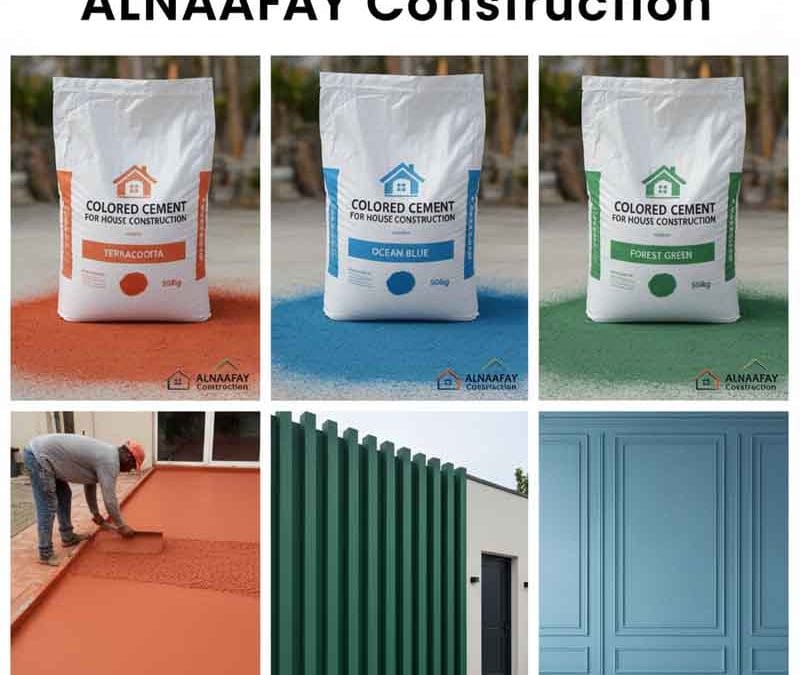
Colored Cement for House Construction
1. What Is Colored Cement?
Colored cement is ordinary cement mixed with color pigments. It is used to give concrete and mortar different shades and tones without needing to paint over it.
This cement looks beautiful from the moment it is applied. Whether you are building a house, floor pathway, or garden wall, it brings beauty and strength together.
2. Why People Use Colored Cement in House Construction
There was a time when homeowners thought only paint could add color. Today, builders and architects use colored cement because:
- It doesn’t peel off like paint
- The color lasts longer
- It gives a natural, textured look
- Maintenance is lower
- It blends well into eco-friendly designs
People choose it not just for decoration but also for its durability and natural appeal. Colored Cement for House Construction
3. Colors Available in Decorative Cement
Colored cement does not come in only red or grey. There are many popular shades now available:
| Color | Common Usage Area |
|---|---|
| Red/Brown | Garden tiles, driveways, traditional roofs |
| Green | Landscaping blocks, garden borders |
| White | Modern interiors, exposed walls |
| Black/Charcoal | Contemporary exteriors, floors |
| Yellow/Tan | Courtyards, rustic homes |
| Bluish-Grey | Urban buildings, artistic floors |
You can even make your custom shade by mixing pigments in specific amounts. This gives you endless design options. Colored Cement for House Construction
4. How Is Colored Cement Made?
To prepare colored cement:
- Ordinary Portland Cement (OPC) is the base
- Color pigments (natural or synthetic oxides) are added
- It is thoroughly mixed for even coloring
- Sometimes, white cement is used to get pure colors
The quality of color depends on:
- Pigment type
- Mixing process
- Cement base color (gray or white)
If done properly, the color spreads completely and evenly without patch marks.
5. Where to Use Colored Cement in Your Home
There are many places where colored cement can bring beauty:
- Exterior walls (instead of paint)
- Driveways and pathways
- Boundary walls and columns
- Interior statement walls
- Staircase risers and railings
- Roof surfaces and water tanks
- Window ledges and external flooring
- Tiles and interlocking blocks
- Courtyards and baradaris (verandas)
Each place looks unique and artistic when designed with the right tone.
6. Benefits of Using Colored Cement in Construction
Let’s explore some of the strong reasons why more people use colored cement in home building:
| Benefit | Explanation |
|---|---|
| Long-lasting color | Does not fade easily, even in sunlight |
| No paint required | Saves future painting costs |
| Better bonding | Pigments become part of cement, not surface |
| Lower maintenance | Easy to clean, doesn’t peel |
| Design-friendly | Works with patterns, textures, and stamps |
| Heat resistance | White and tan reflect more light |
| Weather protection | Stronger against rain and dirt |
Colored cement helps you save money and increase beauty at the same time.
7. A Real Example: A House Made Beautiful in Lahore
In 2023, a house was built near Bahria Orchard with the idea of using colored cement instead of tiles or paint.
Key choices:
- Outer walls in textured charcoal grey cement
- Pathway with red and brown cement tiles
- Water tank plastered and sealed with white cement
- Interior stairs designed using green cement with white risers
Today, even guests are surprised to find such beautiful finishes were not done by paint or tile — but directly cemented. Colored Cement for House Construction
8. Colored Cement vs Painted Surface – What’s Better?
Paint is surface-only. Cement color is within the material.
| Feature | Paint | Colored Cement |
|---|---|---|
| Color depth | Surface only | Full depth color |
| Lifespan | 2–5 years | 10–20 years |
| Weatherproof | Cracks and peels | Resistant |
| Repainting needed | Yes | Usually no |
| Natural texture | Low | High |
Maintenance is also lower in colored cement. That’s why more people skip paint for permanent color.
9. Does Color Weaken Cement Strength?
No. If high-quality pigments (oxides) are added in correct percentages (about 5–10% by weight), the strength remains strong.
However, overuse of pigment or poor mixing may affect bonding. That’s why trained workers or specialists should prepare the mix.
Professional builders know exactly how much pigment is safe in cement without affecting load capacity.
10. Colored Concrete vs Colored Cement – What’s the Difference?
- Colored Cement = Cement with pigment used in mortar, plaster or direct surface
- Colored Concrete = Complete concrete mix (cement + sand + gravel + pigment)
Colored cement is used in:
- Plaster
- Grouting
- Rendering
While colored concrete is used in:
- Slabs
- Roads
- Decorative flooring
Both serve a purpose — selection depends on your building function and finish style.
11. How to Apply Colored Cement in Floors, Walls and More
For best results:
- Surface must be clean and moist
- Mix cement + pigment + sand evenly
- Apply in thin layers (max 10 to 15 mm mortar)
- Use flat edge steel trowel for smooth finish
- For floors, polish after setting (optional for shine)
- Keep curing consistent for 7 days
If doing stamping:
- Imprint pattern before full hardness
- Use release agent to avoid patch pulling
12. Oxides and Pigments Used in Cement Coloring
Here are common pigments used:
| Pigment | Color Produced |
|---|---|
| Iron Oxide Red | Red, Brown |
| Iron Oxide Yellow | Yellow, Tan |
| Iron Oxide Black | Deep Black |
| Chromium Oxide | Green |
| Titanium Dioxide | White |
| Cobalt Blue | Premium Blue |
All pigments should be UV-resistant and alkali-resistant to remain stable with cement’s chemistry.
13. Colored Cement in Modern and Pakistani Traditional Homes
Smart design combines color with culture.
- Modern homes: Use white, charcoal, beige tones
- Traditional homes: Prefer red, brown, and green
- Heritage-style villas: Use yellow and rustic finishing
- Contemporary bungalows: Use black-white or dual tone design
You can blend color themes in such a way that it:
- Compliments tiles
- Matches wood tones
- Highlights brick designs
14. Stamp and Texture Matte Finishes Using Colored Cement
Colored cement can be used for:
- Brick texture stamping
- Stone finish
- Wood plank imitation
- Marble-look surface polishing
- Ashlar slate stamping
These patterns add texture and natural beauty — often without needing tiles.
Stamp tools are available in Pakistan now with trained applicators as well.
15. Caring for Colored Cement Walls and Floors
Maintenance is easy:
- Clean with dry mop or soft brush
- Avoid harsh acid cleaners
- Use sealant on outdoor flooring (every 3–5 years)
- Cover freshly done surface after rain
- Reseal joints if cracks appear (rare)
It needs minimum care, and unlike paint, it doesn’t wash away.
16. Colored Cement Cost in Pakistan (2024–2025)
| Product | PKR Estimate |
|---|---|
| Red Cement Bag (50kg) | Rs. 1,300 – 1,500 |
| Green Cement (50kg) | Rs. 1,350 – 1,600 |
| White Cement (25kg) | Rs. 1,800 – 2,300 |
| Pigment powders (1 kg) | Rs. 300 – 800 |
| Colored concrete per sq. ft. | Rs. 250 – 450 |
| Stamping tools (rental) | Rs. 800 – 1,200 per day |
Price may vary by city (Lahore, Karachi, Islamabad) and by brand.
You can budget for smart color use without overspending.
17. Top Cement Companies Offering Ready-Colored Cement
- Maple Leaf Premium White Cement
- DG Khan Colored Mortar Line
- Bestway Decorative Cement Series
- Pioneer Cement Colored Binders
- Flying Cement Stamping Series
- Cherat Cement Color Pack
Always buy products from authorized dealers only, and ask for batch code and freshness date.
18. Mistakes to Avoid When Using Colored Cement
| Mistake | Problem It Causes |
|---|---|
| Adding too much pigment | Weakens cement |
| Not curing properly | Color mismatches |
| Poor surface prep | Dust and inconsistency |
| Skipping sealant | Fast fading in sun |
| Using expired pigment | Cracking or powdering |
Right planning and training = lasting results.
19. Eco-Friendly Impact of Using Colored Cement
- No need to repaint
- Less chemical waste
- Less water usage for re-work
- No fumes like enamel paint
- Can be made from natural oxides
Some brands offer eco-label pigments that are non-toxic and recyclable.
This makes colored cement part of green building trends for responsible construction.
Quick Links
Social Icons
Contact Us Information
443 J3 Johar Town Lahore near Expo Center Lahore
