
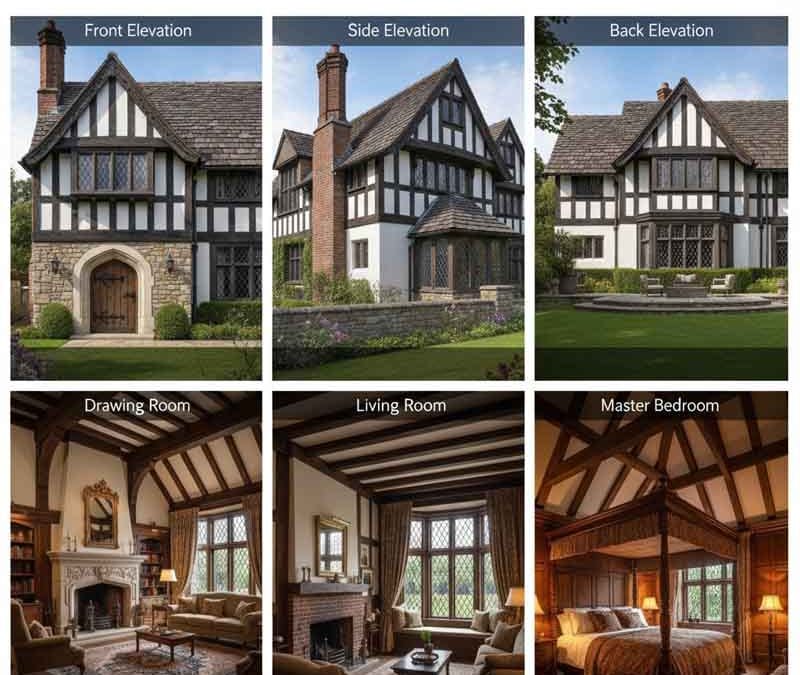
Tudor House Design – A Classic Style That Tells a Stories Through Time
Have you ever walked by a house that looked like it came out of a fairy tale? A slanted roof, tall chimneys, wooden lines across white walls, and windows with tiny glass panes. That’s the look of a Tudor House Design — old, magical, and full of character.
This design takes us many years into the past. Yet, it still feels welcoming and cozy today. In this blog, we’ll take a peaceful walk through history, explore how Tudor homes look inside and outside, and learn how to build or enjoy one—even in today’s busy world.
What is a Tudor House Design?
Let’s start with the basics.
A Tudor House Design is a type of architecture that first became popular in England during the early 1500s. This time in history was known as the Tudor period, and it changed many things—clothing, furniture, and most of all, homes.
Although its name comes from this era, the style became widely known and loved in the early 1900s in countries like:
- The United Kingdom
- The United States
- Canada
Even today, Tudor-style homes can be found across Europe and North America, especially in suburbs or countryside areas.
This style brings together strong construction, cozy charm, and bold details.
Why Choose Tudor House Design in Modern Times?
While some people prefer modern or minimalist houses, others fall in love with the warmth and personality of Tudor homes.
But why?
Let’s look at a few gentle reasons to make this your dream design.
1. It Looks Unique and Timeless
Around glass buildings and flat-roof villas, a Tudor home stands out. It looks like a home from a fairy tale or old English movie. This kind of beauty doesn’t fade with time.
2. Strong and Long-Lasting Feel
Tudor homes were made from a mix of wood, bricks, and stone. Even today, people build them with strong materials—and they last for generations.
3. Great for Cold and Moderate Climates
Because of small windows, thick walls, and fireplaces, this design works wonderfully in colder countries. That’s why you see many Tudor houses in Britain, Scotland, USA (northern states), and Canada.
4. Warm and Cozy Interiors
Even if the house looks tall and serious from the outside, inside it feels very homely. Sloping roofs, wooden beams, small corners, and soft lighting make it inviting and safe.
Basic Features of a Tudor House Design
Now, let’s explore what exactly gives this design its character. These are the little touches that make you stop and stare.
1. Half-Timbering – The Signature Look
One of the most noticeable features of Tudor House Design is what is called half-timbering.
In simple words:
- You see dark wooden beams laid out in lines (vertical, horizontal, or X-shaped) across walls
- Between the beams is white plaster or brick
This gives walls a strong patterned design — as if the wood is drawing lines across the home’s face.
2. Steep Sloping Roofs with Gables
Unlike flat roofs seen in modern designs, Tudor homes usually have very steeply sloped roofs.
Key roof features:
- Often made of slate, wooden shingles, or clay tiles
- The roofs angle downwards very sharply
- Gables (the triangular upper part of a house wall) sit above entrances or windows
This shape helps push off rain or snow and adds dramatic charm.
3. Rounded Doorways and Brick Arches
The entry of a Tudor home always has personality.
Sometimes the front door is:
- Slightly rounded at the top
- Placed under a brick arch
- Decorated with iron handles or lantern-style lights
It’s like a soft welcome, bringing you into a world that feels old but pleasantly familiar.
4. Tall Narrow Windows with Lead Glass
The windows in Tudor homes are not just ways to look out — they are pieces of art.
They’re usually:
- Tall and narrow
- Often divided by wooden or metal pieces
- Sometimes filled with leaded glass windows, giving a sparkling touch
These small panes help control light while offering a gentle vintage appearance.
5. Heavy Chimneys
Another fun fact: Tudor homes often have multiple chimneys!
These brick or stone chimneys sit tall on the roof and sometimes have little spiral patterns or carved tops. Back in old England, homes had several fireplaces — thus, multiple chimneys were the norm.
Today, they may be fewer, but the design remains.
Tudor House Design Layout – Room by Room Tour
Let’s go inside now.
We’ll walk through a typical layout for a small-to-medium Tudor home.
Entry Hallway
- Often has a brick or wooden floor
- A low-beam wooden ceiling adds old-style charm
- Simple furniture like a coat rack or shoe bench
- A slight curve toward the living room or kitchen
Main Living Room
This is usually the largest room in the house.
- Fireplace made from smooth stone or bricks is the centerpiece
- High ceilings with exposed wooden beams
- Soft sofas, stone or wood flooring, and rugs for warmth
- Tall curtains over narrow windows
Dining Room
Located either next to or open to the living room.
- A heavy wooden dining table sits in the center
- Chairs or benches with soft cushions
- Iron or bronze chandelier lighting above
Sometimes, you’ll find old sideboards or hutches on the wall with pottery and cutlery.
Kitchen
Although Tudor homes are traditional, modern kitchens can be built thoughtfully within.
- Narrower space but very functional
- Exposed stone or painted brick wall
- Wooden cabinets in natural or faded colors
- Hanging pots or iron shelves add a rustic look
Bedrooms
Usually upstairs, these rooms are small, warm, and filled with charm.
- Sloped ceilings due to the roof shape
- Low windows offering natural light
- Quilted bed covers, wooden dressers
- Soft lighting, and maybe a reading corner under a beam
Bathrooms
Blend classic with present-day comfort.
- Materials like stone, porcelain, and wood keep the Tudor tone
- Metal-framed mirrors and styled faucets are common
- Small windows and wall lights make it feel cozy
Interior Styling Ideas for Tudor Homes
Even though this design is old, it doesn’t have to feel dark or dusty. You can decorate smartly.
Try the following:
✅ Color Palette:
- Warm neutrals: beige, cream, soft browns
- Deep tones: burgundy, olive green, navy blue
- Natural wood colors
✅ Furniture:
- Vintage or reclaimed wood furniture
- Upholstered armchairs
- Bookshelves with classics and handmade items
✅ Decor:
- Candles or lanterns
- Woven rugs
- Pottery, ceramic vases, and old maps or paintings
Your goal should be to celebrate age, story, and texture—not perfection.
Countries Where Tudor House Design is Popular Today
Even though the style started in England, today, you’ll find Tudor-style homes in many countries, including: United Kingdom
Most commonly seen in older towns, suburbs, and tourist villages. It’s truly the heartland of all things Tudor.
🇺🇸 United States
Especially popular in Northeastern states, such as Pennsylvania, Ohio, and New York. They became trendy in America in the 1920s–1940s.
🇨🇦 Canada
Seen mostly in Ontario and other colder provinces where the style fits the weather perfectly.
Australia & South Africa
Used in a few European-inspired neighborhoods or heritage areas.
Clearly, this style travels beyond origin. No matter where it goes, it always brings the same warmth and noble history.
Can You Build a New House in Tudor Style Today?
Yes — and people do!
While woodwork and half-timbering are more decorative than structural today, all main elements are easy to recreate. Builders now use fake timber framing, fiber-cement panels, and modern insulation beneath the classic look.
If you have:
- A medium-sized plot
- Respect for classic design
- A trusted architect
You can absolutely enjoy a Tudor home in your own city or suburban area!
Budget Tips for a Tudor-Inspired Home
Tudor doesn’t mean costly. It can actually be affordable if planned creatively.
Here’s how:
- Use cement plaster + paint in timber patterns if real wood beams exceed your budget
- Buy second-hand wooden furniture and refinish it
- Use vinyl tiles or wallpapers with Tudor print for accent walls
- Pick vintage-style light fixtures available online or in local markets
This way, you get the look and feel without financial stress.
Tudor House Design is Great for Families
These homes aren’t just for history lovers.
They also:
- Offer privacy and peaceful corners
- Embrace kids and pets with safe, cozy rooms
- Inspire creativity (imagine growing up in a house like Hogwarts!)
- Allow blended families to live in layered comfort across floors
From toddlers to grandparents, everyone finds their space here.
Quick Links
Social Icons
Contact Us Information
443 J3 Johar Town Lahore near Expo Center Lahore
