
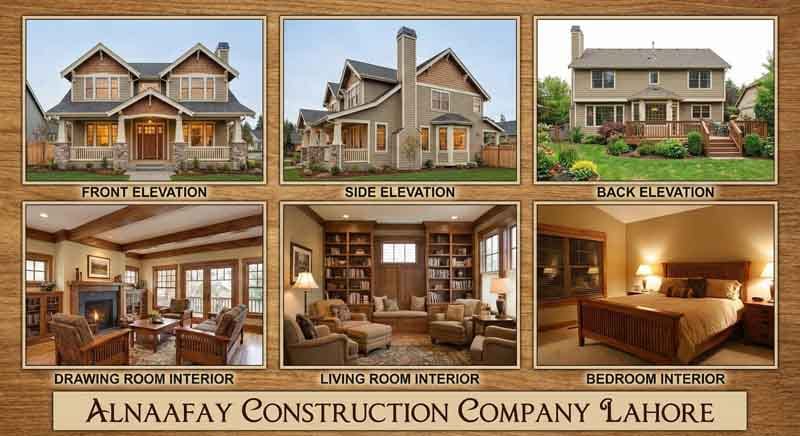
Craftsman House 10 Marla
Easy, Complete Guide in Simple English
A Craftsman House 10 Marla can be a very warm, beautiful, and practical family home. Although the name sounds a bit technical, the idea behind it is actually very simple. This style of house loves natural materials, hand-made details, and comfortable spaces where families can really live and relax.
Many people in Pakistan and other countries have 10 Marla plots in modern housing societies. Because of this, they keep searching for a house style that feels stylish, yet still homely. Craftsman design fits this wish very well. It looks special from the outside, and at the same time, it is very friendly on the inside.
Throughout this long guide, ideas will be explained in very clear English so that even students and beginners do not get confused. Technical words will be kept low, and whenever a new idea appears, it will be explained with simple examples.
In this blog, you will learn:
- What a 10 Marla plot means
- What a Craftsman house is and where it came from
- Why a Craftsman House 10 Marla is a smart choice
- What main features the outside and inside should have
- Which country loves this design the most
- How to plan, budget, and build such a house step by step
By the end, you should clearly understand whether this style is right for your family and your 10 Marla plot.
1. What Does 10 Marla Mean for a Craftsman House?
Before talking about beams, porches, and woodwork, it helps to understand the size. Only then can the design of a Craftsman House 10 Marla truly make sense.
1.1 Simple Explanation of 10 Marla Plot
In many Western countries, people measure land in square feet or square meters. In Pakistan and some parts of India, however, another word is often used: Marla.
Although the exact size of one Marla can change from place to place, in many housing societies:
- 1 Marla ≈ 225 square feet
- 10 Marla ≈ 2,250 square feet of land
Some authorities use 272 or 250 square feet for one Marla, yet the idea remains the same: a 10 Marla plot is a medium–large residential plot for a single family house.
On a 10 Marla plot, owners can usually:
- Build a double-story house
- Keep space for a front lawn
- Leave some area for a backyard or side yard
- Include a car porch
Because there is more space than a 5 Marla plot, a Craftsman House 10 Marla can really show its style. The front porch, wooden details, and roof shapes get enough room to breathe.
1.2 How Plot Shape Affects a 10 Marla Craftsman House
Not every 10 Marla plot has the same shape. Some are wide and short; others are narrow and deep. A few may be on corners, which means they touch two streets.
Plot shape affects design in several ways:
- A wider front allows a long, welcoming Craftsman porch.
- A deeper plot gives more space for a backyard, which suits outdoor living.
- A corner plot offers more open sides for windows and natural light.
Therefore, when planning a Craftsman House 10 Marla, the architect first studies the plot shape. That study helps decide where the porch, garden, driveway, and main building should sit.
2. What Is a Craftsman House?
Now that the land size is clear, the next question naturally appears: What is a Craftsman house?
2.1 Origin of the Craftsman Home Style
The Craftsman style grew in the United States around the late 1800s and early 1900s. At that time, many buildings were becoming very industrial, with machine-made parts everywhere. As a reaction, some designers wanted houses that felt hand-made, honest, and closer to nature.
Those designers believed:
- Wood, stone, and brick should be seen and celebrated.
- Simple, strong lines are better than too much decoration.
- Built-in cupboards, shelves, and benches make life easier.
- Houses must feel human in scale, not like big stone palaces.
From this thinking, the Craftsman house was born. It often appeared as single-story or one-and-a-half story bungalows in American neighborhoods.
Because the style focused on human comfort and natural materials, people quickly loved it. Even today, many Americans dream of living in a Craftsman-style home.
2.2 Main Features of Craftsman Architecture
Several special features make a house feel truly Craftsman:
Low-pitched gable roofs
Roofs are usually not very steep. The shape often looks like a simple triangle when viewed from the side.Wide eaves with exposed rafters
Eaves are the edges of the roof that stick out past the walls. In Craftsman houses, these are wide, and the wooden beams or rafters under them can often be seen.Front porch with thick columns
A wide, friendly front porch is almost a signature. Tapered columns (fatter at bottom, thinner at top) often sit on stone or brick bases.Use of natural materials
Wood, stone, and brick are used proudly. They are not always hidden behind plaster.Horizontal lines and human scale
Houses are usually not very tall or formal. They feel cosy and grounded.Built-in furniture and detailed woodwork
Inside, one may find built-in benches, shelves, and beautiful wooden trims.
These ideas can be adjusted to fit different plot sizes. When mixed with a 10 Marla plot, they create a very comfortable Craftsman House 10 Marla that suits a medium-sized family perfectly.
2.3 Where Is This Craftsman Design Most Famous?
Because the style was born in the United States, it is naturally very famous there. Many cities in states like California, Washington, Oregon, and the Midwest have entire neighborhoods full of beautiful Craftsman bungalows.
Additionally, Canada also has many Craftsman-style homes, especially in areas with lots of forests, where wood is easy to find.
In Pakistan and India, the name “Craftsman” may not be as well known, yet the look is slowly gaining fans. People who like natural wood, warm colors, and comfortable porches often feel attracted to this style, even if they do not know its English name at first.
In simple words:
- This design is most famous in the United States,
- Quite common in Canada,
- And now becoming more known in South Asian countries for 10 Marla and larger plots.
3. Why a Craftsman House 10 Marla Is a Great Idea
Understanding the style is only the first step. It also helps to see why a Craftsman House 10 Marla is a very good match, especially in countries like Pakistan.
3.1 Right Balance of Size and Warmth
A 10 Marla plot is big enough for a comfortable house, yet not as huge as 1 kanal. Therefore, if the design becomes too royal or showy, it can look out of place.
Craftsman style focuses on warmth, comfort, and detail, not on extreme size or luxury. That is why the balance looks perfect on a 10 Marla piece of land:
- Rooms can be reasonably large, but still feel cosy.
- The front porch can be wide but not overpowering.
- Wood and stone details look rich without shouting.
Instead of a cold, boxy modern building, a Craftsman House 10 Marla feels like a friendly, welcoming home.
3.2 Perfect for Families Who Love Togetherness
Family life sits at the heart of Craftsman design. Many original Craftsman homes had:
- Open living–dining spaces
- A kitchen that connects easily with the family area
- A big front porch where people sit, talk, and watch the street
For a medium-sized family in a 10 Marla house, these ideas work beautifully. Parents can cook while keeping an eye on children. Grandparents can relax on the porch while kids play in the front yard. Guests can be welcomed into a warm, natural space instead of a stiff drawing room only used twice a year.
Because of this, a Craftsman House 10 Marla suits people who value simple, daily happiness more than show-off glamour.
3.3 Fits Well with Nature and Climate
Craftsman design loves natural surroundings. Therefore, small gardens, trees, and shrubs look very good next to such a house. A 10 Marla plot usually has enough outdoor space to grow plants in front and at the back.
Furthermore, that wide porch and roof overhang can help in hot climates:
- The porch offers shade for people to sit outside.
- Wide eaves block direct sun from hitting the walls and windows.
- Natural materials like brick and stone help keep inside temperature more stable.
With careful planning, a Craftsman House 10 Marla can stay cooler in summer and feel cosy in winter.
4. Exterior Design of a Craftsman House on 10 Marla
The outside of a Craftsman House 10 Marla is what people see first. For that reason, the exterior design deserves careful thought.
4.1 Roof Design in a 10 Marla Craftsman Home
Craftsman roofs are usually:
- Low-pitched (gentle slope)
- In gable or hip shapes (triangles or four-sided roofs)
- Extended beyond walls, creating shade
On a 10 Marla plot, the roof can be designed in layers. For example:
- The main roof covers the central part of the house.
- A smaller front-facing gable stands above the porch.
- Another gable or dormer might appear over an upper bedroom.
These different roof pieces create a rich, interesting shape without feeling artificial.
Tiled roofs (concrete tiles or shingles) often look very good with Craftsman design. Metal roofs can also work if the color and shape match the natural style.
4.2 Front Porch – Heart of the Craftsman House 10 Marla
Almost every classic Craftsman home has a front porch. This area is more than just a decoration. It is like an extra living room in fresh air.
On a 10 Marla plot, the porch can be:
- As wide as the car porch plus front door area
- Deep enough to place chairs or a small wooden bench
- Covered by the main roof or a special porch roof
Columns that support this roof are very important. Often they:
- Sit on stone or brick bases
- Are thicker at the bottom and slimmer at the top
- May be made of wood or concrete, then painted or stained
When someone walks up to a Craftsman House 10 Marla, this porch gives a strong first impression. It says, “You are welcome here. Come, sit, and relax.”
4.3 Exterior Materials: Wood, Brick, and Stone
Craftsman houses love honest materials. Instead of hiding everything with heavy plaster, they proudly show textures.
Common exterior materials for a 10 Marla Craftsman home include:
- Face brick on lower walls or columns
- Stone cladding near the entrance or on porch bases
- Wooden or wood-look siding on upper walls or gables
- Exposed wooden beams under the roof edges
In Pakistan or India, real wood outside may need strong protection from sun and rain. For that reason, many people now use wood-look tiles, fiber cement boards, or high-quality uPVC that mimic wood grains. These save maintenance effort while keeping the Craftsman feel.
Using too many different materials on one small house can look messy. Therefore, it helps to limit the main exterior palette to:
- One wall finish (for example, brick or plaster)
- One accent material (for example, stone)
- One or two wood tones
That way, the Craftsman House 10 Marla looks rich but not confusing.
4.4 Windows and Doors in a Craftsman Home
Windows and doors are like the eyes and mouth of a house. In Craftsman style, they have a distinct character.
Typically, Craftsman windows:
- Are wider than very tall
- Have multiple small panes in the upper part
- Use wooden or wood-look frames
- Sit under thick window sills or simple trim
Doors in a Craftsman House 10 Marla often:
- Are made of solid-looking wood or a good wood alternative
- May have a few glass panes at the top
- Include side glass panels to bring light into the entrance hall
Furthermore, window grills, if needed for security, can follow simple, horizontal or vertical patterns. Very heavy, sharp designs do not usually suit this gentle, natural style.
4.5 Color Palette for a Craftsman House 10 Marla
Color plays a big role in Craftsman design. Instead of very bright or neon colors, this style often uses earth tones, which are colors found in nature.
Popular color sets include:
- Olive green walls with cream trim and brown roof
- Warm beige walls with dark brown beams and brick base
- Soft grey walls with white trim and deep charcoal roof
In Pakistan’s bright sunlight, slightly lighter shades of these colors often work better than very dark ones. They keep the house cool and still look natural.
Trims around windows and doors usually contrast slightly with wall color. That small difference highlights the beautiful details of a Craftsman House 10 Marla without making the house feel loud.
5. Interior Planning for a Craftsman House 10 Marla
After enjoying the outside, family life happens inside. Good planning is essential so that a Craftsman house feels both beautiful and practical.
5.1 Ground Floor Layout in a 10 Marla Craftsman Home
Most 10 Marla houses in Pakistan and similar countries follow a pattern:
- Car porch and front garden
- Entrance lobby or small hallway
- Drawing room or guest sitting room
- Family lounge / living room
- Kitchen and dining space
- One or two bedrooms with attached bathrooms
- Staircase
A Craftsman House 10 Marla can follow this structure but with some changes to match its spirit.
For example:
- The family lounge might open directly to the front porch through wide doors.
- The dining area could connect closely with both kitchen and living room.
- Built-in seating or shelves might appear under windows or along walls.
This open, connected layout encourages togetherness and makes the house feel larger.
5.2 First Floor Layout in a Craftsman Style 10 Marla Home
On the upper floor, families usually prefer:
- Two or three bedrooms
- A small family sitting / study area
- Terrace or balcony
- Sometimes a store room or prayer room
Craftsman style supports cosy private spaces. Bedrooms can have sloping ceilings (if roof shape allows), wooden beams, or built-in wardrobes that feel like part of the architecture.
A small balcony with wooden or simple metal railing can echo the design language of the front porch. When that balcony looks toward the garden, it becomes a peaceful place for evening tea.
5.3 Ceilings, Beams, and Woodwork
Inside a Craftsman House 10 Marla, ceilings and beams gain special attention. Originally, many Craftsman homes showed real wooden structure beams on the ceiling. In modern times, however, decorative beams made from lighter materials are often used.
These beams can:
- Run across the living room ceiling
- Define the dining area
- Add warmth to bedrooms
False ceilings should remain simple. Instead of many sharp curves and multi-level trays, Craftsman design prefers straight lines and small steps. A simple rectangular border with wood-tone beams often looks very good.
Woodwork details appear at:
- Door and window frames
- Skirting along the floor
- Staircase handrails
- Built-in cabinets and shelves
Using the same or similar wood tone across the house gives a calm, unified feeling.
5.4 Flooring Choices for a Craftsman House 10 Marla
Flooring affects both look and comfort. Fortunately, many current materials can create a Craftsman mood.
Good options include:
- Wood-look ceramic or porcelain tiles – These mimic real wood but handle moisture better.
- Natural stone tiles – Such as slate or tumbled marble in earthy shades.
- Neutral ceramic tiles – In beige or warm grey, combined with strong woodwork.
Highly glossy white tiles, often used in many modern homes, might feel too cold for a Craftsman interior. More natural-looking finishes support the style better.
In bedrooms, some families like to use laminate or engineered wood flooring. Those materials feel warm underfoot and match the Craftsman spirit nicely, provided proper moisture protection is applied.
5.5 Walls, Colors, and Built-In Features
Wall colors inside a Craftsman House 10 Marla generally stay warm and soft. Popular choices include:
- Cream
- Warm beige
- Light tan
- Gentle sage green
- Soft grey with a warm undertone
Too many bright, loud colors in one room can fight against the calm feeling Craftsman style wants to create. Instead, color accents can appear in:
- Cushions
- Rugs
- Artwork
- Curtains
Built-in features are a strong part of this style. You might see:
- A built-in bench with storage near the entrance for shoes and bags
- Shelves around the TV in the living room
- A window seat with cushions under a big window
- A study nook with built-in desk and shelves on the first floor
These elements save space and also give a hand-crafted look that suits the name “Craftsman”.
6. Room-by-Room Guide for a Craftsman House 10 Marla
For better clarity, it helps to look at each room type and see how Craftsman ideas can be used.
6.1 Living Room in a 10 Marla Craftsman Home
The living room is often the heart of the house. In a Craftsman design, it usually:
- Connects visually with the dining area or kitchen
- Has a focal point such as a fireplace wall, TV wall, or large window
- Uses comfortable, not overly formal furniture
Sofas can be simple in shape with wooden legs. A wooden coffee table with visible grain fits the mood well. Side tables, bookshelves, or display units can carry the same wood tone.
Lighting may include:
- A central warm-light ceiling fixture
- Floor lamps with simple fabric shades
- Wall sconces with bronze or black metal details
These layers of light keep the room cosy and flexible.
6.2 Drawing Room or Guest Room
Many South Asian families still keep a more formal drawing room. This space can also follow Craftsman rules, but with slightly more polished furniture.
For example:
- Wooden sofa sets with fabric cushions in neutral tones
- A strong, solid center table with clean edges
- Framed artwork showing nature, landscapes, or simple patterns
Excessively shiny golden decor or very heavy carved furniture may fight against the simple, honest spirit of a Craftsman House 10 Marla. Subtle elegance works better in this context.
6.3 Kitchen and Dining in a Craftsman Style 10 Marla House
The kitchen is a very important area in Craftsman philosophy. It should feel like the warm workshop of the home.
Cabinets often:
- Have shaker-style doors (simple frames with flat centers)
- Are painted in warm white, cream, or soft green
- Include visible wood grain if natural wood is used
Countertops can be:
- Granite in brown, black, or grey tones
- Quartz in light shades with gentle patterns
Backsplash tiles may be simple subway tiles, small stone tiles, or patterned tiles with earthy colors.
The dining space might:
- Sit right next to the kitchen
- Share part of the same open area as the living room
- Have a solid wooden dining table with comfortable chairs
Open shelves for jars, plates, or cups can add to the Craftsman feeling, but they should not be overloaded. Neatness is important.
6.4 Bedrooms in a Craftsman House 10 Marla
Bedrooms in a Craftsman home aim to be calm, simple, and restful.
Common features include:
- A wooden bed with a headboard that shows grain or simple panel designs
- Side tables that match the bed
- Built-in wardrobes with plain or shaker-style doors
- Soft rugs near the bed
Wall color in bedrooms can be even softer than in living areas. Light greys, beiges, and gentle greens work especially well.
Large windows with light curtains let in daylight. In the evening, bedside lamps with warm light create a peaceful glow.
6.5 Bathrooms and Utility Spaces
Bathrooms do not need heavy decoration to match Craftsman style. They need to feel clean, simple, and slightly natural.
Choices that work well:
- Neutral floor tiles with some texture for safety
- Wall tiles in white, cream, or soft grey
- Wooden or wood-look vanity (under-sink cabinet)
- Simple framed mirror above the sink
Black, bronze, or brushed nickel taps and handles look more classic than ultra-shiny chrome, although both can work.
Utility spaces like washing area or store room can keep the same basic color scheme, even if they are simpler. When every space feels part of one big design story, the whole Craftsman House 10 Marla becomes more harmonious.
6.6 Staircase and Hallways
Staircases are a great place to show Craftsman character. A typical stair in this style might have:
- Wooden handrails
- Simple square or slightly tapered balusters (vertical supports)
- Solid steps with wood or stone finish
Hallways can display family photos in simple frames, art prints, or wall lights that match the rest of the house. Built-in shelves for books or decor items along hallways are also common in Craftsman homes.
7. Outdoor Living in a Craftsman House 10 Marla
Because Craftsman design loves nature, outdoor spaces become very important.
7.1 Front Garden and Porch Area
The front of a Craftsman House 10 Marla might include:
- A small lawn or planted bed
- A path leading to the front porch
- Flowering shrubs along the boundary wall
Plant choices can include both flowering and evergreen types. Local plants that handle heat and low water are usually the smartest choice.
On the porch, simple wooden or metal chairs with cushions create a perfect tea spot. A small table can hold snacks or magazines. Hanging plants or potted plants at the corners further soften the look.
7.2 Backyard and Side Yard Uses
A 10 Marla plot often allows some space at the back or sides of the house. These parts can serve many functions, such as:
- A small vegetable garden
- Outdoor sitting area with paving stones
- Barbecue or tandoor corner
- Children’s play space
To keep the Craftsman mood, outdoor furniture and structures can also use natural materials. Wooden pergolas, stone paving, and brick planters all match well.
Moreover, if privacy is a concern, tall plants or lattice screens can block direct views from neighbors without feeling harsh.
7.3 Boundary Walls and Main Gate
Even boundary walls can follow Craftsman ideas. Instead of plain concrete only, a mix of:
- Brick or stone at certain sections
- Plastered walls in the main color of the house
- Horizontal wooden or metal slats in the gate
creates a more welcoming entrance.
The main gate may combine:
- A strong metal frame for security
- Wooden or wood-look panels for warmth
Careful use of these materials can turn the gate into a proud marker of your Craftsman House 10 Marla.
8. Advantages of a Craftsman House 10 Marla
Choosing any style has pros and cons. Craftsman design, however, comes with several strong advantages for a 10 Marla home.
8.1 Warm, Welcoming Look
One of the biggest benefits is the friendly appearance. A Craftsman house never feels too stiff or cold. Instead, it invites people in with its porch, natural colors, and human scale.
People walking past often feel that real life happens in such a home. They imagine families laughing on the porch, kids playing in the yard, and warm lights glowing from the windows at night.
8.2 Strong Connection with Nature
Because of its love for wood, stone, and outdoor living, a Craftsman House 10 Marla brings nature closer to daily life. Even in a busy city, small gardens, natural materials, and big windows help residents feel less trapped by concrete.
Furthermore, plants and natural materials can have a calming effect on the mind. Many people feel less aggravated and less stressed when they come home to a warm, nature-linked space instead of a sharp, industrial-looking building.
8.3 Practical Layout for Families
Craftsman layouts often work very well for families:
- Open living areas make it easier to watch children.
- Built-in storage keeps clutter under control.
- Porches and yards provide safe places for play and rest.
These practical benefits add real value beyond looks. A house that supports daily life smoothly usually feels more satisfying over time.
8.4 Flexible for Different Budgets
Although some Craftsman details can be costly, the style itself does not demand the most expensive materials. The key elements are:
- Good proportions
- Natural-looking finishes
- Simple, honest details
For example, wood-look tiles are much cheaper than real hardwood floors, yet they still create the right mood. Stone tiles or brick tiles on parts of the exterior cost less than full stone walls, yet they still give character.
Because of this, both medium and higher budgets can produce a very attractive Craftsman House 10 Marla.
8.5 Timeless and Long-Lasting Style
Craftsman design has already been around for more than 100 years in the United States. It has passed through many fashion waves and still looks beautiful.
Therefore, when you build a Craftsman-inspired house now, chances are high that it will still look charming after 20 or 30 years. That long life of style protects your investment, especially if you plan to keep the house for the long term.
9. Challenges and Mistakes to Avoid in a Craftsman House 10 Marla
No design style is perfect. Craftsman houses also have some possible problems, especially if the design is handled carelessly.
9.1 Using Too Many Fake or Weak Materials
Because real wood and stone can be expensive or hard to maintain, many people choose cheaper copies. That is fine if the imitations are of good quality. However, very cheap fake wood panels or low-grade stone prints may fade or peel quickly.
Such damage can make the house look old and tired much faster than expected. For a Craftsman House 10 Marla, it is better to:
- Use fewer natural features but do them well
- Choose mid-range but durable materials, not the weakest ones
- Protect wood and metal with good paints or coatings
Quality in key visible areas matters more than covering everything with cheap decoration.
9.2 Overloading the Design with Details
Craftsman style values detail, yet too much of anything becomes a problem. If every wall, beam, and corner has a different pattern, the result can feel cluttered.
Common overdoing mistakes include:
- Too many colors on the exterior
- Every wall having stone, wood, brick, and tile at the same time
- Very heavy beams and columns in small rooms
To avoid this, it helps to choose a few strong features and repeat them calmly. For example, the same type of tapered porch column can appear on the balcony. The same wood tone can be used on doors, windows, and staircase railing.
9.3 Ignoring Local Climate and Maintenance
Craftsman design from the United States developed in certain climates with certain kinds of wood. When bringing that idea to another country, local climate must be respected.
In hot, dusty areas:
- Exterior wood needs extra care and finishing.
- Roofs must handle strong sun and sometimes heavy rain.
- Lighter exterior colors may work better than very dark ones.
If maintenance will be difficult, more durable alternatives to real wood should be chosen from the beginning. That way, the Craftsman House 10 Marla remains beautiful without constant repairs.
9.4 Poor Space Planning Behind a Pretty Front
Sometimes, owners focus mostly on the front look and forget the inside plan. A house may end up with a stunning porch but awkward rooms.
Typical planning mistakes:
- Tiny bedrooms but huge drawing room that nobody uses
- Dark kitchens with no direct window
- Staircases squeezed into uncomfortable corners
To prevent such issues, room sizes, natural light, and movement paths inside must come first. The Craftsman front elevation should then grow naturally from that sensible plan.
10. Cost and Budgeting for a Craftsman House 10 Marla
Money is always an important part of building. Therefore, cost planning should go hand in hand with design decisions.
10.1 Main Cost Parts
Overall cost of a Craftsman House 10 Marla usually includes:
Grey structure
- Foundations
- Columns, beams, slabs
- Brickwork
- Plaster
Finishing
- Flooring
- Paint
- Doors and windows
- Kitchen and bathroom fittings
- Woodwork and built-ins
Special Craftsman features
- Porch details
- Exterior cladding (stone, brick, wood-look)
- Decorative beams
- Custom built-in furniture
The basic grey structure cost is similar to many other house styles. Craftsman design mainly influences the finishing and special features part.
10.2 Where to Spend More and Where to Save
Smart budgeting means choosing where high quality is essential and where simpler choices are fine.
Areas worth higher spending:
- Exterior paint and cladding facing sun and rain
- Roof waterproofing and insulation
- Windows and doors for security, sound, and heat control
- Main staircase materials and railing
Areas where costs can be controlled:
- Using wood-look tiles instead of real hardwood floors
- Selecting mid-range bathroom fixtures instead of luxury brands
- Keeping built-in furniture design simple, not overly fancy
When these choices are made carefully, a Craftsman House 10 Marla can stay within a realistic budget and still carry strong character.
10.3 Hidden or Extra Costs
Some expenses often surprise first-time builders:
- Housing society approvals and fees
- Soil testing or special foundations if land is weak
- Power backup or solar systems
- Extra outlets, lights, or points added during construction
- Upgraded locks and security equipment
Additionally, Craftsman designs sometimes need more careful carpentry and masonry work. Skilled labor may cost slightly more, but the results are usually stronger and more beautiful.
Keeping a reserve fund of around 5–10% of planned cost for such surprises is usually wise.
11. Step-by-Step Planning Guide for a Craftsman House 10 Marla
To transform ideas into a real home, a clear path helps a lot. The following step-by-step guide gives a simple roadmap.
11.1 Step 1: Decide Needs and Budget
Start by sitting with your family and answering questions such as:
- How many bedrooms are needed?
- Is a separate drawing room important?
- How much parking space is required?
- How much total money can be safely spent?
Write these points down. They become the brief for your Craftsman House 10 Marla.
11.2 Step 2: Choose an Architect Who Understands Craftsman Style
Next, search for an architect or designer who:
- Listens to your needs
- Has experience with warm, natural styles
- Can show some similar previous work or sample designs
During your first meeting, explain clearly that you want a Craftsman-style 10 Marla home. Show a few reference pictures from the internet if possible. That way, both sides share the same vision.
11.3 Step 3: Finalize the Floor Plan
The architect will usually first create a floor plan. This drawing shows room sizes, wall positions, doors, windows, and stairs from a top view.
While checking the plan, think about:
- How you will move through the house each day
- Whether furniture will fit easily
- If every bedroom has good light and ventilation
- Whether the kitchen, dining, and living areas feel connected
Only after you feel comfortable with the plan, move to the next step.
11.4 Step 4: Design the Craftsman Elevation
With the plan fixed, the architect can design the elevation, which is the outside view of the house.
This stage includes:
- Roof shapes and slopes
- Position and style of the porch
- Sizes and types of windows
- Choice of exterior materials and colors
Ask for colored 3D views if possible. Those will help you imagine the final Craftsman House 10 Marla more clearly.
If any part feels too heavy or too plain, discuss possible adjustments. However, avoid non-stop changes, or the design may lose its balance.
11.5 Step 5: Get Approvals and Select a Contractor
Most housing societies require you to submit drawings for approval. Follow their process and wait for permission before starting construction.
At the same time, search for a contractor. There are two common methods:
- Labour-only contract – You buy materials; contractor provides workers.
- Turnkey contract – Contractor handles both materials and labor for a fixed price.
Each method has pros and cons. Choose based on your time, knowledge, and trust level.
11.6 Step 6: Construct the Grey Structure
Once work begins, the first target is the grey structure. This stage covers:
- Foundations and plinth
- Columns, beams, and slabs
- Staircase structure
- Brick walls
- Rough plaster
During this time, check that:
- Room sizes match the drawings
- Window and door openings are in the right place
- Stair steps feel comfortable and safe
Early corrections are easier than fixing mistakes during finishing.
11.7 Step 7: Plan Electrical and Plumbing Early
Before walls are fully covered and floors completed, all pipes and cables must be placed.
Discuss with your electrician and plumber:
- Where you want sockets, switches, and lights
- How many fans and AC units each room will have
- Where water tanks, pumps, and geysers will go
Because Craftsman houses often use multiple light layers, planning extra light points in living rooms and porches is a good idea.
11.8 Step 8: Do the Finishing with Craftsman Details in Mind
After grey structure and services, finishing begins. This includes:
- Flooring
- Wall finishing and paints
- Ceiling designs and false ceilings
- Door and window installation
- Kitchen and bathroom fitting
- Woodwork and built-ins
During this stage, Craftsman character appears strongly. Make sure:
- Wood tones remain consistent
- Tiles match the intended natural style
- Porch columns, beams, and railings look as designed
Regular visits and communication with the contractor help keep everything on track.
11.9 Step 9: Furnish and Decorate in Craftsman Style
Finally, furniture and decor enter the picture. To keep harmony with your Craftsman House 10 Marla, consider:
- Wooden or wood-look furniture with simple lines
- Neutral or warm-colored sofas and chairs
- Rugs that add texture but not extreme patterns
- Art that shows nature, crafts, or calm abstract designs
You do not need to buy everything at once. Start with main pieces and slowly add more. Because the house layout and finishes already carry strong character, even basic furniture can look very good.
12. Adapting Craftsman House 10 Marla to Pakistani or South Asian Life
Although Craftsman style started in the United States, it can be adapted well to South Asian living.
12.1 Privacy and Gender-Segregated Spaces
In many Pakistani families, privacy from street views and from male guests matters a lot. A Craftsman House 10 Marla can still respect this by:
- Placing the drawing room near the entrance
- Keeping a door that separates guest area from family area
- Using porch railings and plants to soften outside views
Windows facing the street can use blinds or layered curtains that allow light while blocking direct views.
12.2 Joint Family Living
If more than one generation lives together, the plan can include:
- One bedroom for elders on the ground floor
- Separate but connected lounges on each floor
- A second small kitchen or kitchenette upstairs
Craftsman style is flexible enough to handle these needs. The main ideas of open family areas, built-in storage, and warm materials continue to work well.
12.3 Climate and Energy Concerns
Hot summers and sometimes cold winters require thoughtful design. Helpful features include:
- Wide eaves to shade windows
- Ventilated roof spaces or insulation
- Cross-ventilation through windows on opposite walls
- Planting trees or tall shrubs on west-facing sides
Solar panels can also be installed on the roof, usually without affecting the Craftsman look when placed carefully.
13. Frequently Asked Questions about Craftsman House 10 Marla
To end this guide, let us answer some common questions people often raise about this style and size of house.
13.1 What Exactly Is a Craftsman House in Simple Words?
In simple terms, a Craftsman house is a home that:
- Uses natural-looking materials like wood, brick, and stone
- Has a low, simple roof with wide overhangs
- Includes a friendly front porch with solid columns
- Focuses on comfort and hand-made details rather than show-off luxury
When this style is applied to a 10 Marla plot, you get a Craftsman House 10 Marla – a medium-sized, very cosy family home.
13.2 In Which Country Is the Craftsman Design Most Famous?
This design is most famous in the United States, where it originally developed in the early 1900s. Many American neighborhoods, especially in states like California, Washington, and Oregon, still have large numbers of Craftsman bungalows.
It is also quite popular in Canada, particularly in areas with many forests and a strong culture of wood construction.
In Pakistan, India, and other South Asian countries, the style is not as widely known by name. However, some architects and homeowners are now choosing Craftsman-inspired designs, especially for 10 Marla and 1 kanal plots, because they like the warm, natural look.
13.3 Is a Craftsman House 10 Marla Expensive to Build?
Cost depends on:
- Location and labor rates
- Material choices
- Number of special features
If you choose very high-end wooden beams, natural stone everywhere, and complex custom work, the cost can rise. However, if you use smart alternatives like wood-look tiles, limited stone cladding, and simple built-ins, a Craftsman House 10 Marla can be built at a similar cost to many other mid-range styles.
The main extra cost often comes from better-quality woodwork and exterior finishes. Many families feel that this extra expense is worth it because it improves both beauty and comfort.
13.4 Is Maintenance Difficult?
Maintenance can be easy if you plan wisely from the beginning. Real wood outside needs regular polishing or repainting, which can be time-consuming. Consequently, many people now use:
- uPVC or aluminum windows with wood-like colors
- Fiber cement or other durable boards with wood patterns
- Quality exterior paints designed for harsh weather
Inside the house, wood-look tiles and laminate floors are easier to clean than real raw wood. With these choices, maintaining a Craftsman House 10 Marla becomes similar to maintaining any other well-built home.
13.5 Can Craftsman Style Be Mixed with Modern Design?
Yes, mixing is very possible and actually quite common today. A modern Craftsman 10 Marla house might have:
- Squarer roof shapes but still with wide eaves
- Larger, simpler windows without many small panes
- Cleaner lines in furniture, but still in warm wood tones
This hybrid style can satisfy people who like both tradition and modern simplicity. The key is to keep some classic Craftsman signals, like the porch and natural materials, while simplifying details where you prefer.
13.6 Is Craftsman Style Good for a Long, Narrow 10 Marla Plot?
Even on a long, narrow plot, a Craftsman House 10 Marla can work well. In such cases:
- The porch might be slightly narrower but still present.
- The house may stretch deeper into the plot, with a side yard instead of a wide front yard.
- Windows along the longer side can bring plenty of light inside.
Good design can adapt the basic Craftsman elements to almost any plot shape.
Quick Links
Social Icons
Contact Us Information
443 J3 Johar Town Lahore near Expo Center Lahore
