
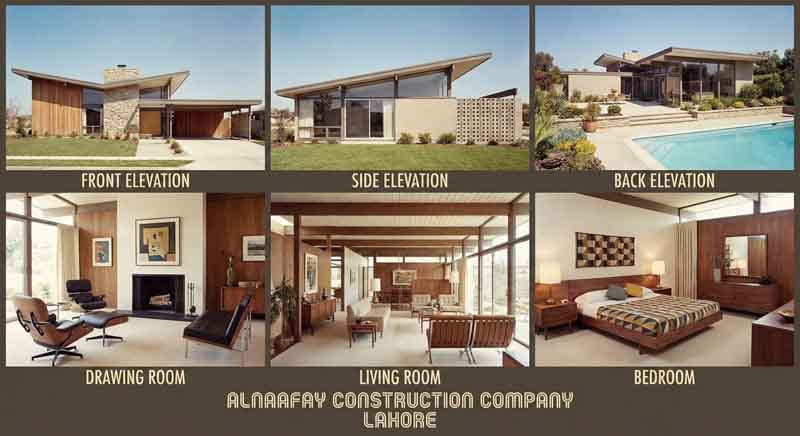
Mid-century Modern House 10 Marla Design
Mid-century Modern House 10 Marla Design sounds like something from a design magazine. However, when the ideas are explained in simple English, even school students can understand and enjoy this style. Many families today want a house that feels modern, bright, and stylish, but still warm and comfortable. Mid-century modern design gives exactly that feeling, especially when used on a 10 marla plot.
In this complete guide, you will learn:
- What 10 marla means in everyday words
- What “mid-century modern” style really is
- How Mid-century Modern House 10 Marla Design can fit a family’s needs
- How to plan the outside and inside of such a house
- Which country loves this style the most
- How much it may cost and how to plan step by step
Language will stay easy. Hard terms will be explained. Sentences will stay clear so that even children do not get confused while reading.
1. Understanding Mid-century Modern House 10 Marla Design
Before jumping into rooms and roofs, it helps to understand two main things. Firstly, what 10 marla means for a house. Secondly, what mid-century modern style is and where it comes from.
1.1 What Is a 10 Marla Plot?
In many Western countries, land is measured in square feet or square meters. In Pakistan and some parts of India, people also use a local unit called marla.
In many housing societies:
- 1 marla ≈ 225 square feet (sometimes 250 or 272, depending on local rules)
- 10 marla ≈ around 2,250 square feet of land
Therefore, a 10 marla plot is a medium-size residential plot. It is larger than a 5 marla plot but smaller than 1 kanal.
Because of this size, a typical 10 marla plan can include:
- Double-story house
- Car porch for one or two cars
- Small or medium front lawn
- Some space at the back or sides
- Around 3–5 bedrooms with attached bathrooms
When Mid-century Modern House 10 Marla Design is used on such a plot, the result can be a very comfortable and stylish family home.
1.2 What Does “Mid-century Modern” Mean?
The phrase “mid-century modern” points to a design style from around the 1940s to the 1960s. Those years sit in the “middle” of the 20th century, so people say “mid-century”.
Architects and designers of that time wanted homes that were:
- Simple in shape
- Full of natural light
- Connected to gardens and nature
- Comfortable for ordinary families
- Free from heavy decoration
Because of this thinking, mid-century modern houses often have:
- Clean, straight lines
- Flat or gently sloping roofs
- Big windows and sliding glass doors
- Open or semi-open floor plans
- Simple, functional furniture
Later, people in many countries started loving this style again. Today, Mid-century Modern House 10 Marla Design brings these old ideas back, but with new materials and technology.
1.3 Main Features of Mid-century Modern House 10 Marla Design
Although every house is different, a mid-century modern 10 marla home usually shows some clear features:
Horizontal lines and low shapes
Many mid-century houses appear wider than tall, with strong horizontal lines.Large windows connecting indoors and outdoors
Glass walls, corner windows, and big openings are common.Simple geometry
Squares, rectangles, and clean angles dominate the design.Natural materials
Wood, stone, and brick are used in a simple, honest way.Minimal decoration
Surfaces stay mostly plain. Shapes and materials do the talking.Functional planning
Room layouts follow daily life needs, not just show-off looks.
When all these elements sit on a 10 marla plot, the result is a clear example of Mid-century Modern House 10 Marla Design.
2. Why Choose a Mid-century Modern House on 10 Marla?
Many other design styles are available. Yet more and more families today want a Mid-century Modern House 10 Marla Design. Several strong reasons explain this choice.
2.1 Perfect Balance Between Old and New
Mid-century modern style is not fully old, and not fully new. Instead, it sits between both.
On one side:
- It has history and character from the 1940s–1960s.
- It carries a classic feel that does not go out of fashion easily.
On the other side:
- It already looks modern compared to very traditional houses.
- It works naturally with new technology and modern materials.
Because of this balance, a Mid-century Modern House 10 Marla Design feels timeless. The house does not feel like a museum, yet it also does not feel like a strange future box.
2.2 Very Comfortable for Family Life
Mid-century architects cared deeply about how families live inside their homes. Consequently, this style focuses on:
- Easy movement from room to room
- Open or semi-open living and dining areas
- Clear views towards the garden
- Functional kitchens
- Cozy bedrooms
For a 10 marla family home, these ideas fit very well. Children can play in the lounge while parents cook and still keep an eye on them. Grandparents can enjoy sunlight in sitting areas. Guests feel relaxed instead of stiff.
2.3 Best Use of Medium Plot Size
A 10 marla plot offers enough space to show mid-century modern features. At the same time, it is not so huge that the house becomes difficult to manage.
Good Mid-century Modern House 10 Marla Design:
- Uses open-plan zones to reduce wasted corridors
- Places windows and courtyards to bring in more light
- Uses roof forms and heights to make spaces feel larger
- Balances built area with lawns and patios
Because the style loves wide and low shapes, a 10 marla front is ideal. The house can stretch a bit horizontally and show its character clearly.
2.4 Strong Connection with Nature
One of the coolest ideas in mid-century modern design is the strong link between home and nature. Designers often created:
- Glass walls facing gardens
- Internal courtyards
- Long roof overhangs that shade open areas
- Patios just outside living rooms
On a 10 marla plot, even a small lawn or garden can become a big part of daily life. Morning tea on the patio, children playing in the yard, or plants near big windows all become part of the home’s heart.
3. Where Is Mid-century Modern Design Most Famous?
You also asked, “Yeh design kis country main zyada famous hai?” That is an important question for understanding the style.
3.1 Mid-century Modern Houses in the United States
Mid-century modern design became especially famous in the United States. Many classic examples stand in:
- California (especially Los Angeles and Palm Springs)
- Other West Coast areas
- Some parts of the Midwest and East Coast
Architects such as Richard Neutra, Charles and Ray Eames, and others built houses with:
- Wide glass walls
- Flat roofs
- Open plans
Even today, American mid-century modern houses are highly valued. Some people travel to cities like Palm Springs just to see these homes. Because of this, the USA is the country where mid-century modern house design is most famous, both historically and now.
3.2 Mid-century Modern Style in Europe and Scandinavia
Besides the United States, several European countries also developed similar ideas. Places like:
- Denmark
- Sweden
- Finland
- Germany
- The United Kingdom
saw designers creating simple, functional homes and furniture. Scandinavian mid-century design especially is known for light wood, clean lines, and cosy minimalism.
3.3 Mid-century Modern House 10 Marla Design in South Asia
When talking specifically about Mid-century Modern House 10 Marla Design, with marla as the unit, attention shifts mainly to:
- Pakistan
- Some parts of India
- Possibly Bangladesh and Sri Lanka in certain housing schemes
In Pakistan, cities such as:
- Lahore
- Islamabad
- Rawalpindi
- Karachi
- Faisalabad
have many 10 marla plots in housing societies. Some architects and owners now mix mid-century modern ideas with local needs. As a result, the 10 marla mid-century modern house is slowly becoming more popular in these cities too.
So, in summary:
- Mid-century modern design is most famous in the United States, and also strong in Scandinavian and some European countries.
- The 10 marla version of this style is becoming better known in Pakistan and nearby regions where marla is used.
4. Plot Basics for Mid-century Modern House 10 Marla Design
Understanding the plot details helps turn style ideas into real plans.
4.1 Common 10 Marla Plot Dimensions
Different housing societies may use slightly different sizes. However, many 10 marla plots follow dimensions such as:
- 35 feet x 65 feet
- 36 feet x 70 feet
- 40 feet x 56 feet
Exact numbers can differ; what matters is that total area stays around 2,250 square feet (in the 225 sqft per marla system).
Shape affects mid-century modern design:
- Wider front – better for strong horizontal lines and wide windows.
- Narrow front, long depth – may need inner courtyards and clever window placement.
- Corner plot – more open sides for glass and garden views, but also more exposure.
4.2 Building Rules and Coverage
Every housing authority sets by-laws. These rules might control:
- Maximum covered area on ground and first floor
- Required front, side, and back setbacks
- Maximum height of building
- Position of garages and boundary walls
Mid-century Modern House 10 Marla Design must respect these rules. Yet, the style loves open spaces, which actually works well with required setbacks. Garden strips, courtyards, and side yards become design strengths instead of just empty leftover land.
4.3 Single-story or Double-story 10 Marla Mid-century House?
On 10 marla, you can build:
- A single-story bungalow with larger footprint
- A double-story house with more rooms and a smaller ground footprint
Classic mid-century homes in the US were often single-story. In Pakistan and India, however, land is expensive, and families often need more bedrooms. Therefore, Mid-century Modern House 10 Marla Design usually becomes a double-story or at least one-and-a-half-story structure.
Even with two floors, the design can keep a low, horizontal feeling by:
- Using strong horizontal bands on front
- Keeping roof gently sloped or mostly flat
- Placing upper floor back slightly from ground floor edge
5. Exterior Design in Mid-century Modern House 10 Marla Design
Outside appearance gives the first impression. So, exterior Mid-century Modern House 10 Marla Design deserves careful attention.
5.1 Front Elevation: Horizontal Lines and Clean Geometry
Mid-century modern fronts often display:
- Long horizontal elements, such as roof edges and window bands
- Simple rectangular volumes placed together
- Some parts projecting, others recessed
On a 10 marla front, the architect might:
- Stretch a long roof slab over the car porch
- Add a long window strip for living room
- Use vertical walls or screens to balance the wide lines
Asymmetry is common. One side may host the garage, while the other side holds the main living area. Still, overall look feels balanced and calm.
5.2 Roof Forms: Flat and Low-slope Roofs
Roofs in mid-century modern houses often are:
- Completely flat
- Slightly sloping towards back for drainage
- Low-pitched gables that look almost flat from the street
In a 10 marla mid-century modern house:
- Flat roofs give terraces and easy solar panel installation
- Parapet walls hide slopes and water tanks
- Extended roof slabs create deep overhangs that shade windows and patios
These overhangs protect from sun and rain and also give a classic mid-century modern character.
5.3 Materials: Wood, Stone, Brick, and Concrete
Materials create mood. Mid-century homes usually use materials honestly and simply.
Common exterior materials in Mid-century Modern House 10 Marla Design include:
- Smooth plaster with paint – as main surface, often light-colored
- Brick or stone cladding – on selected areas, such as entrance wall or feature column
- Wood or wood-look panels – under roof overhangs or around windows
- Exposed concrete – sometimes on beams, slabs, or feature walls
Using too many materials at once can disturb the clean look. A typical good mix might be:
- 60–70% painted plaster
- 20–25% brick or stone
- 5–10% wood or wood-look finishes
That proportion keeps the house modern yet warm.
5.4 Color Palette for a 10 Marla Mid-century Modern Front
Color choices in mid-century modern design often stay natural and soft.
Popular palettes:
- Off-white walls, warm wooden panels, and dark grey window frames
- Light grey walls, beige stone, and black metal details
- Soft earthy tones like light brown or taupe with white trim
Very bright colors may be used only in small spots, such as:
- Front door
- A panel near entrance
- Planters or outdoor furniture
That way, small pops of color bring life without making the overall façade go wild visually.
5.5 Windows, Doors, and Screens
Openings are crucial in Mid-century Modern House 10 Marla Design.
Windows:
- Often large and wide
- Sometimes wrap around corners
- Use slim aluminum or uPVC frames
- May have horizontal mullions or remain simple glass sheets
Doors:
- Main door might be solid wood or wood-look with simple grooves
- Sliding glass doors often connect lounge to patio or garden
- Internal doors are usually flush or simple-paneled designs
Screens and Louvers:
- Wooden or metal screens can provide privacy
- Vertical or horizontal slats create patterns of light and shadow
- Screens also help reduce heat from harsh direct sunlight
Together, these elements create a façade that looks light, open, and inviting.
6. Interior Layout in Mid-century Modern House 10 Marla Design
Inside the house, planning must support daily life. Mid-century modern thinking helps create spaces that feel open, bright, and useful.
6.1 Zoning: Public, Family, and Private Areas
Good Mid-century Modern House 10 Marla Design separates activities smartly.
Typical zones:
Public zone
- Entrance lobby
- Drawing room or formal sitting
- Guest powder room
Family zone
- Lounge or living room
- Dining area
- Kitchen
Private zone
- Bedrooms
- Attached baths
- Dressing areas
The public zone usually sits near the front door. Family zone stays in the middle and often connects to garden or patio. Private zone is at the back or upstairs, away from noise and guests.
6.2 Ground Floor Planning for a 10 Marla Mid-century Modern Home
A typical ground floor might include:
- Car porch
- Small front lawn
- Entrance lobby
- Drawing room
- Powder room
- Stairs to first floor
- Open-plan lounge and dining
- Kitchen, maybe with a small store
- One bedroom (often for parents or guests)
- Access to backyard or side yard
Mid-century modern planning often uses open plans. Instead of full walls between lounge and dining, there may be:
- Half walls
- Low cabinets
- Sliding partitions
- Changes in ceiling or floor finishes
These tricks keep spaces visually connected but still give a sense of separate zones.
6.3 First Floor Layout in Mid-century Modern House 10 Marla Design
Upper floor usually holds more bedrooms and sometimes extra family areas.
Possible features:
- Master bedroom with dressing area and large bathroom
- One or two children’s bedrooms with attached baths
- Small family sitting / study area
- Terrace or balcony
- Store or laundry area
Mid-century style on the first floor might show:
- Long windows or glass doors opening to balcony
- A low parapet with metal or glass railing
- Continuation of horizontal lines from the ground floor façade
6.4 Double-height Spaces and Internal Courtyards
To add drama and bring in more light, many Mid-century Modern House 10 Marla Designs include:
- Double-height living areas or entrance halls
- Small internal courtyards open to the sky
A double-height lounge:
- Lets light enter from high windows
- Makes the space feel larger and richer
- Reveals part of the first-floor circulation, such as a gallery or bridge
An internal courtyard:
- Serves as a private garden
- Helps ventilate inner rooms
- Creates beautiful views from many angles
Even a small 6×8 foot courtyard can strongly improve light and air in a 10 marla house.
6.5 Circulation and Flow
“Flow” means how people move inside the house.
Good flow in Mid-century Modern House 10 Marla Design ensures that:
- You can reach the kitchen easily from the entrance with groceries
- Guests can go to drawing room and powder room without crossing bedrooms
- Family members can move between lounge, patio, and bedrooms without confusion
Passages are kept short. Corners are rounded in lifestyle terms, not literally, meaning movements feel natural and smooth.
7. Room-by-Room Guide for Mid-century Modern House 10 Marla Design
Looking at each room type will give you a clearer picture of how this style works in real life.
7.1 Entrance and Foyer in a 10 Marla Mid-century Modern House
Entrance sets the tone for the entire home.
Common foyer elements:
- Simple, strong main door with clear lines
- A slim bench or console table for keys and shoes
- A large mirror to enlarge the feel of space
- One artwork or print, not many small pieces
Ceiling might have a clean rectangular recess with soft lighting. Floor can use the same tile as living area to keep continuity.
7.2 Drawing Room or Formal Sitting
In South Asian culture, drawing room often welcomes formal guests. Mid-century modern style can make this room elegant yet informal.
Design tips:
- Choose sofas with low backs and wooden legs
- Add one or two accent chairs with mid-century shapes (slightly angled legs, simple form)
- Use a coffee table with thin legs instead of very bulky base
- Keep side tables and lamps simple
Color palette can stay neutral: cream, light grey, or soft beige. A patterned rug or a few colorful cushions can bring personality without noise.
7.3 Family Lounge in a Mid-century Modern 10 Marla House
Family lounge holds TV, casual seating, and everyday activities.
Suggestions:
- Place a comfortable L-shaped sofa or a set of sofas and chairs
- Plan the TV wall as a simple built-in unit with shelves or drawers
- Use open shelves for a few books, plants, and decor items
- Ensure at least one side opens to garden, patio, or courtyard through glass doors
Lighting can combine ceiling downlights, a floor lamp, and maybe some wall lights to create layers.
7.4 Dining Area in Mid-century Modern House 10 Marla Design
Dining often sits between lounge and kitchen.
Typical features:
- Wooden or wood-look dining table, often with a rectangular shape
- Modern chairs with slim legs
- A pendant light or cluster of lights above the table
- Simple sideboard or cabinet against one wall
Walls remain mostly plain; one large painting or framed print can be enough. Too many small frames can make the space feel cluttered.
7.5 Kitchen in a 10 Marla Mid-century Modern Home
Kitchen is a key area in any family home. Mid-century modern kitchens mix function and style.
Cabinet design:
- Flat (slab) or simple framed doors
- Handles that are straight bars or even handle-less push systems
- Upper cabinets sometimes reduced, with open shelves instead
Color ideas:
- White cabinets with wooden accents
- Soft grey with light wood tones
- Warm beige with black handles
Backsplash tiles can be subway tiles, small mosaics, or simple large tiles. Counters might be granite or quartz, depending on budget.
A breakfast bar or small island, if space allows, makes cooking more social and convenient.
7.6 Bedrooms in Mid-century Modern House 10 Marla Design
Bedrooms should feel peaceful retreats.
Key points:
- Bed frame can be low, with simple headboard
- Bedside tables may be small wooden tables with straight or angled legs
- Built-in wardrobes keep lines clean and reduce clutter
- Wall colors stay soft; one darker accent wall behind the bed can look beautiful
Master bedroom might include:
- Walk-in closet or wall-to-wall wardrobe
- Attached bathroom with shower area and vanity
- Access to a balcony or terrace for fresh air
Children’s bedrooms can use more color, but furniture should keep the mid-century modern simplicity.
7.7 Bathrooms in a 10 Marla Mid-century Modern House
Bathrooms must be easy to clean and pleasant to use.
Typical style choices:
- Wall tiles in white, light grey, or beige
- Floor tiles with gentle texture for safety
- Vanity with wooden or wood-look front and plain countertop
- Frameless or simple-glass shower partitions
Wall-hung toilets and vanities free floor space and make cleaning easier. Mirrors should be wide enough to widen the feeling of the room.
7.8 Staircase and Hallways
Staircases in mid-century modern design often become important visual elements.
Common styles:
- Floating stairs with concrete or metal structure and wooden treads
- Straight or L-shaped stairs with simple metal or glass railing
- Skylight or high window above stairs to bring light down
Under-stair space may be used as:
- Storage cabinets
- Small study or reading corner
- Decorative niche with plants and art
Hallways should not be long dark tunnels. Using glass, openings, or light colors keeps them bright and inviting.
8. Materials, Colors, and Lighting in Mid-century Modern House 10 Marla Design
Finishes and light shape the mood of the whole home.
8.1 Flooring Choices
Floor options for a 10 marla mid-century modern house usually aim for durability and a clean look.
Popular choices:
- Large-format porcelain tiles that look like stone or concrete
- Wood-look tiles that give warmth without wood maintenance issues
- Real engineered wood or laminate in bedrooms, if budget allows
Using the same tile through most of the ground floor creates a continuous, flowing feeling. Changes in floor finish can mark special areas like the entrance or bathroom zones.
8.2 Wall Colors and Feature Walls
Mid-century modern interiors often use:
- White
- Off-white
- Light grey
- Warm beige
- Soft earthy tones
Feature walls might use:
- Darker paint (for example, deep grey, olive green, or muted blue)
- Wooden cladding
- Textured panels
However, too many feature walls in one house can make it feel restless. Choosing a few key places, such as behind the bed or at the TV wall, normally works best.
8.3 Lighting Strategy in Mid-century Modern House 10 Marla Design
Good lighting has layers:
- General lighting – ceiling lights or downlights that brighten the whole room
- Task lighting – focused lights for reading, cooking, or studying
- Accent lighting – lights that highlight art, plants, or textures
Mid-century modern houses may use:
- Recessed ceiling lights in a simple grid
- Pendant lights over dining and kitchen islands
- Floor lamps near sofas
- Wall sconces in corridors
Warm white light (around 2700K–3000K) feels more homely than very cool white. Mixing different intensities allows you to create different moods for work, rest, or events.
8.4 Using Glass Smartly
Glass is essential in Mid-century Modern House 10 Marla Design but must be controlled.
Pros of large glass:
- Brings in natural light
- Makes rooms feel bigger
- Connects inside with garden views
Possible issues:
- Heat gain in hot climates
- Glare on TV and screens
- Privacy problems
Solutions include:
- Double-glazed or performance glass, where budget allows
- External shades, louvers, or long roof overhangs
- Curtains, blinds, or screens inside
- Smart placement away from the harshest sun directions
When used wisely, glass makes mid-century modern houses bright, open, and cheerful.
9. Outdoor Spaces in Mid-century Modern House 10 Marla Design
Outdoor areas complete the design. Mid-century modern homes treat outdoor living as almost another room.
9.1 Front Lawn and Entry Path
Front space usually combines:
- Car porch
- Hardscape (paths, driveway)
- Softscape (grass, plants)
Design ideas:
- Straight, clear path to main door using stone or concrete slabs
- Low, simple planters along boundary wall
- One or two trees or taller plants for vertical interest
- Simple outdoor lights to guide visitors at night
A clean, neat front yard supports the overall modern look.
9.2 Backyard or Patio in a 10 Marla Mid-century Modern House
Backyard is more private and often connects directly with lounge or dining.
Common features:
- Paved patio just outside sliding doors
- Outdoor table and chairs
- Some grass or planted area around the edges
- Maybe a barbecue or small outdoor kitchen corner
Boundary walls can be softened with climbers, shrubs, or slim trees. A few planters with different heights can make the view more interesting from inside.
9.3 Courtyards and Side Yards
Side yards and internal courtyards are very helpful in Mid-century Modern House 10 Marla Design.
Side yards can:
- Provide cross-ventilation
- Give safe play or sitting spaces
- Hold services like washing area discreetly
Internal courtyards:
- Bring light to the middle of the plan
- Offer private open space even in crowded neighborhoods
- Create a special calm spot for plants and seating
Even narrow spaces between house and boundary wall can be beautified with stepping stones and vertical gardens.
9.4 Roof Terrace Use
Flat roofs mean terraces become easy to use.
Roof terraces can serve as:
- Evening sitting areas
- Party or barbecue zones
- Small roof gardens in pots or planters
- Clothes drying area behind screens
Parapet walls or railings must be safe and at proper height. Simple seating and a few plants can already make a terrace very enjoyable.
10. Advantages of Mid-century Modern House 10 Marla Design
After seeing all these details, it helps to list the main benefits clearly.
10.1 Timeless, Stylish Look
Mid-century modern style has already survived many fashion cycles. Because its lines are simple and honest, the house does not look old quickly.
A well-designed Mid-century Modern House 10 Marla Design can still feel fresh even after many years. Only small updates in color, furniture, or landscaping may be needed over time.
10.2 Bright, Open Interiors
Large windows, glass doors, and open plans:
- Fill rooms with daylight
- Make spaces seem larger than they are
- Improve mood and energy of family members
Children can do homework at a dining table while sunlight enters through big windows. Adults can relax in lounges that feel airy instead of closed.
10.3 Strong Connection with Nature
Indoor–outdoor connection is one of the most loved parts of this style.
Benefits include:
- Better views from inside
- Easier use of gardens and patios
- More chances to enjoy fresh air
Even if the plot is not huge, careful planting and viewing directions can make nature feel close.
10.4 Flexible Interiors
Mid-century modern interiors form a clean base. You can decorate them:
- In a very minimal way
- In a warmer, cosier way with more textiles
- With hints of industrial or Scandinavian style
Furniture and accessories can change over time as taste or budget changes. Yet the underlying Mid-century Modern House 10 Marla Design remains strong.
10.5 Suitability for Modern Technology
This style easily accepts:
- Solar power systems
- Smart lighting and automation
- Modern security systems
- Efficient heating and cooling systems
Straight walls and flat roofs simplify installation. Technology hides neatly, while the house still looks simple and calm.
11. Challenges and Mistakes to Avoid in Mid-century Modern House 10 Marla Design
Every style has risks when wrongly applied. Mid-century modern is no different.
11.1 Overusing Glass without Protection
Huge glass walls can look stunning. However, in hot and sunny climates, uncontrolled glass can:
- Overheat rooms
- Cause glare
- Reduce privacy
Designers should:
- Use shaded glass areas where possible
- Provide overhangs and screens
- Plan window positions according to sun path
- Use curtains and blinds wisely
Balanced glass use keeps comfort high while still giving mid-century charm.
11.2 Making the House Too Minimal and Cold
Sometimes people think modern means empty. If too many walls and surfaces remain bare and hard, the house may feel cold and unfriendly.
To avoid this:
- Add textures through rugs, curtains, and cushions
- Use warm wood tones in furniture and trims
- Place plants in key locations
- Choose warm lighting colors
Mid-century modern does not mean no warmth. It just means no unnecessary decoration.
11.3 Ignoring Storage Needs
Sleek lines can tempt people to skip visible storage. Real families, however, must store:
- Clothes
- Toys
- Books
- Tools
- Kitchen items
If storage is not built in, clutter appears everywhere, and homeowners can start to feel aggravated about the mess.
Mid-century Modern House 10 Marla Design should include:
- Wardrobes
- Kitchen cabinets and pantry
- Bathroom cabinets
- Shoe racks and linen storage
These can remain visually quiet while still very functional.
11.4 Weak Structure for Wide Openings
Large spans and few columns require proper structural design.
If beams and columns are undersized:
- Cracks may appear
- Floors might feel bouncy
- Safety issues can arise
Professional structural engineering is necessary, especially for:
- Long living rooms
- Car porches
- Big glass openings
Cutting corners here is risky and should be avoided.
11.5 Copying Designs without Adapting to Local Needs
Pictures from the United States or Europe look attractive. Yet, climate, culture, and plot rules in Pakistan or India are different.
Simply copying a foreign mid-century house can cause problems such as:
- Overheating
- Poor privacy from neighbors
- Awkward car parking
Design should be inspired by global mid-century modern examples but adapted carefully to your local context and 10 marla dimensions.
12. Cost and Budget Planning for Mid-century Modern House 10 Marla Design
Money controls what can actually be built. Understanding cost helps avoid shock later.
12.1 Major Cost Heads
Normally, costs divide into:
Grey structure
- Foundations
- Columns, beams, and slabs
- Brickwork
- Rough plaster
Finishing
- Flooring
- Doors and windows
- Paint and wall finishes
- Kitchen and bathrooms
- Woodwork and built-ins
External works
- Boundary wall and gate
- Driveway and pathways
- Lawns and plants
- Exterior cladding and lighting
Mid-century modern style mainly affects finishing and external works, because shape of structure stays fairly standard.
12.2 Where Mid-century Modern Can Increase Cost
Certain choices may raise expenses:
- Higher quality windows and glass doors
- Wooden or composite cladding on façade
- Large-format tiles or special floor finishes
- Custom metal or wooden screens
However, these features often also:
- Improve comfort
- Enhance looks strongly
- Increase resale value
Balancing desire and budget is the key.
12.3 Ways to Control Budget in a 10 Marla Mid-century Modern Project
Several strategies can help keep costs within limits:
- Decide your maximum budget early and inform your architect clearly
- Focus special materials on visible key areas only, not everywhere
- Use mid-range, good quality tiles instead of the most expensive ones
- Keep room sizes reasonable instead of extremely large
- Choose simple, clean ceilings instead of very complex ones
Mid-century modern design relies more on proportion and light than on very costly items. Therefore, a sensible Mid-century Modern House 10 Marla Design can look expensive even with medium-level spending.
12.4 Hidden and Extra Costs
Some costs people often forget:
- Society approval and drawing scrutiny fees
- Soil tests and extra foundation work if needed
- Underground water tanks and water pump systems
- Power backup or solar systems
- Extra electrical points requested later during construction
Allowing 5–10% of your budget as a reserve for such items gives safety. That reserve protects you from feeling that money is out of control if small surprises appear.
13. Step-by-Step Planning Guide for Mid-century Modern House 10 Marla Design
Turning a design dream into a real house is a step-by-step journey. Following a clear path helps.
13.1 Step 1 – Define Your Needs
Sit with your family and discuss:
- Number of bedrooms and bathrooms needed
- Whether you require a separate drawing room
- How many cars you expect to park
- Need for a home office or study
- Requirement for rental portion or independent upper floor
- Budget range
Write everything down. That list becomes your brief for the architect.
13.2 Step 2 – Select an Architect Familiar with Mid-century Modern
Not all architects focus on the same style. Searching for one who understands mid-century modern:
- Check their past projects
- See whether they have designed modern, clean-lined homes
- Talk about your taste and show reference photos
Mention clearly that you want Mid-century Modern House 10 Marla Design so the architect can think in that direction from the start.
13.3 Step 3 – Finalize Floor Plans
Architect will first propose floor plans. When you receive them:
- Imagine daily life in each room
- Think about how you will bring groceries in, how children will move, where guests will sit
- Check natural light and ventilation in all rooms
- Look at furniture positions
After discussion, revised plans may come. Once the plan feels practical and comfortable, lock it.
13.4 Step 4 – Develop the Mid-century Modern Elevation
With plan fixed, elevation design starts.
During this phase:
- Decide on roof style and overhangs
- Choose main materials and colors
- Place windows, screens, and balconies
- Think about how car porch will look
3D views help you understand the final Mid-century Modern House 10 Marla Design. Use them to adjust proportions before construction begins.
13.5 Step 5 – Obtain Approvals
Submit drawings to your housing authority or city office if required. This stage may need:
- Architectural plans
- Structural drawings
- Application forms
- Fees
Although this paperwork can feel slow, it is necessary for safety and legal reasons.
13.6 Step 6 – Choose Construction Method and Contractor
You can build the house by:
- Hiring labour only and buying materials yourself
- Hiring a contractor for material plus labour
- Hiring a company on turnkey basis for a full package price
Each method has pros and cons. Choose based on your own time, knowledge, and trust in specific people.
13.7 Step 7 – Construct Grey Structure
Construction on site begins with:
- Layout marking
- Foundation work
- Column and beam casting
- Slab casting
- Wall building
Visit the site regularly to confirm:
- Room sizes match drawings
- Openings for windows and doors are correct
- Stairs feel comfortable
Correct any problems as early as possible.
13.8 Step 8 – Install Electrical and Plumbing Systems
Once grey structure is stable:
- Electric conduits and wires go into walls and slabs
- Water and drainage pipes are laid
- Gas lines (if any) are placed
Plan ahead for:
- Number and location of sockets
- Positions for TV and internet points
- AC indoor and outdoor unit spots
Mid-century modern ceilings often are simple, so hidden planning becomes extra important.
13.9 Step 9 – Complete Interior and Exterior Finishing
Finishing includes:
- Plaster smoothing
- Tile and floor laying
- False ceilings (if any)
- Painting and wall treatments
- Door and window fitting
- Kitchen cabinets and wardrobes
- Bathroom installations
Mid-century Modern House 10 Marla Design depends heavily on clean lines and neat finishes. Therefore, small mistakes in tile alignment, paint edges, or carpentry can be clearly visible. Regular quality checks are very important at this phase.
13.10 Step 10 – Furnish, Decorate, and Move In
After construction dust is cleaned:
- Bring in furniture that matches mid-century modern style (simple forms, wooden legs, clean shapes)
- Add rugs, curtains, and cushions for comfort
- Place some plants for freshness
- Hang a few artworks or prints, not too many
Start with the basics if budget is limited. Over time, more items can be added. Because the house already has strong Mid-century Modern House 10 Marla Design bones, even simple furniture will look good.
14. Frequently Asked Questions about Mid-century Modern House 10 Marla Design
Questions often repeat when people first hear about this style. Clear answers help.
14.1 How Can I Explain Mid-century Modern House 10 Marla Design in One Simple Line?
You can say:
“It is a clean, bright, and simple style house on a 10 marla plot, based on designs from the 1950s and 1960s, with big windows, open spaces, and a strong link to nature.”
That single line captures the main idea.
14.2 In Which Country Is This Design More Famous?
Mid-century modern design is most famous in the United States. Many classic mid-century houses there, especially in California and some other states, have become design icons. Scandinavian countries and parts of Europe also love this style.
Regarding Mid-century Modern House 10 Marla Design specifically, this plot-based version is now being used more in Pakistan and some parts of India, where 10 marla plots are common in housing societies.
14.3 Is a Mid-century Modern 10 Marla House Very Costly?
Cost depends on:
- Total covered area
- Material quality
- Design complexity
Mid-century modern style does not automatically mean very high cost. Because decoration stays minimal, money can be saved by:
- Using mid-range tiles and fixtures
- Limiting expensive cladding to smaller areas
- Choosing simple ceilings and trims
Expenses usually increase most with high-end windows, special glass, or imported materials, which are optional.
14.4 Is This Style Practical for Hot Climates?
Yes, it can work well if adjusted properly.
Helpful strategies:
- Long roof overhangs to shade windows
- Proper insulation in roof and walls
- Smart window placement according to sun movement
- Use of cross-ventilation and courtyards
With these adjustments, Mid-century Modern House 10 Marla Design can stay comfortable even in hot regions.
14.5 Can I Mix Mid-century Modern with Other Styles?
Mixing is possible and often successful. Examples include:
- Mid-century modern + Scandinavian (light wood, white, cosy textiles)
- Mid-century modern + industrial (some exposed concrete or brick)
- Mid-century modern + local traditional touches (patterned tiles, local art)
Balance is crucial. Keeping mid-century modern as the main theme and adding small touches from other styles usually works best.
14.6 Does This Style Suit Joint Families?
Joint families can also enjoy this design on 10 marla. Planning can include:
- Separate upper floor lounge
- Extra bedrooms with attached baths
- Maybe a small second kitchen upstairs
- Flexible spaces that can change use over time
Open planning can still respect privacy by using sliding doors and level changes.
Quick Links
Social Icons
Contact Us Information
443 J3 Johar Town Lahore near Expo Center Lahore
