
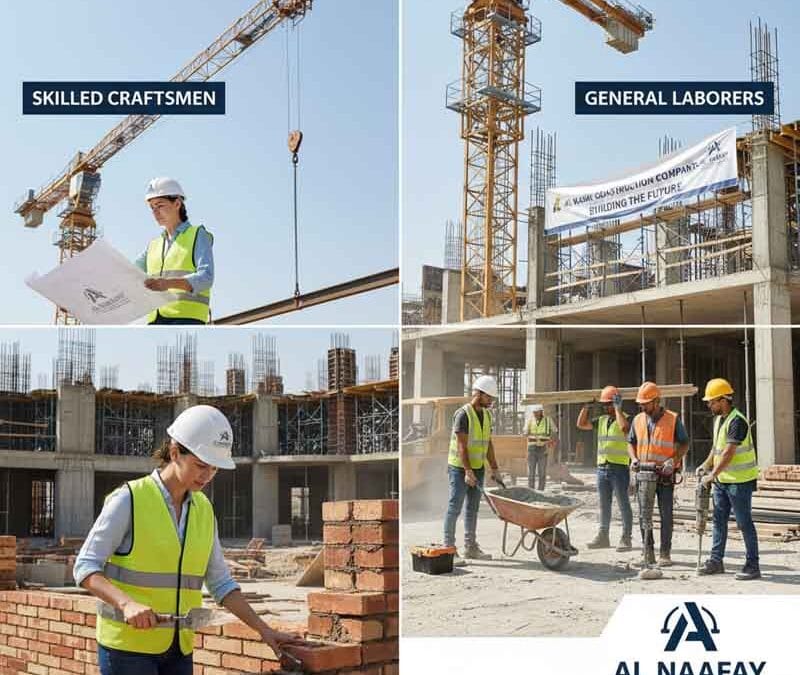
Types of Construction Workers on Site
A building doesn't just appear out of thin air. Instead, it rises thanks to the coordinated effort of a large and diverse team. Understanding the different types of construction workers is key to appreciating the complexity behind every home, office, and skyscraper. Moreover, this knowledge reveals the human skill and hard work that turns a blueprint into a physical structure.
This comprehensive guide will explore the spectrum of roles on a job site. We will differentiate between skilled artisans and general laborers. Furthermore, the article will connect these roles to a specific architectural style, including material choices and climate considerations. Ultimately, you will gain a clear picture of the people who build our world and the specific skills they bring to a project.
What Are the Primary Types of Construction Workers?
The construction workforce is generally divided into two main categories: skilled and unskilled. However, this is a broad simplification. Within these groups, there are numerous specialized professions, each with its own training path and responsibilities. Consequently, a successful project requires seamless teamwork among all these different types of construction workers.
Skilled professionals have dedicated years to mastering a specific trade, often through apprenticeships and formal education. On the other hand, unskilled workers, frequently called general laborers, perform a wide range of essential tasks that demand physical fitness and versatility rather than specialized certification. Both groups are absolutely vital for a project's timely and successful completion.
Skilled Workers: The Experts of the Trade
Skilled tradespeople represent the technical mastery required in construction. These individuals possess in-depth knowledge and refined abilities in a particular craft. For instance, professions like electricians, plumbers, masons, and welders fall into this bracket. Their expertise ensures that a building is not only structurally sound but also safe, functional, and compliant with all building codes. A deep dive into the types of construction workers showcases a clear hierarchy based on skill and experience.
Moreover, the path to becoming a skilled worker is a significant undertaking. Most spend several years learning as an apprentice under the guidance of experienced masters before they are qualified to work independently. This rigorous process guarantees a high standard of quality and safety across the industry. Therefore, their contributions are highly valued, and they typically earn higher wages.
Key Examples of Skilled Trades:
- Carpenters: These workers shape wood to create the structural frames of buildings, install doors and windows, and craft fine details like trim and cabinetry.
- Electricians: They are responsible for designing, installing, and maintaining all electrical systems, from the main power feed to the last light switch.
- Plumbers: Plumbers install complex systems for water supply, drainage, and gas, ensuring everything operates correctly and safely.
- Masons: Specialists in working with materials like brick, stone, and concrete, they build durable walls, foundations, and decorative features.
- Welders: Using intense heat to fuse metal components, welders are crucial for the construction of steel-framed buildings, bridges, and industrial structures.
- Heavy Equipment Operators: These skilled professionals operate cranes, bulldozers, excavators, and other large machinery essential for earthmoving and lifting heavy materials.
Unskilled Workers: The Foundation of the Workforce
While skilled trades handle the technical aspects, general laborers provide the indispensable support that keeps every job site running smoothly. Their tasks are often physically demanding and can change daily based on the project's needs. For example, they might be responsible for site preparation, moving materials by hand, assisting tradespeople, or performing demolition. These various types of construction workers are crucial for maintaining momentum.
Although their positions do not demand formal certification, the importance of general laborers cannot be overstated. They perform the foundational work that clears the way for the specialists to do their jobs effectively. Their adaptability makes them a flexible and essential part of the team, able to fill in wherever help is needed. Consequently, without their tireless efforts, a project's timeline and budget would be impossible to maintain.
Common Tasks for General Labor:
- Preparing and cleaning the construction site.
- Loading, unloading, and distributing materials.
- Operating basic hand and power tools.
- Digging trenches and backfilling holes.
- Assisting skilled workers by supplying tools and materials.
Defining an Architectural Style: The International Style
To better understand how different types of construction workers collaborate, we can examine a specific architectural approach. The International Style, which flourished from the 1920s through the 1970s, represents a pivotal moment in modern architecture. It is defined by a rejection of ornamentation and a focus on volume, balance, and clean lines. Characteristics include flat roofs, large glass curtain walls, and smooth, unadorned surfaces.
This style emphasizes the underlying structure and functionality of a building. It often uses materials like steel, glass, and reinforced concrete to create a sense of lightness and openness. The aesthetic is one of radical simplicity and geometric precision. Executing this style properly requires an extremely high level of skill from all types of construction workers, as the minimalist design leaves no room to hide imperfections.
Core Benefits of the International Style
The International Style offers several significant advantages. First, its focus on open-plan interiors and large windows creates bright, airy spaces that connect the inside with the outside. This can improve the well-being of occupants and provide a feeling of spaciousness. Second, the use of modern materials like steel frames allows for greater structural freedom, enabling architects to design buildings with large, uninterrupted floor plates.
Additionally, the absence of non-structural ornamentation can make construction more straightforward in some respects, though it demands higher precision in finishing. The clean, functional aesthetic has a timeless quality that continues to influence contemporary design. From a practical standpoint, the flat roofs can be utilized for HVAC equipment or even green roof systems. Therefore, the style's benefits are both visual and functional.
Material Options and the Corresponding Workforce
The choice of materials is a defining feature of the International Style and directly determines the types of construction workers needed. The three signature materials are steel for the frame, glass for the skin, and reinforced concrete for floors and core structures.
The steel frame requires ironworkers and welders with exceptional skill. These workers are responsible for erecting the building's skeleton, a task that requires incredible precision and a head for heights. The welders must create flawless joints to ensure the structure's integrity. Afterward, a team of glaziers is needed to install the vast curtain walls of glass. This is a delicate operation involving cranes and specialized suction cups to lift large, heavy panels into place. Carpenters and concrete finishers are also essential for creating the formwork and smooth surfaces for the concrete floors and internal walls.
How Material Choices Shape the Team
While steel, glass, and concrete are primary, other materials play supporting roles. For instance, electricians and plumbers must work in close coordination with the ironworkers to run conduits and pipes through the steel frame before walls are closed up. HVAC technicians install the complex systems needed to manage the temperature in a building with so much glass.
Ultimately, the material palette dictates the project's labor needs. A building made primarily of brick and timber would require a different set of lead trades than a sleek glass-and-steel tower. Recognizing this relationship is fundamental to understanding the distinct contributions of various types of construction workers.
Explaining Climate Suitability for International Style Architecture
The climate suitability of the International Style has been a topic of debate since its inception. The style originated in Europe, and its early masters did not always consider the challenges of different global climates. A building with a massive glass facade can perform very differently in a cold versus a hot environment.
In cold, temperate climates, the large windows can be beneficial for passive solar gain during the winter, allowing sunlight to enter and warm the interior. However, this same feature can lead to significant heat loss at night and on cloudy days, requiring high-performance, multi-paned glass and excellent insulation to be energy-efficient. In contrast, in hot and sunny climates, an unmodified International Style building can act like a greenhouse. The vast expanses of glass can lead to massive heat gain, placing an enormous load on air conditioning systems and leading to high energy consumption.
Modern Adaptations for Climate Control
Contemporary architects have developed sophisticated solutions to adapt the principles of the International Style to different climates. To mitigate solar gain in hot regions, designers now incorporate high-performance solar control glass, external shading devices like louvers or screens, and deep roof overhangs. These additions can dramatically reduce cooling costs while preserving the open, glassy aesthetic.
This process of adaptation requires a collaborative effort from many types of construction workers. Fabricating and installing custom shading systems, for example, might require skilled metalworkers and specialized installation crews. The goal is to retain the style's elegance while ensuring the building performs efficiently and provides a comfortable environment for its occupants, regardless of the local weather.
Which Country is Most Famous for This Design?
While the International Style was a global movement with pioneers from Germany (Walter Gropius, Mies van der Rohe) and France (Le Corbusier), the United States became the country most famous for its large-scale adoption and development, particularly after World War II. Many of the style's leading European architects emigrated to the U.S., where they found fertile ground for their ideas and the financial backing for ambitious projects.
American corporations embraced the International Style for their headquarters, seeing it as a symbol of modernity, efficiency, and progress. Cities like New York and Chicago are home to some of the world's most iconic examples, such as the Seagram Building and the Lake Shore Drive Apartments. These projects were monumental achievements that required a vast and highly skilled workforce, solidifying the U.S.'s reputation as a leader in modern construction.
The Workforce Behind America's Glass Towers
The construction of these mid-century skyscrapers was a remarkable feat of project management and labor coordination. It demanded a new level of precision from all types of construction workers. Teams of ironworkers seemed to dance in the sky as they bolted the steel frames together. Below them, glaziers worked their way up the facade, enclosing the structure in a skin of glass.
The sheer scale of these projects created jobs for thousands of workers and spurred innovation in construction techniques and material manufacturing. This era showcased the ability of the American construction industry to execute complex, large-scale designs with speed and efficiency. It demonstrated the power of a highly organized workforce, combining the strength of general labor with the precision of dozens of skilled trades to reshape the nation's cityscapes.
Conclusion
From the clean lines of the International Style in Chicago to countless other projects around the globe, buildings are a testament to human ingenuity and teamwork. A deep appreciation for the different types of construction workers—both skilled and unskilled—gives us insight into the complex, challenging, and collaborative process of building. Every role, from the architect who draws the first line to the laborer who cleans the site at the end of the day, is an indispensable part of the journey.
Ultimately, a structure is far more than its materials or its design; it is the physical embodiment of a shared goal. By recognizing the contributions of every worker, we can better appreciate the built environment that surrounds us. The success of any construction project is a direct reflection of the skill, dedication, and coordinated effort of its diverse and hardworking people.
Quick Links
Social Icons
Contact Us Information
443 J3 Johar Town Lahore near Expo Center Lahore
