
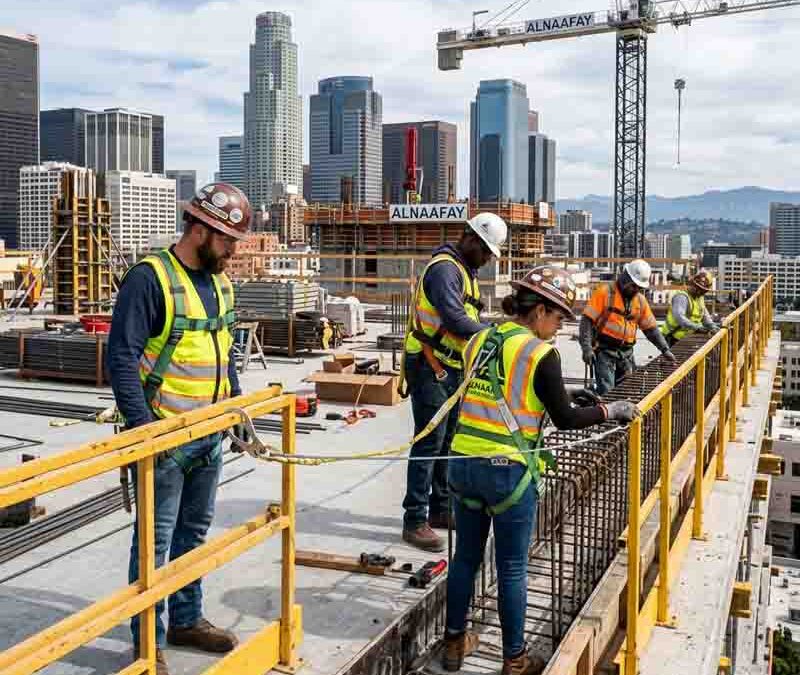
Fall Protection in Construction: Rules, Equipment, and Best Practices
Falls remain the deadliest hazard on construction sites. In 2024, there were 389 fatal falls to a lower level out of 1,034 construction fatalities, according to data from the Bureau of Labor Statistics. That single statistic explains why fall protection sits at the top of every safety conversation in the building trade.
We work in construction every day, and we have seen how a strong fall protection program saves lives. This guide breaks down the rules, the equipment, and the practices that keep workers safe at height. We wrote it in plain language so that supervisors, workers, and business owners can all use it. Whether you manage a small crew or run a large Construction Company Lahore relies on, the information here applies directly to your sites.
Throughout this article, we share specific standards, named equipment, and step-by-step practices. Furthermore, we connect those standards to how teams on the ground actually apply them. By the end, you will understand what good fall protection looks like and how to build it into your own operations.
Table of Contents
- Why Fall Protection Matters in Construction
- Must-Follow Rules for Fall Protection
- Essential Fall Protection Equipment
- Best Practices for Working at Height
- Fall Protection Standards and Regulations
- How a Construction Company in Lahore Implements Fall Protection
- Common Fall Hazards on Construction Sites
- Training Workers on Fall Safety
- Conclusion
Why Fall Protection Matters in Construction
Fall protection matters because falls kill more construction workers than any other hazard. The numbers tell the story clearly. In 2024, falls to a lower level accounted for 389 deaths in the construction industry. Moreover, fall protection has remained the most frequently cited OSHA standard for years running, which shows how often sites fall short of the basic requirements.
Behind every statistic sits a real person and a real family. A single fall can end a life, cause permanent disability, or leave a worker unable to earn a living. Consequently, the cost of ignoring fall protection reaches far beyond fines and lost time. It touches workers, their families, and the reputation of the business itself.
There are practical reasons to take fall protection seriously, and we list them below so the case is clear:
- Lives saved: Proper systems prevent the leading cause of death on site.
- Lower costs: Fewer accidents mean fewer medical bills, fewer claims, and less downtime.
- Legal compliance: Meeting the rules protects your business from heavy penalties.
- Stronger reputation: Clients and workers trust a firm that puts safety first.
- Higher productivity: A crew that feels safe works with focus and confidence.
For any Construction Company Lahore depends on for large projects, these reasons carry real weight. Tall buildings, scaffolding, and rooftop work all create fall risks. Therefore, a firm that invests in fall protection protects both its people and its future. We believe safety is not an extra cost; instead, it is part of doing the job right.
It also helps to understand why falls happen so often. Construction work involves heights by its very nature. Workers climb scaffolds, stand on roofs, and operate near unprotected edges. In addition, time pressure, fatigue, and missing equipment all raise the risk. Because the hazard is built into the work, the protection must be built in too.
Must-Follow Rules for Fall Protection
Strong fall protection starts with clear rules that everyone follows. These rules are not suggestions. Rather, they form the foundation of a safe site, and skipping them puts lives at risk. Below, we explain the core rules that apply to almost every job involving heights.
Rule 1: Know the Trigger Height
Every safety system begins with a simple question: at what height does protection become mandatory? Under OSHA, construction workers need fall protection at six feet above a lower level. General industry sets the threshold at four feet, while shipyards use five feet. Once a worker crosses that line, protection becomes a legal and practical requirement.
Rule 2: Choose the Right System
After you know the trigger height, you must pick the correct system for the task. Guardrails, safety nets, and personal fall arrest systems all serve different situations. For example, a guardrail suits a fixed edge, while a harness and lanyard suit a roofer moving across a slope. Selecting the wrong system leaves gaps that lead to accidents.
Rule 3: Inspect Before Every Use
Equipment fails when it is worn, damaged, or poorly maintained. For that reason, every harness, lanyard, and anchor must be inspected before each use. A frayed strap or a cracked buckle can turn a safe system into a deadly one. We teach crews to check gear every single time, without exception.
Rule 4: Protect Every Opening
Holes, edges, and openings create silent dangers on a busy site. Cover every floor hole, guard every open edge, and mark every hazard clearly. A small uncovered opening can cause a fatal fall in seconds. Because these hazards are easy to miss, constant attention keeps them under control.
Rule 5: Never Work Alone at Height
A worker who falls while alone may not get help in time. Whenever possible, pair workers and keep communication open. In addition, a rescue plan should already be in place before anyone goes up. We never assume a fall will not happen; instead, we prepare for the moment it might.
These rules apply to any Construction Company Lahore trusts with high-rise or rooftop projects. When a firm follows them consistently, fall risks drop sharply. Each rule is simple on its own, yet together they form a strong defense against the most common cause of construction deaths.
Essential Fall Protection Equipment
The right equipment turns a fall protection plan into real protection. Without proper gear, even the best rules cannot keep a worker safe. In this section, we explain the essential equipment that belongs on every site involving heights. Each item plays a specific role, and together they form a complete system.
Full-Body Harness
The full-body harness sits at the heart of personal fall protection. It spreads the force of a fall across the chest, shoulders, and thighs rather than the stomach or neck. As a result, it lowers the chance of serious injury when a fall is stopped. We make sure every harness fits the worker correctly, because a loose harness offers far less protection.
Lanyards and Lifelines
Lanyards and lifelines connect the harness to a secure anchor point. A shock-absorbing lanyard slows the body during a fall and reduces the force on the spine. Self-retracting lifelines, meanwhile, lock quickly to limit how far a worker drops. Choosing the correct length matters, since a lanyard that is too long allows a dangerous fall distance.
Anchor Points
Anchor points hold the entire system in place during a fall. A strong anchor must support the full weight and force generated when a fall is arrested. Weak or improvised anchors are among the most dangerous mistakes on any site. Therefore, we only attach to engineered anchor points rated for the load.
Guardrails
Guardrails offer passive protection, which means they work without any action from the worker. They line open edges, rooftops, and platforms to stop a fall before it starts. Because guardrails do not depend on the worker remembering to clip in, they provide reliable, constant protection. A well-built guardrail system is often the first line of defense on a site.
Safety Nets
Safety nets catch workers when other systems are not practical. They sit below the work area and reduce the distance and force of a fall. While nets do not prevent a fall, they greatly lower the chance of a fatal outcome. We position nets close to the work surface to limit how far a worker can drop.
Personal Protective Equipment
Beyond fall arrest gear, basic protective equipment supports overall safety. Hard hats guard against falling objects, while non-slip boots improve footing on smooth or wet surfaces. Gloves and eye protection round out the kit for many tasks. Each piece adds another layer of defense for the worker at height.
Here is a quick summary of the core fall protection gear every site should carry:
- Full-body harness to distribute fall forces safely across the body.
- Shock-absorbing lanyard or self-retracting lifeline to slow and stop a fall.
- Engineered anchor point rated for the full load of a fall.
- Guardrails for constant, passive edge protection.
- Safety nets as backup where other systems do not fit.
- Hard hats, non-slip boots, gloves, and eye protection for general safety.
A respected Construction Company Lahore counts on for tall projects will keep all of this equipment stocked and inspected. We treat gear as an investment, not an expense, because reliable equipment keeps workers alive.
Best Practices for Working at Height
Good equipment and clear rules deliver the best results when paired with strong daily habits. Best practices fill the gap between knowing the rules and living them on site. Below, we share the practices we follow to keep workers safe whenever they work above ground level.
Plan the Job Before It Starts
Every safe job begins long before a worker climbs a ladder. We assess the site, identify the fall hazards, and choose the right systems in advance. Planning ahead means fewer surprises and fewer last-minute shortcuts. Additionally, a written plan gives the whole crew a shared understanding of how the work will proceed.
Use the Hierarchy of Controls
Not all protection methods carry the same strength. The hierarchy of controls ranks them from most to least effective. First, eliminate the hazard by doing the work at ground level when possible. Next, use passive systems like guardrails. After that, rely on fall arrest systems such as harnesses. Finally, depend on administrative controls and training. Following this order produces the safest outcome.
Keep Walkways Clear
Clutter causes trips, and trips near an edge cause falls. We keep walkways, scaffolds, and platforms free of loose tools, cords, and debris. A clean site is a safer site, especially when workers move quickly. Because small hazards add up, constant housekeeping makes a real difference.
Check the Weather
Wind, rain, and ice make height work far more dangerous. Slippery surfaces and strong gusts can push a worker off balance in an instant. For that reason, we monitor the forecast and stop high work when conditions turn unsafe. No deadline is worth a worker's life.
Maintain Three Points of Contact
On ladders and climbing structures, three points of contact keep a worker stable. This means two hands and one foot, or two feet and one hand, stay in contact at all times. Such a simple habit prevents many ladder falls. We remind crews of this rule often, since familiarity can make workers careless.
Have a Rescue Plan Ready
A harness stops a fall, yet a suspended worker still faces danger. Hanging in a harness for too long can cause serious harm. Consequently, a rescue plan must be ready before anyone goes up. We make sure every team knows how to bring a fallen worker down quickly and safely.
These practices guide how any Construction Company Lahore relies on should approach work at height. When habits like these become routine, safety stops being a checklist and becomes part of the culture. We have seen firsthand how small daily actions prevent major accidents.
Fall Protection Standards and Regulations
Standards and regulations give fall protection its legal backbone. They define what employers must do and what workers can expect. Understanding these rules helps any firm stay compliant and, more importantly, keep its people safe. In this section, we cover both international standards and the rules that apply locally.
OSHA Standards in the United States
OSHA sets the most widely referenced fall protection standards in the world. The construction standard, found in 29 CFR 1926, requires fall protection at six feet above a lower level. It spells out the requirements for guardrails, safety nets, and personal fall arrest systems. Because fall protection is the most cited OSHA violation, these rules deserve close attention. Many countries model their own standards on the OSHA framework.
The Punjab Occupational Safety and Health Act 2019
In Pakistan, the Punjab Occupational Safety and Health Act 2019 governs workplace safety, including construction. The Act places clear duties on every employer. Section 3 states that every employer shall "take all possible and reasonably practicable measures to ensure safety and health of the employees at the workplace." That language sets a high bar for any business operating in the province.
The Act lists specific employer duties that apply directly to fall protection:
- Provide protective clothing and protective equipment at the employer's own expense when hazards cannot otherwise be controlled.
- Inform workers, in clear written form, of the hazards and protective measures before work begins.
- Keep the workplace safe and maintain safe means of access and exit.
- Provide information, instruction, training, and supervision as required.
- Maintain a register of accidents and report serious incidents within the set time limits.
The Act also gives the Government power to make rules covering "installation and use of scaffolding and work at height," along with the testing and use of personal protective equipment. Employers who violate sections 3 to 7 may face fines up to one hundred thousand rupees. These provisions show that fall protection is not optional under local law.
Why Standards Matter on the Ground
Standards only protect workers when they are applied, not just filed away. A serious Construction Company Lahore depends on will treat these regulations as a minimum, not a ceiling. We follow the letter of the law and then go further where the work demands it. Compliance keeps a business legal; commitment keeps its workers alive.
Combining Local and International Best Practices
Local law sets the baseline, while international standards offer proven detail. We draw on both to build a complete program. For instance, the OSHA framework provides clear technical guidance on anchor strength and system design. The Punjab Act, meanwhile, defines the legal duties that bind employers in the province. Together, they give a Construction Company Lahore trusts a strong, practical foundation for safety.
How a Construction Company in Lahore Implements Fall Protection
Rules and standards mean little until a firm puts them into practice. This section shows how a responsible Construction Company Lahore can rely on translates fall protection from paper into daily action. We describe the concrete steps that turn a written plan into a safe site.
Step 1: Site Assessment and Hazard Mapping
Every project starts with a full assessment of the site. We walk the area, identify each fall hazard, and map out where protection is needed. Open edges, floor openings, scaffolds, and rooftop zones all get marked. This map then guides where guardrails, nets, and anchor points must go.
Step 2: Equipment Procurement and Inspection
After the assessment, the right equipment must reach the site. A reliable Construction Company Lahore counts on will buy certified harnesses, lanyards, anchors, and guardrails. Each item arrives, gets logged, and goes through inspection before use. We replace any gear that shows wear, because compromised equipment offers false security.
Step 3: Worker Training
Equipment alone does not protect a crew. Workers must know how to wear, connect, and inspect their gear. Therefore, we run training sessions before high work begins and refresh that training often. The Punjab Occupational Safety and Health Act 2019 requires employers to provide information, instruction, training, and supervision, and we treat that duty seriously.
Step 4: Daily Safety Briefings
Each work day opens with a short safety briefing. The team reviews the day's tasks, the hazards involved, and the protection in place. These briefings keep safety fresh in everyone's mind. Furthermore, they give workers a chance to raise concerns before climbing.
Step 5: Supervision and Enforcement
A plan only works when someone makes sure it is followed. A safety officer or supervisor watches the site and corrects unsafe behavior on the spot. The Act calls for the appointment of a safety and health officer at the workplace, and a strong Construction Company Lahore depends on will honor that requirement. We do not leave compliance to chance; instead, we build it into the chain of command.
Step 6: Accident Recording and Review
When an incident or near miss occurs, we record it and study what went wrong. The Act requires employers to maintain a register of accidents and report serious events within set time frames. Reviewing these records helps us spot patterns and fix weak points. Over time, this habit makes every future project safer.
This step-by-step approach shows what real commitment looks like. A Construction Company Lahore trusts for major builds does more than buy equipment; it builds a full system around it. We believe this kind of structure is what separates a safe site from a risky one.
Common Fall Hazards on Construction Sites
Knowing the hazards is the first step toward controlling them. Falls rarely happen by chance. Instead, they trace back to a small number of common, preventable dangers. Below, we describe the hazards we watch for most closely on every site.
Unprotected Edges
Open edges on floors, roofs, and platforms cause many serious falls. A worker focused on a task can step too close without noticing the drop. For this reason, guardrails or warning lines should mark every exposed edge. We treat every unguarded edge as an immediate priority.
Floor and Wall Openings
Holes in floors and openings in walls create hidden traps. A worker can step into an uncovered hole or fall through a poorly marked opening. Covering these gaps and labeling them clearly removes the danger. Because openings appear and change as work progresses, they need constant checking.
Unsafe Scaffolding
Scaffolds give workers access to height, yet they bring their own risks. A poorly built or overloaded scaffold can collapse or tip. Missing planks, weak ties, and absent guardrails all raise the danger. We inspect every scaffold before use and confirm it meets the load and design requirements.
Ladder Misuse
Ladders look simple, but they cause a large share of falls. Using a damaged ladder, placing it on uneven ground, or overreaching all lead to accidents. Three points of contact and proper setup prevent most ladder falls. We train workers to choose the right ladder for the task and to set it up correctly.
Fragile Surfaces
Some roofs and surfaces cannot bear a worker's weight. Skylights, old roofing sheets, and weak panels can give way without warning. Marking fragile areas and using crawl boards keeps workers off dangerous surfaces. Because the danger is invisible from above, clear marking is essential.
Weather-Related Hazards
Rain, wind, and ice turn safe surfaces into slippery traps. A gust of wind can unbalance a worker carrying material. Therefore, we adjust or stop high work when the weather turns. Respecting conditions on the ground prevents many avoidable falls.
Every Construction Company Lahore relies on faces these same hazards. The difference lies in how each firm responds. We identify these dangers early, address them directly, and check them often. This steady attention is what keeps a busy site from becoming a dangerous one.
Training Workers on Fall Safety
Training turns rules and equipment into safe behavior. A worker who understands the risks and knows how to use the gear becomes the strongest part of the safety system. In this section, we explain how effective fall safety training works and why it matters so much.
Start With the Basics
Good training begins with the fundamentals. Workers learn why falls happen, what the trigger heights are, and which systems protect them. Building this foundation first helps the rest of the training make sense. We never assume that experience alone teaches safe habits.
Teach Hands-On Equipment Use
Reading about a harness is not the same as wearing one correctly. For that reason, we run hands-on sessions where workers practice fitting harnesses, clipping lanyards, and checking anchors. Practice builds muscle memory, so the right action becomes automatic. A worker who has practiced will react correctly under pressure.
Cover Inspection and Maintenance
Workers must know how to spot damaged gear. We teach them to check straps, buckles, and connectors before every use. Spotting a frayed lanyard or a cracked buckle can prevent a tragedy. Because equipment fails silently, careful inspection is a skill every worker needs.
Run Regular Refreshers
Skills fade and complacency grows over time. To counter this, we hold regular refresher sessions and toolbox talks. These short, frequent reminders keep safety at the front of everyone's mind. A single training at hiring is never enough.
Include Rescue Procedures
Training must cover what happens after a fall, not just how to prevent one. Workers learn how to respond when a colleague is suspended in a harness. Knowing the rescue plan and acting quickly can save a life. We make sure every team can carry out a rescue without delay.
Document the Training
A strong training program keeps clear records. The Punjab Occupational Safety and Health Act 2019 requires employers to provide and document training and supervision. We log who was trained, when, and on what topics. This record proves compliance and helps us plan future sessions.
A committed Construction Company Lahore depends on treats training as an ongoing duty, not a one-time event. We invest in our people because trained workers prevent accidents. When everyone on site understands the risks and the right responses, the whole team grows safer.
Conclusion
Fall protection saves lives, and the evidence leaves no room for doubt. Falls remain the leading cause of death in construction, with 389 fatal falls recorded in 2024 alone. Yet nearly every one of those deaths was preventable. The right rules, the right equipment, and the right habits stop falls before they happen.
Throughout this guide, we have laid out a complete approach. We covered the trigger heights and core rules, the essential equipment, and the daily practices that protect workers at height. In addition, we explained the standards that govern the work, including OSHA requirements and the Punjab Occupational Safety and Health Act 2019. Finally, we showed how a responsible Construction Company Lahore can rely on puts all of this into practice through assessment, training, supervision, and review.
Safety is not a cost to cut; rather, it is a duty to honor. We stand behind that belief on every project we take on. A Construction Company Lahore trusts protects its workers first, and strong results follow from that foundation. When you build safety into the work from the start, you protect lives, meet the law, and earn lasting trust.
If you are planning a project that involves work at height, do not leave fall protection to chance. Partner with a Construction Company Lahore counts on to follow these standards from the first day to the last. We are ready to bring this level of care and expertise to your next build.
