
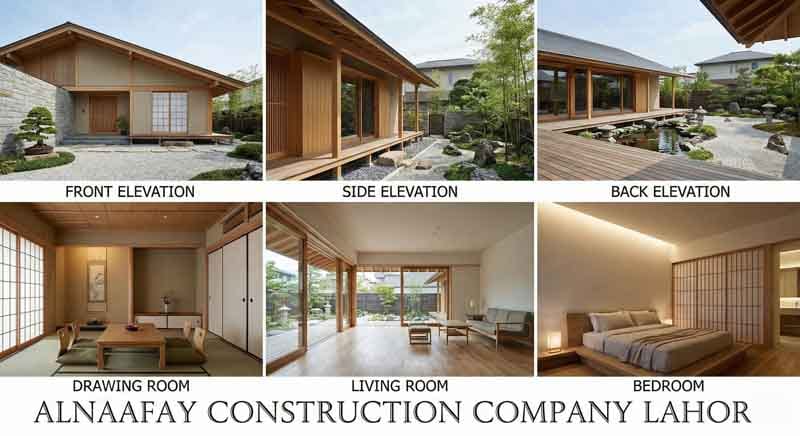
Japanese Zen 1 Kanal House Design – Peaceful Home in Simple Words
Designing a Japanese Zen 1 kanal house sounds very fancy at first. Many people think it is only for rich resorts or famous architects. Yet, when we break the ideas into small, clear pieces, this style becomes very easy to understand. Even children can follow the basic concepts if the language stays simple.
A Japanese Zen 1 kanal house design is all about peace, balance, and nature. Instead of showing off, it focuses on calm feelings. Rather than filling every corner with furniture and decoration, it leaves breathing space. Because of this, many families today want a Zen-inspired home where they can relax after busy city life.
In this long guide, you will learn:
- What 1 kanal means in simple language
- What “Japanese Zen” style really is
- How a Japanese Zen 1 kanal house design can be planned
- How the outside and inside of such a house can look
- Which country loves this design the most
- How much it might cost and how to plan step by step
Throughout the blog, sentences will stay clear and easy. Hard design words will be explained. Also, harmful expressions like “to go crazy” will be avoided; instead, softer words such as “to go wild” or “to be aggravated” may be used if needed.
1. What Does 1 Kanal Mean for a Japanese Zen House?
Before we talk about bamboo, gardens, and soft light, land size must be clear. Without that, planning a Japanese Zen 1 kanal house design can become confusing.
1.1 Simple Explanation of a 1 Kanal Plot
In many countries, land is measured in square feet or square meters. In Pakistan and some nearby regions, people also use the word kanal.
In many housing societies:
- 1 marla ≈ 225 square feet (in many schemes)
- 20 marla = 1 kanal
- So, 1 kanal ≈ 4,500 square feet of land
However, some authorities use slightly different numbers, like 250 or 272 square feet per marla. Even then, the idea stays the same: a 1 kanal plot is a large residential plot for a single family house.
On such a plot, you can usually have:
- A big house with two floors
- A front lawn and often a back garden
- Car parking for two or more cars
- Space for courtyards, patios, or water features
Because of this size, a Japanese Zen 1 kanal house design has room to breathe. Zen style loves open space and gardens, so a kanal plot is a very good match.
1.2 Plot Shape and Its Effect on Japanese Zen 1 Kanal House Design
Not every 1 kanal plot looks the same. Some are wide and shallow; others narrow and deep. A few are on a corner and touch two streets.
Plot shape changes design in different ways:
- A wide front supports long, low roof lines and broad gardens.
- A deep plot allows inner courtyards and gentle walks through nature.
- A corner plot gives more open sides for sliding doors and windows.
Japanese Zen 1 kanal house design usually likes long, low shapes. Because of that, a wider front often helps. Still, a deep plot can also work beautifully by using courtyards and side gardens.
1.3 Single-story or Double-story for a Zen 1 Kanal Home?
Traditional Japanese houses are often single-story or one-and-a-half-story. In Pakistan or India, though, land is expensive and families are larger. Consequently, many people need more rooms.
For a Japanese Zen 1 kanal house design, you can choose:
- A single-story Zen bungalow with more spreading footprint
- A double-story Zen home with careful, simple forms
Both can work. A single-story house may feel closer to traditional Japanese homes. A double-story version can still keep Zen character by using:
- Low, gentle roof shapes
- Strong horizontal lines
- Upper floor pulled back slightly from ground floor
In many cities, double-story is the practical choice, while the design still follows Japanese Zen principles.
2. What Is Japanese Zen Design in a 1 Kanal House?
Now that land basics are clear, understanding Japanese Zen style becomes the next step. Only then can we fully imagine a Japanese Zen 1 kanal house design.
2.1 Meaning of “Zen” in Simple Words
“Zen” comes from Buddhism in Japan. In daily language, people use “Zen” to mean:
- Calm
- Balance
- Clear mind
- Simple living
In house design, a Zen home tries to:
- Reduce noise and clutter
- Bring nature close
- Use light and shadow gently
- Help people feel relaxed and mindful
A Japanese Zen 1 kanal house uses these ideas to shape both the building and the garden.
2.2 Key Features of Japanese Zen House Design
Several features repeat in Japanese Zen homes, whether small or large:
Simplicity
Shapes are simple. Decoration is limited. Lines are clean.Natural materials
Wood, stone, bamboo, paper, and natural fabrics are used.Connection with nature
Gardens, courtyards, water, and rocks become part of the home.Soft, filtered light
Light enters through screens, shoji-like panels, or narrow openings.Low furniture and open floors
Seats and beds often stay low. Some areas may use floor sitting.Neutral colors
Whites, creams, browns, and greys dominate, with small accents.
When these ideas meet a large plot, the result is a Japanese Zen 1 kanal house design that feels like a small, private world.
2.3 How Japanese Zen 1 Kanal House Design Differs from Other Styles
It helps to compare Zen design with other common house styles:
Versus colonial or classical
Colonial houses use heavy decoration, arches, and columns.
Japanese Zen homes stay very simple and light.Versus urban modern
Urban modern design may use bright metals, glass, and sharp colors.
Zen design prefers soft, natural textures and gentle tones.Versus traditional local houses
Many local houses use bright tiles, strong patterns, and many colors.
Japanese Zen 1 kanal house design keeps patterns and colors calm and limited.
Because of this difference, a Zen house can feel like a quiet retreat inside a busy city.
3. Where Is Japanese Zen 1 Kanal House Design Most Famous?
You asked, “Yeh design kis country main zyada famous hai?” That is a very important part of the story.
3.1 Japanese Zen Houses in Japan
As the name suggests, Japan is the main home of Zen design. Traditional Japanese houses, temples, and tea houses follow Zen ideas strongly.
In Japan, you will find:
- Sliding paper doors (shoji)
- Tatami mat floors
- Wooden beams and posts
- Inner courtyards (tsuboniwa)
- Stone and moss gardens
Many Japanese people appreciate calm, simple homes because cities there can be very crowded. Therefore, Japanese Zen house design is most famous in Japan itself.
3.2 Spread of Japanese Zen House Style to Other Countries
Later, the world also discovered this beautiful style. Many countries now have Zen-inspired homes:
- United States – especially in states like California and Washington
- European countries – some architects there love Japanese minimalism
- Australia – homes with strong indoor-outdoor links often follow Zen ideas
- South-East Asia – resorts and villas in Bali, Thailand, and others use Japanese and Zen elements
In these places, designers mix Japanese Zen with local weather and culture.
3.3 Japanese Zen 1 Kanal House Design in Pakistan and India
When we talk about Japanese Zen 1 kanal house design specifically, with the kanal unit, the focus moves to:
- Pakistan
- Some parts of India
Many housing societies in cities like:
- Lahore
- Islamabad
- Rawalpindi
- Karachi
- Faisalabad
offer 1 kanal plots. A few architects and owners now choose Japanese Zen style for these big homes. They combine:
- Zen-inspired gardens
- Clean, low shapes
- Natural materials
with local needs, such as more bedrooms or servant spaces. This mixture is still new but is growing slowly in popularity.
So in summary:
- Japanese Zen house design is most famous in Japan.
- Zen-inspired luxury homes also appear in the United States, Europe, and Australia.
- The 1 kanal version is especially seen in Pakistan and India, where kanal plots exist.
4. Main Principles for a Japanese Zen 1 Kanal House Design
To create a truly Zen home on a big plot, some deep principles must guide every decision.
4.1 Simplicity and “Less Is More”
Zen design believes that when you remove extra things, peace appears. Consequently:
- Rooms contain only what is needed.
- Surfaces stay mostly clear.
- Decoration is limited and meaningful.
A Japanese Zen 1 kanal house does not try to fill every corner with furniture or showpieces. Instead, it allows empty space so that the mind can rest.
4.2 Harmony with Nature
In Zen thinking, humans and nature are not separate. Because of that:
- Houses frame views of trees, sky, and water.
- Materials feel natural to touch and see.
- Gardens are planned as carefully as rooms.
On a 1 kanal plot, this harmony might show as:
- A central courtyard with a tree
- A pond with stones and plants
- Bamboo or tall grass along walls
- Paths of stepping stones through the lawn
Japanese Zen 1 kanal house design turns the land itself into part of the home.
4.3 Balance and Asymmetry
Western classical design often uses perfect symmetry. Japanese Zen is different. It likes balance without being perfectly equal.
For example:
- One side of a garden may have a big rock; the other side has a small group of plants.
- A wall might have one large window, not three equal ones.
Even though sides are not the same, the whole scene still feels stable and pleasing. That type of balance is called asymmetrical balance.
4.4 Quiet Colors and Soft Light
Zen homes avoid strong, shouting colors. They usually follow natural shades:
- White and off-white
- Cream and beige
- Soft browns
- Grey stones
- Gentle greens from plants
Light enters in gentle ways:
- Through screens
- From high windows
- Reflected from pale walls
Strong spotlights and very bright colored lights are avoided. Instead, lighting feels like daylight: soft and evenly spread.
5. Site Planning for a Japanese Zen 1 Kanal House
Once principles are clear, planning the full plot becomes easier.
5.1 Overall Layout of a 1 Kanal Zen-inspired Plot
A complete Japanese Zen 1 kanal house design might include:
- Main house block
- Front garden and approach path
- Inner courtyard or side courtyard
- Back garden or patio
- Small water feature
- Car porch and driveway
- Service areas (laundry, servant room, etc.)
Placement of each part affects how the house feels.
Often:
- The house does not sit exactly in the middle of the plot.
- Some side is left wider to create a garden or court.
- Main rooms face the nicest views.
5.2 Orientation and Sun Path
Sun direction plays a big role in comfort. In South Asia:
- South and west sides get strong afternoon sun.
- North and east sides receive softer light.
Therefore, a smart Japanese Zen 1 kanal house design might:
- Place large glass areas towards north or east when possible.
- Use deeper roof overhangs on south and west.
- Keep service spaces like stairs or storage on hotter sides.
This orientation helps keep the home cool and bright at the same time.
5.3 Using Courtyards in a Japanese Zen 1 Kanal House
Inner courtyards are perfect for Zen homes. Even a fairly small courtyard can do a lot.
Benefits:
- Brings daylight into the center of house
- Gives private open space
- Allows cross-ventilation
- Offers a peaceful garden view from several rooms
Courtyards in a Japanese Zen 1 kanal house design may include:
- A single tree
- Raked gravel or pebbles
- A stone lantern
- Few big rocks and moss or groundcover
This simple scene can change with light, weather, and seasons, giving new beauty every day.
5.4 Water Features and Ponds
Water is very important in Japanese gardens. In a 1 kanal Zen home, water can appear in different forms:
- A shallow reflecting pond
- A narrow water channel along a path
- A bamboo water spout (like “shishi-odoshi”)
- A small waterfall stone feature
Running water adds soft sound, which can cover city noise. Still, water features must be designed with care, so they do not create mosquito problems or heavy maintenance.
6. Exterior Architecture in Japanese Zen 1 Kanal House Design
Now we can look more closely at the building itself, starting from the outside.
6.1 Overall Shape of a Zen-inspired 1 Kanal House
A Japanese Zen 1 kanal house almost never looks like a tall tower. Instead, it tends to:
- Spread horizontally
- Keep roof lines low and long
- Use simple rectangular blocks
Ground floor may be larger, with first floor set back in some places. That trick keeps building height from feeling too heavy.
6.2 Roof Design for Japanese Zen 1 Kanal House
Traditional Japanese roofs have gentle slopes and wide eaves. Modern Zen houses often use a mix of:
- Low-pitch gable roofs
- Flat roofs with neat edges
- Overhanging slabs for shade
On a 1 kanal plot, roof shapes can:
- Stretch over verandas and decks
- Cover walkways between rooms
- Create sheltered outdoor seating
Wide eaves protect walls and windows from sun and rain, while also giving a classic Japanese feel.
6.3 Façade Materials in Japanese Zen 1 Kanal House Design
Exterior materials influence both look and maintenance.
Typical choices:
Wood or wood-look cladding
Real wood looks beautiful but needs care. Wood-look planks or tiles can give a similar feel with less upkeep.Stone and brick
Natural stone strips or brickwork add earthy texture.Smooth plaster
Painted in soft, light colors like off-white or cream.Glass
Used in controlled areas for views and light.
A balanced Japanese Zen 1 kanal house design might use:
- Plaster as the main surface
- Wood or wood-look near windows, under roofs, or at entrance
- Stone in lower parts of the façade or around the courtyard
This combination keeps the house natural and calm.
6.4 Windows, Screens, and Doors
Openings define how people see and feel the house.
Windows:
- Often wide and horizontal
- Sometimes extend from floor almost to ceiling
- Use simple frames in dark brown, black, or natural wood tones
Screens:
- Wooden or metal slats can act like modern “shoji”
- Screens filter light and provide privacy
- They may slide or stay fixed
Doors:
- Main entrance door may be a solid wooden panel with simple grain
- Sliding glass doors connect rooms to gardens and patios
- Internal doors often stay plain, with flat panels and soft colors
Together, these create a feeling of lightness and quiet elegance.
7. Interior Layout of a Japanese Zen 1 Kanal House
Inside the house, planning must follow Zen values: calm, order, and usefulness.
7.1 Zoning the Japanese Zen 1 Kanal House Design
Like other big houses, a Zen 1 kanal home can be divided into:
Public zone
Entrance, drawing room or formal sitting, guest toilet.Family zone
Living lounge, dining area, kitchen.Private zone
Bedrooms, attached baths, dressing areas.
Japanese Zen 1 kanal house design also adds a nature zone, which includes:
- Courtyards
- Gardens
- Patios and decks
Doors and openings are placed so that movement through these zones feels smooth and peaceful.
7.2 Ground Floor Plan in a Zen 1 Kanal Home
A typical ground floor may have:
- Entrance foyer with view to a tree or inner garden
- Drawing room that can open to front lawn
- Powder room for guests
- Stairs placed near the center or side
- Family lounge facing back garden or courtyard
- Dining area next to lounge
- Main kitchen and maybe a dirty kitchen
- One bedroom for parents or guests, with attached bath
- Access to a veranda or deck outside the lounge
Rooms do not always have full solid walls between them. Instead, Mid walls, screens, or level changes create a sense of zones without cutting light.
7.3 First Floor Plan in Japanese Zen 1 Kanal House Design
Upper floor often holds:
- Master bedroom with walk-in closet and bathroom
- 1–3 additional bedrooms with attached baths
- Small family sitting or study corner
- Terrace or balcony gardens
- Store or laundry space
Zen ideas can show in:
- Sliding doors for closets
- Simple open shelves instead of heavy cupboards
- Tatami-style low bed platforms (even if not actual tatami)
Some designs may open a part of the lounge below as a double-height space, giving a grand yet calm feeling.
7.4 Circulation and Movement
Moving from one place to another in a Zen home should feel gentle.
Paths inside may:
- Turn slightly to avoid straight, harsh corridors
- Pass near a garden view or a small niche
- Use changes in floor material to mark zones
In a Japanese Zen 1 kanal house design, the journey from entrance to bedroom can become a small experience, not just a walk.
7.5 Quiet Corners for Meditation or Reading
Zen houses like to create small, peaceful corners.
These might be:
- A low platform near a window for tea or reading
- A tatami-like mat in a quiet corner
- A small alcove (tokonoma) with one art piece and maybe a flower
On a 1 kanal plot, adding one or two such spaces is very easy and adds a lot of spiritual value.
8. Room-by-Room Japanese Zen 1 Kanal House Design Ideas
Now we can look at each main room and see how Zen style can appear there.
8.1 Japanese Zen Entrance and Foyer in a 1 Kanal Home
Entrance is the first meeting between guest and house.
For a Zen foyer:
- Keep it uncluttered.
- Use a simple shoe cabinet or bench near door.
- Place one piece of art or a plant instead of many items.
- Use natural light if possible, maybe through a high window.
Floor may use stone tiles or wood-look tiles. Walls usually remain a light color, with maybe one textured panel.
8.2 Drawing Room in Japanese Zen 1 Kanal House Design
Drawing room welcomes guests and sometimes hosts small events.
Zen drawing room ideas:
- Use medium or low-height sofas and chairs.
- Choose simple straight lines, not heavy carving.
- Keep cushions and fabrics in neutral shades with maybe a single accent color.
- Place a low wooden center table, perhaps with visible wood grain.
Curtains can be plain or lightly textured, possibly in linen-like fabric. A single large painting of nature or a calm abstract design often suits better than many small pictures.
8.3 Family Lounge in a Zen-inspired 1 Kanal House
Family lounge is the heart of daily life.
In a Japanese Zen 1 kanal house design, the lounge might:
- Open to a garden through wide sliding doors.
- Include a mix of sofa seating and maybe some floor cushions.
- Keep TV wall simple, with a long, low unit and a few shelves.
- Use plants in corners to soften lines.
Lighting can combine ceiling downlights, a floor lamp, and indirect strip lighting. Harsh, single bright tube lights are avoided, because they disturb the calm mood.
8.4 Dining Area in a Japanese Zen 1 Kanal House
Dining can sit next to lounge or partly in its own space.
Zen dining ideas:
- Use a wooden or wood-look table with simple legs.
- Choose chairs with slim frames and comfortable seats.
- Place perhaps one pendant light or lantern-style light over the table.
- Avoid large, busy patterns on tablecloths; plain or very simple designs work best.
Often the dining area also has a garden view, which makes meals feel calmer.
8.5 Kitchen in Japanese Zen 1 Kanal House Design
Kitchen is where energy of the house is prepared. Zen kitchens focus on order and cleanliness.
Cabinet design can be:
- Flat doors in white, cream, or soft grey.
- Wood-finish lower cabinets with lighter uppers.
- Open shelves for a few beautiful bowls or jars.
Counters might use:
- Light-colored quartz
- Granite in soft tones
Backsplash should stay easy to clean and not too busy. Subway tiles, plain tiles, or gentle patterns fit well.
Everything should have a place. When tools and pots stay hidden or neatly arranged, the mind feels more relaxed while cooking.
8.6 Bedrooms in a Japanese Zen 1 Kanal House
Bedrooms in Zen style aim to be very peaceful.
Key ideas:
- Keep bed low or at normal level, but not very high.
- Use a simple headboard, maybe of wood or upholstered fabric.
- Limit furniture to essentials: bed, side tables, wardrobe, perhaps a small chair.
- Choose bedding in soft, solid colors or very delicate patterns.
Master bedroom in a Japanese Zen 1 kanal house design may:
- Open to a balcony or small garden.
- Have a sliding door to dressing area.
- Include a small sitting or meditation corner.
Children’s rooms can include a bit more color, yet main theme should stay calm and not too visually noisy.
8.7 Bathrooms with Japanese Zen Feel
Bathrooms can also follow Zen ideas.
Design tips:
- Use neutral tiles and simple shapes.
- Let light enter from a high window or skylight if possible.
- Keep vanity neat, with closed storage under basin.
- Use stone or wood-look details in small amounts.
A single plant that tolerates humidity can freshen the space. Framed mirrors with thin, simple frames suit the style.
8.8 Staircase and Hallways in a Zen 1 Kanal Home
Staircases can become strong design features.
For Zen staircases:
- Use straight or L-shaped stairs with clean lines.
- Combine wooden treads with metal or glass railing.
- Place a narrow garden or rock bed under the stairs if there is space.
Hallways should not be dark or too narrow. Skylights, side windows, or open niches can keep them bright and interesting.
9. Gardens in Japanese Zen 1 Kanal House Design
Gardens are not just “extra” in Zen homes; they are almost like outdoor rooms.
9.1 Types of Japanese Zen Gardens for a 1 Kanal House
There are different traditional garden types, and a Japanese Zen 1 kanal house design can borrow from several:
Karesansui (dry rock garden)
Uses rocks, gravel, and sand raked into patterns. Often seen in temples.Tsukiyama (hill garden)
Has small artificial hills, stones, and water features.Chaniwa (tea garden)
Designed for tea ceremonies, with stepping stones and simple plants.
A kanal plot offers enough area to create a mix, for example:
- A small dry rock garden in a courtyard.
- A green garden with lawn and shrubs at the back.
- A tea-corner-style patio for outdoor sitting.
9.2 Plants for a Japanese Zen 1 Kanal Garden (Adapted to Local Climate)
Traditional Japanese gardens use plants like maple, pine, and bamboo. In Pakistan or India, climate differs, so we must choose similar-looking or suitable species.
Possibilities:
- Bamboo or bamboo-like plants for height and sound.
- Grasses that sway in the wind.
- Shrubs with small leaves instead of huge, flashy flowers.
- Groundcovers like soft grass or low plants around stones.
Flower colors usually stay soft: white, light pink, or gentle tones. Very bright, mixed flower beds are less common in strict Zen gardens, although they can be used in separate areas.
9.3 Rocks, Gravel, and Paths
Stone is a key part of Japanese Zen 1 kanal house design.
Uses include:
- Large rocks as focal points in gardens.
- Gravel or pebbles in dry gardens, sometimes raked in patterns.
- Stepping stone paths leading to doors or sitting spots.
Paths are often slightly curved, so each step reveals a new view. Straight, harsh paths are used less in Zen gardens.
9.4 Water in the Zen 1 Kanal Garden
As mentioned earlier, water can appear in many ways:
- Small pond with koi fish (if you are ready for care).
- Narrow reflecting pool.
- Wall fountain or small cascade.
- Bamboo spout dropping water into a stone basin.
The sound of water can be deeply calming. Still, design should allow easy cleaning and include filters where needed.
10. Advantages of Japanese Zen 1 Kanal House Design
After looking at all these details, it helps to clearly see why families might choose this style.
10.1 Deep Sense of Calm and Peace
Many houses today feel visually busy. Colors shout, furniture crowds, and patterns fight. In contrast, a Japanese Zen 1 kanal house design offers:
- Clean, quiet rooms
- Soft light
- Gentle colors
- Simple, natural materials
Living in such a home can lower stress. People often feel less easily aggravated by daily problems when their surroundings are calm.
10.2 Strong Connection to Nature
Zen houses break the hard wall between indoors and outdoors.
Benefits include:
- Better mental health due to more contact with green views.
- Natural light and air improving indoor environment.
- Children learning to respect plants, water, and animals.
Courtyards, patios, and gardens all work together to support this connection.
10.3 Timeless Style That Ages Well
Trends change quickly. Some very flashy designs look “old” after just a few years. However, Japanese Zen style has been respected for centuries.
Because it is based on nature and simplicity, a good Japanese Zen 1 kanal house design can stay beautiful for decades. Only small updates in paint, furniture, or planting might be needed over time.
10.4 Flexible for Different Families
Although the look seems strict, the inside plan can be very flexible.
Japanese Zen 1 kanal houses can be shaped for:
- Nuclear families
- Joint families
- Families with elders needing ground-floor rooms
- People who work from home
Rooms can be made multi-purpose. One space may serve as study, guest room, or meditation hall when needed.
10.5 Support for Mindful Living
Zen design gently encourages:
- Slowing down
- Paying attention
- Respecting simple daily actions
For example, removing shoes at entrance, sitting quietly near a garden, or drinking tea slowly in a small corner all become easier in such a home. That way, the house supports not just body comfort but also mind and heart.
11. Challenges and Mistakes to Avoid in Japanese Zen 1 Kanal House Design
Every style also has risks if done without understanding. Zen design is no exception.
11.1 Using Too Much Decoration
Sometimes people think, “Japanese = add many lanterns, bamboo prints, and dragon statues.” That idea can lead design to go wild in a wrong direction.
True Zen style is the opposite. Too many “Japanese-looking” items can actually break the peaceful mood. It is better to:
- Choose a few strong, simple elements.
- Avoid filling every wall with art.
- Keep patterns limited and quiet.
Less really is more in this style.
11.2 Ignoring Local Climate and Culture
Copying a house from Japan directly into Pakistan or India can cause problems. Differences include:
- Stronger heat and sun here.
- Different rain patterns.
- Local customs about privacy and joint families.
Therefore, Japanese Zen 1 kanal house design must adapt. For example:
- Use deeper roof overhangs for heat control.
- Choose local plant species that survive well.
- Keep some spaces flexible for guests and family events.
Without adaptation, the house may look nice in photos but feel difficult to live in.
11.3 Overusing Glass without Shade
Large glass walls are beautiful but also risky in hot climates.
Problems:
- Heat gain makes rooms uncomfortable.
- Glare makes it hard to see screens.
- People inside feel watched by neighbors.
Solutions:
- Place large glass mostly on cooler sides.
- Provide external shades, screens, and overhangs.
- Use curtains or blinds that still allow soft light.
Zen houses love light, yet they control it carefully instead of letting it be out of control.
11.4 Poor Space Planning Behind a Calm Look
A house can look Zen on the outside and still be poorly planned inside.
Common issues:
- Strange room sizes
- Dark internal corners with no windows
- Kitchens too far from dining
- Long, boring corridors
To avoid this, function must come first. Then Zen style sits like a smooth skin on a strong body.
11.5 Forgetting Storage Needs
Zen houses look clean partly because owners can store their belongings easily. If there is no storage, clutter piles up on every surface.
Japanese Zen 1 kanal house design should include:
- Built-in wardrobes
- Kitchen cabinets and pantry
- Bathroom cabinets
- Shoe cabinets
- Linen and cleaning storage
All of these can remain simple and quietly hidden.
12. Cost and Budget Planning for a Japanese Zen 1 Kanal House
Building any 1 kanal house is a big financial step. Zen style may look “simple”, but simplicity with good materials can still cost money.
12.1 Major Cost Parts
Costs usually break into:
Grey structure
- Foundations, columns, beams, slabs
- Brickwork and rough plaster
Finishing
- Flooring
- Windows and doors
- Paint, tiles, woodwork
- Kitchens and bathrooms
External works
- Gardens, ponds, and paths
- Boundary wall and gate
- Driveways and outdoor lighting
Japanese Zen 1 kanal house design especially affects finishing and external works, because materials and gardens matter a lot.
12.2 Where Zen Design May Increase Cost
Some Zen elements can raise cost, for example:
- Good-quality wood or wood-look cladding outside
- Large windows with stronger glass
- Well-built ponds and water features
- Special stones and landscaping
However, you can control expenses by:
- Using wood-look tiles or panels instead of full solid wood outside
- Choosing medium-sized windows in key areas instead of huge glass everywhere
- Keeping water features small and simple
Wise choices keep beauty while watching budget.
12.3 Ways to Save Money in a Japanese Zen 1 Kanal House Design
Several smart steps can help:
- Use simple, straight shapes in building to reduce structural complexity.
- Choose one or two main floor materials instead of many.
- Limit expensive imported items to a few feature spots.
- Design gardens in phases; start basic and add more later.
Zen design does not depend on luxury items. Its real power lies in proportion, light, and emptiness, which cost little or nothing.
12.4 Hidden Costs to Remember
Often people forget:
- Society approval fees
- Soil testing and special foundations if needed
- Septic or sewer connection costs
- Extra lights or points added late during work
- Maintenance of water features and gardens
Planning a safety amount of about 5–10% of expected budget is wise. That reserve can handle small surprises without making you feel everything is going up the wall.
13. Step-by-Step Guide to Plan a Japanese Zen 1 Kanal House
Turning ideas into a real Zen home needs clear steps.
13.1 Step 1 – Understand Your Family’s Needs
Sit together and discuss:
- How many bedrooms and bathrooms you need.
- Whether a separate drawing room is needed.
- How many cars must be parked.
- If a home office, study, or meditation room is required.
- Whether joint family or nuclear family will live here.
- How much money you can safely spend.
Write all these points. They form the base for your Japanese Zen 1 kanal house design.
13.2 Step 2 – Choose an Architect Who Knows Zen and Minimalism
Search for a designer who:
- Has done modern or minimal homes before.
- Understands natural materials and gardens.
- Listens carefully instead of forcing their own style only.
Show them:
- Your needs list.
- Some pictures of Japanese or Zen houses you like.
- Your plot documents and exact measurements.
Clear talk at the beginning saves many issues later.
13.3 Step 3 – Finalize Floor Plans
The architect will create first plans. When you see them:
- Imagine how you will move from room to room each day.
- Think about where children will play, where elders will rest.
- Check that all main rooms get some natural light and fresh air.
- Confirm that kitchens, dining, and lounges connect well.
Give feedback politely. After a few rounds, you can agree on a final plan.
13.4 Step 4 – Develop the Zen Elevation and Garden Concept
Next, the outer shape and garden ideas come.
Discuss:
- Roof style and overhangs.
- Use of wood, stone, and plaster.
- Position and size of main windows.
- Basic garden plan: front lawn, inner court, back yard.
Ask for 3D views if possible. Those will help you see what your Japanese Zen 1 kanal house design will truly feel like.
13.5 Step 5 – Get Official Approvals
Most housing societies and city offices need:
- Signed plans
- Structural drawings
- Applications and fees
Follow their rules so that your project stays legal and safe.
13.6 Step 6 – Choose Building Method and Contractor
Decide whether you will:
- Hire labor only and buy all materials yourself.
- Choose a contractor for both materials and labor.
- Select a turnkey company that takes full responsibility.
Each method has pros and cons. Pick the one that matches your time, knowledge, and trust level.
13.7 Step 7 – Build the Grey Structure
Construction on site begins.
This stage includes:
- Marking layout
- Digging foundations
- Casting columns and slabs
- Building walls
Visit the site yourself or send someone you trust to check:
- Room sizes
- Window and door positions
- Quality of concrete and bricks
Correct mistakes now instead of later.
13.8 Step 8 – Plan Electrical, Plumbing, and AC Systems
Before finishing starts fully, internal services must be placed:
- Electrical conduits and wiring
- Water supply and drainage pipes
- Gas lines (if used)
- AC piping and possible ducts
Think ahead about:
- Number and location of plug points.
- Internet and TV points.
- Switches near doors.
- Positions of fans and lights.
A calm Zen home can still be very smart and comfortable with good hidden systems.
13.9 Step 9 – Complete Finishing and Zen Details
Now the house starts to look real.
Finishing includes:
- Plaster and smoothing
- Floor tiles or wooden floors
- False ceilings (if any)
- Paint and wall finishes
- Doors and windows
- Kitchen cabinets and wardrobes
- Bathroom fittings
Here Zen details appear:
- Simple, neat lines
- Natural colors
- Minimal ornament
Check work often. Small errors in alignment or finishing show clearly in such a clean style.
13.10 Step 10 – Garden, Furnishing, and Moving In
Finally, outdoor and indoor softness arrives.
In the garden:
- Plant trees, shrubs, and groundcovers.
- Place rocks, gravel, and stepping stones.
- Start water features if planned.
Inside:
- Bring in low or medium-height furniture with simple shapes.
- Add rugs, cushions, and curtains in neutral tones.
- Place a few plants and art pieces thoughtfully.
Begin with essentials. Over time, you can add more items as you understand how you truly live in the Japanese Zen 1 kanal house.
14. Frequently Asked Questions about Japanese Zen 1 Kanal House Design
Several questions often appear when people first hear about this style.
14.1 How Can I Explain Japanese Zen 1 Kanal House Design in One Short Line?
You can say:
“It is a calm, simple house on a 1 kanal plot, inspired by Japanese Zen ideas, with natural materials, open spaces, and peaceful gardens.”
That single sentence covers the main feeling.
14.2 In Which Country Is This Design Most Famous?
Japanese Zen design is most famous in Japan, where it started. Traditional homes, tea houses, and temples there have used Zen ideas for centuries.
Today, Zen-inspired houses are also respected in the United States, many European countries, and Australia.
When we speak about Japanese Zen 1 kanal house design especially, the format using kanal units appears mostly in Pakistan and some parts of India, where 1 kanal plots are common.
14.3 Is Building a Japanese Zen 1 Kanal House Very Expensive?
Cost depends on:
- How large you build on the plot
- Which materials you choose
- How detailed the garden and water features become
Zen style itself does not demand gold or very costly items. In fact, it likes simple things. You can control cost by:
- Using local stones and plants
- Choosing wood-look tiles instead of full timber outside
- Keeping ceilings simple and flat
High costs come mostly from large glass areas, imported materials, or complex ponds, which are optional.
14.4 Is a Zen House Practical for a Big Family?
Yes, it can be. A Japanese Zen 1 kanal house design can include:
- Many bedrooms
- Two lounges (one on each floor)
- Separate spaces for elders and younger family members
- Flexible rooms that change use over time
The calm look does not stop the house from being practical. It just arranges things in a neat, peaceful way.
14.5 Will a Zen House Work in a Hot Country?
With correct design, it can work very well.
Important steps:
- Use wide roof overhangs on sunny sides.
- Place most large glass on cooler directions.
- Add insulation in roof and maybe outer walls.
- Allow cross-ventilation through windows and courtyards.
Japanese Zen houses in hot parts of Japan already use such tricks. Those ideas can be adjusted to South Asian heat too.
14.6 Can I Mix Japanese Zen with Other Styles?
Mixing must be done carefully. Still, it is possible.
Examples:
- Zen + modern minimal (very clean, almost gallery-like inside).
- Zen + Scandinavian (light wood, white walls, cosy textiles).
- Zen + some local traditional elements (patterned tiles in small doses, local art pieces).
The main rule is: keep the feeling calm. If too many styles fight with each other, the house may start to feel confused.
Quick Links
Social Icons
Contact Us Information
443 J3 Johar Town Lahore near Expo Center Lahore
