
Labor Rate Grey Structure
Everything You Need to Know About Grey Structure Labor Rates and Agreements
Building a house is one of the most significant financial and emotional investments you will ever make. It is a journey that transforms a simple plot of land into a sanctuary for you and your family. However, this journey is often paved with challenges, technical jargon, and the potential for costly misunderstandings.
One of the most critical phases in this process is the “grey structure” construction. For many first-time home builders, the term itself can be vague. What exactly does it include? How are labor rates calculated? What should be in the contract to prevent you from being taken advantage of by a contractor (or thekdar)?
Navigating the construction industry—especially in regions like Pakistan where informal agreements are common—can be tough. Contractors often make mistakes, or worse, hide costs that appear later as unpleasant surprises. If you assume you can manage labor directly without prior knowledge, you might end up wasting precious time and money.
This comprehensive guide breaks down everything you need to know about grey structure labor rates, what a solid construction agreement looks like, and the specific inclusions and exclusions you must clarify before breaking ground.
What is a Grey Structure?
Before diving into rates and contracts, it is essential to define what “grey structure” actually means. In the construction world, a house is generally built in two main phases:
Grey Structure
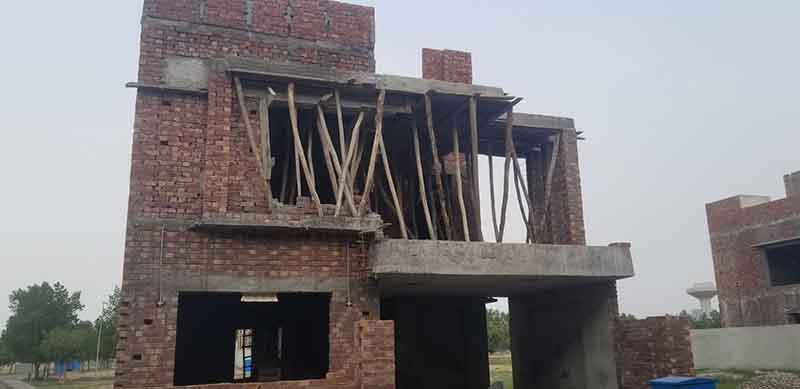
This is the skeleton of the house. It includes the foundations, walls, roof, plastering, and the installation of essential utility pipes. It is called “grey” because it primarily consists of cement and bricks, lacking paint, tiles, or wood finishes.
Finishing
This is the second phase where tiles, paint, woodwork, electrical fixtures, and plumbing fixtures are installed to make the house livable.
Understanding this distinction is vital because labor contracts are often signed specifically for the grey structure first.
— The Importance of a Written Construction Agreement
Many homeowners make the mistake of relying on verbal agreements. A contractor might nod and say, “Don’t worry, everything is included,” only to demand extra payment for basic tasks later.
Never start construction without a written agreement.
Your contract acts as a roadmap and a rulebook. It protects both you and the contractor. It ensures that expectations are aligned and that there is a clear reference point if disputes arise. A vague contract is a recipe for disaster, while a detailed one is your best insurance policy against fraud and incompetence.
What Should Be in the Agreement?
Your agreement needs to be specific. It shouldn’t just say “Grey Structure Construction.” It needs to list every single activity. Below, we will explore the specific items that must be clarified in your labor contract.
Civil Works: What is Included?
Civil work refers to the physical building of the structure. When you hire labor for the grey structure, the following should be explicitly mentioned in the contract:
Excavation and Foundation
The work starts with digging. Your labor contract should cover the excavation of the plot for foundations. It should also include the backfilling of earth once the foundations are laid.
Brickwork and Structure
The core of the job is laying bricks and pouring concrete columns and beams. Ensure the contract covers:
- Building all walls as per the architectural drawings.
- Construction of all concrete columns and beams.
- Installation of the roof slab (lantern).
Kitchen and Store Slabs
A common point of contention is the concrete slabs used for kitchen counters and storage shelves.
- The Rule: These should be included in the labor cost.
- The Trap: Some contractors claim these are “extra” work. Ensure your agreement states that kitchen and store concrete slabs are part of the standard grey structure job.
Window Shades
In many architectural designs, windows have concrete shades (often called “chajjas”) protruding above them to protect against rain and sun.
- The Rule: Making these shades is part of the shuttering and concrete work.
- Measurement: These are usually measured the same way as the main roof slab (we will discuss measurement formulas later).
Roof Plastering (The False Ceiling Factor)
Traditionally, plastering the underside of the roof (the ceiling) was standard. However, trends have changed.
- Current Practice: Most modern homes use false ceilings (gypsum or POP designs). Because the false ceiling covers the concrete slab, plastering the roof is often unnecessary and a waste of material.
- The Check: Discuss this before signing. If you plan to install false ceilings, you can exclude roof plaster from the labor contract, potentially saving money or negotiating a better rate elsewhere. If you don’t want false ceilings, ensure roof plaster is included.
Specialized Inclusions: Electrical and Plumbing
This is where the “grey area” in grey structure often occurs. You are hiring labor for the structure, but pipes and conduits must be laid inside the walls and floors before they are plastered over.
Electrical Work
Your agreement must clarify the scope of electrical labor.
- Included: Cutting walls (chiseling) to place conduits (pipes) for wires. Installing the back-boxes for switches and sockets. Laying pipes in the roof slab for lights and fans.
- Excluded: Pulling the actual wires and installing the switches usually happens in the finishing phase, not the grey structure phase. However, the pathway for electricity must be completed now.
Critical Question: Ask if the electrician’s labor for laying these pipes is included in the grey structure rate or if you have to pay a separate electrician team. Ideally, the main contractor manages this.
Plumbing Work
Similar to electrical work, plumbing is crucial at this stage.
- Included: Installation of all underground sewerage pipes (UPVC) and hot/cold water supply lines (PPRC) inside the walls and floors.
- The Boundary: Clarify if the labor includes connecting the house sewerage to the main street sewer line (outside the house). Often, contractors only cover work inside the boundary wall.
- Tanks: Construction of the underground water tank and the septic tank is a standard part of the grey structure civil work.
External Development: Walls, Gates, and Pavements
Your house doesn’t end at the front door. The exterior elements are just as important.
Boundary Wall
The boundary wall surrounds your property and provides security.
- Inclusion: The construction of the boundary wall (front, back, and sides) as per the drawing must be included.
- Design: If your front elevation drawing shows a specific design for the boundary wall, the labor rate should cover it.
Main Gate Installation
This is a heavy task. The main steel gate is usually installed after the heavy construction is done to avoid damage.
- The Clause: The agreement should state that the main gate will be installed upon completion of the grey structure without any extra charges.
Outside PCC (Plain Cement Concrete)
PCC refers to the concrete flooring often done on the sidewalk or the ramp leading to your gate.
- Scope: The labor contract should include the “Outside PCC work” complete with the passageway or ramp. Do not let them charge you extra for fixing the area immediately outside your gate.
The Technical Details: Shuttering and Steel
To build a strong roof and pillars, you need temporary molds (shuttering) and reinforcement (steel).
Shuttering: Wood vs. Steel
Shuttering is the temporary structure used to hold wet concrete in place until it hardens. The quality of shuttering determines the finish of your concrete.
- Types:
- Wood/Ply Shuttering: Uses wooden planks or plywood sheets. Plywood (often called “Palai”) generally gives a smoother finish than rough planks.
- Steel Shuttering: Uses metal plates. This is very durable and provides a decent finish but can be heavy.
- The Agreement: You must specify which type of shuttering will be used. If you want a specific finish, specify “Ply Shuttering.”
- Double Height Areas: If your design includes a double-height lobby or living area (where the ceiling is two stories high), this requires complex scaffolding. Contractors often charge extra for this. Clarify this cost before signing.
Steel Binding
Steel bars (rebar) are the backbone of your house.
- The Rule: Cutting and binding the steel bars is a labor-intensive job. This labor must be included in your agreement.
- Lintel Slabs: Steel binding for lintels (beams above windows/doors) and the main slabs should not incur extra charges. It is a fundamental part of the structure.
Understanding Measurement: How is the Cost Calculated?
This is the most confusing part for homeowners and the most common source of disputes. How do you measure the square footage to calculate the final payment?
The standard practice in the market is measuring “Covered Area,” but the definition of covered area varies.
The Slab Measurement Method
The most common way to calculate labor payments is by measuring the roof slab (lintel slab).
- Formula: Length x Width of the slab.
- Example: If your roof slab is 20 feet by 20 feet, the billable area is 400 square feet.
Overhangs and Shades
Remember the window shades we mentioned earlier?
- Measurement: Even though they are small, window shades are measured and added to the total covered area. If a window shade is 1.5 feet wide and 6 feet long, that area is added to your billable square footage.
Water and Septic Tanks
You might think tanks are just holes in the ground, but in labor contracts, they are measured as “covered area.”
- The Method: The measurement is usually taken of the top slab of the water tank and septic tank. This square footage is added to the total bill.
Double Height Voids
If you have an open space looking down from the first floor to the ground floor (a void), discuss how this is measured. Since there is no slab there, you shouldn’t pay the full slab rate, but contractors may charge for the beams and side railings.
The Reality of Dealing with Labor
Construction work, particularly in South Asia (like Pakistan), is notoriously difficult to manage. The labor market is unorganized, and professionalism is rare.
The “Thekdar” Challenge
The local contractor, or thekdar, is your point of contact. While many are skilled, they operate on tight margins.
- Mistakes: Laborers will make mistakes. Walls might not be perfectly straight; pipes might be slightly off. If you are managing them yourself, you need to be vigilant every single day.
- Tugging: The text mentions getting “tugged” (cheated or misled). This happens when scopes are undefined. A contractor might stop work halfway and demand more money, knowing you are desperate to finish.
Trustworthy Companies vs. Individual Labor
The text offers valuable advice: Construction is a tough job. If you think you can deal with labor, that’s good. But if you don’t know the technicalities, it will be tough.
You risk wasting:
- Money: On Reworking mistakes or paying unfair “extras.”
- Time: Chasing laborers who don’t show up.
- Peace of Mind: Dealing with constant arguments.
Recommendation: If you are not experienced, hire a trustworthy construction company or a qualified project manager. They charge a fee, but they handle the headaches, ensure quality control, and keep the labor in check. They know the market rates and the tricks of the trade.
Summary Checklist Before Signing
Before you shake hands or sign that paper, run through this checklist with your contractor:
- Rate: What is the per square foot rate?
- Measurement: Will you measure edge-to-edge on the slab? How are tanks and shades measured?
- Excavation: Is digging and backfilling included?
- Utilities: Is the labor for laying electric conduits and plumbing pipes (internal and external) included?
- Tanks: Are water and septic tanks included?
- Roof: Is roof plaster included, or can we exclude it for false ceilings?
- Shuttering: Will you use wood (palai) or steel? Is there an extra charge for double-height scaffolding?
- Civil Details: Are kitchen slabs, store slabs, and window shades included?
- Exterior: Is the boundary wall, main gate installation, and outside PCC/ramp included?
- Steel: Is steel cutting and binding included?
By clarifying these ten points, you move from a vulnerable position to an informed one. Building a house is a dream; don’t let the grey structure turn it into a nightmare. Equip yourself with knowledge, demand a written agreement, and build with confidence.
AL Naafay Construction Company provide all civil services within Lahore city
Home Labor Rate Grey Structure items
- All Masonry work as per drawing (height 10.5 feet) single floor
- Door base of the installation
- Door lintels (inclusive of shades)
- C.C slab (as per drawing specification including beams)
- Elevation shapeup as per drawing (or 3D )
- Plasters inside & outside excluding roof ( roof will not plasters)
- Staircase till plaster (extra charges for the metal staircase)
- Metal safety grill windows installation only
- Installation of Main Gate with pillars
- Boundary wall as per drawing
- Bricks work Septic tank & Under Groundwater tank with plaster and chips
- P.C.C Cemented floors with water levelling (as drawing specification)
- Rooftop completion plus heat insulation (plastic, coal tar, tiles, etc)
- Steel binding included in this agreement (No Extra Charges)

Bricks work

plasterwork construction on labour rate
Quick Links
Social Icons
Contact Us Information
443 J3 Johar Town Lahore near Expo Center Lahore
