
Milestone Tracking in Projects: Rules, Tools, and Success
Introduction
Every successful journey needs a map. In the complex world of project management, that map is made of milestones. Without them, you are just wandering in the dark. Milestone tracking in projects is the art of marking critical points along a timeline. It tells you where you are, where you should be, and if you are going to arrive on time. Whether you are building a skyscraper or launching a software product, milestones are your best friends.
However, many managers misunderstand how to use them. They treat milestones as simple tasks or vague goals. This is a mistake. A true milestone is a significant event that marks the completion of a major phase. It is a moment to pause, review, and celebrate. This comprehensive guide will explain the must-follow rules for setting these markers. We will explore the massive benefits they bring to your workflow. Furthermore, we will look at the tools you can use, how environmental factors affect outdoor tracking, and which country sets the global standard for precision.
The Must-Follow Rules for Effective Milestone Tracking
To get the most out of your schedule, you must follow specific rules. Randomly picking dates on a calendar is not enough. You need a strategy.
Rule 1: Binary Completion Status
A milestone must be black and white. It is either done, or it is not done. There is no “90% complete” for a milestone.
- The Problem: If you say a milestone is “mostly done,” you are hiding potential problems.
- The Solution: Define the criteria clearly. For example, “Foundation Poured” is a good milestone. The concrete is either in the ground, or it is not. This clarity is essential for accurate milestone tracking in projects.
Rule 2: Even Spacing
Do not bunch all your milestones at the end of the project. This creates a “false sense of security” in the beginning.
- The Strategy: Space them out evenly. Ideally, you should have a significant milestone every month or at least every quarter.
- The Benefit: This keeps the team focused and provides regular opportunities to check progress. If you miss an early milestone, you have time to recover.
Rule 3: Zero Duration
Technically, a milestone takes zero time. It is a point in time, not a period of time.
- The Distinction: “Pouring concrete” is a task that takes three days. “Concrete Pour Complete” is the milestone.
- The Rule: Never assign a duration to a milestone in your software. It is a flag, not a road.
The Benefits of Milestone Tracking in Project Management
Why should you spend time defining these points? The benefits are transformative for any team.
Improved Schedule Visibility
When you look at a Gantt chart with thousands of tasks, it is hard to see the big picture. Milestones act as signposts. They allow stakeholders to understand the status at a glance. Consequently, milestone tracking in projects provides a high-level view that executives and clients appreciate. They do not need to know if the plumber is there today; they just need to know if the “Rough-in Complete” milestone was met.
Early Warning System
Projects rarely fail at the end; they fail at the beginning, but no one notices until it is too late. Milestones force you to notice.
- Scenario: If you miss the first milestone by two weeks, you know immediately that your final deadline is in danger.
- Action: You can hire more staff or adjust the scope now, rather than waiting until the week before launch.
Team Motivation and Morale
Working on a long project can feel like a marathon with no finish line. Milestones break the race into sprints.
- Psychology: achieving a goal releases dopamine.
- Practice: When a team hits a milestone, celebrate it. Buy lunch or simply acknowledge the win in a meeting. This keeps energy levels high.
Tools and Material Options for Tracking Progress
You need the right tools to track your journey. In the digital age, we have powerful software, but physical tools still have a place.
Digital Project Management Software
Cloud-based tools are the industry standard.
- Microsoft Project: The classic choice for complex construction and engineering. It allows for detailed dependencies.
- Asana/Trello: Better for agile software teams. They use visual boards to track progress toward milestones.
- Jira: Specifically designed for software development, linking code releases to milestones.
- Benefit: These tools automate milestone tracking in projects. If a task is delayed, the software automatically shows the impact on upcoming milestones.
Physical “War Room” Boards
Sometimes, a digital screen is too small. A physical board in the office creates a shared reality.
- Material: A large whiteboard or a wall of sticky notes.
- Usage: Move the milestone card from “Pending” to “Done” during the weekly meeting.
- Benefit: It forces the team to physically interact with the schedule. It makes the commitment real.
Visual Gantt Charts
A Gantt chart is a bar chart that illustrates a project schedule.
- Feature: Milestones appear as diamonds on the chart.
- Benefit: This visual representation helps you see the sequence of events. You can see which tasks must be finished before the milestone can be achieved.
Climate Suitability Considerations for Outdoor Projects
If your project is outside, the weather is a major stakeholder. You cannot schedule milestones without consulting the climate data.
Wet Season Impacts
Rain can wash away your schedule.
- Strategy: Do not schedule earthwork milestones during the rainy season.
- Adjustment: Move the “Foundation Complete” milestone to the dry season. If you miss this window, you might be delayed for months.
- Relevance: Milestone tracking in projects must be flexible enough to account for weather delays. You might need “rain dates” built into your timeline.
Winter Freezing Conditions
Cold weather stops certain activities.
- Concrete: You cannot pour standard concrete in freezing temperatures.
- Paint: Exterior paint will not cure below a certain temperature.
- Milestone Planning: Schedule “Building Envelope Sealed” before the first frost. This allows you to heat the interior and continue working through the winter.
Extreme Heat Factors
High temperatures affect labor productivity and material properties.
- Labor: Workers move slower and need more breaks in 100-degree heat.
- Materials: Asphalt sets too quickly, and glue dries out.
- Adjustment: Extend the duration of tasks leading up to summer milestones. Do not expect peak productivity in July or August.
Global Leader: Germany and “Gründlichkeit”
When we discuss precision and adherence to schedules, Germany stands out as the world leader.
Why Germany is Famous for Milestones
German engineering is synonymous with reliability. This reputation comes from a cultural emphasis on Gründlichkeit (thoroughness) and Pünktlichkeit (punctuality). In German manufacturing and construction, a milestone is a sacred promise.
The Methodology
German project managers spend more time planning than their counterparts in other countries. They define every requirement before they start.
- The Process: They do not believe in “figuring it out as we go.” They figure it out first.
- The Result: When execution starts, it moves like a machine. Milestones are hit exactly when predicted because the unpredictable variables were analyzed beforehand.
Lessons for the World
The German approach teaches us that milestone tracking in projects is actually about planning. If your plan is vague, your tracking will be messy. By investing time upfront to define clear, realistic milestones, you save time and stress later.
Setting Smart Milestones for Project Success
To track effectively, you must first set the right markers. The “SMART” criteria are often used for goals, but they apply perfectly here.
Specific and Measurable
A vague milestone is useless. “Make progress on the website” is not a milestone. “Homepage Design Approved by Client” is a milestone.
- Specific: It refers to a specific page (Homepage).
- Measurable: It requires a signature or email approval.
- Application: This removes ambiguity. When you are doing milestone tracking in projects, you never want to argue about whether something is done.
Achievable and Realistic
Do not set milestones that require a miracle.
- The Trap: Managers often set aggressive dates to “push” the team.
- The Result: The team misses the first few dates and gets discouraged. They stop taking the schedule seriously.
- The Fix: Use historical data. If it took six weeks last time, schedule six weeks this time.
Time-Bound
Every milestone needs a date.
- Hard Dates: These are driven by external factors (e.g., a trade show launch or a regulatory deadline).
- Soft Dates: These are internal targets to keep the team moving.
- Balance: Know the difference. Missing a soft date is a warning; missing a hard date is a failure.
The Role of the Critical Path Method (CPM)
Milestones and the Critical Path go hand in hand. You cannot effectively track one without understanding the other.
Defining the Critical Path
The critical path is the longest sequence of dependent tasks. It determines the shortest possible time to complete the project.
- Connection: Your most important milestones should fall along this path.
- Impact: If a task on the critical path is delayed, the subsequent milestone will be delayed.
Float and Slack
Tasks off the critical path have “float” or “slack.” This means they can be delayed without hurting the final date.
- Strategy: Place milestones at the convergence points where non-critical paths meet the critical path.
- Benefit: This ensures that all sub-components are ready when the main project needs them. Effective milestone tracking in projects monitors this float to ensure it isn’t used up.
Communication Strategies for Milestone Updates
Tracking is only half the battle; reporting is the other half. You must communicate status effectively.
The “Traffic Light” System
Executives love simplicity. Use colors to report status.
- Green: On track. No issues.
- Yellow: At risk. We might miss the date, but we have a plan to recover.
- Red: Missed or blocked. We need help immediately.
- Usage: Start every status meeting by reviewing the color of the next milestone.
Transparency is Key
Bad news does not get better with age. If a milestone is Red, admit it early.
- Trust: Stakeholders trust managers who are honest about delays.
- Help: When you flag a milestone as Red, you invite the team to help solve the problem. Hiding it only guarantees failure.
Celebrating Wins
Do not just report the bad news.
- Recognition: When a milestone turns Green (Completed), send an email to the whole team.
- Impact: This reinforces the habit of success. It reminds everyone that progress is happening.
Payment Milestones in Contracts
In many industries, especially construction and freelance work, milestones are linked to money.
Cash Flow Management
Contractors often get paid when they hit specific milestones.
- Example: 20% deposit, 30% upon Rough-in, 30% upon Drywall, 20% upon Completion.
- Importance: This incentivizes the contractor to hit the dates. It also protects the client from paying for work not yet done.
Verification of Value
Before releasing a payment, the client must verify the milestone.
- Process: This often involves a site walk or a code review.
- Benefit: This formal sign-off protects both parties. It ensures that milestone tracking in projects is tied to tangible value, not just calendar dates.
Common Pitfalls in Milestone Tracking
Even experienced managers make mistakes. Avoiding these traps is crucial.
The “Too Many Milestones” Trap
If you have a milestone every day, they lose their meaning. They become a “to-do” list.
- Rule of Thumb: A project should have between 10 and 20 major milestones. If you have 100, you are tracking tasks, not milestones.
- Consequence: The team becomes numb to the dates because there are too many to care about.
The “Moving Goalposts” Trap
Changing the definition of a milestone mid-project is dangerous.
- Scenario: You are behind schedule, so you decide to count the milestone as “done” even though the testing isn’t finished.
- Result: You are borrowing time from the future. The testing still has to happen, but now it will happen during the next phase, causing a pile-up.
Ignoring Dependencies
Milestones do not exist in a vacuum.
- Reality: Milestone B cannot happen until Milestone A is done.
- Failure: If you delay A but don’t move B, you have created an impossible schedule. Milestone tracking in projects requires you to update the entire chain when one link breaks.
Agile vs. Waterfall Milestone Tracking
Different methodologies handle milestones differently.
Waterfall Methodology
This is the traditional approach. You plan everything upfront.
- Milestones: rigid and date-driven. “Design Complete by Jan 1.”
- Suitability: Best for construction and manufacturing where changes are expensive.
Agile Methodology
This is common in software. You work in short sprints.
- Milestones: Feature-driven. “User Login Functionality Complete.” The date might shift, but the feature set is the goal.
- Suitability: Best for projects where the requirements might change based on user feedback.
- Adaptation: Even in Agile, you need major milestones (e.g., “Beta Release”) to align the team with the business goals.
Using Milestones for Scope Control
Scope creep is the silent killer of projects. Milestones help you fight it.
The Gatekeeper Effect
Treat each milestone as a “gate.”
- Process: You cannot pass through the gate until the current scope is finished and approved.
- Control: If a client wants to add a new feature, you stop at the gate. You calculate the impact on the next milestone. “We can add that, but it will push the ‘Launch’ milestone back by two weeks.”
- Benefit: This makes the cost of scope creep visible immediately.
Freezing Requirements
Use milestones to lock in decisions.
- Concept: “Design Freeze” is a common milestone. After this date, no more design changes are allowed.
- Enforcement: Be strict. If you allow changes after the freeze, you undermine the entire system of milestone tracking in projects.
Detailed Breakdown: The Initiation Phase
The beginning is where you set the trajectory.
Milestone: Project Charter Signed
This is the birth of the project.
- Meaning: The project is officially authorized. Budget is allocated. Manager is assigned.
- Why Track It: It prevents “zombie projects” that consume resources without official approval.
Milestone: Kick-off Meeting Held
This marks the start of execution.
- Meaning: The team is assembled and briefed.
- Why Track It: It ensures everyone starts on the same page.
Detailed Breakdown: The Planning Phase
Planning is work, and it needs milestones too.
Milestone: Requirements Gathered
You cannot build what you do not understand.
- Meaning: All stakeholders have been interviewed. Needs are documented.
- Why Track It: This is often the most delayed phase. Tracking it keeps the pressure on stakeholders to make decisions.
Milestone: Schedule Approved
The plan itself is a deliverable.
- Meaning: The baseline schedule is set.
- Why Track It: You cannot track progress until you have an agreed-upon baseline.
Detailed Breakdown: The Execution Phase
This is where the real work happens.
Milestone: Design Review Complete
Before you build, you must verify the design.
- Meaning: Experts have looked at the plans and found no errors.
- Why Track It: catching errors here is 100 times cheaper than fixing them later.
Milestone: Prototype/Beta Release
The first tangible output.
- Meaning: It works, but it’s not pretty.
- Why Track It: This proves the concept works. It reduces technical risk significantly. Milestone tracking in projects relies on these proof points to validate assumptions.
Detailed Breakdown: The Closing Phase
The project isn’t over until it’s closed.
Milestone: User Acceptance Testing (UAT) Signed Off
The client agrees it works.
- Meaning: The product meets the requirements.
- Why Track It: This triggers the final invoice or the public launch.
Milestone: Project Archived
Clean up the mess.
- Meaning: Contracts closed. Team released. Lessons learned documented.
- Why Track It: This frees up resources for the next project.
Advanced Strategies: Weighted Milestones
For complex programs, simple binary tracking isn’t enough. You can assign “weight” or value to milestones.
Earned Value Management (EVM)
EVM is a technique to measure project performance.
- Method: Each milestone is worth a certain dollar amount of “earned value.”
- Calculation: If you have spent 50% of the budget but only achieved 20% of the value, you are in trouble.
- Benefit: This combines schedule and budget tracking into one powerful metric.
Trend Analysis
Look at the history of your milestones.
- Pattern: Are you consistently missing milestones by 10%?
- Prediction: Use this trend to forecast the final date. “Based on our current slip rate, we will finish in December, not November.”
- Action: Adjust expectations now based on data, not hope.
The Human Element: Managing Stakeholder Anxiety
Stakeholders get nervous when they don’t know what is happening. Milestones cure anxiety.
Consistent Cadence
Report on milestones at the same time every week.
- Effect: This builds a rhythm. Stakeholders stop pestering you for updates because they know the report is coming on Friday.
Visualizing Progress
Show, don’t just tell.
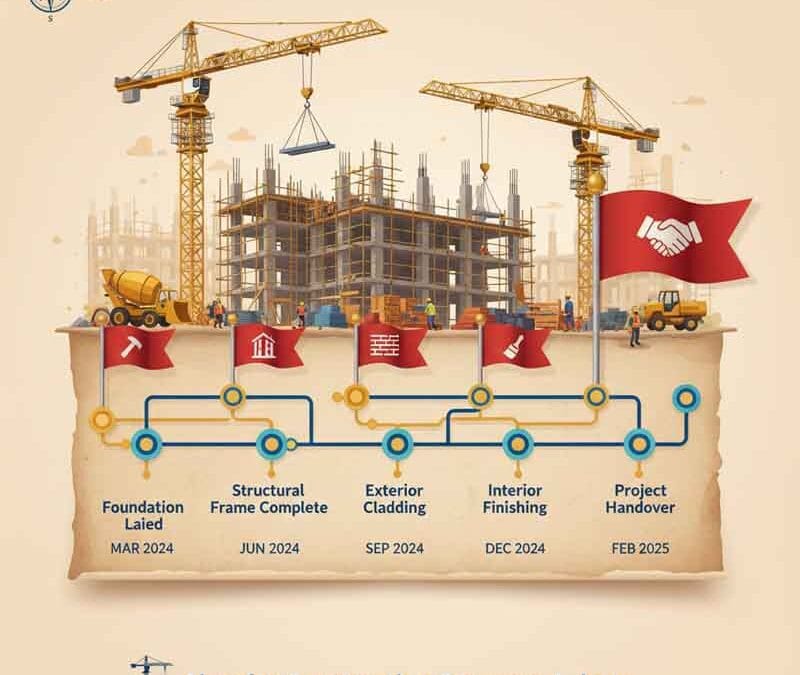
- Tool: Use a “milestone roadmap” graphic. It looks like a subway map.
- Impact: It is easy to understand. It shows progress as a journey from station to station. Effective milestone tracking in projects is as much about marketing your progress as it is about managing it.
Conclusion
The path to project success is rarely a straight line. It is a winding road full of obstacles and surprises. However, by planting firm milestones in the ground, you ensure that you never lose your way. These markers provide the discipline, visibility, and motivation your team needs to reach the finish line.
To recap, remember the rules: make milestones binary, space them evenly, and give them zero duration. Use the right tools, whether it is sophisticated software or a simple whiteboard. Respect the climate if you are building outdoors. Look to the German model of thorough planning for inspiration.
Most importantly, treat your milestones as commitments. When you hit a milestone, you are building trust. When you miss one, you are spending that trust. Use the strategies in this guide to build a track record of reliability. Start today by reviewing your current project. Are your milestones clear? Are they realistic? If not, adjust them now. Your future self will thank you when the project is delivered on time, on budget, and to the delight of your stakeholders. Milestone tracking is not just paperwork; it is the heartbeat of professional project management. Keep that heart beating strong.
Quick Links
Social Icons
Contact Us Information
443 J3 Johar Town Lahore near Expo Center Lahore
