
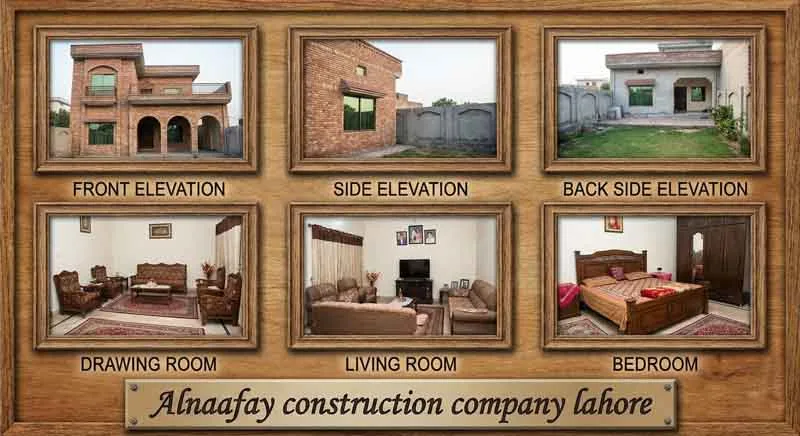
Pakistani Punjabi House 10 Malra
What is a Pakistani Punjabi House 10 Marla?
A 10 Marla plot is a very common residential size in Pakistan, especially in Punjab. Families choose it because it fits three to five bedrooms, a car porch, a front lawn, and often a small backyard. It usually allows space for gatherings while still being manageable in cost.
However, Marla size can vary by city and housing authority:
- Traditional or “old” marla: about 272.25 square feet per marla (10 marla ≈ 2,722 sq ft of plot).
- Housing-society or “new” marla: about 225 square feet per marla (10 marla ≈ 2,250 sq ft of plot).
Because of this difference, always check your society’s official definition. Plot dimensions also vary, but many 10 Marla plots are around 35 ft × 65 ft or close to that. Setbacks (side, front, and rear open areas) further reduce the buildable area, so you need expert advice before finalizing any house plan.
Why a 10-Marla Punjabi home suits family life
Families in Punjab often live in multi-generational setups. Grandparents, parents, and kids share the same home, and a 10 Marla lot supports that lifestyle while keeping daily life comfortable. Moreover, the layout can adapt over time. A couple might start with a single story and later add a first floor when the family grows.
Beyond flexibility, this size gives you:
- Enough rooms, without being too large to maintain.
- Space for a small garden and an airy car porch.
- A balance between open areas and indoor comfort.
- Proper privacy for women and guests if you include a drawing room (formal sitting).
Where a Pakistani Punjabi House 10 Marla makes the most sense
Punjabi-style 10 Marla homes are popular in Lahore, Faisalabad, Sialkot, Gujranwala, Multan, and Rawalpindi. Housing societies such as DHA, Bahria Town, and LDA/CDA-approved projects commonly include this size. Although other provinces also use 10 Marla plots, the “Punjabi house” look—brick warmth, arches or jali screens, and a welcoming veranda—feels most at home in Punjab’s culture.
Plot and bylaw basics for a 10-Marla Pakistani house plan
Before you sketch even a single room, it helps to confirm:
- Bylaws: coverage limits, floor area ratio (FAR), maximum height, basement rules, porch depth, boundary wall height, and balcony projections.
- Setbacks: front, rear, and side margins differ by society.
- Orientation: where the sun rises and sets, wind direction, and how neighboring houses shade your plot.
- Soil and services: soil bearing capacity, stormwater drains, sewer connection, Sui gas, water supply, and electricity loads.
- Access: street width, corner-plot rules, parking expectations, and turning radius for cars.
Because every authority has different rules, your architect should align the design to the correct code. In addition, a structural engineer confirms beam sizes, slab thickness, rebar details, and foundation design for your soil.
Space planning: room sizes and layouts that work
Although every family is different, the following sizes usually feel comfortable for a Pakistani Punjabi House 10 Marla. These are approximate and can be adjusted to suit your needs and local bylaws.
Suggested ground-floor spaces
- Car porch: 12–14 ft wide for one car; 16–18 ft for two small cars.
- Entry foyer: 5–7 ft wide for a welcoming feel and privacy from the lounge.
- Drawing room (formal sitting): 12 × 14 ft or 13 × 15 ft, ideally near the main door.
- Powder room (guest washroom): 4 × 6 ft.
- Family lounge/TV room: 14 × 16 ft or similar.
- Open kitchen with island: 10 × 12 ft; plus a dirty kitchen (back kitchen) 6 × 8 ft for frying and heavier cooking.
- Dining zone: 10 × 12 ft near the kitchen.
- Bedroom on ground: 12 × 14 ft with attached bath 6 × 8 ft or 7 × 9 ft; wardrobe niche 2–3 ft deep.
- Laundry/store: 6 × 8 ft.
- Staircase: 3.5–4 ft clear width feels comfortable.
Sample first-floor plan elements
- Two bedrooms: each 12 × 14 ft to 13 × 15 ft with attached baths and wardrobes.
- Sitting area or small lounge: 11 × 13 ft.
- Terrace/balcony: size as allowed; even 6–8 ft depth is useful.
- Study or home office: 8 × 10 ft or 9 × 11 ft.
- Box/store: 6 × 8 ft for seasonal items.
- Optional servant’s room: 8 × 10 ft with compact bath, if allowed and needed.
Alternatively, some families prefer a full single-story bungalow. In that case, expect less terrace space but easier mobility for elders and kids.
Common 10-Marla coverage and levels
Many societies allow about 65–70% ground-floor coverage and 55–60% on the first floor. Nevertheless, numbers change with each authority. Because of this variation, finalize the covered area only after you review your society’s latest handbook or design control sheet.
Punjabi architecture flavors to consider
The “Punjabi look” can be expressed in several styles. Instead of sticking to one recipe, mix elements as you like.
Modern minimalist Punjabi home
- Clean lines and simple forms.
- Large windows with deep overhangs for shade.
- Neutral colors with warm brick accents.
Neo-classical Punjabi elevation
- Symmetry, pilasters, and gentle cornices.
- Arches at the porch or entry.
- Light stone or off-white paint with a darker base course.
Traditional Punjabi warmth
- Exposed brick, jali screens, wooden doors, and carved lintels.
- Courtyard or a small internal patio.
- Thick walls for thermal comfort, if bylaws and budget allow.
Mediterranean or Turkish-inspired blend
- Earthy stone, textured plaster, timber pergolas.
- Soft arches and shaded verandas.
- Clay-tile tones for roofing sheets or parapet caps.
- With patient planning, respect for local climate and codes, and good teamwork with experts, a Turkish stone house can become a timeless, durable home. It looks especially natural in regions with stone supply and a sunny climate.
Façade and elevation ideas for a 10-Marla Punjabi bungalow
A memorable façade does not have to be loud. Even small, smart choices make the front face feel special.
- Layer shade before glass. Deep chajjas (overhangs), louvers, and pergolas reduce heat and glare.
- Highlight one feature wall. Exposed brick or stone cladding on one portion creates a strong identity.
- Design the gate and boundary wall with care. Metal patterns, jali cut-outs, and brick piers can add character without going out of control on cost.
- Balance symmetry and movement. One side can hold the porch arch, while the other frames a tall window with a vertical jali.
- Choose calm colors. Creams, warm grays, sandy tones, or light brick keep dust less visible and heat gain lower.
- Add a veranda. A shaded sit-out at the front says “welcome,” nodding to Punjabi culture.
Construction materials that suit Punjab
Bricks are part of the Punjabi soul. Even so, modern blocks and RCC frames offer speed and structural confidence. Blending materials wisely keeps the house solid and comfortable.
- Structure: RCC columns and beams with slab; rebar as per structural drawings.
- Walls: burnt clay bricks or concrete blocks; cavity walls or external insulation improve summer comfort.
- Damp proof course (DPC): vital against monsoon splash and rising damp.
- Plaster and paint: use waterproofing admixtures for external plaster; finish with weather shield paint.
- Waterproofing: apply on roofs, wet areas, and terraces before tiles.
- Roof: add insulation board or foam under the screed; create proper slope toward rainwater pipes.
- Termite control: treat soil before foundations and re-treat at critical stages.
- Doors and windows: aluminum or UPVC with double glazing, where budget allows; timber for warmth at the main door.
- Tiles and stone: non-slip tiles for bathrooms and porches; granite or engineered stone for kitchen counters.
Climate-smart design for a Pakistani Punjabi House 10 Marla
Summers in Punjab can be harsh. Winters bring fog and cold evenings. Designing for these swings keeps bills and stress low.
- Orient for sun and wind. Position living spaces to catch morning light while avoiding harsh west sun in the afternoon.
- Shade first, then cool. Add pergolas, louvers, trees, and deep eaves before you think of bigger ACs.
- Cross ventilation. Place windows on opposite walls for airflow; use ventilators in kitchens and baths.
- Courtyard or light well. Even a small internal cut-out brightens the core of the house and releases hot air.
- Insulation and airtightness. Insulate roof slabs and consider cavity walls or external insulation; seal gaps around windows and doors.
- Water-wise landscape. Native plants and simple drip irrigation conserve water.
Budgeting and costs for a 10-Marla Punjabi home
Prices change with market conditions, finishing choices, and city. Even so, a range helps in early planning.
Key cost buckets
- Grey structure: excavation, RCC, brick/block walls, plaster, roof, DPC, basic plumbing/electrical conduits, and external boundary wall.
- Finishing: floor tiles/wood, paint, doors/windows, kitchen cabinets, wardrobes, sanitary fixtures, lights, switches, and fans.
- Services and extras: HVAC, solar panels, UPS/inverter or generator, water tanks, filtration, landscaping, and smart-home items.
- Professional fees: architect, structural engineer, MEP engineer, approvals, and quantity surveyor.
- Contingency: 5–10% for surprises.
Typical ballpark (will vary)
- Grey structure often falls in a broad band depending on the year and city.
- Finishing can swing more widely because of imported tiles, wood quality, and brand choices.
- As a strategy, lock your scope in writing and request a bill of quantities (BOQ) to avoid disputes.
Because covered area matters, decide early:
- Single story: roughly 1,500–2,000 sq ft covered (depending on setbacks).
- Double story: roughly 2,800–3,500 sq ft combined, again depending on bylaws and your plan.
Always seek quotes from at least three reputable contractors. Moreover, ask for references and visit a running site before you sign.
Room-by-room design tips that save headaches
Entry and foyer
- Keep a small lobby so visitors do not see the whole lounge at once.
- Add a shoe cabinet and a slim console for keys and mail.
Drawing room
- Place near the main entrance for guest privacy.
- Use modest, comfortable seating; avoid sharp glass corners if kids visit often.
Family lounge
- Let it connect to the dining and kitchen for easy serving.
- Provide soft rugs and rounded furniture edges so children can move safely.
Kitchen (plus dirty kitchen)
- Open kitchen improves family interaction; the dirty kitchen controls smells and heavy frying.
- Plan a tall cabinet for pantry items; fit a chimney near the cooktop.
- Keep a window or exhaust to the outside, not into a shaft only.
Bedrooms
- Orient beds away from direct west sun; add blackout curtains if needed.
- Allocate wardrobe niches to save floor space; sliding doors help in tighter rooms.
- Maintain good cross ventilation with windows on two sides where possible.
Bathrooms
- Use non-slip tiles; slope water toward the drain.
- Separate the shower area with a glass partition; keep a niche for toiletries.
- Vent with an exhaust fan and consider a small window for fresh air.
Staircase
- Provide a handrail height around 34–36 inches.
- Use anti-slip nosing on steps and proper lighting.
Laundry and store
- Place near the kitchen or back yard for ease.
- Keep at least one tall shelf for buckets and cleaning tools.
Servant’s space
- If your bylaws allow, include a compact room and bath near the back, with separate access for privacy.
Electrical and lighting
- Layer light: ambient (ceiling), task (over counters), and accent (under-cabinet).
- Reserve space for the distribution board (DB) and ensure proper earthing.
- Add surge protection for inverter appliances and electronics.
Plumbing and water
- Install overhead and underground tanks sized for your family.
- Consider a filtration unit for drinking water.
- Provide clean-outs for easy maintenance of drains.
Energy efficiency for a 10 Marla Punjabi home
Electric bills can go up the wall in peak summer. Smart moves today protect your budget tomorrow.
- Solar panels with net metering: position on the roof with shade analysis.
- Inverter ACs and fans: choose efficient ratings to cut consumption.
- LED lighting: cool and long-lasting, perfect for every zone.
- Roof insulation: foam sheets or boards under screed reduce heat transfer.
- Water heating: solar water heaters or efficient instant heaters control costs.
Landscape and the Punjabi feel
Courtyards, charpai-friendly verandas, and green edges make a Punjabi home come alive. Beyond beauty, plants cool the microclimate and trap dust.
- Front lawn: even a small patch brightens the entry.
- Backyard: place for a tandoor or weekend tea under a pergola.
- Trees: choose native shade trees where space allows.
- Hardscape: non-slip pavers in the porch and paths; keep gentle slopes for drainage.
Approvals, permits, and safety
Paperwork might feel boring, yet it protects your investment.
- Map approval: submit architectural, structural, and MEP drawings as required by LDA, CDA, DHA, or your society.
- Inspections: allow periodic checks; photograph steel and services before concreting.
- Fire safety: smoke detectors in hallways and near kitchens; fire extinguishers on each floor.
- Boundary wall and gate: follow approved heights and sightlines.
Working with professionals and contractors
Good teamwork keeps projects from going out of control.
- Architect: leads planning, bylaws compliance, and façade design.
- Structural engineer: designs safe foundations, beams, and slabs.
- MEP engineers: plan plumbing lines, electrical loads, and HVAC routing.
- Quantity surveyor: prepares BOQ and cost checks.
- Contractor: builds according to drawings; maintains site safety and schedule.
- Site supervisor: tracks daily progress and quality.
Contract tips
- Use a written contract with scope, materials, and milestones.
- Link payments to measurable stages.
- Record variations in writing; update cost and time together.
- Visit site weekly; keep minutes of meetings.
Build timeline for a Pakistani Punjabi House 10 Marla
Every site is different, but a typical flow looks like this:
- Pre-design: 2–4 weeks for survey, soil test, and client brief.
- Concept design: 3–6 weeks to develop plans, elevation, and revisions.
- Approvals: 2–8 weeks depending on authority.
- Grey structure: 4–6 months for foundations, structure, and plaster.
- Finishing: 3–6 months for tiles, paint, doors, fixtures, and external works.
- Handover: 1–2 weeks for snag list and final touch-ups.
Common mistakes to avoid
- Ignoring orientation and shade. Heat control starts outside, not with AC size.
- Overloading the first floor. Structure must match loads; avoid late design changes.
- Skipping DPC and waterproofing. Water damage can be expensive and frustrating.
- Picking cheap wiring and fittings. Electrical issues can be dangerous.
- Narrow stairs and passages. Daily life becomes tight and unsafe.
- Poor drainage slope on roofs and porches. Standing water leads to leaks and stains.
- No storage planning. Clutter creeps in if you do not design wardrobes and stores early.
Interior design ideas with Punjabi character
- Colors: warm neutrals, soft terracotta, olive green, and off-white keep rooms calm.
- Textures: exposed brick accents, wood tones, woven rugs, and printed cushions.
- Patterns: subtle jali screens, lattice partitions, or hand-crafted door panels.
- Art and craft: truck-art touches, phulkari-inspired prints, and clay pottery.
- Lighting: warm LEDs in the evening; daylight-balanced lights for kitchens and studies.
Comparison and culture: Punjabi home vs Turkish stone house
Each region shapes homes through climate, materials, and culture. Punjabi houses lean on brick, shaded verandas, and lively family spaces. Meanwhile, Turkish stone houses rely on stone walls, arches, and thick construction that stay cool in the Mediterranean sun.
Which country is a Turkish stone house design most famous in?
- Turkey is the clear home of this style. Coastal areas such as Bodrum, Antalya, and Izmir show many stone façades and arches.
- The design also appears, with local twists, in parts of Greece, Cyprus, and other Mediterranean regions because the climate and materials are similar.
- In cooler or wetter climates, stone construction changes in detail due to moisture and freeze-thaw issues.
A practical note for Turkish stone style
With patient planning, respect for local climate and codes, and good teamwork with experts, a Turkish stone house can become a durable, comfortable, and beautiful family home. If you love this look in Pakistan, consider a hybrid approach: use stone cladding and shaded verandas, but keep the structure and insulation tuned for Punjab’s heat and monsoon.
Safety language and word choice in your home story
Sometimes homebuilding makes people feel overwhelmed. Rather than using a harsh phrase, this guide uses softer options such as “to go wild,” “to go out of control,” “to go up the wall,” “to be aggravated,” or “to get confused.” Planning reduces that stress. Clear drawings, a step-by-step schedule, and a fixed budget keep worries in check.
Kid-friendly planning for a family home
- Rounded furniture edges reduce bumps and scrapes.
- Anti-slip tiles in bathrooms and on stairs prevent falls.
- Child locks on cabinets with cleaning chemicals improve safety.
- Window grills or restricted openers on higher floors protect curious kids.
- A small study corner near the lounge keeps homework supervised yet relaxed.
Maintenance tips to keep things smooth
- Clean roof drains before monsoon season.
- Reseal external joints and parapet tops every few years.
- Check silicone around bathroom fixtures; replace when it cracks.
- Service AC units before summer and after peak season.
- Trim trees that touch the façade to stop moisture and pests.
Smart-home ideas that actually help
Technology is useful when it solves a real problem. Pick a few features that your family will truly use.
- Video doorbell and smart lock for safer entries.
- App-based lights at the porch and gate so you never return to a dark home.
- Motion sensors in corridors and stairs for hands-free lighting.
- Water-leak sensors in laundries and under sinks for early warnings.
- Smart thermostat or AC controls for efficient cooling.
Security without losing the welcoming feel
- Plan camera coverage for entry points and the back lane.
- Add a grill door behind the main wooden door for ventilation with security.
- Use a well-lit façade and porch; avoid dark corners.
- Keep boundary-wall height and spikes within allowed limits.
How to personalize a Pakistani Punjabi House 10 Marla
Your story is unique, and the home should show it.
- Heirloom corner: display framed old family photos and a carved chest in the foyer.
- Prayer niche: a quiet, clean spot with soft lighting.
- Courtyard tree: a single, strong tree as a family symbol.
- Baithak spirit: create a flexible sitting area that welcomes neighbors, just like the old days.
Frequently asked questions (FAQs)
Q: What exactly is a Pakistani Punjabi House 10 Marla?
A: It’s a house planned on a 10 Marla plot, very popular in Punjab, designed for family comfort with cultural touches such as verandas, a drawing room, and warm materials.
Q: Is 10 Marla enough for five people?
A: Yes, a well-designed 10 Marla home can hold three to four bedrooms, a lounge, a drawing room, a decent kitchen, and storage. Smart planning makes daily life smooth.
Q: How many floors are common?
A: Single-story bungalows and double-story homes both work. Many families pick a double story for extra rooms and a terrace.
Q: What are the best materials for the façade?
A: Brick, stone, textured plaster, and tasteful paint combinations suit the Punjabi feel. Shading devices like pergolas and overhangs add comfort and style.
Q: Can I blend Turkish stone style with a Pakistani Punjabi House 10 Marla?
A: Certainly. Use stone accents, arches, and timber pergolas for the look, while keeping structure, insulation, and drainage suitable for Punjab’s climate.
Q: Which country is the Turkish stone house design more famous in?
A: Turkey, especially the Aegean and Mediterranean regions. Similar looks appear around the Mediterranean with local variations.
Q: How do I avoid my budget going out of control?
A: Fix your scope, request a BOQ, use a written contract, and approve variations before work. Regular site visits prevent costly surprises.
Q: What are basic room sizes for comfort?
A: Bedrooms around 12 × 14 ft, lounges 14 × 16 ft, kitchens 10 × 12 ft, and attached baths around 6 × 8 ft are common starting points.
Q: Do I need solar?
A: Not mandatory, but very helpful. Solar plus net metering lowers bills and adds resilience during peak loads.
Q: How do I make the house kid-friendly?
A: Choose non-slip floors, rounded furniture, safe window openings, and secure storage for chemicals and tools.
Key takeaways for a Pakistani Punjabi House 10 Marla
- Start with bylaws and orientation, then design rooms.
- Keep shade, ventilation, and insulation at the heart of comfort.
- Mix Punjabi warmth with modern efficiency.
- Write clear contracts, link payments to milestones, and document changes.
- Add personal stories through materials, art, and landscape.
A short sample brief you can give your architect
- Plot: 10 Marla in Lahore; society uses 225 sq ft per marla; plot around 35 × 65 ft.
- Family: parents, two kids, grandparents visit often.
- Spaces: porch for two cars, drawing room near entry, family lounge open to kitchen, dirty kitchen, three bedrooms with attached baths, study, laundry/store, upstairs sitting area, terrace.
- Style: modern Punjabi with brick feature wall, pergola at porch, calm colors.
- Climate strategy: deep overhangs, cross-ventilation, roof insulation, native landscaping.
- Budget control: BOQ-based contract, three quotes, milestone payments, weekly site check.
- Energy: solar-ready roof, inverter ACs, LED lighting.
- Safety: anti-slip stairs and bathrooms, smoke detectors, surge protection, proper earthing.
Why this guide cares about clear, kind language
Home building is exciting, but it can also make people get confused. Supportive language helps everyone stay calm and focused. Although design choices may go wild sometimes, a strong plan and a reliable team prevent things from going up the wall. When disagreements pop up, handle them in writing and keep solutions practical.
Quick Links
Social Icons
Contact Us Information
443 J3 Johar Town Lahore near Expo Center Lahore
