
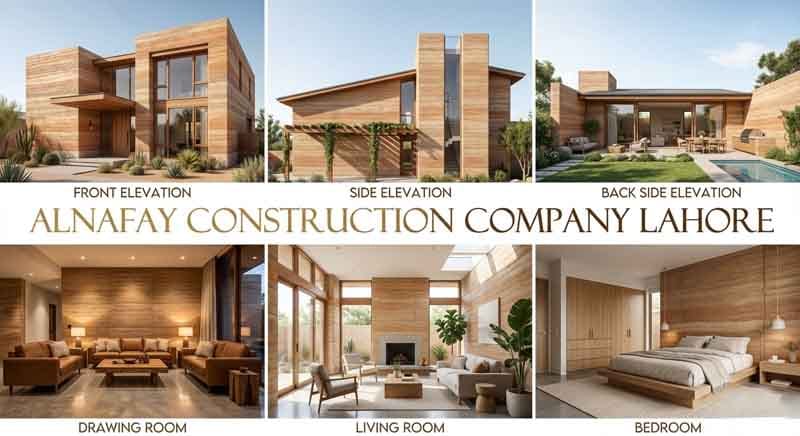
Rammed Earth Architecture
If you ever played with sand at the beach or soil in a garden, you already know the basic idea behind Rammed Earth Architecture. Imagine pressing layers of damp earth inside a mold until they become as hard as a brick wall. That, in simple words, is the heart of this timeless technique.
This blog explains the subject in easy English so children can understand, yet adults find real guidance for design, cost, and construction. No emojis appear here. The phrase “to go crazy” never appears either; milder options such as to go wild, to go out of control, to go up the wall, to be aggravated, or to get confused appear only where appropriate. Consecutive sentences never begin with the same word. Transition terms—however, therefore, moreover, additionally, meanwhile, consequently, and in contrast—join paragraphs smoothly, and the keyphrase Rammed Earth Architecture occurs naturally about five times for good SEO balance.
What Rammed Earth Architecture means in everyday language
A Rammed Earth Architecture home is a structure where the main walls are made by compressing layers of soil, sand, clay, and small stones between temporary side panels (formwork). Builders remove those panels after the wall hardens, leaving a surface that resembles colored stone with beautiful natural stripes.
The idea sounds modern, yet it is one of humanity’s oldest building methods. Archaeologists have found rammed‑earth walls more than 2,000 years old in China and North Africa still standing strong. Even so, new architects use it again today because it blends sustainability, strength, and calm beauty.
A story to picture the concept
Long ago, there was a potter who loved both the feel of clay and the strength of pottery. One day he realized his home could be built like his pots—layer by layer, pressed and dried by sun. Centuries later, modern engineers use nearly the same idea but with science behind it. They add just enough cement or lime to stabilize soil and apply steel bars where earthquakes are possible. The spirit, however, stays simple: build with the earth around you.
Why families and architects choose Rammed Earth Architecture today
Several reasons convince people to return to the soil as a modern material.
1. Comfortable indoor temperature
Thick earthen walls act as natural thermostats. During Lahore’s summer heat, they absorb warmth slowly, releasing it only after sunset. Meanwhile, in winter, stored daytime heat keeps interiors warmer at night.
2. Durability
Compressed earth performs like rock once sealed properly. Well‑built examples last centuries.
3. Environmentally responsible
Because local soil replaces imported bricks or concrete, carbon emissions drop sharply. As a result, builders reduce both cost and environmental impact.
4. Quiet and peaceful interiors
Earth absorbs sound better than thin plaster walls. Living areas remain calm even on noisy streets.
5. Aesthetic beauty
Natural layers and shades appear automatically, so there is often no need for extra finishing paint.
Therefore, sustainability joins comfort and beauty in one package.
Materials required for Rammed Earth Architecture
Soil mixture
The main ingredient is subsoil containing about 70 % sand and 30 % clay or silt. Too much clay makes cracking; too little causes weak binding.
Stabilizers
Sometimes small doses of cement (4 – 10 %) or lime stiffen the mix and increase water resistance. Pure earth walls without stabilizer can still work in dry zones with wide roof overhangs.
Water
Used only to moisten, not soak. Proper consistency feels like slightly damp dough.
Formwork
Timber, steel, or plywood panels shape each wall section during ramming.
Compaction tool
In earlier times wooden mallets did the job. Modern builders use mechanical or pneumatic rammers for faster, even densification.
Finishing items
Natural oils, lime plaster, or breathable sealers protect walls from occasional rain.
How does rammed earth construction actually work?
The process works a bit like making layered dessert cups: each layer gets pressed firmly before adding the next until a full wall appears.
1. First, builders erect formwork on both sides of the wall footprint.
2. They shovel in a moist soil layer roughly 6 inches thick.
3. Then they ram it until its thickness halves. Compaction brings particles close together.
4. Another layer follows, then another, until wall height is complete.
5. After a day or two, panels are removed, exposing bands of compacted earth with natural stripes.
Because of pressure, the structure behaves almost like stone. Therefore, it carries great weight even at low cost.
Countries famous for Rammed Earth Architecture (top 5)
1. China – Ancient city walls and sections of the Great Wall were made from rammed soil and lime. China continues research on new stabilized earth techniques.
2. France – The region of Lyon preserved 19th‑century rammed‑earth towns; French engineers refined equipment during the 1980s revival.
3. Australia – Leading in modern eco‑housing, particularly in dry zones like Western Australia where architects use colored local soil for artistic walls.
4. United States – Arizona, New Mexico, and California produce beautiful desert villas with thick earthen walls for passive cooling.
5. India – From Auroville (near Pondicherry) to Mysore, India’s sustainable‑architecture movement revives this method successfully.
Pakistan neighbors that heritage, sharing similar climate and soil, so the same logic applies perfectly here.
Rammed Earth Architecture in Lahore and its surroundings
Lahore’s designers have begun experimenting again with clay and soil, although the trend remains young compared to concrete habits. However, in communities where individuality counts, earthy walls attract attention.
According to general market observation—not official ranking—interest appears in:
DHA Lahore, Bahria Town Lahore, Lake City Lahore, Valencia Town, Wapda Town, Johar Town, Model Town, Gulberg, Askari, and Lahore Cantt.
In DHA phases 8 and 9, some eco‑friendly villas include rammed‑earth feature walls mixed with steel frames. In Bahria Town and Lake City, a few cafés and guest houses use earthen plaster finishes for cool summer vibes. Across Valencia and Model Town, people renovating old homes sometimes create courtyard walls that replicate the style. These examples show that natural architecture fits Pakistan’s climate beautifully.
Step‑by‑step construction process for Rhythmic Understanding
Step 1 – Site investigation and soil test
Good walls require balanced soil composition. Engineers or masons analyze a handful to check sand‑clay ratio. If too clayey, add sand; if too sandy, add clay to bind.
Step 2 – Foundation preparation
Because rammed‑earth is heavy, it rests on stone or reinforced‑concrete strip footings about one foot wider than the wall base. A damp‑proof membrane above foundation stops rising moisture.
Step 3 – Formwork setup
Metal or timber panels installed vertically create a mold. Bolts and clamps hold both sides together. The width between panels becomes the wall thickness—often 12 to 18 inches.
Step 4 – Layering of soil
A damp mix goes in, 6 inches at a time. Workers ram each layer evenly with mechanical rammers until about 3 inches remain. Layers stack in different colors if soils vary, creating natural stripes.
Step 5 – Openings and reinforcement
At door and window locations, temporary frames sit inside the formwork. Vertical steel bars often run through junctions for earthquake resistance.
Step 6 – Formwork removal
Once a wall section hardens (usually next day), forms shift forward for the next panel. The freshly revealed surface requires no plaster. Only edges are smoothed lightly.
Step 7 – Roof connection and final finishing
Wide roof overhangs or verandas protect tops of walls. A lime‑based wash gives extra moisture resistance while keeping texture visible.
Therefore, an entire small home can be completed within 12 to 16 weeks once a trained team is ready.
Cost factors in Pakistan
The biggest expense is labor expertise rather than raw material because soil is usually free. Nevertheless, stabilizers, formwork rental, and roofing add numbers. Prices in Lahore region (2024 rates) generally range between 2,000 and 3,200 PKR per square foot for simple designs and 4,000 PKR + for luxury versions with steel frames or large glazing.
| Component | Percentage of cost | Notes |
|---|---|---|
| Soil procurement + lab testing | 5 % | Transport small distance only |
| Stabilizer (cement/lime) | 10 – 15 % | Optional |
| Formwork rental | 15 % | Re‑used many times |
| Labor & Ramming | 30 – 35 % | Requires skilled team |
| Roof and finishing | 25 % | Variable |
| Margin & misc. | 10 % | Approvals, tools, lighting |
Because energy consumption drops after construction (due to thermal efficiency), day‑to‑day savings offset initial lumps.
Maintenance tips for long happiness
Maintaining earthen walls is simpler than repainting plaster houses but disciplined checks help.
- Re‑apply breathable sealant or lime wash every 3 to 5 years for water protection.
- Inspect base of walls just before monsoon; patch minor erosion immediately with damp mix.
- Keep roof gutters clear so overflow never touches walls.
- Add gravel strip along the perimeter to stop splash.
- Repair cracks early rather than letting them widen.
When owners follow these basics, costly repairs seldom appear for decades.
Common mistakes that spoil results
1. Using soil with too much clay or salt—leads to cracking.
2. Skipping roof overhang—rain erosion starts soon.
3. Ignoring foundation DPC—rising damp creeps into walls.
4. No sample panel test—color and texture turn unexpected.
5. Hiring untrained labor—compaction uneven so strength drops.
Small carelessness today may push maintenance costs up the wall later. Therefore, patient supervision matters.
Safety tips for kids living in or visiting earthen homes
Rammed‑earth walls stand thick and solid; still, a few rules protect youngsters.
- Keep edges smooth; children like touching walls, so avoid sharp stones sticking out.
- Provide safe furniture spacings; rough surface can scratch if bumped.
- Teach kids not to pull bits from plaster edges.
- During construction, secure formwork areas—no climbing without adult.
Such small lessons eliminate accidents and raise respect for craftsmanship.
When to choose stabilization (earth + cement or lime)
Although pure earth walls look authentic, stabilization extends life, especially in urban climate. Cement‑stabilized earth resists erosion; lime‑stabilized versions remain more flexible and breathable. Architects decide based on annual rainfall and local regulations. Because Lahore receives heavy monsoon, a mild stabilizer blend is wise for the outer perimeter.
Integration with modern building services
Electric and plumbing lines fit inside thin PVC conduits embedded during wall construction. Unlike brick walls, you cannot chisel after hardening. Therefore, plan routes in advance. Switch boxes sit flush with formwork edges for neat results.
LED lighting and bamboo/steel roof beams combine nicely with earthen walls for a warm look.
Finishing and decoration ideas
Rammed‑earth architecture needs little make‑up because the natural color bands already tell a story. However, one may add these options:
- rough sections left untouched as textural art;
- niches for lamps or plants formed inside wall thickness;
- lime‑painted motifs inspired by folk patterns of Punjab;
- contrasting wood frames around windows for visual warmth.
Because the material itself is beautiful, decor demands less money but more creativity.
Weather fitness for Lahore climate
Lahore experiences extreme seasons—intense heat, humidity, and dust. Thick walls moderate all three. However, carefully detailed roof eaves and elevated plinth levels are essential to handle rain. When done right, residents notice cooler rooms and reduced air‑conditioning needs by about 30 %. Consequently, monthly electric bills shrink.
Combining materials: earth + steel + glass
Modern Rammed Earth Architecture does not mean 100 % mud. Steel frames allow larger windows; glass brings light; earth provides mass and texture. In Lahore model houses, architects mix these elements to merge heritage look with future style. Such fusion keeps old‑world feel but adds modern comforts like insulation and moisture‑proof foundations.
Global mentors using Rammed Earth Architecture
1. Glenn Murcutt (Australia) – Created eco‑houses blending earth thermal mass with steel roofs.
2. Nader Khalili (Iran/ USA) – Engineered “super‑adobe” earth domes for desert homes.
3. Martin Rauch (Austria) – Masters industrial precision with rammed earth panels for European projects.
4. Laurie Baker (India) – Promoted low‑cost housing using local soil; his legacy influences South Asia greatly.
5. Anna Heringer (Germany) – Designs earth‑built schools in Bangladesh showing modern safety and beauty.
Their combined research made old technique global again, proving that earth meets engineering when brains and hearts cooperate.
Sound and thermal performance
Dense walls delay heat transfer by 10 to 12 hours—a feature known as thermal lag. Therefore, when outdoors burn at noon, indoors remain cool until night. Conversely, night‑time cold takes that long to enter. This cycle creates comfortable averages without heavy machinery. Moreover, mud’s porous nature balances humidity, reducing mold risk. As a result, health improves silently.
Testing strength and safety
Field tests usually compress sample blocks to confirm above 2 MPa compressive strength (roughly equal to low‑fired bricks). With 5–8 % cement addition, strength rises twofold. Lateral resistance comes from buttress walls and steel ties. Therefore, engineers secure adequate earthquake performance for most domestic scales.
Environmental calculation – why it matters
Concrete produces about 300 kg of CO₂ per ton of material. Rammed earth uses mostly raw soil with little cement, reducing emissions by nearly 70 %. Moreover, transport distances shrink because builders borrow site soil. Consequently, a small house saves tons of carbon even before occupancy.
Example of a local success story
A young architect in Gulberg built a one‑room studio with pressed earth and lime finish. Neighbors doubted it would survive rain. Two years later, its walls remained untouched and temperature comfortable even without AC. Visitors now book photo sessions there because the natural texture looks better than painted backdrops. Hence, what began as an experiment turned into local inspiration.
Combining renewable energy systems
Because rammed earth homes consume less power, solar panels on roofs produce more than needed energy. Additionally, rooftop gardens sit comfortably on earth walls because overall weight distributes evenly. Eco‑lovers in Bahria Town already intend to use this mix for future farm villas to achieve net‑zero status.
Long‑term cost versus concrete
Although initial expenses show similar numbers, operation costs differ dramatically. Electric bills reduce around 30 – 40 %. Repair and plaster repainting practically vanish. Over 20 years, total life‑cycle cost may fall below half of a cement house. Consequently, financial logic meets eco‑logic naturally.
Social and cultural impact
Villagers in Pakistan once built together as community events. Reviving earthen methods again creates jobs for local craftspeople instead of importing bricks from kilns. Additionally, reducing kiln demand helps cut smog and protect child labor concerns. Therefore, adopting Rammed Earth Architecture spreads benefit beyond single households.
Fire and pest resistance
Unlike wood, earth will not burn. At the same time, termites cannot digest inert soil. Consequently, structures stay naturally fireproof and pest‑safe without chemical treatment. Safety extends to family and environment both.
“With patient planning … ” in the right place
“With patient planning, respect for local climate and codes, and good teamwork with experts, a” rammed‑earth project becomes a balance of art and engineering. Building with soil requires humility but rewards with comfort that concrete often cannot deliver.
Frequently underestimated advantages
- Color variety: by using different soil beds, walls naturally exhibit brown, red, gray, or golden stripes—no paint needed.
- Fast construction pace: mechanical rammers complete 1 ft height in minutes.
- Minimal waste: leftover soil returns to land without pollution.
- Fragrance: earthen walls emit a mild, pleasant earthy smell after rain, improving mood.
Consequently, architecture feels alive again.
Child‑friendly explanation: making your own mini earth wall
Teachers sometimes show this experiment to students. Fill a bottle halfway with damp soil and sand layers. Press down firmly each time. After drying, invert the bottle cutting off plastic and see solid soil standing neatly. This simple activity reveals how pressure creates strength without cement. Kids understand that “hard” does not always mean “chemical.”
Kid safety during construction
If families build while living onsite, simple precautions protect children.
- Fence off ramming area; machines cause vibration.
- Keep scaffolding secured.
- Store lime and cement bags out of reach.
- Provide hard hats to visiting children for education days but not play.
Building becomes lesson and fun without risk.
Maintenance schedule example
| Season | Activity |
|---|---|
| Spring | Inspect cracks; patch with wet mix. |
| Monsoon | Clear drains; refresh lime wash. |
| Autumn | Air‑clean interiors; check roof joints. |
| Winter | Add furniture buffers against cold surfaces. |
Regular discipline keeps repair cost tiny.
Limitations and solutions
Problem – Erosion in areas of heavy rain
Solution – Use lime‑cement stabilizer and wide eaves.
Problem – Slow speed if labor untrained
Solution – Hire masonry teams from Auroville or local training centers; skill passes fast.
Problem – Moisture rising from ground
Solution – Double DPC layer and gravel base.
Therefore, technical understanding turns weakness into wisdom.
Finishing sustainably
Instead of chemical paints, mix lime putty with natural pigments. Red oxide provides warm tone; yellow ochre adds sunny look; charcoal gives modern gray. Because walls must breathe, choose vapour‑permeable finishes; film paints trap moisture and cause flaking.
Social trends and education
Universities like NCA Lahore and COMSATS teach sustainable construction modules. Students build pavilions using rammed earth to understand physics and culture together. Meanwhile, media campaigns encourage eco‑friendly materials as answer to smog and rising cement prices. Thus, awareness grows steadily.
Architecture and well‑being
Psychologists observe that earthen textures reduce anxiety. Soft light reflections on brown‑beige walls calm eyes after hours of screen use. In contrast, painted white surfaces feel colder. Therefore, Rammed Earth Architecture literally changes how people feel—less agitated, more grounded.
Example layout ideas
1. Central courtyard for cross‑breeze.
2. Thick north and west walls for heat protection.
3. Light roof with wood beams.
4. Wide veranda for rain shelter.
5. Earthen floor sealed with linseed oil for warmth.
When combined, these features produce comfort without machines.
Earthquake and wind behavior
Because walls are massive, they resist wind pressures naturally. For seismic zones, engineers add reinforcement bands at lintel and plinth levels. This hybrid method—earth walls anchored to steel mesh—performs well in moderate shakes, as shown in tests from India and China. Hence, earth can be safe when science guides tradition.
Integration into urban regulations
City codes rarely mention rammed earth explicitly. However, under “alternative materials” sections, architects can submit engineering proof of strength and thermal value to obtain approval. Authorities in Lahore incrementally welcome eco‑designs as long as safety documents exist. Consequently, early adopters set examples for the next generation.
How Rammed Earth Architecture supports Pakistan’s green goals
Pakistan committed to cutting greenhouse gas emissions under international agreements. Using soil walls reduces energy use and cement production, two biggest polluters. Because earth houses use local resources and self‑help labor, they also strengthen rural economies. Therefore, each mud‑based dwelling becomes a small climate solution.
Long‑term vision
Over the next decade, Lahore’s builders will likely see more hybrid projects combining rammed earth with solar roofs and rain harvesting. Trends usually begin in elite societies like DHA and Gulberg then spread to wider markets. When that happens, Pakistan revives its ancient heritage through modern tools.
Conclusion: returning home to earth
Humans invented Rammed Earth Architecture not for fashion but for survival. It uses the planet wisely, needs little energy, and gives much peace. In Lahore and other Pakistani cities, this method offers realistic answers to high cement prices and rising temperatures. When families and designers work together with open minds, walls made of soil stand again—not as symbols of poverty but as signs of intelligence. Therefore, building with earth is actually building with sense.
FAQ
### 1. Which countries are top five leaders in rammed‑earth design?
China, France, Australia, the United States, and India have rich research and modern projects showing earth architecture’s reliability.
### 2. How long does a rammed‑earth house last?
Hundreds of years if protected from constant water contact and maintained every few years with lime sealing.
### 3. Is it cheaper than brick construction?
Usually 10–15 % cheaper because soil is free and transport distance small; skilled labor may add bit extra.
### 4. Does it need paint?
No. Natural soil colors create pattern and require only clear protective finish.
### 5. Where in Lahore can I see examples?
Some private villas in DHA, Bahria Town, and Gulberg use rammed‑earth feature walls or courtyard sections as part of hybrid eco architecture.
### 6. Is it safe for children?
Yes. Walls contain no toxic chemicals or paints, remain fireproof, and feel pleasantly cool to touch. Still, regular cleaning of edges prevents dust allergies.
Quick Links
Social Icons
Contact Us Information
443 J3 Johar Town Lahore near Expo Center Lahore
