
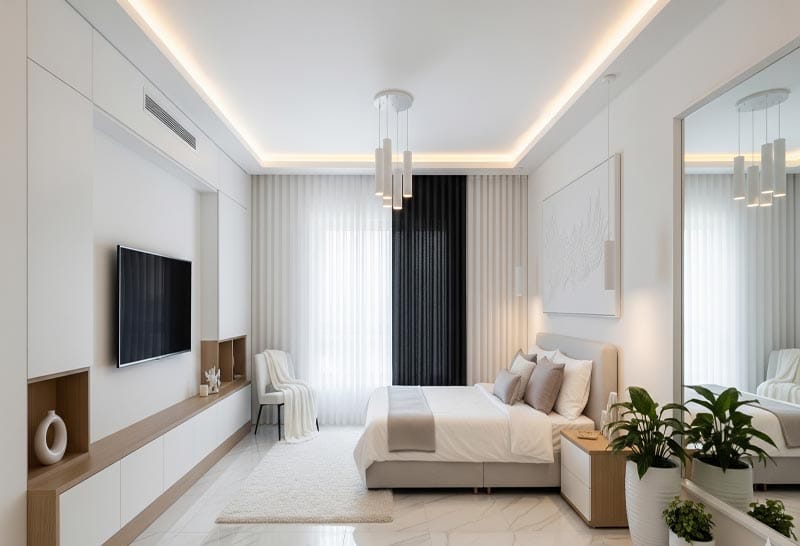
Room Interior by Architect
Designing a room is more than just placing furniture and choosing random colors. A professional room interior by architect is a balance of beauty, comfort, and functionality. An architect focuses on every detail – from the color theme to lighting, from bed placement to curtains, and even the smallest accessories that bring harmony into the space. In this blog, we will explore step by step how architects design modern rooms in a way that feels open, bright, and stylish, while still being practical for daily life.
1.Importance of Color Theme
One of the first things an architect decides while planning a room interior is the color theme. Colors directly affect how the space feels.
White color theme: White is often the first choice because it makes the room look brighter, cleaner, and bigger than it really is. When the floor, ceiling, walls, and even some furniture have white or off-white shades, the room feels more open and spacious.
Accent colors: While white dominates, architects also add accent colors like grey, beige, or soft pastel shades (light blue, mint green, blush pink). These bring warmth and avoid making the room look too plain.
Furniture and floor tiles: If the main theme is white, furniture can have wooden or light grey finishes to balance the brightness. Floor tiles in white or cream shades with glossy finish reflect light and add elegance.
A room designed with this theme instantly feels peaceful and welcoming.
2. Floor Tiles and Ceiling Design
An architect pays attention to the floor and ceiling because these two surfaces set the base of the design.
Floor tiles: Large-sized tiles in white or light tones make the room look more spacious. Glossy or semi-gloss finishes reflect natural and artificial light. For bedrooms, architects sometimes use wooden-style tiles to add a cozy effect.
Ceiling: A false ceiling with a simple white design is very effective. Cove lighting in the ceiling corners adds softness, while maintaining a modern look. A plain white ceiling is also a good choice if you want a minimal look.
The combination of light tiles and a bright ceiling creates a smooth flow in the room.
3. Lighting Design – The Heart of Interior
Lighting is one of the most important elements in a room interior by architect. It sets the mood and enhances the design.
Warm lights: These lights (yellowish tone) create a cozy and relaxing environment. Perfect for evenings when you want to rest.
White lights: These give a fresh and bright feeling. Ideal for daytime activities like reading, working, or studying.
Combination: Architects usually add both warm and white lights in a room, so you can switch according to your mood. Ceiling spotlights, cove lights, and lamps help balance the effect.
With the right mix, your room can easily shift from a working space to a relaxing bedroom.
4. Bed Location – The Center of Attention
In most bedrooms, the bed is the central element, and its placement affects the overall layout.
Ideal placement: The bed should be against the main wall, preferably opposite the door, so it becomes the first thing you notice when entering.
Headboard design: Architects often add upholstered or wooden headboards for a touch of luxury.
Bedside tables: Small tables with lamps on both sides create balance and add symmetry to the design.
The right location of the bed not only improves functionality but also makes the room look organized.
5. Media Wall – A Modern Must-Have
Many modern bedrooms include a media wall for TV and storage.
Design: A simple wall with a mounted TV, shelves, or cabinets for decoration pieces.
Color scheme: Usually matches the main theme – white with wooden or grey touches.
Extra features: Hidden LED lights around the media wall create a stylish look.
The media wall keeps the room neat by managing entertainment and storage in one place.
6. Hanging Lights – A Touch of Style
Hanging lights are not only for dining rooms or living areas; they look stunning in bedrooms too.
Placement: Over bedside tables or in the center above the bed.
Style: Modern pendant lights, crystal chandeliers, or simple dome lights depending on taste.
Effect: They add elegance, depth, and a luxury feeling to the room.
Architects use hanging lights to highlight specific areas and create focal points.
7. Curtains – Beauty and Function Together
Curtains play a big role in room interiors, especially in controlling natural light.
Two types of curtains:
Net curtains allow sunlight to pass but keep privacy. Perfect for daytime use.
Full (dull/blackout) curtains block light completely. Ideal for sleeping or watching TV.
Movable design: Curtains should be easy to slide open or close, giving flexibility.
Colors: Light shades for daytime freshness, darker shades for night comfort.
With the right curtain design, the room feels more polished and complete.
8. Furniture Arrangement
Besides the bed, other furniture should be placed thoughtfully.
Wardrobes: Built-in wardrobes save space and look clean. Sliding doors in white or mirrored finishes add modern style.
Study or work table: If space allows, a small study corner is very practical.
Sofa or lounge chair: Adds comfort for reading or relaxing without using the bed.
The goal is to keep the room open and uncluttered.
9. Storage Solutions
Architects design rooms with smart storage so that the space always looks neat.
Under-bed storage drawers.
Floating shelves for books and decorations.
Hidden storage in ottomans or side tables.
Good storage helps maintain a clean and minimal interior.
10. Wall Decoration
Walls should not be left empty. A few decoration elements can transform the vibe.
Modern paintings or wall art.
Family photos in matching frames.
Wooden panels or wallpaper for a stylish touch.
Mirrors to make the room look larger and brighter.
The wall design completes the personality of the room.
11. Accessories and Final Touches
Small things make a big difference in interiors.
Rugs near the bed for softness.
Plants for freshness and natural beauty.
Table lamps and floor lamps for cozy corners.
Decorative cushions and throws on the bed.
These accessories add warmth and life to the design.
12. Air and Ventilation
No interior design is complete without proper ventilation.
Windows for fresh air.
Cross ventilation to keep the room cool and healthy.
Modern air ventilators or exhaust fans in connected bathrooms.
Good ventilation ensures comfort and health along with design.
13. Professional Tips from Architects
Always keep a balance between beauty and function.
Use neutral colors for a timeless look.
Avoid overcrowding the room with furniture.
Use lighting smartly to create moods.
Keep the design simple and elegant.
Quick Links
Social Icons
Contact Us Information
443 J3 Johar Town Lahore near Expo Center Lahore
