Types of Cement
Cement is the backbone of modern construction, but not all cement is created equal. Understanding the various types of cement is crucial for ensuring the strength, durability, and success of any building project. From massive dams to residential homes, the right choice of material makes all the difference. Consequently, choosing the correct one from the many types of cement available is a foundational step for builders and homeowners alike.
This guide will walk you through the most common types of cement, their specific uses, and how to select the best one for your needs. Moreover, we will explore how these materials perform in different climates and what you need to know to get the best results for your project.
Understanding the Primary Categories of Cement
Cement is broadly classified based on its chemical composition, properties, and intended use. Therefore, knowing these distinctions is key to a successful build. Let’s delve into some of the most widely used types of cement.
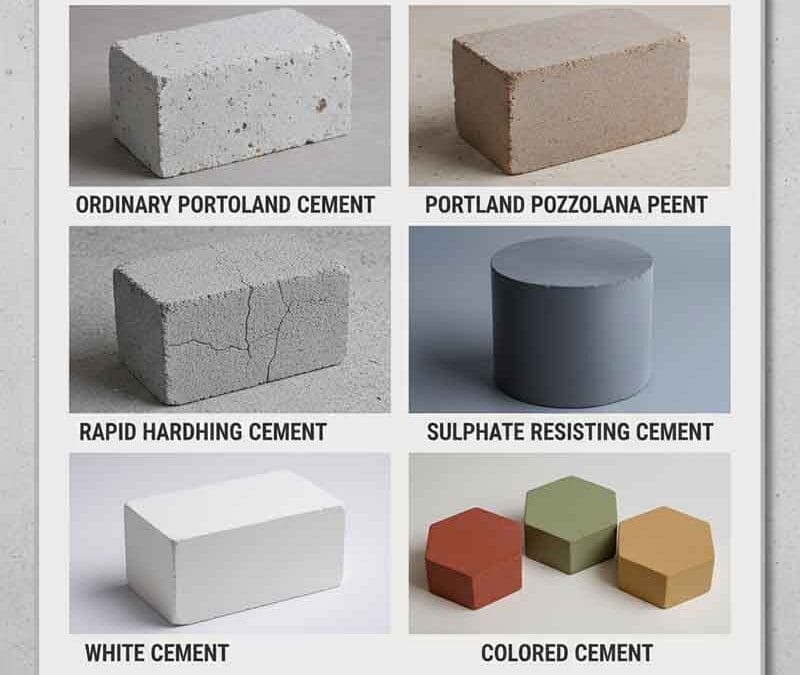
Ordinary Portland Cement (OPC)
Ordinary Portland Cement is the most common and versatile of all the types of cement. It’s the go-to choice for general construction purposes, including residential buildings, bridges, and pavements.
- Benefits and Uses: OPC is widely available and cost-effective. Additionally, it provides good strength and durability for most standard applications. It’s used in concrete, mortar, plaster, and grout.
- Material Options: It is available in different grades, such as 33, 43, and 53, which indicate its compressive strength in megapascals (MPa) after 28 days. Higher grades, for instance, are used for high-strength concrete.
- Climate Suitability: OPC performs well in a wide range of climates. However, in very hot weather, precautions must be taken to prevent rapid water evaporation, which can lead to cracks. In contrast, cold weather can slow down its curing process.
Portland Pozzolana Cement (PPC)
Portland Pozzolana Cement is an eco-friendly option that incorporates pozzolanic materials like fly ash. This addition gives it unique properties that make it superior to OPC in certain situations.
- Benefits and Uses: PPC offers higher resistance to chemical attacks, making it ideal for marine structures, dams, and sewage pipes. Furthermore, it generates less heat during hydration, which reduces the risk of cracking in mass concrete structures. It’s an excellent choice among the various types of cement for plastering and brickwork.
- Material Options: It is primarily made by inter-grinding OPC clinker with gypsum and pozzolanic materials.
- Climate Suitability: Because it has lower heat of hydration, PPC is particularly suitable for construction in hot climates.
Rapid Hardening Cement
As the name suggests, this cement gains strength more quickly than OPC. It achieves the same strength in three days that OPC achieves in seven.
- Benefits and Uses: Its main advantage is faster construction and early removal of formwork, which saves time and money. Consequently, it’s often used for road repairs and prefabricated concrete construction.
- Material Options: It has a higher content of tricalcium silicate (C3S) and is ground finer than OPC.
- Climate Suitability: It is particularly useful in cold weather, as its faster heat generation helps offset the slowing effect of low temperatures on curing.
Specialized Types of Cement for Specific Needs
Beyond the common varieties, several specialized types of cement are engineered for unique environmental or structural challenges.
Sulphate Resisting Cement
This type is designed for use in environments where the concrete is exposed to high levels of sulfates, such as in soil or groundwater.
- Benefits and Uses: Sulphate attacks can cause concrete to expand and crack, but this cement offers excellent resistance. Therefore, it is used for foundations in sulphate-rich soil, canal linings, and wastewater treatment plants.
- Climate Suitability: It is suitable for various climates but is chosen based on soil and water chemistry rather than weather conditions.
White Cement
White Cement is a variation of Portland cement distinguished by its pure white color. This aesthetic quality makes it a popular choice for decorative and architectural purposes.
- Country of Origin: Italy is particularly famous for its high-quality white cement. The country has access to raw materials with very low iron and manganese oxide content—the elements that give ordinary cement its gray color. This geological advantage, combined with advanced manufacturing techniques, has made Italian white cement a global benchmark.
- Benefits and Uses: Its primary benefit is aesthetic. It’s used for creating decorative concrete finishes, terrazzo flooring, and producing light-colored mortars and grouts.
- Climate Suitability: Its performance is similar to OPC, so it is suitable for most climates.
Cement Selection in Lahore’s Construction Scene
In a rapidly developing city like Lahore, construction is a constant. The choice among the types of cement is critical, especially given the city’s hot and sometimes humid climate. High-quality construction is visible across its premier residential societies. For instance, neighborhoods like DHA, Bahria Town, and Lake City showcase modern infrastructure built with durable materials.
Similarly, developments in Valencia, Wapda Town, and Johar Town also rely on appropriate cement choices to ensure longevity. From the established lanes of Model Town and Gulberg to the structured environments of Askari and Cantt, builders must select the right materials. For most residential projects in these areas, PPC is an excellent choice due to its workability and resistance to chemical attacks, while OPC remains a staple for general-purpose work.
Common Mistakes to Avoid
Selecting the right material is only the first step. Proper handling and usage are just as important.
- Incorrect Water-Cement Ratio: Adding too much water weakens the concrete, while too little makes it difficult to work with. Always follow the recommended ratio.
- Improper Curing: Curing is the process of keeping the concrete moist to allow it to gain strength. Skipping this step, especially in hot weather, leads to weak and cracked concrete.
- Ignoring Climate Conditions: Using rapid-hardening cement on a hot day without precautions can cause premature drying and cracking. Conversely, not protecting a fresh OPC pour from frost can ruin it.
- Using Expired Cement: Cement has a shelf life. Using old, lumpy cement will result in a poor-quality mix.
With patient planning, respect for local climate and codes, and good teamwork with experts, you can avoid these pitfalls and ensure a successful outcome.
Budget, Maintenance, and Final Tips
- Budgeting: While some specialized types of cement cost more upfront, they can save money in the long run by reducing maintenance or repair needs. OPC is generally the most budget-friendly option for standard projects.
- Maintenance: Once cured, concrete is very low-maintenance. The key is ensuring it was mixed and applied correctly from the start. For decorative finishes using white cement, occasional cleaning may be needed to maintain its appearance.
Frequently Asked Questions (FAQs)
Q1: What is the strongest type of cement?
Rapid Hardening Cement gains strength the fastest, but high-grade OPC (like Grade 53) ultimately develops very high compressive strength. The “strongest” depends on the specific requirement and timeline.
Q2: Can I use the same cement for everything?
While OPC is very versatile, using specialized types of cement like Sulphate Resisting or PPC for specific conditions (e.g., marine environments or mass concrete) will produce a much more durable structure.
Q3: How long does cement last in the bag?
Cement can typically be stored for up to three months in a dry, moisture-free environment. After that, it may start to lose its strength and effectiveness.
Q4: Is PPC better than OPC?
PPC offers better long-term durability and resistance to chemicals, making it superior for certain applications. However, OPC gains strength faster, which might be necessary for projects with tight deadlines. The choice between these popular types of cement depends on the project’s specific needs.
Quick Links
Social Icons
Contact Us Information
443 J3 Johar Town Lahore near Expo Center Lahore
