
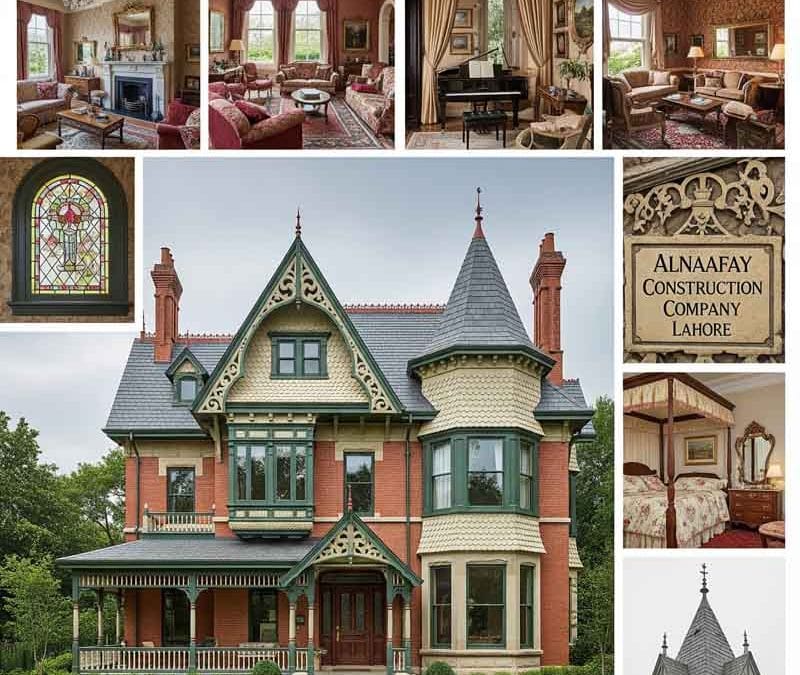
Victorian House Design
Introduction
Victorian House Design is one of the most famous and charming styles in the history of architecture. This style became popular during the reign of Queen Victoria in the 19th century (1837–1901). Homes built in this period are known for their elegance, detail, and decorative beauty. Unlike modern houses that often focus on simplicity and minimalism, Victorian homes are full of character. They have steep roofs, large porches, tall windows, and beautiful decorative trims that make them look unique and timeless.
Even today, people around the world admire Victorian House Design. It is seen as a symbol of tradition, elegance, and cultural richness. Whether built in its original form or adapted into modern layouts, Victorian homes remain one of the most attractive choices for those who want a house with both beauty and history.
History of Victorian House Design
The Victorian era was a time of great change in society, technology, and architecture. With the industrial revolution, new building materials became available, and middle-class families could afford stylish homes. Architects began experimenting with designs that were bold, decorative, and unique.
Victorian House Design is not just one single style—it includes several sub-styles that developed during the long reign of Queen Victoria. These styles include Gothic Revival, Italianate, Second Empire, Queen Anne, and Romanesque Revival. Each type had its own features, but all shared the spirit of creativity, decoration, and elegance.
The style spread quickly from England to America, Europe, Australia, and even parts of Asia. Many Victorian houses built during that period are still standing today and are considered treasures of history.
Key Features of Victorian House Design
Victorian houses are easy to recognize because of their unique features. Some of the most common characteristics include:
Asymmetrical Shape
Victorian houses usually have complex layouts with towers, turrets, and bay windows instead of simple square or rectangular designs.Steep Roofs
Roofs are often tall and steep, sometimes decorated with patterned shingles or iron details.Ornamental Details
Woodwork, carvings, and trims are used everywhere—from windows and doors to porches and staircases.Large and Tall Windows
Windows are narrow but tall. Stained glass or colored glass is sometimes used to create an artistic effect.Porches and Balconies
Wide front porches with wooden railings and carved details are a highlight of Victorian homes.Bold Colors
Victorian houses are often painted in rich and bold colors like dark red, green, brown, cream, and sometimes even combinations of three or more colors.
Interior Design in Victorian Homes
Inside, Victorian houses are just as detailed and beautiful as the outside.
Furniture: Heavy wooden furniture with carved patterns, elegant sofas with patterned fabric, and large cabinets are common.
Floors: Hardwood floors, patterned tiles, and decorative carpets are typical in Victorian interiors.
Walls: Wallpaper with floral or geometric prints is widely used. Sometimes, wooden wall panels are also added.
Lighting: Chandeliers, oil lamps, and decorative light fixtures give the rooms a royal touch.
Rooms: Unlike modern open layouts, Victorian homes usually have many smaller rooms, each designed with its own unique decoration.
Types of Victorian House Design
Victorian architecture includes different styles. Some of the most popular types are:
Gothic Revival
Known for pointed arches, steep roofs, and castle-like details.Italianate
Features wide eaves with decorative brackets and tall, narrow windows.Second Empire
Recognized by its mansard roof (a roof with two slopes on each side).Queen Anne
The most famous Victorian style. It has towers, turrets, asymmetrical shapes, and lots of decoration.Romanesque Revival
Heavy stonework, rounded arches, and massive structures.
Each of these sub-styles gives Victorian houses their diversity and charm.
Victorian House Design in Modern Times
Even though Victorian houses were built more than 100 years ago, the style is still alive today. Many architects and homeowners mix Victorian features with modern layouts. For example:
A Victorian-style exterior with a modern open-plan interior.
Decorative trims, colors, and towers combined with modern building materials.
Antique furniture mixed with new lighting and technology.
This blending allows people to enjoy both the beauty of history and the comfort of modern living.
Advantages of Victorian House Design
Timeless Beauty
Victorian homes never go out of style. Their detailed designs remain attractive forever.Unique Personality
Every Victorian house looks different because of its complex shapes and decorations.Historical Value
These homes connect us to history and tradition, which makes them culturally rich.Increased Property Value
A Victorian-style home often has higher market value because of its unique architecture.
Victorian Houses Around the World
England: Original Victorian houses can still be found in many cities.
United States: Queen Anne and Italianate styles are very popular.
Australia: Victorian homes are admired in cities like Melbourne and Sydney.
Pakistan and South Asia: Some colonial-era houses built during British rule still carry Victorian elements such as tall windows, verandas, and decorative woodwork.
Quick Links
Social Icons
Contact Us Information
443 J3 Johar Town Lahore near Expo Center Lahore
