

what is Contemporary architecture?
Introduction
Contemporary architecture refers to the architectural styles and practices that are currently relevant and in vogue. Unlike historical movements tied to specific time periods, contemporary architecture reflects the latest design and construction trends. It continues to evolve as architects incorporate new materials, technologies, and sustainable practices.
Key Characteristics of Contemporary Architecture
1. Innovation and Creativity
One of the defining features of contemporary architecture is its emphasis on innovation. Architects frequently push the boundaries of traditional design by utilizing cutting-edge technologies, materials, and construction techniques. Consequently, contemporary buildings often stand out due to their unique and visually striking forms.
2. Sustainability
With growing concerns about environmental impact, contemporary architects prioritize sustainability. Many designs incorporate eco-friendly materials, energy-efficient systems, and sustainable building practices. Features such as green roofs, solar panels, and rainwater harvesting systems help reduce the carbon footprint of modern structures.
3. Open and Flexible Spaces
Unlike conventional architecture, contemporary design favors open floor plans and adaptable spaces. This flexibility allows buildings to accommodate different functions, catering to the changing needs of modern society. For example, multi-purpose living areas in homes or collaborative spaces in offices reflect this principle.
4. Integration of Nature
Many contemporary architects incorporate natural elements into their designs, fostering a strong connection between indoor and outdoor spaces. Large windows, skylights, and living walls enhance this interaction, promoting natural ventilation and maximizing daylight exposure.
5. Minimalism
Another significant aspect of contemporary architecture is minimalism. Clean lines, simple geometric shapes, and uncluttered spaces define this approach. By eliminating excessive ornamentation, architects focus on functionality and aesthetics, creating visually pleasing environments.
6. Use of Advanced Technology
Modern technology plays a vital role in contemporary architecture. Architects leverage tools like computer-aided design (CAD), 3D printing, and parametric modeling to create intricate and efficient designs. These technologies allow for precise planning and innovative structural solutions.
7. Cultural and Global Influences
Contemporary architecture is shaped by global influences. Architects often draw inspiration from different cultures and architectural traditions, incorporating elements that reflect local identity while embracing modern design principles.
8. Diverse and Innovative Materials
Unlike traditional architecture, which relied heavily on wood, brick, and stone, contemporary designs utilize a variety of materials, including glass, steel, concrete, and composites. Additionally, sustainable materials like bamboo, recycled plastics, and engineered wood are increasingly being used.
9. Expression of Identity
Many contemporary buildings are designed to express the identity, values, or culture of their occupants or communities. This results in unique and symbolic architectural statements, distinguishing them from purely functional structures.
10. Urban Adaptation
As cities become more densely populated, contemporary architecture adapts to urban environments by incorporating vertical structures, mixed-use developments, and efficient land use planning. This helps maximize available space while creating dynamic urban landscapes.
Historical Development of Contemporary Architecture
The evolution of contemporary architecture is a complex journey that spans from the late 19th century to the present day. Below is an overview of key movements that shaped its development:
Late 19th to Early 20th Century: The Rise of Modernism
During this period, architects began to challenge the ornate, historicist styles of the past. The modernist movement emerged, characterized by simplicity, functionality, and the use of new materials like steel, glass, and concrete. Pioneering figures such as Ludwig Mies van der Rohe, Le Corbusier, and Walter Gropius played a crucial role in shaping this movement.
Mid-20th Century: Post-War Architecture and Brutalism
Following World War II, the demand for rapid reconstruction led to the rise of new architectural styles. Brutalism, known for its raw concrete structures and bold, utilitarian designs, gained popularity. During this time, architects like Frank Lloyd Wright introduced organic architecture, integrating buildings with their natural surroundings.
Late 20th Century: Postmodernism and Deconstructivism
Postmodernism emerged as a reaction against the rigid functionalism of modernism. Architects such as Robert Venturi and Michael Graves reintroduced ornamentation, playful design, and historical references. Meanwhile, deconstructivism, led by figures like Frank Gehry and Zaha Hadid, challenged conventional forms by creating fragmented and unconventional structures.
21st Century: Contemporary Architecture
The Evolution of Contemporary Architecture
Globalization and Cultural Influences
In today’s interconnected world, contemporary architecture is deeply shaped by globalization. Architects draw inspiration from diverse cultural and regional styles, creating designs that blend tradition with modernity. Additionally, urbanization presents new challenges, requiring innovative, adaptable, and sustainable solutions for rapidly growing cities.
Iconic Contemporary Buildings
Contemporary architecture has produced many groundbreaking structures that define modern skylines. Some of the most notable examples include:
- Burj Khalifa (Dubai, UAE): The tallest building in the world, showcasing cutting-edge engineering and sleek design.
- Guggenheim Museum Bilbao (Spain): Designed by Frank Gehry, this architectural masterpiece features flowing, deconstructed forms.
- CCTV Headquarters (Beijing, China): A striking, unconventional structure designed by Rem Koolhaas, demonstrating innovation in form and function.
Post-War Influence and the Mid-Century Modern Era
After World War II, architects expanded upon modernist principles, embracing new materials and design philosophies. The mid-century modern era saw a rise in innovative structures that prioritized simplicity, functionality, and harmony with nature. Pioneering architects such as:
- Frank Lloyd Wright introduced organic architecture, seamlessly integrating buildings with their natural surroundings.
- Alvar Aalto emphasized human-centered design, incorporating warmth and natural materials.
- Richard Neutra focused on open spaces and indoor-outdoor connections, shaping modern residential architecture.
Key Features and Principles of Contemporary Architecture
Contemporary architecture is characterized by several defining principles that distinguish it from earlier styles:
- Innovation and Experimentation: The use of advanced materials, digital design tools, and unconventional structures.
- Minimalist Aesthetic: Clean lines, geometric shapes, and uncluttered spaces create a refined, modern look.
- Sustainability and Eco-Friendly Design: Energy-efficient technologies, renewable materials, and green building techniques reduce environmental impact.
- Integration with Nature: Large windows, open spaces, and natural elements enhance indoor-outdoor connectivity.
- Smart Technology: Automated lighting, climate control, and security systems improve efficiency and convenience.
Design Elements of Contemporary Houses
When designing a contemporary home, architects incorporate several essential elements to achieve a modern and functional aesthetic:
- Open Floor Plans: Seamless transitions between living areas create spacious, adaptable environments.
- Expansive Windows: Floor-to-ceiling glass enhances natural light and fosters a connection with the outdoors.
- Sustainable Materials: The use of wood, stone, recycled materials, and eco-friendly finishes supports sustainability.
- Flat or Low-Pitched Roofs: These sleek roof designs enable green roofs and solar panel integration.
- Indoor-Outdoor Living: Features such as sliding glass doors and outdoor courtyards enhance spatial fluidity.
- Neutral Color Palettes: Whites, grays, and earth tones establish a minimalist yet sophisticated ambiance.
- Functional and Adaptive Spaces: Multi-purpose rooms and smart storage solutions optimize space efficiency.
- Landscaping Integration: Clean, modern gardens and hardscaping elements complement the home’s architectural style.

1. Innovation and Experimentation
Contemporary architecture pushes boundaries by embracing new materials, technologies, and design concepts. Architects constantly experiment with unconventional structures, digital fabrication, and parametric design to create groundbreaking buildings.
2. Minimalism and Simplicity
A hallmark of contemporary design is its minimalist approach—clean lines, geometric shapes, and uncluttered spaces. Ornamentation is kept to a minimum, with a strong focus on form and function.
3. Functionality and Efficiency
Modern buildings prioritize usability and adaptability. Spaces are designed to be practical, energy-efficient, and capable of evolving to meet changing needs. Smart technology further enhances efficiency through automation and intelligent systems.
4. Open and Flexible Spaces
Contemporary architecture often features open floor plans and multi-purpose areas. These spaces offer flexibility, allowing occupants to adapt interiors based on evolving lifestyle or commercial requirements.
5. Integration with the Environment
Sustainability is a core principle of contemporary architecture. Architects aim to minimize environmental impact through green roofs, passive solar design, natural ventilation, and energy-efficient materials. Buildings are designed to harmonize with their surroundings rather than disrupt them.
6. Advanced Use of Technology
Modern architecture benefits from technological advancements, including:
- Computer-Aided Design (CAD) for precision in planning.
- 3D Modeling and Digital Fabrication to test and refine innovative forms.
- Smart Home and Building Systems that improve energy efficiency and occupant comfort.
7. Cultural Sensitivity and Identity
Many contemporary architectural projects reflect the identity of their occupants or communities. Architects blend local traditions with modern materials and techniques, creating contextually relevant and culturally sensitive designs.
8. Material Innovation
A variety of materials are used in contemporary architecture, including:
- Glass, Steel, and Concrete for sleek and industrial aesthetics.
- Sustainable Materials like bamboo, recycled metals, and repurposed wood for eco-friendly designs.
9. Fluid and Dynamic Forms
Unlike rigid, boxy structures of the past, contemporary buildings often feature fluid, organic, and asymmetrical designs. These dynamic forms challenge traditional architectural norms and create visually striking structures.
10. Transparency and Light
To foster a strong connection between indoor and outdoor spaces, contemporary buildings incorporate large windows, skylights, and transparent facades. Maximizing natural light enhances energy efficiency and creates a sense of openness.
11. Adaptation to Urban Environments
With increasing urbanization, contemporary architecture emphasizes efficient land use. Strategies include:
- Vertical Construction (high-rise buildings and skyscrapers).
- Mixed-Use Developments that combine residential, commercial, and recreational spaces in one location.
- Green Urban Planning that integrates parks, gardens, and pedestrian-friendly zones.
12. Iconic and Landmark Buildings
Contemporary architecture has produced many iconic structures that redefine cityscapes. Examples include:
- Burj Khalifa (Dubai): The world’s tallest building, an engineering marvel.
- Guggenheim Museum Bilbao (Spain): A masterpiece of fluid, deconstructed forms.
- CCTV Headquarters (Beijing): A unique, interconnected tower reshaping architectural possibilities.
Design Elements of Contemporary Houses
When designing contemporary homes, architects integrate the following key elements to achieve a modern and functional aesthetic:
1. Open Floor Plans
Seamless transitions between living areas create a spacious and adaptable environment.
2. Expansive Windows
Floor-to-ceiling glass enhances natural light and fosters indoor-outdoor connectivity.
3. Sustainable Materials
The use of wood, stone, recycled materials, and eco-friendly finishes supports environmental responsibility.
4. Flat or Low-Pitched Roofs
Modern roofs allow for solar panel installation and green roofing solutions.
5. Indoor-Outdoor Living
Sliding glass doors, outdoor patios, and integrated courtyards enhance spatial fluidity.
6. Neutral Color Palettes
A mix of whites, grays, and earth tones reinforces a minimalist yet sophisticated ambiance.
7. Functional and Adaptive Spaces
Multi-purpose rooms and built-in storage optimize space efficiency and usability.
8. Smart Home Integration
Automated lighting, climate control, and security systems provide convenience and energy savings.
9. Landscaping and Hardscaping
Minimalistic gardens and clean exterior lines complement the home’s architectural style
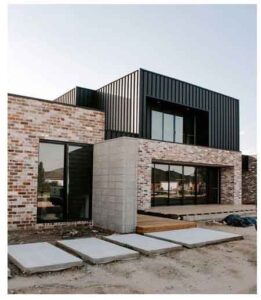
Essential Design Elements of a Contemporary Architecture House
Designing a contemporary house involves integrating key architectural elements that reflect modern aesthetics, functionality, and sustainability. Below are the essential features of contemporary house design:
1. Clean Lines and Minimalism
Contemporary architecture is characterized by sharp, clean lines and a minimalist approach. Simple geometric shapes and uncluttered designs create a sleek, modern appearance.
2. Open Floor Plans
Walls are minimized to promote open, flowing spaces. Contemporary homes prioritize seamless transitions between living, dining, and kitchen areas to enhance spaciousness and connectivity.
3. Expansive Windows
Large, strategically placed windows—often floor-to-ceiling—maximize natural light and provide unobstructed views of the surrounding environment. This enhances transparency and openness.
4. Use of Natural and Modern Materials
While steel, concrete, and glass are common in contemporary design, natural materials like wood and stone add warmth and contrast, balancing the industrial aesthetic with organic elements.
5. Flat or Low-Pitched Roofs
Flat or gently sloping roofs define the contemporary style, reinforcing its streamlined appearance. Many incorporate green roofs or solar panels for energy efficiency.
6. Sustainability and Eco-Friendly Features
Sustainable design is central to contemporary architecture. Features include:
- Passive solar design for natural heating and cooling.
- Energy-efficient systems like LED lighting and smart thermostats.
- Rainwater harvesting and recycled materials for eco-conscious construction.
7. Indoor-Outdoor Connectivity
Blurring the boundary between indoor and outdoor living is a hallmark of contemporary homes. Large sliding glass doors, courtyards, and outdoor lounge areas create fluid transitions between spaces.
8. Innovative Use of Space
Efficiency is key in contemporary homes, with design elements such as:
- Built-in furniture for functionality.
- Hidden storage solutions to maintain a clutter-free aesthetic.
- Multi-functional rooms that adapt to changing needs.
9. Minimalist Color Palette
Neutral and monochromatic color schemes—whites, grays, blacks, and earth tones—enhance simplicity and sophistication, allowing textures and materials to take center stage.
10. Functionality and Practicality
Every design element in a contemporary home serves a purpose. Spaces are tailored to the occupants’ needs while maintaining a sleek and minimalist aesthetic.
11. Unique Architectural Features
Many contemporary houses showcase striking design elements, including:
- Cantilevered structures for a floating effect.
- Asymmetrical facades for a dynamic, unconventional look.
- Sculptural elements that add artistic appeal.
12. Smart Home Integration
Automation and smart technology enhance convenience, security, and efficiency. Contemporary homes often include:
- Smart lighting and climate control.
- Automated security systems.
- Voice-controlled home assistants.
13. Cultural and Regional Adaptations
Contemporary architecture often incorporates elements that reflect local culture or regional traditions, ensuring harmony with the environment and historical influences.
14. Modern Landscaping and Exterior Design
Contemporary landscaping complements the house’s architecture with:
- Minimalist plantings for a clean, structured look.
- Hardscaping elements such as stone pathways and water features.
- Outdoor seating areas designed for relaxation and entertainment.
15. Personalized Artistic Touches
Contemporary architecture allows for self-expression through:
- Custom-designed elements.
- Art installations and statement pieces.
- Unique furnishings that reflect personal taste.
Quick Links
Social Icons
Contact Us Information
443 J3 Johar Town Lahore near Expo Center Lahore
