
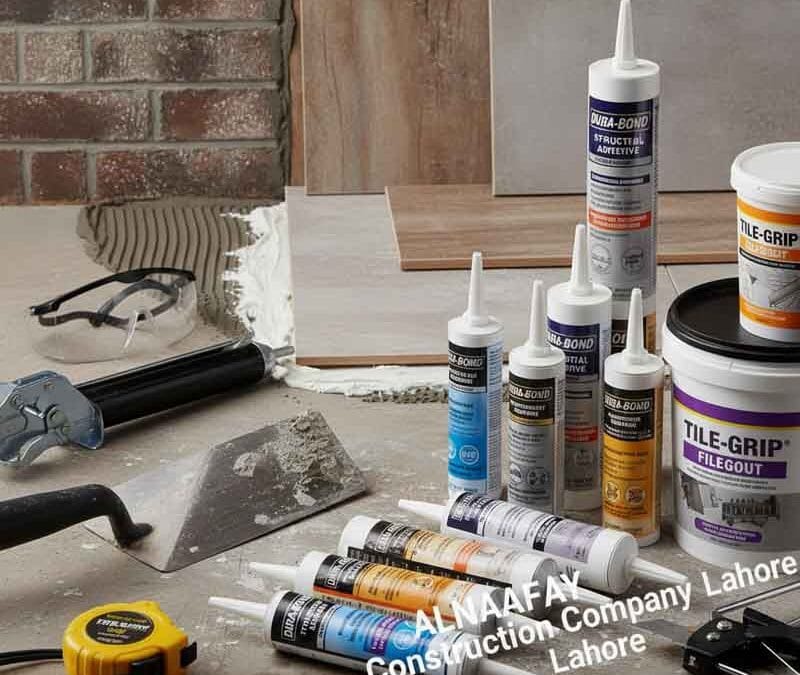
Adhesives and Sealants for Construction
Table of Contents
- Introduction
- Defining Adhesives and Sealants for Construction
- Key Benefits of Using Adhesives and Sealants in Construction
- Essential Material Options Available Today
- Climate Suitability of Construction Sealants and Adhesives
- Germany: The Global Leader in Construction Adhesives
- The Construction Boom in Lahore, Pakistan
- Frequently Asked Questions (FAQs)
- Conclusion
Introduction
Building strong structures requires more than just bricks and cement. Furthermore, modern engineering relies heavily on advanced chemical solutions to hold things together. Therefore, understanding the correct use of materials is essential for any builder. We will explore the critical role of adhesives and sealants for construction in this comprehensive guide. Ultimately, you will learn exactly how to select the right products for your next building project.
Defining Adhesives and Sealants for Construction
Many people use these terms interchangeably, but they serve different primary purposes. First, adhesives are chemical mixtures designed to bind two surfaces together. They create a strong structural bond that resists pulling and shearing forces. Consequently, builders use them to attach panels, flooring, and structural components without relying completely on nails or screws.
On the other hand, sealants act mainly as protective barriers. Specifically, they fill gaps between two surfaces to prevent water, air, and dust from entering a building. Moreover, sealants offer high flexibility, allowing materials to expand and contract as temperatures change. Understanding the difference between these two products is the first must-follow rule when using adhesives and sealants for construction. Sometimes, hybrid products exist that perform both functions simultaneously. However, pure adhesives focus on strength, while pure sealants prioritize flexibility.
Key Benefits of Using Adhesives and Sealants in Construction
Choosing the right chemical bonding agents transforms the quality of a building. Initially, these materials improve the overall structural integrity of a project. Adhesives distribute stress evenly across a bonded area, unlike screws that concentrate stress at a single point. Consequently, this even distribution prevents materials from cracking under heavy loads.
Another major benefit involves improved energy efficiency. When workers apply sealants around windows and doors, they block drafts effectively. As a result, heating and cooling systems operate much more efficiently. Furthermore, adhesives and sealants for construction enhance the aesthetic appeal of a building. Hidden chemical bonds eliminate the need for ugly metal fasteners on beautiful wooden or glass surfaces.
Additionally, these products offer incredible vibration dampening properties. Buildings near busy roads or train tracks experience constant shaking. Therefore, flexible bonds absorb these vibrations, preventing long-term structural damage. Finally, using advanced adhesives and sealants for construction significantly speeds up the building process. Workers can apply chemical bonds much faster than they can drill hundreds of individual screws.
Essential Material Options Available Today
Builders can choose from a wide variety of chemical formulations. Each material option serves a specific purpose on a job site.
Silicone-Based Options
Silicone remains one of the most popular choices for sealing gaps. Firstly, it offers unmatched resistance to ultraviolet sunlight and extreme temperatures. Consequently, workers use silicone primarily for exterior joints and glass applications.
Polyurethane Products
Polyurethane provides exceptional strength and flexibility. Furthermore, builders love this material because it adheres perfectly to concrete, wood, and metal. Therefore, polyurethane serves as a top choice when selecting adhesives and sealants for construction projects involving heavy structural loads.
Acrylic Formulations
Acrylic products are generally water-based and easy to clean up. Moreover, they accept paint very well, making them ideal for interior cosmetic work. However, acrylics do not perform well in areas exposed to standing water.
Epoxy Resins
Epoxy delivers the strongest chemical bond available in the industry. Specifically, engineers use epoxy to anchor heavy steel bolts into solid concrete. While epoxy offers incredible strength, it lacks the flexibility found in polyurethane or silicone.
Climate Suitability of Construction Sealants and Adhesives
Weather conditions heavily influence how chemical bonds perform. Therefore, matching your materials to the local climate remains a crucial rule.
In extremely hot environments, certain materials can melt or degrade rapidly. Silicone performs beautifully in the heat because it resists high temperatures without losing its shape. Conversely, extreme cold causes many products to become brittle and shatter. Polyurethane maintains its flexibility even during freezing winters, making it perfect for cold climates.
Humid environments present a completely different challenge. High moisture levels can prevent certain chemicals from curing properly. As a result, builders in rainy regions must choose moisture-curing adhesives and sealants for construction. These specialized products actually absorb water from the air to trigger the hardening process. Understanding your local climate guarantees that your building materials will last for decades.
Germany: The Global Leader in Construction Adhesives
When discussing the engineering behind these chemicals, one country stands above the rest. Germany is universally recognized as the most famous country for developing adhesives and sealants for construction.
Historically, German chemical engineering has dominated the global market for over a century. Companies founded in Germany pioneered the earliest synthetic resins used in modern building. Furthermore, their strict national building codes force manufacturers to produce incredibly durable materials. Consequently, German products offer unmatched reliability, safety, and environmental sustainability.
Another reason for this dominance is their intense focus on research and development. German universities collaborate closely with industrial manufacturers to invent new polymer chains. Therefore, whenever a revolutionary new building chemical hits the market, it often originates from a German laboratory. Builders worldwide trust German engineering when they need permanent structural solutions.
The Construction Boom in Lahore, Pakistan
While Germany produces the materials, rapidly growing cities across the world are consuming them. Lahore, Pakistan, serves as a perfect example of a city experiencing a massive construction boom. Consequently, the demand for high-quality adhesives and sealants for construction has skyrocketed in this region.
Modern housing developments in Lahore require advanced building materials to maintain luxury standards. Leading the way is DHA (Defence Housing Authority), where contractors build expansive, modern villas. Similarly, Bahria Town features incredible infrastructure that relies on premium sealants to protect buildings from the intense summer heat. Lake City offers beautiful waterfront properties that absolutely require waterproof bonding agents to prevent moisture damage.
Valencia and Wapda Town continue to expand with new commercial and residential blocks. Moreover, Johar Town and Model Town feature a mix of classic architecture and modern renovations, heavily utilizing structural adhesives. Gulberg serves as the commercial heart of the city, with high-rise glass buildings held together by structural silicone. Finally, secure neighborhoods like Askari and the Cantt area demand long-lasting materials for their premium housing units. Builders across all these top societies in Lahore recognize that using proper adhesives and sealants for construction guarantees long-term durability.
Frequently Asked Questions (FAQs)
What is the main difference between adhesives and sealants?
Adhesives are primarily formulated to bond two surfaces together with high strength. Meanwhile, sealants are designed to fill gaps and prevent water or air from passing through a joint.
Can I use the same product for both gluing and sealing?
Yes, certain hybrid polyurethane products perform both tasks well. However, dedicated products usually provide better specific results for demanding applications.
How long do adhesives and sealants for construction take to dry?
Drying times vary drastically based on the chemical makeup. Some acrylics dry in a few hours, while heavy-duty epoxies might require several days to reach full structural strength.
Are these construction chemicals safe for the environment?
Many modern manufacturers now produce low-VOC (Volatile Organic Compound) formulas. Consequently, these eco-friendly options emit fewer harmful fumes during the curing process.
Why do some sealants crack over time?
Cracking usually occurs when a worker chooses the wrong material for the climate. Furthermore, extreme UV exposure can degrade cheaper products that lack protective additives.
Conclusion
Building strong, weather-resistant structures requires careful planning and the right materials. Adhesives and sealants for construction provide the hidden strength that keeps modern buildings standing tall. Furthermore, matching the right chemical to your specific climate and material needs ensures lasting success. Whether you are building a skyscraper in Germany or a luxury home in Lahore, these rules remain exactly the same. Always prioritize quality, follow the manufacturer guidelines, and your construction projects will endure for generations.
Quick Links
Social Icons
Contact Us Information
443 J3 Johar Town Lahore near Expo Center Lahore
