
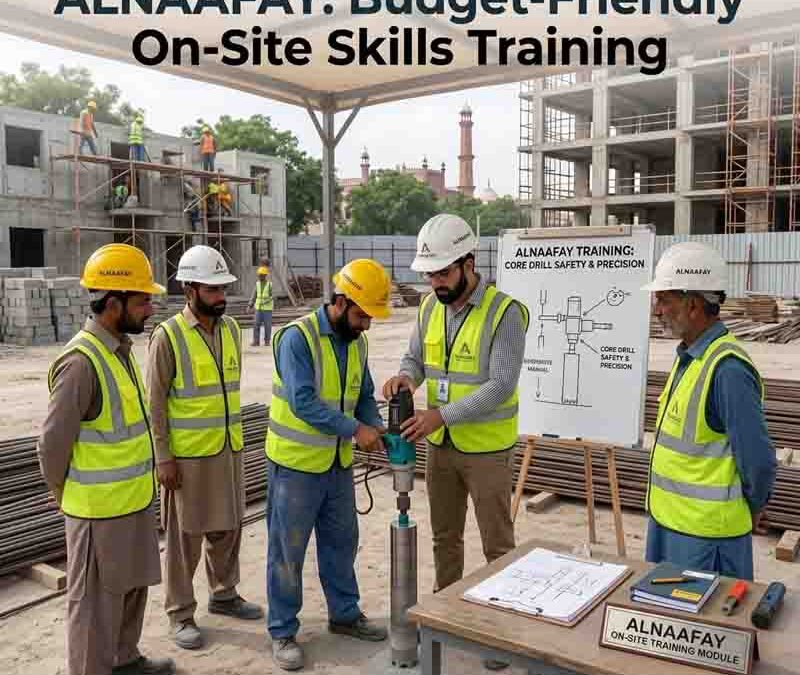
How to Train and Upskill Your Construction Workforce on a Budget
Building a skilled construction team does not have to drain your finances. Whether you are managing a small crew on a residential project or overseeing hundreds of workers on a large development, training and upskilling your construction workforce is one of the most impactful investments you can make — and it does not have to cost a fortune.
The construction industry faces a persistent skills gap. According to the Associated General Contractors of America, more than 80% of construction firms report difficulty finding qualified workers. Furthermore, workplace accidents, project delays, and costly rework are often the direct result of undertrained teams. The good news is that effective workforce development does not require a large budget. With the right strategies, even small and mid-sized construction companies can build highly capable teams without breaking the bank.
This guide walks you through everything you need to know about training and upskilling your construction workforce affordably and effectively — from on-the-job mentorship to government-funded grants and in-house programs.
Table of Contents
- Why Training and Upskilling Your Construction Workforce Matters
- Challenges of Upskilling a Construction Workforce on a Budget
- Cost-Effective Ways to Train Your Construction Workforce
- On-the-Job Training and Mentorship Programs
- Free and Low-Cost Online Training Resources for Construction Workers
- Government-Funded Training Programs and Grants
- Building an In-House Training Program on a Budget
- How to Measure the ROI of Construction Workforce Training
- Construction Company Lahore: Upskilling Workers in a Local Context
- FAQs
- Conclusion
Why Training and Upskilling Your Construction Workforce Matters
Before diving into the how, it is worth understanding the why. Training and upskilling your construction workforce is not just a box-ticking exercise. Rather, it is a practical strategy that directly affects your company's safety record, project quality, staff retention, and bottom line.
Fewer Accidents, Lower Liability
Construction remains one of the most hazardous industries in the world. The Occupational Safety and Health Administration (OSHA) reports that construction accounts for a significant share of workplace fatalities each year. However, companies that invest in regular safety training see measurable reductions in incident rates. Well-trained workers identify hazards faster, follow safety protocols more consistently, and make better decisions under pressure. As a result, fewer accidents mean lower insurance premiums, fewer project stoppages, and reduced legal exposure.
Higher Quality Work and Fewer Errors
Rework is one of the biggest hidden costs in construction. Studies by FMI Corporation suggest that rework can account for up to 5% of total project costs. Skilled workers produce better results the first time, which reduces wasted materials, saves time, and protects your reputation with clients. Therefore, investing in upskilling your workforce pays for itself many times over through improved quality and reduced rework.
Better Staff Retention
Qualified construction workers have options. Companies that fail to invest in their people lose them to competitors who do. Conversely, construction businesses that offer clear training pathways and career development opportunities consistently report higher employee satisfaction and lower turnover. Replacing a skilled tradesperson can cost thousands of dollars when you factor in recruitment, onboarding, and lost productivity. Retaining that person through training is far cheaper.
Competitive Advantage
Clients increasingly expect construction companies to demonstrate that their workforce is qualified, certified, and up to date with industry standards. A well-trained team is not only more productive — it is also a strong selling point when bidding on contracts.
Challenges of Upskilling a Construction Workforce on a Budget
Despite the clear benefits, many construction companies — particularly smaller ones — face real obstacles when it comes to workforce development. Understanding these challenges is the first step toward overcoming them.
Limited Financial Resources
The most obvious challenge is cost. Formal training programs, external trainers, and accredited courses can be expensive. For small contractors with tight margins, allocating a meaningful training budget can feel impossible. Nevertheless, as this guide will show, many effective training methods cost very little.
Time Constraints on Active Job Sites
Construction schedules are demanding. Taking workers off the tools for training disrupts productivity and can push project timelines. Additionally, many construction workers work irregular hours, making it difficult to coordinate group training sessions. Finding the right balance between training and operational demands is a genuine logistical challenge.
High Workforce Turnover
Construction companies with high turnover rates may question the value of investing in workers who might leave. However, this logic works in reverse — companies that invest in training tend to retain workers longer, which ultimately reduces turnover costs.
Resistance to Change
Some experienced workers resist formal training, particularly if they feel it implies their existing skills are inadequate. Therefore, framing training as professional development rather than remedial education is important. The goal is to build on existing strengths, not to suggest that current methods are wrong.
Cost-Effective Ways to Train Your Construction Workforce
The most effective approach to budget-conscious workforce development is not to rely on a single method. Instead, combine several low-cost or no-cost strategies to build a comprehensive training program. The following sections explore the most practical options available to construction companies of all sizes.
On-the-Job Training and Mentorship Programs for Construction Workers
On-the-job training (OJT) is one of the oldest and most effective methods of upskilling a construction workforce — and it costs almost nothing to implement. The core idea is straightforward: experienced workers teach less experienced colleagues by working alongside them on real tasks.
How to Set Up a Mentorship Program
Start by identifying your most skilled and knowledgeable workers. These people are your potential mentors. Look not only at technical skill, but also at communication ability and patience. A worker who is technically brilliant but unwilling to explain things clearly will not make an effective mentor.
Next, pair mentors with newer or less experienced workers based on the skills gaps you want to address. Be explicit about the goals of the pairing. Both the mentor and the mentee should understand what skills are being developed, how progress will be measured, and how long the mentorship period will last.
Finally, recognize and reward mentors for their contribution. This does not have to mean financial bonuses — although that certainly helps. Public acknowledgment, additional responsibilities, or a formal mentor certification all signal that the role is valued by the organization.
Why OJT Works Particularly Well in Construction
Construction is a hands-on industry. Consequently, skills that are difficult to convey in a classroom — reading site conditions, operating equipment safely, problem-solving in real time — are naturally embedded in daily work through OJT. Workers learn by doing, which accelerates skill acquisition and builds confidence faster than passive instruction.
Moreover, OJT integrates seamlessly into the workday. Workers do not need to be pulled off the tools for extended periods. Instead, learning happens continuously as part of normal operations.
Free and Low-Cost Online Training Resources for Construction Workers
The internet has transformed access to vocational training. Today, construction workers can access high-quality instructional content at little or no cost, often from their phones during breaks or after work hours.
OSHA Online Training
OSHA offers a range of free online training materials covering construction safety, hazard identification, and regulatory compliance. The OSHA 10-hour and 30-hour construction courses are widely recognized across the industry and provide workers with foundational safety knowledge. While the formal card requires attendance at an authorized provider, much of the preparatory content is available online for free.
YouTube and Video-Based Learning
It may seem informal, but YouTube has become a legitimate training resource for construction skills. Channels dedicated to carpentry, electrical work, plumbing, concrete work, and project management provide detailed, visually rich instruction that workers can revisit as many times as needed. Furthermore, video-based learning is highly effective for visual learners, which represents a large proportion of the construction workforce.
Coursera, edX, and LinkedIn Learning
Platforms like Coursera, edX, and LinkedIn Learning offer structured courses in construction management, project planning, safety management, and related topics. Many of these courses are available for free in audit mode, meaning workers can access the content without paying for certification. For companies willing to invest a small amount, bulk subscriptions to platforms like LinkedIn Learning can provide organization-wide access to a broad library of relevant courses.
Industry Association Resources
Many construction industry associations — such as the Associated Builders and Contractors (ABC), the National Association of Home Builders (NAHB), and the Construction Industry Institute (CII) — offer free or subsidized training resources to members. If your company is not already a member of a relevant association, it is worth evaluating whether membership fees are justified by the training benefits alone.
Government-Funded Training Programs and Grants for Construction Upskilling
One of the most underutilized resources available to construction companies is government funding for workforce development. Across the United States and many other countries, federal, state, and local governments offer grants, subsidized training programs, and tax incentives specifically designed to help employers upskill their workforce.
Federal Programs in the United States
The Workforce Innovation and Opportunity Act (WIOA) is the primary federal legislation governing workforce development in the United States. Under WIOA, eligible workers can access subsidized training through local American Job Centers. Construction companies can partner with these centers to facilitate training for both existing employees and new hires, often at no direct cost to the employer.
Additionally, the U.S. Department of Labor's Registered Apprenticeship program provides a structured pathway for developing skilled construction workers. Employers who register as apprenticeship sponsors gain access to federal support, and apprentices can earn industry-recognized credentials while contributing productively on the job site. The cost-sharing structure of apprenticeships makes them one of the most financially attractive training models available.
State-Level Workforce Development Grants
Most U.S. states operate their own workforce development programs that supplement federal funding. Many of these programs offer direct grants to employers for training expenses, including course fees, materials, and even wages during training periods. State economic development agencies are typically the best starting point for researching available programs.
Tax Incentives for Training Investment
In some jurisdictions, employers can claim tax deductions or credits for qualifying workforce training expenses. Consulting with a tax professional who is familiar with construction industry regulations can help identify these opportunities and ensure that eligible expenses are properly documented.
Building an In-House Training Program on a Budget
For construction companies that want more control over the content and delivery of training, building an in-house program is a highly cost-effective approach — provided it is designed carefully.
Step 1: Identify Your Skills Gaps
Begin by conducting a skills audit across your workforce. Talk to project managers, site supervisors, and workers themselves to understand where knowledge gaps are creating problems. Review incident reports, quality issues, and project performance data to identify patterns. The goal is to build a clear picture of what your workforce currently knows and what they need to learn.
Step 2: Define Your Training Objectives
Once you know your skills gaps, translate them into specific, measurable training objectives. For example, rather than setting a vague goal like "improve safety awareness," define something concrete: "All site workers will complete OSHA 10-hour training within the next six months." Clear objectives make it easier to design relevant content, assign responsibilities, and measure outcomes.
Step 3: Develop Your Training Materials
Developing training materials in-house costs primarily time rather than money. Leverage the knowledge of your most experienced workers to create practical guides, checklists, demonstration videos, and reference cards. Keep materials simple, visual, and job-specific. Complex documents that workers will not read are less useful than concise, illustrated guides that address real on-site situations.
Step 4: Schedule Training Strategically
To minimize disruption to active projects, schedule training during natural downtime periods — between project phases, during weather delays, or at the start of a new project before full deployment. Short, focused training sessions of 30 to 60 minutes are often more effective than lengthy workshops, particularly for workers who are accustomed to physically active days.
Step 5: Assign Internal Trainers
Identify workers who have the knowledge, communication skills, and willingness to serve as internal trainers. Provide them with basic instruction in adult learning principles — how people learn best, how to give clear demonstrations, and how to check for understanding. Internal trainers cost far less than external consultants and have the added advantage of deep familiarity with your specific operations and site conditions.
Step 6: Review and Improve Continuously
An in-house training program should evolve over time. Collect feedback from participants after each session, track whether the targeted skills gaps are closing, and update content as regulations, technologies, and job site conditions change. A training program that is regularly reviewed and improved will deliver compounding returns over time.
How to Measure the ROI of Construction Workforce Training
One of the reasons that training budgets are often the first to be cut is that their return on investment is not always obvious. However, construction companies that track the right metrics can demonstrate clearly that workforce development pays for itself.
Track Safety Incident Rates
Before and after training, monitor your recordable incident rate (RIR) and total recordable incident rate (TRIR). A measurable reduction in incidents following safety training provides clear evidence of value — and can be translated directly into dollar savings through reduced workers' compensation claims, lower insurance premiums, and fewer project delays.
Monitor Rework and Quality Defects
Track the frequency and cost of rework before and after skills training. Even a modest reduction in rework rates can yield significant financial savings on large projects. Additionally, quality improvements are visible to clients and contribute to stronger business relationships and repeat contracts.
Measure Employee Retention
Calculate your annual employee turnover rate and estimate the cost of replacing each departed worker. If turnover decreases following the introduction of training programs, the savings can be directly attributed to workforce development investment.
Assess Productivity Metrics
Monitor output metrics such as units completed per shift, material waste rates, and schedule adherence before and after training. Improvements in these areas demonstrate that trained workers are not only safer and more accurate, but also more efficient.
Gather Worker Feedback
Surveys and informal conversations with workers provide qualitative evidence of training effectiveness. Workers who feel more confident, more competent, and more valued as a result of training are more engaged — and engaged workers are consistently more productive.
Construction Company Lahore: Upskilling Workers in a Local Context
For a construction company in Lahore, the challenge of training and upskilling a construction workforce takes on a particular character shaped by local labor market conditions, cultural dynamics, and the extraordinary pace of urban development in the city.
Lahore is one of South Asia's fastest-growing urban centers. Large-scale infrastructure projects, residential developments, commercial complexes, and government-funded public works are transforming the city at a remarkable rate. As a result, construction companies in Lahore are managing large, often diverse workforces under significant time and cost pressure — precisely the conditions that make structured, budget-conscious workforce training both more challenging and more necessary.
The Skills Gap in Lahore's Construction Sector
The construction labor market in Lahore draws heavily on workers from rural areas of Punjab and neighboring provinces. Many of these workers bring strong foundational skills and a strong work ethic, but may have limited exposure to formal safety training, modern construction techniques, or the use of digital tools and project management systems. Furthermore, as the complexity and scale of construction projects in Lahore continues to grow, the gap between available skills and required competencies is widening.
A construction company in Lahore that invests in bridging this gap gains a meaningful competitive advantage — not only in the quality of work it delivers, but also in its ability to attract and retain skilled workers in a competitive labor market.
Practical Training Approaches for Lahore-Based Companies
Several of the budget-friendly training strategies outlined above are particularly well-suited to the Lahore construction context. On-the-job training and mentorship programs, for instance, align naturally with the cultural tradition of learning through apprenticeship and direct knowledge transfer from experienced craftspeople to newer workers. Formalizing these existing informal practices — by defining mentorship roles, setting clear learning objectives, and recognizing mentors for their contribution — can significantly amplify their effectiveness at minimal cost.
In-house training programs are also highly practical for a construction company in Lahore. Given that training materials developed externally may not always reflect local building methods, materials, or regulatory requirements, creating site-specific guides and checklists in Urdu or relevant regional languages ensures that all workers can access and apply the information effectively. Visual instruction materials are particularly valuable in contexts where literacy levels vary across the workforce.
Government and Industry Support for Construction Training in Pakistan
Pakistan's Technical and Vocational Education and Training (TVET) system, overseen by the National Vocational and Technical Training Commission (NAVTTC), offers a range of subsidized training programs relevant to the construction industry. These include courses in masonry, electrical work, plumbing, welding, and construction safety. A construction company in Lahore that partners with NAVTTC-affiliated training providers can access qualified instruction at significantly reduced cost, while workers gain recognized credentials that enhance their employability and professional standing.
Additionally, the Punjab Skills Development Fund (PSDF) provides grants and subsidized training specifically for workers in Punjab province. Construction companies operating in and around Lahore should explore PSDF programs as a practical, low-cost pathway for upskilling their workforce.
Building a Training Culture in Lahore's Construction Industry
Perhaps the most important long-term step for a construction company in Lahore is to build a genuine culture of continuous learning. This means treating training not as an occasional event, but as an ongoing part of how the company operates. It means recognizing and rewarding workers who develop new skills, providing clear pathways for career advancement, and communicating clearly that the company invests in its people because it values their contribution.
In a labor market where skilled workers have growing options, companies that demonstrate this commitment will attract and retain the best people — and deliver better results for their clients as a direct consequence.
FAQs
How much should a construction company budget for workforce training?
There is no universal figure, but industry benchmarks suggest that organizations spending between 1% and 3% of payroll on training tend to see positive returns. However, given that many highly effective training methods — such as on-the-job mentorship, in-house program development, and free online resources — carry minimal direct cost, even companies with very limited budgets can implement meaningful training initiatives. Start with what you can afford, measure the results, and scale up as the return on investment becomes clear.
How do I encourage experienced workers to participate in training?
Frame training as professional development and an opportunity to grow, not as remediation. Involve experienced workers in the design and delivery of training — positioning them as mentors and internal trainers rather than as students. Additionally, make it clear that training supports career advancement and increases earning potential. When workers understand that training benefits them directly, resistance typically decreases.
What are the most important skills to prioritize when upskilling a construction workforce?
Safety skills should always be the top priority, given the physical risks inherent in construction work. Beyond safety, focus on the skills gaps that are most directly affecting your project outcomes — whether that is technical trade skills, equipment operation, quality control, or communication. A skills audit, as described earlier in this guide, is the most effective way to identify these priorities for your specific organization.
Can small construction companies realistically afford to run training programs?
Absolutely. Some of the most effective training methods — mentorship programs, on-the-job learning, and free online resources — cost little more than time and organizational effort. Furthermore, government grants and subsidized programs are specifically designed to make workforce training accessible to smaller employers. The key is to start simple, use the resources available, and build your program incrementally rather than trying to create a comprehensive system overnight.
How do I measure whether training is actually working?
Track metrics that reflect the practical outcomes you are trying to achieve — safety incident rates, rework frequency, employee turnover, productivity measures, and worker satisfaction. Compare these figures before and after training to assess impact. Additionally, gather direct feedback from workers about what they found useful and what could be improved. Combining quantitative data with qualitative feedback gives you a well-rounded picture of training effectiveness.
What is the biggest mistake construction companies make with workforce training?
The most common mistake is treating training as a one-time event rather than an ongoing process. A single safety induction or an annual skills day will not produce lasting results. Effective workforce development requires consistent, integrated effort — with regular refreshers, continuous feedback, and a culture that values learning at every level of the organization.
Are there specific certifications construction workers should pursue?
Yes. Depending on your location and the type of work you do, relevant certifications may include OSHA 10 and OSHA 30 (for safety), First Aid and CPR certification, equipment operator licenses, trade-specific certifications (such as journeyman or master credentials in electrical, plumbing, or HVAC), and project management credentials for supervisors. Prioritize certifications that are required by clients, contracts, or regulations in your market, and then expand to those that strengthen your team's overall capability.
Conclusion
Training and upskilling your construction workforce on a budget is not only possible — it is one of the smartest investments a construction company can make. By combining on-the-job mentorship, free digital resources, government funding programs, and carefully designed in-house training, you can build a workforce that is safer, more skilled, and more productive without significant financial outlay.
The evidence is clear: companies that commit to workforce development experience fewer accidents, lower rework costs, stronger employee retention, and better project outcomes. These benefits compound over time, creating a compounding return on every dollar and hour invested in training.
Whether you are running a two-person crew or managing hundreds of workers — whether you are a growing construction company in Lahore or a mid-sized contractor in the American Midwest — the principles are the same. Start by identifying your skills gaps, use the lowest-cost training methods available to you, leverage government support wherever possible, and build a culture where continuous learning is expected and valued.
The construction industry will continue to evolve. New materials, new technologies, new regulations, and new project demands will keep raising the bar for workforce capability. Companies that build strong training foundations now will be well-positioned to meet those demands. Those that do not will fall further behind.
Take the first step today. Identify one skills gap in your workforce, choose one of the strategies outlined in this guide, and start building the team your projects deserve.
