
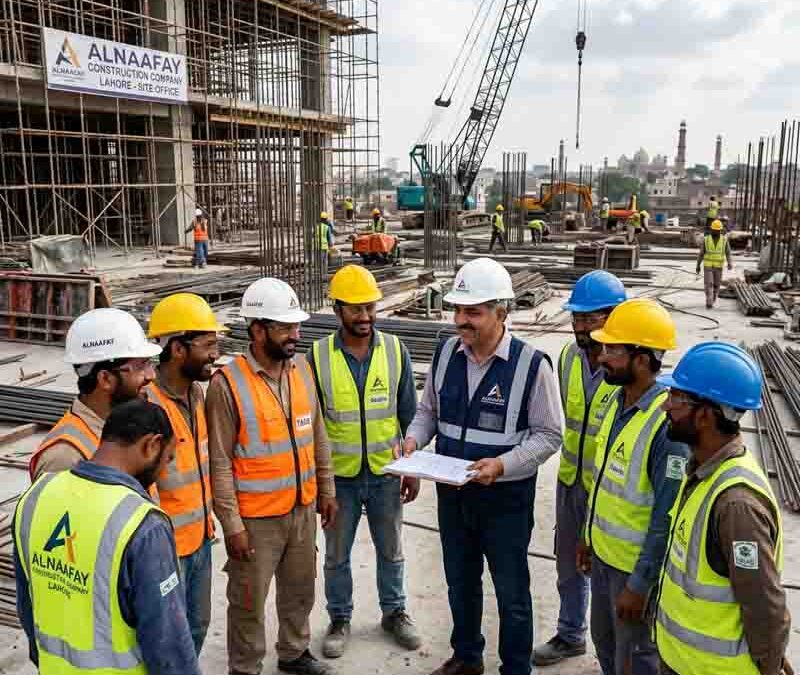
How to Create a Positive Job Site Culture That Reduces Turnover
High turnover is one of the most costly challenges facing construction companies today. When skilled workers leave, projects stall, costs rise, and team morale takes a hit. The good news is that most of the reasons workers walk away have nothing to do with pay alone. More often than not, they leave because of how they feel on the job — overlooked, unsafe, or undervalued.
Creating a positive job site culture that reduces turnover is not just a nice idea. It is a business strategy that directly impacts your bottom line. Companies that invest in their people see fewer resignations, better productivity, and a stronger reputation for attracting top talent. In this guide, you will learn exactly what job site culture means, why it matters, and — most importantly — how to build one that makes workers want to stay.
Whether you are running a large commercial project or managing a small crew, the principles covered here are practical, proven, and immediately actionable.
Table of Contents
- What Is a Positive Job Site Culture?
- Why Job Site Culture Matters for Reducing Turnover
- Common Reasons Construction Workers Leave Their Jobs
- How to Create a Positive Job Site Culture That Reduces Turnover
- The Role of Leadership in Building a Positive Construction Work Environment
- Communication Strategies That Support a Positive Job Site Culture
- Recognition, Respect, and Retention on the Job Site
- Construction Company Lahore: Building a Positive Job Site Culture in a Local Context
- FAQs
- Conclusion
What Is a Positive Job Site Culture?
Before diving into solutions, it helps to define what we are actually talking about. Job site culture refers to the shared values, behaviors, and attitudes that shape how workers interact with each other and with management on a construction site. It is the unwritten rules that determine whether people feel respected, motivated, and safe — or stressed, dismissed, and replaceable.
A positive job site culture is one where workers trust their supervisors, feel their contributions matter, and believe that the company genuinely cares about their well-being. It shows up in small things, like whether a foreman greets workers in the morning, and in larger things, like whether safety concerns are taken seriously or brushed aside.
Importantly, job site culture is not something that happens by accident. It is shaped — consciously or unconsciously — by the decisions leaders make every single day. Therefore, if your culture is not where you want it to be, the good news is that it can be changed with deliberate effort and consistent action.
Why Job Site Culture Matters for Reducing Turnover
Turnover in the construction industry is notoriously high. According to the U.S. Bureau of Labor Statistics, the construction sector consistently records one of the highest annual turnover rates of any industry, often exceeding 20%. Replacing a single skilled worker can cost anywhere from 50% to 200% of their annual salary when you factor in recruitment, onboarding, and lost productivity.
What does this have to do with culture? Everything. Research consistently shows that workers do not leave jobs — they leave environments. A toxic or indifferent job site culture is a major driver of voluntary turnover. Conversely, when workers feel connected to their team, supported by their supervisors, and valued for their skills, they are far more likely to stay.
Furthermore, a strong job site culture has a ripple effect. Workers who feel good about their environment tend to be more productive, more safety-conscious, and more invested in the quality of their work. As a result, companies that prioritize a positive construction work environment do not just reduce turnover — they also improve project outcomes across the board.
Common Reasons Construction Workers Leave Their Jobs
To build a better culture, you first need to understand why workers leave in the first place. While competitive pay obviously plays a role, studies and exit interviews consistently point to several non-financial factors.
Poor management and leadership is one of the leading causes of turnover in construction. Workers who feel micromanaged, disrespected, or ignored by their supervisors are far more likely to look for opportunities elsewhere. Consequently, the relationship between a worker and their direct supervisor is often the single biggest predictor of whether they stay or go.
Lack of recognition is another powerful driver. Construction workers are skilled professionals who take pride in their craft. When that craft goes unacknowledged, frustration builds. Over time, workers begin to ask themselves why they should put in extra effort if no one notices or cares.
Unsafe working conditions also push workers out the door. A job site where safety is treated as a formality — rather than a genuine priority — sends a clear message that management does not value the workers themselves. Naturally, this erodes trust and loyalty very quickly.
Limited career growth is an increasingly common complaint, particularly among younger workers. If there is no visible path for advancement or skill development, workers will find a company that offers one.
Poor communication rounds out the list. Workers who feel left in the dark about project changes, scheduling, or company decisions feel disrespected and disconnected. Over time, that disconnect becomes a reason to leave.
Understanding these pain points is the foundation for building a job site culture that actually reduces turnover.
How to Create a Positive Job Site Culture That Reduces Turnover
Now that we understand the problem, let us look at practical, step-by-step strategies for creating a positive job site culture that reduces turnover for the long term.
Start With a Clear Set of Values
Every strong culture begins with a clear set of values. These are the non-negotiable principles that guide how everyone on the job site behaves — from the project manager to the newest apprentice. Common values in construction include safety, respect, accountability, teamwork, and quality.
The key is to make these values visible and real, not just words on a poster in the site office. Discuss them in toolbox talks. Reference them when making decisions. Hold people accountable when behavior falls short. When workers see that values are genuinely lived rather than merely stated, they begin to internalize them.
Invest in Onboarding
The culture a new worker experiences in their first few days sets the tone for everything that follows. Unfortunately, onboarding in construction is often rushed or nonexistent — workers are handed a hard hat and sent straight to work.
A structured onboarding process, by contrast, gives new workers a clear picture of what your company stands for, how the team operates, and what support is available to them. Even a half-day orientation that covers safety procedures, team introductions, and company values can make a significant difference in how quickly a new worker feels connected and committed.
Prioritize Physical and Psychological Safety
Safety is foundational to a positive job site culture. This means not only complying with OSHA regulations and conducting regular safety briefings, but also creating an environment where workers feel genuinely safe to raise concerns without fear of ridicule or retaliation.
Psychological safety — the belief that you can speak up without negative consequences — is just as important as physical safety. When workers feel psychologically safe, they report hazards sooner, collaborate more openly, and engage more fully with their work. To foster this, leaders need to actively invite input, respond constructively to concerns, and never punish workers for raising legitimate issues.
Build Strong Peer Relationships
People stay where they feel a sense of belonging. Therefore, encouraging strong peer relationships on the job site is one of the most effective ways to reduce turnover. Simple initiatives like team lunches, joint problem-solving sessions, or paired mentoring programs between experienced workers and newer ones can go a long way toward building genuine camaraderie.
Additionally, assigning consistent crews to work together — rather than constantly shuffling team compositions — allows trust and rapport to develop over time. Workers who have strong relationships with their teammates are significantly less likely to leave.
Offer Pathways for Growth
Workers who can see a future with your company are far more likely to stay. Consequently, creating clear pathways for advancement and skill development is a critical component of a positive construction work environment.
This might include formal apprenticeship programs, certifications paid for by the company, or internal promotion policies that give current workers first consideration for supervisory roles. Even informal mentoring — where experienced workers pass their knowledge on to younger colleagues — signals that the company is invested in the long-term development of its people.
Create Consistent Feedback Loops
Workers should not have to wait for an annual performance review to know how they are doing. Regular, informal check-ins between supervisors and workers create an ongoing dialogue that helps catch problems early and reinforces positive behavior.
These conversations do not need to be formal or lengthy. A five-minute conversation at the end of a shift — asking a worker how things are going, whether they have what they need, or whether there is anything that could be improved — can have a profound impact on how valued that worker feels.
The Role of Leadership in Building a Positive Construction Work Environment
Leadership is the single most important factor in shaping job site culture. Supervisors, foremen, and project managers set the tone every day through their words, decisions, and behaviors. Workers are acutely aware of whether their leaders practice what they preach.
Effective leaders in construction share several key traits. First, they are consistent. Workers need to know what to expect from their supervisors, regardless of the pressure of deadlines or project complications. Inconsistent behavior — being supportive one day and dismissive the next — breeds anxiety and distrust.
Second, strong leaders are visible and accessible. They spend time on the job site, engage with workers directly, and make themselves available to hear concerns. A project manager who is always behind a desk or on a phone call sends a clear signal that the workers on the ground are not a priority.
Third, effective leaders hold everyone — including themselves — accountable to the same standards. A culture where rules apply differently to different people is a toxic one. Therefore, when leaders demonstrate that accountability is universal, workers develop respect for the system and for the people who lead it.
Finally, the best construction leaders invest in their own development. They seek feedback, attend leadership training, and actively work to improve how they manage and motivate their teams. Modeling a growth mindset at the leadership level sends a powerful message throughout the entire organization.
Communication Strategies That Support a Positive Job Site Culture
Clear, consistent communication is the backbone of any healthy workplace — and construction sites are no exception. In fact, given the complexity and pace of construction projects, strong communication is even more critical than in most industries.
One of the most effective tools for improving communication on the job site is the daily toolbox talk. These brief, focused meetings — typically 10 to 15 minutes at the start of a shift — provide an opportunity to review safety reminders, discuss the day's priorities, and address any concerns from the team. When facilitated well, toolbox talks also serve as a platform for workers to voice issues and feel heard.
Beyond daily meetings, it is important to keep workers informed about broader project developments. Changes in scheduling, scope, or personnel can create uncertainty and anxiety if not communicated proactively. Sharing updates — even when the news is not ideal — demonstrates respect for the workforce and reduces the rumor mill that often fills information vacuums.
Digital tools can also support better communication on larger job sites. Platforms like Procore, Buildertrend, or even simple group messaging apps allow supervisors to share updates quickly and ensure that important information reaches everyone simultaneously rather than through an unreliable chain of word-of-mouth.
Additionally, creating a formal channel for anonymous feedback gives workers a safe way to raise concerns they might otherwise stay quiet about. Suggestion boxes, anonymous surveys, or third-party feedback tools can surface issues that would otherwise go unaddressed — often until a valued worker has already decided to leave.
Recognition, Respect, and Retention on the Job Site
Recognition is one of the most underutilized tools in construction management. The idea that workers are simply paid to do a job — and therefore do not need to be acknowledged beyond their paycheck — is both outdated and costly. Workers who feel recognized for their contributions are demonstrably more engaged, more loyal, and more productive.
Recognition does not have to be elaborate or expensive. Sometimes, the most powerful form of recognition is the simplest: a genuine, specific compliment delivered in person. Telling a worker, "I noticed how carefully you handled that pour yesterday — that attention to detail made a real difference," communicates far more than a generic "good job."
Formal recognition programs can also be effective when implemented thoughtfully. Employee of the month awards, safety milestone celebrations, or end-of-project bonuses signal that the company acknowledges and rewards excellence. However, these programs only work if they are perceived as fair and genuinely merit-based.
Respect, meanwhile, is non-negotiable. Workers who are spoken to dismissively, excluded from decisions that affect them, or treated as interchangeable parts rather than skilled professionals will not stay long — regardless of what they are paid. Therefore, training supervisors and managers in respectful, empathetic communication is one of the highest-return investments a construction company can make.
Together, recognition and respect create a sense of dignity on the job site. When workers feel that their time, skills, and personhood are valued, the decision to stay becomes far easier than the decision to leave.
Construction Company Lahore: Building a Positive Job Site Culture in a Local Context
For any construction company in Lahore, the principles of positive job site culture are not just universally applicable — they are especially relevant given the competitive labor market and the rapid growth of the construction sector across Pakistan's major cities.
Lahore's construction industry has expanded significantly in recent years, driven by large-scale infrastructure projects, residential developments, and commercial real estate growth. As a result, skilled construction workers in Lahore have more options than ever before, which means companies that fail to invest in their culture are increasingly at risk of losing their best people to competitors.
Fortunately, many of the cultural values that underpin a positive job site environment align closely with the values already deeply embedded in Pakistani work culture — respect for seniority, loyalty to the team, and a strong sense of collective responsibility. A construction company in Lahore that consciously builds on these existing strengths has a powerful foundation to work from.
Practically speaking, this might look like:
- Treating workers with cultural sensitivity and dignity, particularly in how feedback and correction are delivered. Public criticism is especially damaging in cultural contexts where honor and respect carry significant weight.
- Recognizing religious observances and community obligations, such as prayer times and family events, as part of a respectful and accommodating work environment.
- Investing in skills training and certifications that give local workers a tangible sense of professional advancement within the company.
- Building community through shared meals and team rituals, which resonate deeply within Pakistani cultural norms and help foster genuine connection among crews.
For a construction company in Lahore looking to differentiate itself and reduce the costly cycle of worker turnover, building a positive job site culture is not an abstract HR exercise. Rather, it is a concrete, practical investment in the sustainability and success of the business.
Moreover, construction companies in Lahore that establish a reputation for treating their workers well will find it significantly easier to attract skilled labor in an increasingly competitive market. Word travels fast in tight-knit communities, and a company known for its strong culture will always have an advantage over one that relies purely on wage competition.
FAQs
What is job site culture in construction?
Job site culture refers to the shared values, behaviors, and attitudes that define how workers and managers interact on a construction site. It encompasses everything from how safety is handled to how workers are recognized and communicated with. A positive job site culture is one where workers feel safe, respected, and valued.
How does job site culture affect employee turnover?
Culture is one of the primary drivers of voluntary turnover. Workers who feel disrespected, ignored, or unsupported by their supervisors and company are far more likely to leave, regardless of their pay. Conversely, workers who feel connected to their team, recognized for their contributions, and supported in their growth are much more likely to stay.
How long does it take to change a job site culture?
Cultural change does not happen overnight. However, meaningful improvements can be observed within a few months when leaders are consistent and committed. Small, daily actions — like improving communication, recognizing workers more often, and addressing safety concerns promptly — compound over time and shift the culture gradually but durably.
What is the role of supervisors in creating a positive construction work environment?
Supervisors are the most important variable in shaping the daily experience of construction workers. Their behavior — how they communicate, whether they listen, how they respond to mistakes, and whether they model the company's values — directly determines whether workers feel valued or disposable. Investing in supervisor training is therefore one of the highest-leverage actions a company can take to improve its culture.
Can small construction companies also build a strong job site culture?
Absolutely. In fact, smaller companies often have an advantage here because leaders are more directly visible and accessible to workers. The key is intentionality — being deliberate about the values you want to embed and the behaviors you want to model and reward, regardless of the size of your crew.
How can a construction company in Lahore improve worker retention?
A construction company in Lahore can improve worker retention by combining universally effective cultural strategies — such as recognition, clear communication, and career development opportunities — with culturally specific approaches, such as respecting religious observances, investing in community-building activities, and fostering dignity and respect in all supervisory interactions.
Conclusion
Reducing turnover in construction is not a single-step fix. Rather, it is the cumulative result of deliberate choices made every day on the job site — choices about how workers are spoken to, how their safety is prioritized, how their contributions are acknowledged, and how their futures within the company are supported.
A positive job site culture that reduces turnover is not a luxury reserved for large companies with dedicated HR departments. It is a mindset and a set of practices that any construction company, regardless of size or location, can begin implementing today.
Start small if you need to. Improve your toolbox talks. Recognize one worker genuinely this week. Open a direct line for anonymous feedback. Invest in one supervisor's leadership skills. These actions, repeated consistently, will build a culture that workers genuinely want to be part of — and one that your competitors will struggle to match.
The investment is modest. The return — in reduced turnover, stronger teams, and better project outcomes — is substantial. Most importantly, the people on your job site deserve to work in an environment where they feel safe, valued, and proud of what they do.
