
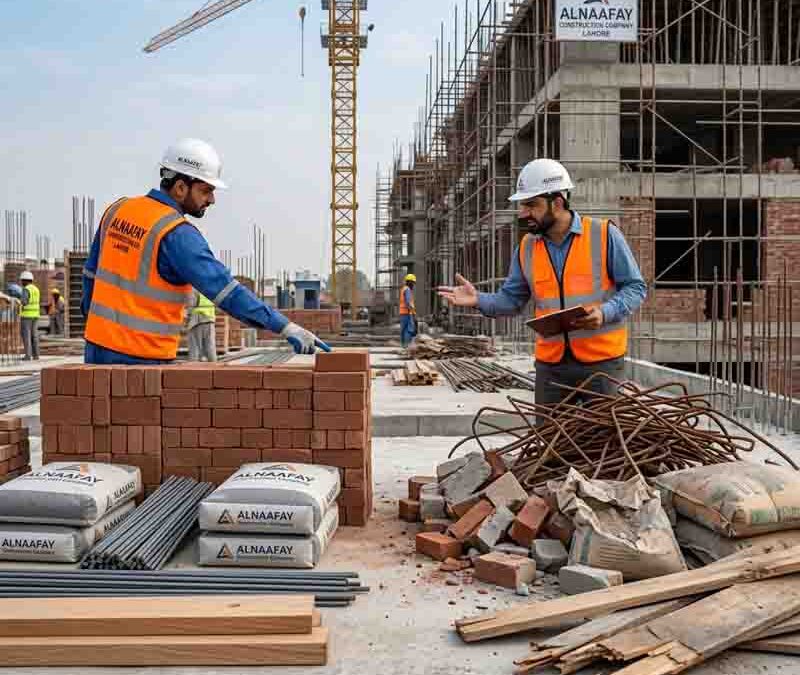
How to Spot and Avoid Low-Quality Construction Materials: A Complete Guide
Every strong building starts with strong materials. Yet many people focus only on design and labor while forgetting that the bricks, cement, and steel beneath it all decide whether a structure lasts for decades or cracks within a few years. When poor materials slip into a project, the results can be costly, dangerous, and sometimes even deadly.
Unfortunately, low-quality and fake building materials have become a growing problem across the construction world. From watered-down cement to weak steel bars, substandard products often look almost identical to genuine ones. As a result, untrained buyers get fooled, and entire projects suffer the consequences. A trusted Construction Company Lahore deals with this challenge on every job, which is exactly why knowing how to spot and avoid bad materials matters so much.
This guide walks you through everything you need to know. You will learn why low-quality materials are so dangerous, how to recognize common fakes, what red flags to watch for, and which steps help you verify quality before you buy. By the end, you will be able to protect your project, your budget, and the people who will one day use the building.
Table of Contents
- Introduction
- Why Low-Quality Construction Materials Are a Serious Problem
- Common Types of Low-Quality Construction Materials and How to Spot Them
- How a Construction Company in Lahore Ensures Material Quality
- Red Flags When Buying Construction Materials
- How to Verify the Quality of Construction Materials
- The Real Cost of Using Low-Quality Materials
- Tips to Avoid Low-Quality Construction Materials
- Frequently Asked Questions (FAQs)
- Conclusion
1. Introduction
Construction is a long-term investment, so the materials you choose today shape the safety of a building for many years to come. Sadly, the temptation to save money often pushes people toward cheaper options without thinking about the hidden risks. While a low price feels like a win in the moment, it can quickly turn into a nightmare once cracks appear or systems fail.
The problem has grown worse as counterfeit and substandard products flood the market. Some sellers mix cheap fillers into cement, while others sell steel that looks fine but fails under load. Because these fakes are designed to fool buyers, even experienced builders must stay alert. Without proper checks, anyone can end up paying full price for materials that simply do not perform.
Throughout this article, we will break the topic down into clear, practical sections. First, we will look at why bad materials cause such serious harm. After that, we will explore how to spot the most common fakes, what warning signs to watch for, and how to verify quality with confidence. Along the way, you will see how a professional Construction Company Lahore approaches material quality, so you can apply the same standards to your own project.
2. Why Low-Quality Construction Materials Are a Serious Problem
It might seem like a small thing to swap one bag of cement for a cheaper one, yet the consequences run far deeper than most people realize. Low-quality materials affect safety, cost, appearance, and even the reputation of everyone involved. Let us examine why this issue deserves serious attention.
The Danger to Human Safety
Above all else, poor materials put lives at risk. When weak steel or watered-down concrete goes into a structure, the building loses the strength it needs to stand safely. In extreme cases, this leads to collapse, and the world has seen too many such tragedies. The Champlain Towers South collapse in Florida in 2021, the Rana Plaza disaster in Bangladesh in 2012, and the Grenfell Tower fire in London in 2017 all remind us how deadly construction failures can be.
The Threat of Structural Failure
Buildings rarely fail for a single reason, but bad materials sit at the heart of many collapses. Structures may give way when they exceed their weight capacity, when manufacturing errors create hidden weak spots, or when defective materials lose their strength over time. For example, concrete that was mixed or stored incorrectly can lose much of its load-bearing power. Because these flaws often stay hidden until it is too late, they make low-quality materials especially dangerous.
The Loss of Durability
Even when a building does not collapse, poor materials shorten its life dramatically. Cheap products tend to crack, warp, fade, corrode, and crumble far sooner than genuine ones. As a result, owners face constant repairs and replacements rather than the long, trouble-free service they expected. Genuine materials, on the other hand, hold up year after year and keep a structure strong.
The Hidden Damage to Reputation
For builders and contractors, the stakes go beyond the structure itself. When a project suffers from constant problems, word spreads quickly, and trust evaporates. A single bad job can cost a builder future clients and damage a hard-earned reputation. This is one major reason a reputable Construction Company Lahore refuses to cut corners on materials, no matter how tempting the savings may seem.
3. Common Types of Low-Quality Construction Materials and How to Spot Them
Now that the dangers are clear, let us turn to practical detection. Different materials show different warning signs, so knowing what to look for makes all the difference. Below are the most common materials that get faked or watered down, along with simple ways to spot trouble.
Substandard Cement
Cement binds an entire structure together, which makes its quality absolutely critical. Fortunately, several quick tests can reveal poor cement before you ever mix it. First, check the bag for a clear brand print, a certification mark, a batch number, and a manufacturing date, since fakes often have blurry printing or spelling mistakes. Next, run your fingers through the powder, because good cement feels smooth and fine while bad cement feels gritty or sandy. Genuine cement also shows a uniform grey color with a slight greenish tint, whereas a patchy or yellowish shade signals trouble. Finally, watch out for hard lumps inside the bag, as these mean moisture has already weakened the product.
Poor-Quality Steel and Rebar
Steel gives a building its skeleton, so weak steel poses a huge risk. Unfortunately, low-grade steel bars often look identical to genuine ones, yet they fail under load because of poor-grade alloying. To protect yourself, always buy from recognized manufacturers and ask for mill test certificates that confirm the grade. Beyond that, inspect the surface for cracks, excessive rust, or uneven thickness, since these flaws point to inferior material. When in doubt, request laboratory testing rather than trusting appearance alone.
Defective Bricks and Blocks
Bricks may seem simple, but their quality varies widely. Good bricks have a uniform shape, sharp edges, and a consistent color throughout. Weak bricks, by contrast, often show cracks, uneven sizes, or a crumbly texture. A quick field test helps here: drop two bricks against each other and listen for a clear, ringing sound, which signals strength, while a dull thud suggests a weak brick. Soaking a brick in water also reveals quality, because low-grade bricks absorb too much moisture and break down faster.
Weak Sand and Aggregates
Sand and aggregates fill a major role in concrete, yet many buyers overlook their quality entirely. Clean, sharp sand produces strong concrete, while sand mixed with clay, silt, or salt weakens the final result. To test it, rub a little sand between your hands; if your palms stay dirty and muddy, the sand likely contains too much clay. Similarly, aggregates should be hard, clean, and well-graded rather than soft or covered in dust.
Inferior Electrical Wiring and Fixtures
Electrical materials carry a special danger, since faulty products can overheat and start fires. Genuine wiring and fixtures carry recognized safety marks and clear branding, while counterfeits often skip these details. Before buying, look for proper certification marks and check that the copper inside the wire looks bright and consistent. Cheap wiring frequently uses thinner conductors than advertised, so verifying the actual gauge protects both your home and the people in it.
Low-Grade Plywood and Wood
Wood adds both strength and beauty, but imitations cause endless problems. Genuine plywood shows a uniform grain and feels solid and heavy, whereas cheap imitations made from particleboard or MDF feel lighter and warp when they meet moisture. To check, inspect the edges for clean, even layers, and avoid boards that smell strongly of chemicals or show obvious gaps. Testing a small corner with water also reveals whether the board swells or holds firm.
Cheap Paints and Coatings
Paint protects surfaces while giving a finished look, so quality matters more than people think. Fake paints often carry spelling errors on their labels, lack proper batch codes, and peel away soon after drying. Before purchasing, verify the batch code on the brand's official website and inspect the label for clean, professional printing. A genuine product also spreads smoothly and covers evenly, while a poor one streaks and fades quickly.
4. How a Construction Company in Lahore Ensures Material Quality
Quality control is not luck; it is the result of careful systems and constant attention. A professional Construction Company Lahore treats material checking as a core part of every project rather than an afterthought. Let us look at the methods these experts rely on to keep substandard products off the job site.
Sourcing Only From Trusted Suppliers
The first line of defense is choosing the right partners. Instead of chasing the cheapest deal, a reliable Construction Company Lahore builds long-term relationships with authorized dealers and reputable manufacturers. These trusted suppliers provide genuine products, proper invoices, and clear documentation, which dramatically reduces the chance of fakes slipping through. Over time, these strong partnerships also bring better service and honest advice.
Inspecting Materials at Every Stage
Good builders never assume that delivered materials are automatically genuine. Instead, a careful Construction Company Lahore inspects every shipment on arrival, checking packaging, certification marks, and physical quality before accepting it. Beyond delivery, the team continues inspecting materials during foundation work, framing, and finishing. Because problems can appear at any point, this stage-by-stage approach catches issues early.
Using Laboratory Testing for Critical Items
For the most important materials, a visual check is simply not enough. A quality-focused Construction Company Lahore sends samples of cement, steel, and concrete to certified laboratories for proper testing. These labs run checks such as compressive strength tests, fineness tests, and chemical composition analysis to confirm that materials meet required standards. This scientific approach removes guesswork and guarantees genuine strength.
Following Recognized Standards
Standards exist to keep everyone safe, so professionals follow them closely. A responsible Construction Company Lahore works according to recognized benchmarks set by bodies such as ISO and ASTM International. By holding every material to these clear standards, the team ensures consistent quality across the entire project. Compliance becomes the starting point, not the goal.
Keeping Detailed Records
Finally, good documentation ties the whole system together. A trustworthy Construction Company Lahore keeps records of supplier invoices, batch numbers, test results, and inspection reports for every major material. Should a question ever arise, these records make it easy to trace exactly what was used and where. This transparency builds client trust and protects everyone involved.
5. Red Flags When Buying Construction Materials
Spotting trouble early saves enormous headaches later. While some fakes are hard to detect, many give themselves away through obvious warning signs. By learning these red flags, you can walk away from a bad deal before it ever reaches your site.
Prices That Seem Too Good to Be True
Bargains feel exciting, yet an unusually low price often hides a serious problem. When a seller offers materials far below the market rate, the product is frequently fake, expired, or substandard. Rather than jumping at the deal, treat suspiciously cheap prices as a clear warning. In construction, you almost always get what you pay for.
Missing or Damaged Certifications
Genuine materials come with proper certifications, batch numbers, and clear branding. Therefore, missing certification marks, smudged printing, or absent batch codes should immediately raise concern. Damaged or repacked bags are equally suspicious, since they may have been tampered with or stored improperly. When the paperwork looks wrong, the product usually is too.
Spelling Mistakes and Poor Packaging
Counterfeiters often imitate famous brands, but they rarely get every detail right. As a result, spelling errors, fuzzy logos, and sloppy stitching frequently appear on fake packaging. Before you buy, examine labels closely and compare them against genuine examples. Small mistakes on the package often point to big problems inside.
Unwilling or Unknown Sellers
A trustworthy supplier happily provides invoices, certifications, and references. By contrast, a seller who avoids questions, refuses to give a proper bill, or operates from an unknown roadside spot deserves real caution. Reputable sellers stand behind their products, while shady ones tend to disappear once the money changes hands. For this reason, a careful Construction Company Lahore always verifies a supplier's reputation before placing an order.
6. How to Verify the Quality of Construction Materials
Beyond spotting red flags, you can take active steps to confirm that materials are genuine. Verification turns suspicion into certainty, which is exactly what every project needs. Here are the most effective ways to check quality before and after a purchase.
Inspect Packaging and Documentation
The simplest verification starts with a careful look at the package. First, check that the brand printing is clear and free of spelling mistakes. Next, confirm the presence of a valid certification mark, a batch number, and a recent manufacturing date. Finally, ask the seller for a proper invoice or bill, since genuine dealers always provide one. Together, these checks filter out many obvious fakes.
Verify Codes and Certifications Online
Many modern brands now offer digital verification, which makes confirmation easier than ever. Rather than trusting the label alone, scan any QR code or enter the batch number on the manufacturer's official website. If the code fails to match or does not exist, the product is almost certainly fake. This quick online step adds a powerful layer of protection.
Request Laboratory Testing
For critical materials, nothing beats proper testing. By sending samples of cement, steel, or concrete to a certified laboratory, you confirm their real strength and composition with hard evidence. While testing costs a little time and money, it prevents far greater losses down the road. A quality-conscious Construction Company Lahore relies on this method for every major structural material.
Hire Independent Inspectors
A second set of expert eyes catches problems that others miss. Rather than depending only on a supplier's word, hire an independent inspector to review materials and workmanship at key stages of the project. These professionals identify deviations from the plan and flag quality issues early. As a result, you gain peace of mind and a stronger final structure.
7. The Real Cost of Using Low-Quality Materials
People often choose cheap materials to save money, yet this choice usually backfires in a big way. The true cost of poor materials goes far beyond the original price tag. Let us look at the hidden expenses that make substandard products such a poor bargain.
The Trap of False Savings
At first, low-quality materials seem like a smart way to cut costs. However, these products settle, crack, warp, corrode, and break long before genuine ones would. Consequently, owners end up replacing them again and again, often spending more in total than they would have on quality materials from the start. What looks like a saving quickly becomes a steady drain.
Expensive Repairs and Rework
When poor materials fail, someone has to fix the damage, and that work is rarely cheap. Repairs may mean tearing out finished sections, buying new materials, and paying for additional labor. Moreover, warranty claims and callbacks eat directly into a builder's profit. Because of this, cutting corners on materials often proves far more expensive than doing the job right the first time.
Falling Property Value
A building plagued by structural problems loses value fast. Buyers and tenants avoid properties that show cracks, leaks, or safety concerns, so rental income and resale prices both decline. In contrast, a soundly built structure holds its value and attracts confident buyers. For any owner, quality materials protect not just safety but financial worth.
Legal and Safety Liability
Finally, the worst outcomes carry legal weight. If a poorly built structure injures someone, the responsible parties may face lawsuits, fines, and lasting damage to their name. These consequences dwarf any money saved on cheap materials. To avoid this risk entirely, a responsible Construction Company Lahore insists on genuine products and proper documentation from day one.
8. Tips to Avoid Low-Quality Construction Materials
Knowledge only helps when you put it into action. Fortunately, a few practical habits go a long way toward keeping bad materials off your site. Follow these tips to protect your project from start to finish.
Buy From Authorized Dealers
The safest path begins with the right source. Whenever possible, purchase materials from authorized dealers and reputable manufacturers rather than roadside or unknown sellers. Authorized dealers provide genuine products, proper invoices, and reliable support. While they may not always offer the lowest price, they offer something far more valuable: peace of mind.
Never Choose Price Alone
Cost matters, but it should never be your only guide. Instead of automatically picking the cheapest option, gather several quotes and compare quality alongside price. When one offer sits far below the rest, treat it as a warning rather than a win. In the long run, balanced decisions protect both your budget and your building.
Always Ask for Documentation
Paperwork may feel like a hassle, yet it serves as powerful protection. For every major purchase, request an invoice, batch details, and certification marks. These documents prove authenticity and make it easy to trace materials if a problem arises later. Sellers who provide complete documentation deserve far more trust than those who avoid it.
Inspect and Test Before You Build
A little checking now prevents major losses later. Before using any material, inspect its packaging, run simple field tests, and send critical items for laboratory analysis. Catching a fake before it goes into a wall is infinitely easier than removing it afterward. This habit alone can save a project from disaster.
Lean on Professional Expertise
Finally, experience is one of your greatest assets. By working with a skilled Construction Company Lahore, you gain a team that already knows how to source, inspect, and verify materials properly. These professionals spot problems an untrained eye would miss and apply proven systems on every job. With expert support, you dramatically lower the risk of poor materials slipping through.
9. Frequently Asked Questions (FAQs)
How can I tell if cement is fake or low quality?
Several quick checks reveal poor cement. First, examine the bag for clear printing, a certification mark, a batch number, and a recent manufacturing date. Next, rub the powder between your fingers, since genuine cement feels smooth while fake cement feels gritty. Good cement also shows a uniform grey color and contains no hard lumps. If any of these signs look wrong, avoid the product.
Why are low-quality construction materials so dangerous?
Poor materials weaken a building's strength and durability, which can lead to cracks, leaks, and even collapse. In serious cases, structural failures put lives at risk and cause major property damage. On top of safety concerns, bad materials force constant repairs and lower a building's value. For all these reasons, quality should never be sacrificed for a lower price.
How does a Construction Company in Lahore check material quality?
A professional Construction Company Lahore uses several layers of protection. The team sources only from trusted suppliers, inspects every shipment on arrival, and sends critical materials to certified labs for testing. Additionally, a good Construction Company Lahore follows recognized standards and keeps detailed records of every purchase. Together, these steps keep substandard products off the job site.
What are the biggest red flags when buying building materials?
The clearest warning signs include prices that seem too low, missing or damaged certifications, and spelling mistakes on packaging. Sellers who refuse to provide invoices or operate from unknown roadside spots also deserve caution. Whenever something feels off, it is wise to pause and verify before buying.
Is it worth paying more for higher-quality materials?
In most cases, yes. While genuine materials cost more upfront, they last far longer and resist cracks, corrosion, and failure. As a result, you save money over time by avoiding repeated repairs and replacements. Quality materials also protect safety and property value, which makes them a smart long-term investment.
Can I verify construction materials myself, or do I need an expert?
You can perform many basic checks on your own, such as inspecting packaging, running field tests, and scanning batch codes online. However, critical structural materials deserve professional attention. For these, hiring an independent inspector or working with an experienced Construction Company Lahore gives you reliable, expert verification you can trust.
10. Conclusion
The materials beneath a building decide its future. While design and labor matter greatly, no project can stand strong on weak cement, faulty steel, or substandard bricks. As counterfeit and low-quality products continue to spread, the ability to spot and avoid them has become an essential skill for anyone involved in construction.
The good news is that protecting your project is entirely possible. By understanding the dangers, recognizing common fakes, watching for red flags, and verifying quality through inspection and testing, you can keep bad materials far away from your site. Simple habits, such as buying from authorized dealers, asking for documentation, and refusing to choose price alone, add up to powerful protection. These steps separate buildings that last for generations from those that fail within a few years.
For anyone building in Lahore, expert support makes all the difference. With a market full of both genuine and counterfeit products, success depends on careful sourcing, proper testing, and deep local knowledge. A trusted Construction Company Lahore brings exactly these strengths to every project, treating material quality as a top priority rather than an afterthought.
Ready to build something safe, strong, and built to last? Partner with an experienced local construction team that knows how to source genuine materials and protect your investment every step of the way.
