
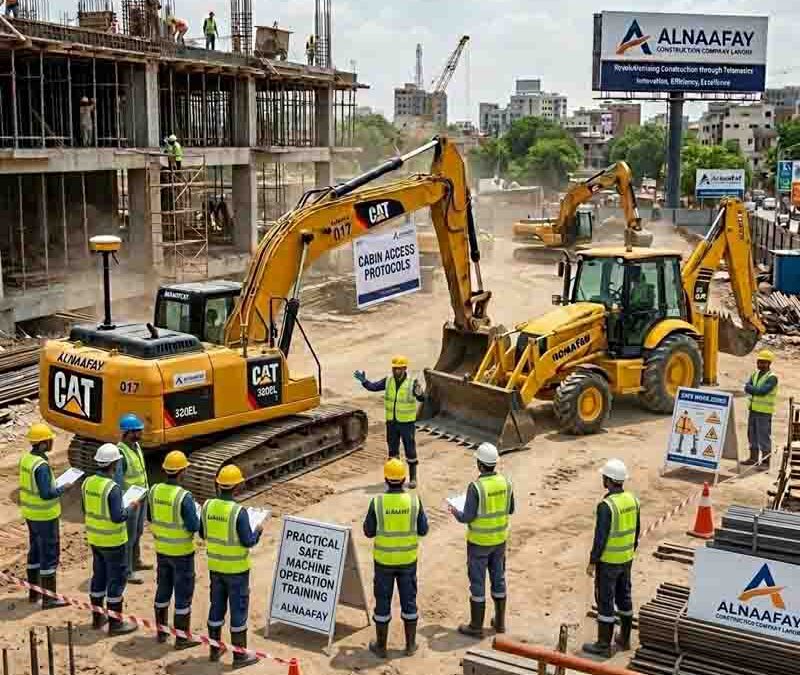
How to Train Construction Workers to Safely Operate Heavy Equipment
Heavy machines build our world, yet they can also cause terrible harm when handled by untrained hands. A single mistake behind the controls of an excavator or crane can injure workers, damage property, and stall an entire project. Because of this, proper training is not a luxury but an absolute necessity on every job site.
Many builders learn this lesson the hard way, often after an accident has already happened. Smart companies, however, treat operator training as a core part of their business from day one. For any serious Construction Company Lahore, a strong training program protects lives, saves money, and builds a reputation that clients trust.
In this detailed guide, we will walk through everything you need to know about training workers to operate heavy equipment safely. You will learn why training matters so much, which methods work best, what regulations and certifications apply, and how to follow on-site best practices. Furthermore, we will show how a forward-thinking Construction Company Lahore puts these ideas into action every single day. By the end, you will know exactly how to build a training program that keeps your crew safe and your projects on track.
Table of Contents
- Introduction to Heavy Equipment Training
- Why Heavy Equipment Training Matters
- Types of Heavy Equipment Training
- Safety Regulations Every Operator Should Know
- Operator Certification and Licensing
- On-Site Best Practices for Safe Operation
- How a Construction Company in Lahore Builds a Training Program
- Common Training Mistakes and How to Avoid Them
- Frequently Asked Questions (FAQs)
- Conclusion
1. Introduction to Heavy Equipment Training
Construction work has always carried risk, and heavy machinery sits at the very heart of that danger. Excavators, bulldozers, cranes, and loaders weigh many tons and move with tremendous force. When an operator lacks proper training, even a simple task can quickly turn deadly.
The numbers tell a sobering story. Across the world, construction ranks among the most dangerous industries, and a large share of serious accidents involve heavy equipment. Struck-by incidents, rollovers, and crushing injuries claim lives every year, and many of these tragedies trace back to poor training. Because of this grim reality, training has become the first line of defense on any responsible job site.
Beyond safety, training also shapes how well a project runs. A skilled operator works faster, wastes less fuel, and treats machines with care that extends their life. As a result, good training pays for itself many times over through fewer accidents, smoother work, and lower repair bills. Therefore, smart builders view training as an investment rather than an expense.
This growing awareness explains why structured training has spread so widely. A modern Construction Company Lahore now treats operator education as a vital part of its operations rather than an afterthought. Throughout this article, we will unpack exactly how to build and run such a program with confidence.
2. Why Heavy Equipment Training Matters
It might seem obvious that operators need training, yet the full reasons run far deeper than most people realize. Training touches safety, cost, quality, and even the legal standing of a company. Let us explore why this topic deserves serious attention.
Protecting Worker Lives and Health
Above everything else, training saves lives. When workers understand how machines behave, they avoid the risky moves that cause rollovers, collisions, and crushing accidents. Furthermore, trained operators learn to spot hazards before they turn into disasters. Because human life can never be replaced, this protection alone justifies every rupee spent on training.
Reducing Costly Accidents and Damage
Accidents drain money in countless ways, and many of them stem from operator error. A poorly handled machine can crash into structures, damage other equipment, or destroy materials in seconds. On top of the repair bills, accidents trigger work stoppages, insurance claims, and legal trouble. By preventing these incidents, a careful Construction Company Lahore protects both its budget and its schedule.
Boosting Productivity and Efficiency
Trained operators simply get more done. Rather than fumbling with controls or repeating tasks, they work smoothly and confidently. As a result, projects finish faster and labor costs drop. Moreover, skilled workers handle machines gently, which reduces wear and tear and keeps equipment running longer.
Meeting Legal and Insurance Requirements
Laws and insurers increasingly demand proof of proper training. Companies that ignore these rules face heavy fines, lawsuits, and even shutdowns after an accident. On the other hand, businesses with strong training records often enjoy lower insurance premiums. For this reason, a responsible Construction Company Lahore treats compliance as a baseline rather than a goal.
Building a Strong Company Reputation
Finally, reputation matters enormously in construction. Clients want to hire teams they can trust, and a clean safety record speaks volumes. When word spreads that a company runs safe, professional sites, more contracts follow. Consequently, training becomes a powerful tool for winning business and earning lasting respect.
3. Types of Heavy Equipment Training
Effective training is rarely a single event; instead, it blends several methods that reinforce one another. Each approach teaches something different, and together they create well-rounded operators. Let us walk through the main types of training that a quality program should include.
Classroom and Theory Training
Every solid program begins with strong theory. In the classroom, workers learn how machines function, what hazards to watch for, and which rules they must follow. Instructors cover topics like load limits, blind spots, ground conditions, and emergency procedures. Because this knowledge forms the foundation of safe operation, no operator should skip it.
Classroom learning also offers a safe space to make mistakes. Rather than learning the hard way on a real machine, workers can ask questions and explore ideas without risk. Through videos, diagrams, and discussions, trainees build a mental map of how equipment behaves. As a result, they step onto the job site already understanding the basics.
Hands-On Practical Training
Theory alone never makes a skilled operator, so practical training comes next. Under close supervision, trainees climb into the cab and operate real machines in a controlled setting. They practice starting up, maneuvering, lifting, digging, and shutting down safely. Because muscle memory matters so much, this repeated practice builds real confidence.
Good hands-on training starts simple and grows harder over time. First, a trainee might learn basic movements in an open area. Next, they tackle more complex tasks like digging trenches or loading trucks. Throughout, an experienced trainer watches closely, corrects mistakes, and offers guidance. A thorough Construction Company Lahore insists on plenty of supervised practice before letting anyone work alone.
Simulator-Based Training
Modern technology has added a powerful new tool: the simulator. Much like a flight simulator for pilots, an equipment simulator lets trainees operate a virtual machine in a realistic digital world. They can practice dangerous scenarios, such as steep slopes or tight spaces, without any real risk.
Simulators bring several clear benefits. For one, they save fuel and reduce wear on actual machines during training. Additionally, they allow trainees to repeat tricky tasks again and again until they master them. While simulators do not fully replace real practice, they make an excellent bridge between the classroom and the cab. Increasingly, a tech-savvy Construction Company Lahore uses simulators to speed up learning safely.
Refresher and Ongoing Training
Training should never stop after the first certificate. Skills fade over time, new machines arrive, and rules change, so workers need regular refreshers. These follow-up sessions remind operators of safe habits and update them on the latest equipment. Because complacency causes many accidents, ongoing training keeps everyone sharp and alert.
4. Safety Regulations Every Operator Should Know
Rules exist to keep people alive, and heavy equipment operation comes with plenty of them. Understanding these regulations protects both workers and companies from harm. Let us look at the key safety standards every operator and employer should respect.
International Safety Standards
Around the world, organizations set clear guidelines for safe equipment operation. In the United States, for example, OSHA requires that only trained and qualified people operate heavy machinery. These standards cover everything from daily inspections to load limits and signal communication. Because such rules reflect decades of hard-won lessons, they offer a reliable blueprint for safety everywhere.
Local Rules and Workplace Safety
Closer to home, Pakistan has its own framework of workplace safety laws and labor regulations. Provincial rules and factory ordinances place a duty on employers to protect their workers from harm. A responsible Construction Company Lahore stays current with these requirements and applies them strictly on every site. By doing so, the company avoids penalties while keeping its crew safe.
Daily Equipment Inspections
One simple rule prevents countless accidents: inspect before you operate. Each day, operators should check brakes, tires, fluids, controls, and warning systems before starting work. Should they spot a problem, they must report it and avoid using the machine until it is fixed. Because small faults can grow into major failures, this habit is non-negotiable.
Safe Work Zones and Communication
Heavy machines and people make a dangerous mix, so clear boundaries matter. Sites should mark off work zones, use spotters near blind spots, and rely on agreed hand signals or radios. Furthermore, every worker should wear high-visibility clothing so operators can see them easily. Through these measures, teams prevent the struck-by accidents that plague many job sites.
Personal Protective Equipment
Finally, protective gear forms a vital layer of defense. Hard hats, steel-toed boots, gloves, eye protection, and ear protection all guard against common injuries. While PPE cannot stop every accident, it greatly reduces the harm when something goes wrong. Therefore, a safety-focused Construction Company Lahore enforces proper gear at all times.
5. Operator Certification and Licensing
Training proves its value through proper certification, which confirms that an operator truly knows their craft. Certification protects workers, satisfies the law, and reassures clients. Let us explore how certification works and why it matters so much.
What Certification Actually Means
Certification is formal proof that an operator has passed both written and practical tests for a specific machine. Rather than relying on vague claims of experience, a certificate shows real, verified skill. Because each machine behaves differently, operators often need separate certifications for excavators, cranes, loaders, and other equipment.
The Certification Process
Earning certification usually follows a clear path. First, the worker completes classroom and hands-on training. Next, they pass a written exam that tests their knowledge of safety and operation. Finally, they demonstrate their skills on the actual machine during a practical test. Once they pass all stages, they receive a certificate that confirms their ability.
Why Certification Protects Everyone
Certification benefits far more than the individual operator. For employers, it provides legal protection and proof of due diligence. For clients, it offers confidence that skilled hands are running the machines. Moreover, certified operators tend to work more safely and efficiently. As a result, a professional Construction Company Lahore insists that its operators hold valid certifications before they touch any equipment.
Keeping Certifications Current
Certificates do not last forever, and renewal matters. Most programs require operators to recertify after a set period, often every few years. This renewal ensures that skills stay sharp and knowledge stays up to date. Because rules and machines keep changing, a diligent Construction Company Lahore tracks expiry dates and arranges timely recertification for its team.
6. On-Site Best Practices for Safe Operation
Training and certification lay the groundwork, yet safety ultimately lives in daily habits on the job site. Strong practices turn knowledge into action and prevent accidents before they happen. Here are the key habits every crew should follow.
Conducting Daily Safety Briefings
Each workday should start with a short safety meeting. During this briefing, supervisors review the day's tasks, point out hazards, and remind everyone of safe procedures. Because risks change from day to day, these quick talks keep safety fresh in everyone's mind. Moreover, they give workers a chance to raise concerns before work begins.
Planning Work Around Machine Movement
Smart planning keeps people and machines apart. Supervisors should map out where equipment will travel and keep workers clear of those paths. In addition, they should plan lifts, digs, and loads carefully to avoid surprises. By thinking ahead, teams sidestep many of the collisions that cause serious injuries.
Respecting Load Limits and Capacities
Every machine has limits, and ignoring them invites disaster. Operators must never lift loads heavier than the equipment can safely handle. Overloading can tip a crane, snap a cable, or topple an excavator in an instant. Therefore, knowing and respecting each machine's capacity ranks among the most important safety habits of all.
Managing Ground Conditions and Weather
The ground beneath a machine matters enormously. Soft, sloped, or unstable surfaces can cause rollovers, so operators must assess conditions carefully. Likewise, rain, mud, and high winds raise the danger considerably. When conditions turn dangerous, a cautious Construction Company Lahore pauses work rather than risking lives.
Maintaining Clear Communication
Good communication holds a safe site together. Operators, spotters, and ground workers must share clear signals at all times. Whether through radios, horns, or hand signals, everyone needs to understand the same system. Because misunderstandings cause accidents, teams should agree on their signals before work starts and stick to them consistently.
Following a Shutdown Routine
Safety continues even when work stops. At the end of each shift, operators should park machines properly, lower attachments, engage brakes, and remove the keys. This routine prevents unauthorized use and accidental movement. By closing out each day carefully, crews protect both people and equipment overnight.
7. How a Construction Company in Lahore Builds a Training Program
Knowing the theory is one thing, yet putting it into practice takes real effort and planning. A professional Construction Company Lahore weaves all of these ideas into a clear, structured program. Let us walk through how such a company builds training that actually works.
Assessing Skills and Needs First
Every good program begins with an honest assessment. Before training starts, the company reviews each worker's current skills, experience, and certifications. By identifying gaps early, a thoughtful Construction Company Lahore can tailor training to exactly what its crew needs. As a result, no time gets wasted on lessons workers already know.
Combining Classroom, Hands-On, and Simulator Methods
Rather than relying on a single method, a smart program blends them all. Workers start in the classroom, move on to simulators where available, and then practice on real machines under supervision. Because each method reinforces the others, this layered approach produces well-rounded, confident operators. A modern Construction Company Lahore embraces this mix to train workers thoroughly and safely.
Partnering With Certified Trainers
Quality training demands quality teachers. Instead of leaving instruction to chance, a serious Construction Company Lahore brings in certified, experienced trainers. These experts know the machines inside out and teach proven safety methods. Furthermore, they can issue recognized certifications that satisfy both clients and the law.
Creating a Culture of Safety
True safety goes beyond rules; it lives in the company culture. By rewarding safe behavior, encouraging workers to speak up, and treating every accident as a lesson, a values-driven Construction Company Lahore makes safety part of daily life. When workers see that leaders truly care, they take safety seriously too. Consequently, the whole site grows safer over time.
Tracking Progress and Keeping Records
Good programs measure their results. The company should keep detailed records of who trained on what, when they certified, and when renewals fall due. These records prove compliance, simplify audits, and help managers spot who needs refresher training. By staying organized, a diligent Construction Company Lahore keeps its entire workforce qualified and ready.
Investing in Ongoing Development
Finally, the best companies never stop teaching. They schedule regular refreshers, introduce new machines with proper training, and update workers on changing rules. Because skills and standards keep evolving, this ongoing effort keeps the team at its best. In this way, a forward-thinking Construction Company Lahore turns training into a lasting habit rather than a one-time task.
8. Common Training Mistakes and How to Avoid Them
Even well-meaning companies stumble when building training programs. Spotting these common mistakes helps you avoid them entirely. Below are the pitfalls to watch for, along with simple fixes for each one.
Rushing Workers Onto Machines Too Soon
Many companies feel pressure to put new hires to work quickly, yet rushing creates danger. When a worker operates a machine before mastering the basics, accidents become far more likely. Instead, give trainees enough supervised practice before letting them work alone. Patience now prevents tragedy later.
Treating Training as a One-Time Event
Another frequent error is viewing training as something you do once and forget. In reality, skills fade and rules change over time. Rather than stopping after the first certificate, schedule regular refreshers and updates. By keeping training ongoing, you keep your crew sharp and safe.
Ignoring Machine-Specific Differences
Not all machines work the same way, so generic training falls short. An operator skilled with an excavator may struggle with a crane or grader. Therefore, provide specific training for each type of equipment a worker will use. This focused approach prevents the confusion that leads to mistakes.
Skipping Proper Documentation
Some companies train workers but fail to record it, which causes trouble later. Without records, you cannot prove compliance or track who needs recertification. To avoid this, document every training session, exam, and certificate carefully. Good paperwork protects both the worker and the company.
Neglecting the Human Side of Safety
Finally, rules alone never guarantee safety if workers feel ignored or afraid to speak up. When crews hesitate to report hazards, dangers go unaddressed. Instead, build trust by listening to workers and encouraging open communication. A people-first Construction Company Lahore knows that engaged workers are safe workers.
9. Frequently Asked Questions (FAQs)
Why is heavy equipment training so important?
Training matters because heavy machines are powerful and dangerous when handled poorly. Proper instruction teaches workers to avoid accidents, protect their coworkers, and operate efficiently. Beyond safety, it also reduces costly damage and helps companies meet legal requirements. For all these reasons, training stands as the foundation of any safe job site.
How long does it take to train a heavy equipment operator?
The timeline varies depending on the machine and the worker's experience. Basic training for a single machine might take a few weeks, while full mastery can take months of practice. Because every operator learns at a different pace, good programs focus on skill rather than a fixed deadline. A careful Construction Company Lahore never rushes this process.
What types of training work best?
The most effective approach blends several methods together. Classroom learning builds theory, simulators allow safe practice, and hands-on training develops real skill. Refresher courses then keep that knowledge fresh over time. By combining these methods, companies produce confident, well-rounded operators.
Do operators really need certification?
Yes, certification matters greatly for both safety and legal reasons. It proves that an operator has passed proper tests and can handle a machine safely. For employers, it offers legal protection and reassures clients. Because of these benefits, a professional Construction Company Lahore requires valid certification before anyone operates equipment.
How often should operators receive refresher training?
Most experts recommend refresher training every few years, though some sites prefer shorter intervals. Regular refreshers remind operators of safe habits and update them on new machines or rules. Since complacency causes many accidents, ongoing training keeps everyone alert. A diligent Construction Company Lahore schedules these sessions consistently.
How does a Construction Company in Lahore build a training program?
A typical Construction Company Lahore starts by assessing worker skills and identifying gaps. From there, it combines classroom, simulator, and hands-on training led by certified trainers. The company also tracks records, enforces certification, and builds a strong safety culture. Through these steps, it keeps its entire workforce skilled and safe.
What is the biggest mistake companies make with training?
The most common mistake is rushing workers onto machines too soon. This haste leads to accidents that proper practice could have prevented. Treating training as a one-time event ranks as another major error. To avoid both, give workers enough supervised practice and keep training ongoing throughout their careers.
10. Conclusion
Heavy equipment training stands as one of the most important investments any builder can make. By teaching workers to operate machines safely, companies protect lives, prevent costly accidents, and keep projects moving smoothly. From classroom theory to hands-on practice and modern simulators, a well-rounded program turns inexperienced workers into confident, capable operators.
The benefits reach far beyond safety alone. Trained operators work faster, treat machines with care, and help companies meet legal and insurance demands. Of course, building a strong program takes effort, including skilled trainers, proper certification, ongoing refreshers, and a genuine culture of safety. Even so, the rewards far outweigh the costs, since every accident prevented saves both money and lives.
For anyone building in Lahore, the message could not be clearer. With rising standards, growing competition, and demanding clients, safe and skilled operators have become essential rather than optional. A trusted Construction Company Lahore that trains its workers properly gains a real edge, delivering projects that are safer, faster, and more reliable than those of rivals who cut corners.
Ready to build a safer, stronger, and more productive job site? Partner with an experienced Construction Company Lahore that treats operator training as a top priority, and give your next project the skilled hands and safe practices it truly deserves.
