
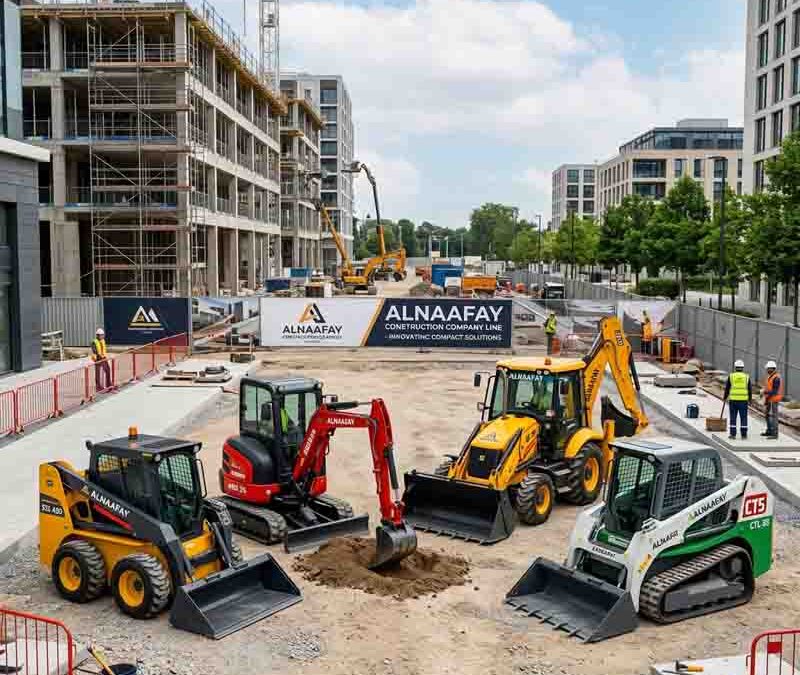
Compact Equipment Trends: Skid Steers, Mini Excavators and More
Big machines once ruled every job site, yet the construction world is shifting toward smaller, smarter tools. Today, compact equipment such as skid steers and mini excavators tackles tasks that used to demand huge, expensive machines. Because cities grow denser and projects get tighter, these nimble machines have become some of the most valuable assets a builder can own.
The change has been dramatic over the past decade. Manufacturers keep packing more power, better technology, and greater versatility into smaller frames. As a result, builders now reach for compact machines on jobs both large and small. Furthermore, the rise of electric models, smart controls, and clever attachments has pushed this trend even faster. For any modern construction firm in Lahore, understanding these machines is no longer optional but essential.
In this detailed guide, we will explore the biggest trends shaping compact equipment today. You will learn why these machines are booming, what is new in skid steers and mini excavators, and which other compact tools are rising fast. Moreover, we will look at how a smart Construction Company Lahore puts these machines to work, the benefits they bring to crowded urban sites, the challenges they pose, and where the technology is heading next. By the end, you will see exactly why compact equipment matters so much.
Table of Contents
- Introduction
- Why Compact Equipment Is Booming
- Skid Steer Loader Trends
- Mini Excavator Trends
- Other Rising Compact Equipment
- How a Construction Company Lahore Uses Compact Equipment
- Benefits of Compact Equipment for Urban Construction
- Challenges and Limitations
- Future Trends in Compact Equipment
- Frequently Asked Questions (FAQs)
- Conclusion
1. Introduction
Construction has always relied on the right tool for the right job, and the definition of "right" keeps evolving. For many years, bigger meant better, since large machines moved more earth and lifted heavier loads. However, this thinking has changed as cities crowd together and project sites shrink. Today, compact equipment often outperforms its larger cousins in the situations that matter most.
The numbers behind this shift tell a powerful story. Industry reports show the global compact construction equipment market growing steadily, driven by urbanization, infrastructure spending, and rental demand. Meanwhile, smaller machines now handle a growing share of everyday tasks, from digging trenches to clearing sites. Because demand keeps climbing, manufacturers invest heavily in new compact models every single year.
Pakistan reflects this same momentum, especially in its fast-growing cities. With construction activity rising and urban spaces becoming tighter, builders increasingly favor machines that fit into narrow lots and busy streets. Consequently, compact equipment has found a natural home in places like Lahore, where space is precious and timelines are tight. A forward-thinking Lahore builder now treats these machines as core members of the fleet.
Throughout this article, we will unpack the trends driving this revolution. First, we will explore why compact equipment is booming. After that, we will dig into the specific machines, examine their benefits and challenges, and look ahead to the future. So let us begin by understanding what fuels this remarkable rise.
2. Why Compact Equipment Is Booming
It might seem surprising that smaller machines are winning so much ground, yet the reasons run deep. Several powerful forces have combined to push compact equipment into the spotlight. Let us examine why these machines have become so popular across the industry.
Cities Are Getting Tighter
Urban growth sits at the heart of this trend. As cities expand and land grows scarce, construction increasingly happens on small, crowded lots squeezed between existing buildings. Large machines simply cannot fit into these tight spaces, while compact equipment slips in with ease. Because urban projects keep multiplying, demand for small, agile machines naturally rises with them.
Versatility Wins Jobs
Modern compact machines do far more than their size suggests. With dozens of available attachments, a single skid steer or mini excavator can dig, lift, drill, grade, sweep, and break concrete. Rather than buying several specialized machines, builders can own one compact unit that handles many tasks. As a result, these machines deliver remarkable value for the money.
Lower Costs Attract Buyers
Compact equipment usually costs far less than full-size machinery, both to buy and to run. Smaller engines burn less fuel, and lighter machines cause less wear on sites and roads. Furthermore, transport becomes easier and cheaper, since many compact units fit on a standard trailer. For budget-conscious builders, these savings make a strong case.
Rental Markets Drive Demand
The booming equipment rental industry has fueled compact machine sales enormously. Many builders rent compact units for short jobs rather than buying them outright, which keeps these machines in constant demand. Because rental companies need reliable, versatile equipment, they stock plenty of skid steers and mini excavators. Consequently, manufacturers produce ever more of these popular models.
Technology Makes Them Smarter
New technology has transformed what compact machines can do. Improved hydraulics, smarter controls, and even electric power have made these units more capable than ever before. Moreover, features once reserved for large machines now appear on compact models. Thanks to these advances, small machines deliver performance that would have amazed builders just a decade ago.
3. Skid Steer Loader Trends
Few machines symbolize compact power quite like the skid steer loader. Small, tough, and endlessly versatile, the skid steer has earned a permanent place on job sites everywhere. Lately, several exciting trends have pushed this machine even further. Let us explore what is new in the world of skid steers.
More Power in Smaller Frames
Manufacturers keep finding ways to boost performance without growing the machine. Newer skid steers offer higher lift capacities, stronger hydraulics, and more efficient engines than older models. Because of this added muscle, today's skid steers handle heavier tasks that once required larger equipment. As a result, builders get more done with a machine that still fits into tight spots.
A Growing World of Attachments
The attachment market has exploded, and skid steers benefit enormously. With a quick swap, one machine becomes a digger, a sweeper, an auger, a grapple, or a concrete breaker. Furthermore, high-flow hydraulic systems now power demanding attachments that older machines could never run. Thanks to this flexibility, a single skid steer replaces an entire shed full of tools.
Smarter, More Comfortable Cabs
Operator comfort has become a major focus, and modern cabs reflect that shift. Newer skid steers feature better visibility, quieter cabins, intuitive joystick controls, and even touchscreen displays. Because comfortable operators work more safely and efficiently, these upgrades pay off directly. Moreover, advanced controls let workers fine-tune the machine for delicate or demanding tasks.
The Rise of Electric Skid Steers
Electric power represents one of the most exciting trends in the skid steer world. Battery-powered models run quietly, produce zero emissions, and cost less to maintain over time. For indoor work and noise-sensitive urban sites, these benefits matter enormously. Although electric machines still carry a higher upfront price, a forward-looking construction firm in Lahore watches this trend closely.
Telematics and Smart Monitoring
Compact machines now come equipped with the same smart tracking once reserved for large fleets. Telematics systems monitor location, fuel use, engine health, and maintenance needs in real time. Because managers gain this clear visibility, they keep machines running longer and avoid costly breakdowns. Consequently, even a small skid steer becomes part of a smart, connected fleet.
4. Mini Excavator Trends
While skid steers handle loading and lifting, mini excavators rule the world of compact digging. These small but mighty machines have surged in popularity, and innovation continues at a rapid pace. Let us look at the trends reshaping the mini excavator today.
Zero and Reduced Tail Swing Designs
Space-saving designs have become a defining feature of modern mini excavators. Zero-tail-swing and reduced-tail-swing models keep the rear of the machine within the width of the tracks during rotation. Because of this clever design, operators can work right up against walls and obstacles without fear of hitting them. For crowded city sites, this feature proves invaluable.
Expanding Size Options
Mini excavators now come in a wider range of sizes than ever before. At the smaller end, micro excavators squeeze through narrow gates and even doorways, while larger minis approach the power of standard machines. As a result, builders can pick the exact size that fits their project perfectly. This range gives buyers more choice and better value.
Better Hydraulics and Attachments
Just like skid steers, mini excavators benefit from improved hydraulics and a growing attachment range. Augers, breakers, grapples, and tilting buckets all expand what these small machines can do. Furthermore, advanced hydraulic systems let operators control attachments with greater precision. Thanks to these upgrades, a mini excavator tackles far more than simple digging.
Electric and Low-Emission Models
The push toward cleaner power has reached mini excavators in a big way. Battery-electric models now offer quiet, emission-free operation that suits indoor and urban work perfectly. Because cities increasingly demand cleaner job sites, these machines fill a growing need. A green-minded building company in Lahore may soon find electric minis a smart investment.
Operator-Friendly Features
Comfort and ease of use have improved dramatically on modern mini excavators. Spacious cabs, smooth controls, and helpful screens make these machines easier to operate than older models. Moreover, some units now include features like automatic idle and adjustable control patterns. As a result, even less-experienced operators can work safely and productively.
5. Other Rising Compact Equipment
Skid steers and mini excavators grab plenty of attention, yet they are far from the only compact machines on the rise. Several other small but powerful units are gaining ground fast. Let us explore three categories making waves on modern job sites.
Compact Track Loaders
Compact track loaders look much like skid steers, but they ride on rubber tracks instead of wheels. Because of these tracks, they spread their weight more evenly and grip soft, muddy, or uneven ground far better. As a result, they shine in conditions where wheeled machines would sink or slip. Their popularity has soared, especially in regions with challenging terrain or wet seasons.
Beyond their traction, compact track loaders share the skid steer's versatility. They accept the same wide range of attachments, which makes them equally useful across many tasks. Furthermore, their stable platform allows for smooth grading and lifting. For builders who need power and traction in one package, these machines deliver beautifully.
Telehandlers
Telehandlers blend the abilities of a forklift and a small crane into one handy machine. Their telescopic boom extends forward and upward, which lets them place loads high and reach over obstacles. Because standard forklifts cannot match this reach, telehandlers have become essential for many lifting tasks. On tight sites, their flexibility proves especially valuable.
Compact telehandlers, in particular, have grown popular for urban and indoor work. These smaller units fit into spaces that larger machines cannot, while still offering impressive lifting height. Moreover, with the right attachments, they can carry pallets, lift workers, or move bulky materials. Consequently, a versatile Construction Company Lahore often keeps a compact telehandler ready for varied jobs.
Micro Excavators
When even a mini excavator proves too large, the micro excavator steps in. These tiny machines often weigh under one ton, which lets them pass through narrow gates, doorways, and even onto upper floors. Because of their small size, they excel at indoor demolition, landscaping, and tight utility work. For the most confined spaces, nothing else compares.
Despite their small stature, micro excavators pack genuine digging power. With the right setup, they trench, dig, and break through surfaces that hand tools could never handle quickly. Furthermore, many micro models now offer electric power for quiet, clean indoor use. As cities grow denser, these machines fill an increasingly important niche.
6. How a Construction Company Lahore Uses Compact Equipment
Lahore is growing rapidly, and its busy, crowded streets create unique challenges for builders. To work efficiently in such conditions, companies increasingly rely on compact machines. Let us explore how a skilled Construction Company Lahore puts these versatile units to practical use across its projects.
Working in Tight Urban Spaces
Lahore's older neighborhoods feature narrow lanes and small plots squeezed between existing buildings. Because large machines cannot fit into these spaces, compact equipment becomes the obvious solution. A resourceful Construction Company Lahore uses skid steers and mini excavators to dig, load, and clear sites that would otherwise demand slow, costly hand labor. As a result, projects move faster even in the tightest locations.
Handling Many Tasks With Few Machines
Budgets matter greatly in a competitive market, so versatility carries real value. Rather than owning many specialized machines, a practical Construction Company Lahore relies on compact units with multiple attachments. One skid steer might dig in the morning, sweep at midday, and break concrete in the afternoon. Consequently, the company saves money while still handling a wide range of jobs.
Moving Equipment Easily Across the City
Lahore's projects often spread across many neighborhoods, which makes transport a constant concern. Because compact machines fit easily on standard trailers, a well-organized Construction Company Lahore can shift them between sites quickly and cheaply. Rather than arranging expensive heavy transport, the team simply hauls the machine where it is needed. This mobility keeps multiple projects moving at once.
Reducing Noise and Disruption
Urban construction often happens close to homes, shops, and offices, so noise and disruption matter. By using compact and electric machines, a considerate Lahore builder reduces the impact on nearby residents. Quieter machines mean fewer complaints and smoother relations with the community. Moreover, cleaner electric units help the company meet rising environmental expectations.
Matching Machines to Project Scale
Smart builders never use more machine than a job requires. For small residential and renovation projects, a thoughtful Construction Company Lahore picks mini excavators and skid steers instead of bulky equipment. This careful matching avoids waste and keeps costs under control. As a result, the company delivers quality work at a fair price, which keeps clients happy.
7. Benefits of Compact Equipment for Urban Construction
Compact machines offer a long list of advantages, especially in busy cities. These benefits explain why builders embrace them so eagerly. Let us look at the key reasons compact equipment shines in urban construction.
Access to Confined Spaces
The clearest benefit is the ability to reach places larger machines cannot. Narrow gates, indoor areas, basements, and crowded lots all welcome compact machines with ease. Because these units fit where others fail, they unlock jobs that would otherwise prove impossible. For dense urban work, this access alone makes them indispensable.
Lower Operating Costs
Money matters on every project, and compact machines help control it. Smaller engines burn less fuel, lighter machines need less maintenance, and transport stays cheaper throughout. Furthermore, many compact units require no special permits to haul. As these savings add up, builders enjoy healthier margins on their projects.
Faster Setup and Mobility
Speed often decides whether a project finishes on time. Because compact machines are easy to transport and quick to deploy, they reduce delays between tasks and sites. Rather than waiting for heavy haulers, crews simply move the machine and get to work. Consequently, the whole project flows more smoothly.
Less Site Damage
Heavy machines can tear up finished surfaces, lawns, and pavements, which creates extra repair work. Compact equipment, by contrast, treads more lightly and causes far less damage. This gentleness matters especially on renovation jobs and finished properties. As a result, builders avoid costly cleanup and keep clients satisfied.
Improved Safety in Crowded Areas
Tight urban sites mix machines, workers, and sometimes the public in close quarters. Because compact machines are smaller and easier to control, they pose fewer risks in these crowded conditions. Better visibility and nimble handling also help operators avoid accidents. For this reason, a safety-focused construction firm in Lahore values these machines highly.
8. Challenges and Limitations
While compact equipment offers many advantages, it is not perfect for every situation. Honesty matters when making big decisions, so let us examine the challenges and limits these machines bring. Understanding them helps builders make wiser choices.
Limited Power for Heavy Work
Compact machines trade raw power for size and agility. As a result, they cannot match the digging depth, lifting capacity, or output of full-size equipment. For massive earthmoving or deep foundation work, larger machines remain essential. Therefore, builders must avoid pushing compact units beyond their natural limits.
Smaller Capacity Means More Trips
Because compact machines carry less material per load, they sometimes need more trips to finish a job. On large-volume tasks, this slower pace can add up over time. Consequently, using a compact machine on the wrong job may actually waste time rather than save it. Matching the machine to the task therefore remains crucial.
Higher Cost for Electric Models
Electric compact machines bring great benefits, yet they carry a higher upfront price. For smaller builders, this cost can feel difficult to justify at first. While long-term savings on fuel and maintenance help, the initial investment still poses a hurdle. As a result, many companies adopt electric models gradually rather than all at once.
Attachment Costs Add Up
Versatility comes from attachments, but those attachments cost money. Buying a full range of buckets, augers, and breakers can grow expensive quickly. Furthermore, high-flow attachments require machines built to power them. Because of this, builders must plan their attachment purchases carefully to avoid overspending.
Wear in Tough Conditions
Compact machines work hard, and demanding conditions can wear them down faster. Dusty air, heavy use, and rough terrain all strain smaller components over time. Without proper maintenance, these machines may break down sooner than expected. For this reason, a careful building company in Lahore invests in regular servicing to protect its fleet.
9. Future Trends in Compact Equipment
Compact equipment has already transformed construction, yet its evolution is far from finished. Exciting new technologies promise to make these machines even more capable in the years ahead. Let us look at the trends shaping the future of compact machinery.
Electrification Goes Mainstream
Electric power stands at the forefront of compact equipment's future. As battery technology improves and prices fall, electric machines will become far more common on job sites. Because cities tighten emission rules and demand quieter work, these clean machines fit perfectly. Consequently, a future-focused Construction Company Lahore should expect electric compact units to become standard.
Smarter Machines With AI
Artificial intelligence is set to make compact machines smarter than ever. Future units may assist operators with tasks, prevent collisions, and even predict maintenance needs with great accuracy. Furthermore, AI could help inexperienced workers operate machines more safely. As these features mature, productivity and safety will both climb.
Greater Automation and Remote Control
Remote and semi-autonomous operation is steadily advancing across the industry. Already, some compact machines can be controlled from a distance, which keeps operators safe during risky tasks. Over time, these capabilities will grow more common and more capable. As a result, builders will gain new ways to work efficiently and safely.
Better Telematics and Connectivity
Smart monitoring will only deepen in the coming years. Future telematics systems will deliver richer data, sharper alerts, and tighter integration with project software. Because managers will gain even clearer insight into their fleets, machines will run longer and waste less. Consequently, even small machines will become highly connected, data-driven assets.
More Versatile Attachments
Attachment innovation shows no sign of slowing down. Manufacturers continue to design new tools that expand what compact machines can do. Moreover, smarter attachments will communicate with machines to optimize performance automatically. Thanks to these advances, a single compact unit will handle an even wider range of jobs in the future.
10. Frequently Asked Questions (FAQs)
What is compact construction equipment?
Compact construction equipment refers to smaller machines built to work efficiently in tight spaces. This category includes skid steers, mini excavators, compact track loaders, telehandlers, and micro excavators. Because these machines combine power with a small footprint, they handle many tasks that larger equipment cannot reach. As a result, they have become essential for urban and small-scale construction projects.
Why are skid steers and mini excavators so popular?
These machines offer remarkable versatility in a compact size, which explains their popularity. With many available attachments, a single unit can dig, lift, sweep, drill, and break concrete. Furthermore, they cost less to buy, run, and transport than full-size equipment. For these reasons, builders everywhere rely on them for a huge range of jobs.
How does a Construction Company Lahore benefit from compact equipment?
A Construction Company Lahore benefits in several important ways. Compact machines fit into the city's narrow lanes and tight lots, which speeds up work in crowded areas. Moreover, they reduce transport costs, cut noise, and handle many tasks with few machines. Because of these advantages, a Lahore builder can deliver quality work efficiently even on challenging urban sites.
Are electric compact machines worth the higher cost?
In many cases, electric compact machines justify their higher upfront price over time. They produce zero emissions, run quietly, and cost less to maintain than fuel-powered units. For indoor work and noise-sensitive areas, these benefits prove especially valuable. However, the right choice depends on each project's needs and the company's long-term plans.
What is the difference between a skid steer and a compact track loader?
The main difference lies in how each machine moves across the ground. A skid steer rides on wheels, while a compact track loader rides on rubber tracks. Because of these tracks, the track loader grips soft, muddy, or uneven ground far better and spreads its weight more evenly. The skid steer, by contrast, often moves faster and costs less on firm surfaces.
Can compact equipment replace full-size machines completely?
Compact equipment cannot fully replace large machines, since each serves a different purpose. While compact units excel in tight spaces and varied tasks, they lack the power and capacity for heavy, large-scale work. Therefore, most builders use a mix of both, choosing the right machine for each job. A smart construction firm in Lahore balances compact and full-size equipment to match every project.
Which compact machine should a small builder buy first?
For most small builders, a versatile skid steer or mini excavator makes an excellent first purchase. These machines handle a wide range of tasks, especially with the right attachments. From there, a builder can add compact track loaders or telehandlers as needs grow. By starting with one versatile machine, a small company gains maximum value for its money.
11. Conclusion
Compact equipment has reshaped the construction world, proving that smaller machines can deliver enormous value. From powerful skid steers and nimble mini excavators to compact track loaders, telehandlers, and micro excavators, these versatile units now handle countless tasks. Because cities grow denser and projects get tighter, the demand for compact machinery will only continue to climb.
The trends driving this revolution are exciting and far-reaching. Electrification promises cleaner, quieter job sites, while artificial intelligence, automation, and smart telematics push these machines toward a brighter future. Of course, compact equipment carries limits too, since it cannot match the raw power of full-size machinery. Even so, when matched wisely to the right task, these machines offer speed, savings, and access that larger units simply cannot provide.
For anyone building in Lahore, the message is clear. With crowded streets, tight lots, and rising client expectations, smart equipment choices have become essential rather than optional. A trusted Construction Company Lahore that embraces compact machines gains a real edge, delivering projects faster, cleaner, and more affordably than competitors who rely only on heavy equipment. Moreover, as technology keeps advancing, that advantage will only grow stronger over time.
Ready to build smarter on even the tightest urban site? Partner with an experienced Construction Company Lahore that pairs the right compact equipment with the skill to use it well, guiding your next project confidently from the first dig to the final finish.
