
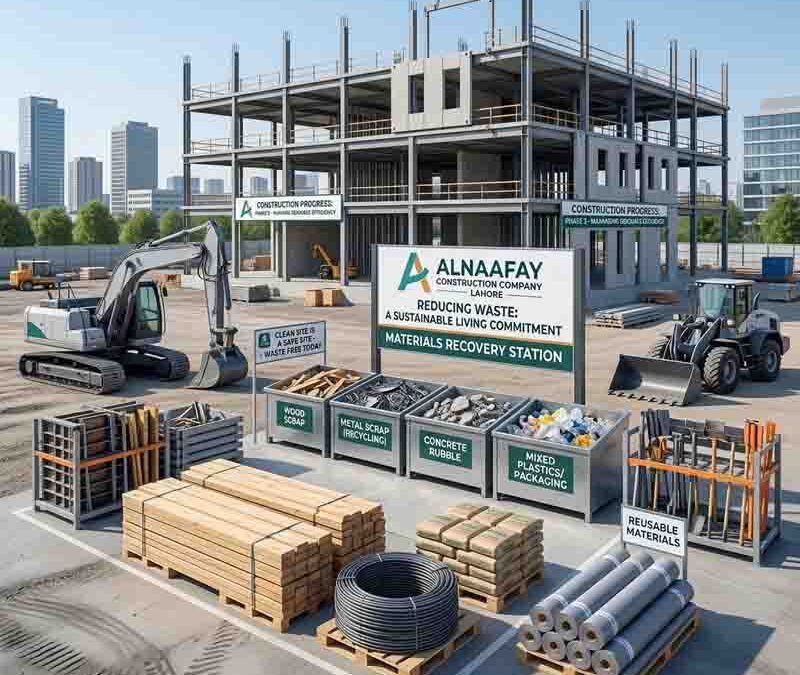
How to Reduce Construction Waste on the Job Site
Construction creates an enormous amount of waste, and most of it ends up buried in landfills rather than reused. Concrete chunks, broken bricks, scrap wood, twisted metal, and torn packaging pile up faster than most people expect. Because this waste costs money to haul away and harms the environment, smart builders treat reduction as a serious priority rather than an afterthought. We have seen firsthand how a clear plan turns a messy, wasteful site into a clean, efficient one.
Reducing waste does far more than tidy up a job site. It cuts disposal costs, speeds up work, protects the environment, and improves safety for everyone on the project. Furthermore, it helps a company build a reputation for responsibility, which clients increasingly value. For any modern Construction Company Lahore, mastering waste reduction has become both a money-saver and a genuine competitive edge.
This detailed guide walks you through everything you need to know about cutting construction waste in plain, simple language. First, you will learn why reducing waste matters so much. After that, we will cover the common sources of waste, smart planning strategies, on-site management, recycling, real cost savings, and honest challenges. Moreover, we will explain how a skilled Construction Company Lahore puts these ideas into practice, along with answers to the questions people ask most.
Table of Contents
- Introduction
- Why Reducing Construction Waste Matters
- Common Sources of Construction Waste
- Planning and Design Strategies to Reduce Waste
- On-Site Waste Management Best Practices
- Recycling and Material Reuse
- How a Construction Company Lahore Reduces Waste
- Cost Savings From Waste Reduction
- Challenges and Practical Solutions
- Frequently Asked Questions (FAQs)
- Conclusion
Introduction
Every construction project produces waste, yet the amount varies hugely from one site to the next. On a poorly managed job, waste piles up everywhere, blocking pathways and slowing the crew. On a well-run site, however, waste stays low, organized, and largely reused. Because the difference comes down to planning and habits, any builder can improve with the right approach.
The scale of the problem surprises most people. Construction and demolition activity generates a large share of the world's solid waste, and much of that material could be reused or recycled. Rather than treating leftover materials as trash, we treat them as resources that still hold value. As a result, we keep more material out of landfills and more money in the budget.
Interest in waste reduction keeps growing across the industry, and the reasons are clear. Disposal costs rise every year, landfills fill up, and clients increasingly expect responsible building. Meanwhile, the methods and tools needed to cut waste keep improving and growing easier to use. Throughout this article, we will explain exactly how these methods work and how a trusted Construction Company Lahore applies them on real projects.
Why Reducing Construction Waste Matters
Reducing construction waste touches money, safety, the environment, and reputation all at once. Because the benefits reach so far, this topic deserves serious attention from anyone in the building business. Below, we explain the main reasons waste reduction matters so much.
Lower Disposal and Material Costs
Money speaks loudly on any project, and waste quietly drains it. Every dumpster you haul away costs money, and every wasted material was paid for in the first place. By cutting waste, you save on both disposal fees and the cost of buying replacement materials. As a result, the same budget stretches further across the project.
A Safer, Cleaner Job Site
Waste piling up across a site creates real hazards for workers. Scattered debris causes trips, falls, cuts, and blocked escape routes during emergencies. By keeping the site clean and organized, you reduce these dangers considerably. Furthermore, a tidy site lets the crew move faster and work with fewer interruptions.
A Smaller Environmental Footprint
The planet pays a heavy price for construction waste. Landfills fill with materials that could have been reused, while making new materials burns energy and creates pollution. By reducing waste, you shrink this footprint in a meaningful way. Moreover, you help conserve the raw resources that future projects will need.
Faster, Smoother Projects
A clean site simply runs better. When materials stay organized and waste stays low, workers spend less time hunting for tools or clearing debris. Consequently, tasks flow more smoothly and the project moves closer to its deadline. We have found that strong waste habits often shave real time off a schedule.
A Stronger Reputation
Reputation matters greatly in construction, and responsibility builds trust. Clients increasingly want builders who work cleanly, respect the environment, and avoid wasteful spending. When word spreads that a company runs efficient, low-waste sites, more contracts follow. For this reason, a forward-thinking Construction Company Lahore treats waste reduction as a genuine selling point rather than a chore.
The takeaway: Cutting waste saves money, protects workers, helps the planet, and builds trust, which makes it one of the smartest habits any builder can adopt.
Common Sources of Construction Waste
Before you can cut waste, you need to know where it comes from. Most construction waste flows from a handful of predictable sources, and naming them makes the problem far easier to tackle. We track these sources closely on every project, because we believe you cannot fix what you do not measure. Below, we break down the most common culprits.
Over-Ordering Materials
Ordering too much material ranks among the biggest sources of waste. When a crew buys far more than a job needs, the leftovers often end up dumped rather than returned. Because materials degrade in storage or get damaged on site, they frequently turn into pure waste. By ordering carefully, you avoid this loss from the very start.
Off-Cuts and Trimming Waste
Cutting materials to size always creates leftover pieces. Wood, drywall, pipe, tile, and steel all leave behind off-cuts that often get tossed. While some off-cuts are unavoidable, poor planning makes the pile far larger than it needs to be. We reduce these scraps through smart measuring and cutting plans.
Packaging and Shipping Materials
Materials arrive wrapped in cardboard, plastic, foam, and pallets, and all of it adds up fast. Once the product comes out, the packaging usually heads straight to the bin. Furthermore, this packaging waste takes up space and slows down site cleanup. By sorting and recycling it properly, we keep much of it out of the landfill.
Damaged and Defective Materials
Materials get damaged in countless ways before they ever go into a building. Rough handling, poor storage, weather exposure, and manufacturing defects all create unusable stock. Because damaged materials cost money twice, once to buy and once to discard, they hurt the budget badly. Careful handling and storage prevent much of this loss.
Design Changes and Rework
Changes during a project create some of the most painful waste of all. When a design shifts after work has started, finished sections often get torn out and rebuilt. As a result, both the materials and the labor go to waste. By finalizing designs early, you avoid this costly cycle of build and rebuild.
Demolition Debris
Demolition and renovation projects produce huge volumes of waste. Concrete, brick, wood, metal, and fixtures all come out at once during teardown. While much of this material could be recycled or reused, it often gets dumped instead. We sort demolition debris carefully to recover everything of value.
The takeaway: Most waste comes from over-ordering, off-cuts, packaging, damage, rework, and demolition, so target these six sources first for the biggest gains.
Planning and Design Strategies to Reduce Waste
The best time to cut construction waste is before the project even begins. Smart planning and design decisions prevent waste long before a single material arrives on site. We build waste reduction into our plans from the first drawing, because we never leave it to chance. Below, we share the strategies that deliver the strongest results.
Plan the Design With Standard Sizes
Designing around standard material sizes cuts off-cuts dramatically. When room dimensions, wall heights, and layouts match the standard sizes of boards, panels, and bricks, less cutting is needed. As a result, fewer scraps end up in the bin. We design with these dimensions in mind to keep trimming waste low from the start.
Order Materials Accurately
Accurate ordering stops waste before it arrives. To get the numbers right, we follow a clear process:
- Calculate quantities carefully from detailed drawings rather than rough guesses.
- Add a small, sensible buffer for breakage instead of a large overstock.
- Stagger deliveries so materials arrive as the project needs them.
- Confirm return policies with suppliers so surplus can go back.
- Track usage as work progresses to refine future orders.
Because over-ordering causes so much waste, this single discipline saves both money and materials.
Finalize Designs Before Building
Locking in the design early prevents costly rework later. When owners, architects, and builders agree on every detail before construction starts, fewer changes interrupt the work. Consequently, fewer finished sections get torn out and rebuilt. We encourage clients to settle design decisions upfront, since this protects both their budget and their schedule.
Choose Prefabricated Components
Prefabrication moves much of the cutting and assembly into a controlled factory. Because factories work with precise measurements and reuse their own scraps, they waste far less material than a typical site. Furthermore, prefabricated parts arrive ready to install, which speeds up the build. For many projects, this approach cuts both waste and time.
Design for Future Reuse and Disassembly
Smart design looks beyond the current project. By choosing materials and connections that can come apart cleanly later, we make future renovation and recycling far easier. As a result, the building wastes less material at the end of its life too. This forward-thinking approach reflects how a careful Construction Company Lahore plans for the long term.
The takeaway: Stop waste before it starts by designing around standard sizes, ordering accurately, finalizing designs early, and using prefabricated parts.
On-Site Waste Management Best Practices
Planning sets the stage, yet daily habits on the job site decide how much waste actually piles up. Strong on-site practices turn good intentions into real results. We follow a consistent set of habits on every project, so the site stays clean no matter who is working that day. Below, we explain the practices that matter most.
Set Up a Clear Waste Sorting System
A simple sorting system keeps materials out of the landfill. Rather than throwing everything into one skip, we separate waste into clear categories right on site:
- Wood for reuse, repair, or recycling.
- Metal for recycling, since it holds strong scrap value.
- Concrete and rubble for crushing and reuse as fill.
- Cardboard and plastic for recycling.
- General waste only for what cannot be recovered.
Because sorted materials are far easier to recycle or reuse, this system recovers value that mixed waste would lose.
Label Bins and Train the Crew
A sorting system only works when everyone understands it. We label every bin clearly and show the crew exactly what goes where. Furthermore, we explain why sorting matters, so workers take it seriously. As a result, materials end up in the right place rather than mixed together in one wasteful pile.
Store Materials Properly
Poor storage turns good materials into waste. To prevent this, we keep materials dry, covered, and off the ground, away from heavy traffic. Moreover, we store fragile items carefully so they avoid knocks and breakage. Because well-stored materials stay usable, this habit alone prevents a great deal of loss.
Keep the Site Clean Daily
A daily cleanup keeps waste under control. Rather than letting debris build up all week, we clear and sort it at the end of each day. Consequently, the site stays safe, organized, and ready for the next task. We have found that small, regular cleanups prevent the large, costly messes that slow projects down.
Assign Clear Responsibility
Waste reduction works best when someone owns it. On our sites, we assign clear responsibility for sorting, storage, and cleanup, so nothing falls through the cracks. Furthermore, we hold short briefings to remind the crew of the plan. Because everyone knows their role, the system runs smoothly day after day.
Track and Measure Waste
You cannot improve what you do not measure. By tracking how much waste each project produces, we spot problems and find ways to do better next time. Moreover, this record helps us prove our results to clients who care about responsible building. We treat these numbers as a tool for steady improvement rather than mere paperwork.
The takeaway: A clean, low-waste site depends on clear sorting, proper storage, daily cleanup, and assigned responsibility, so build these habits into every day.
Recycling and Material Reuse
Even a well-run site produces leftover material, so the next step is recovering its value. Recycling and reuse keep materials working instead of rotting in a landfill. We sort and recover as much as we can on every project, because we believe most "waste" still holds real worth. Below, we explain how recycling and reuse fit into a smart waste plan.
Reusing Materials on Site
The cheapest material is the one you already have. Many leftover materials can serve a second purpose right on the same site. For example, off-cut timber becomes blocking or bracing, while crushed concrete becomes fill or a base layer. Because reusing material costs almost nothing, we look for these opportunities first.
Recycling Common Construction Materials
Many construction materials hold strong recycling value. Rather than dumping them, we send them to recyclers who turn them into new products:
- Concrete and brick crush into aggregate for roads and foundations.
- Metal melts down and returns as new steel or aluminum.
- Wood becomes mulch, chipboard, or recovered lumber.
- Cardboard and plastic return through standard recycling streams.
- Drywall can be processed back into new board in some markets.
Because each of these streams diverts waste from the landfill, they shrink both disposal costs and environmental harm.
Donating Usable Surplus
Sometimes the best option is to give materials away. Leftover fixtures, doors, tiles, and lumber often work perfectly well for someone else. By donating usable surplus to community projects or salvage groups, we keep good materials in use. Furthermore, this approach builds goodwill while cutting disposal costs.
Partnering With Recyclers and Salvagers
Recycling works best with the right partners. To recover the most value, we build relationships with local recyclers, scrap dealers, and salvage yards. Because these partners know how to process each material, they keep more of it out of the landfill. We arrange these partnerships early so collection runs smoothly throughout the project.
Choosing Recycled Materials Too
Reducing waste works both ways. Beyond recycling our own waste, we choose building materials that contain recycled content whenever it makes sense. As a result, we support the recycling cycle from both ends and shrink the project's overall footprint. This balanced approach reflects how a responsible Construction Company Lahore thinks about materials.
The takeaway: Recover value by reusing materials on site, recycling common waste streams, donating surplus, and partnering with local recyclers from the start.
How a Construction Company Lahore Reduces Waste
Knowing the theory is one thing, yet applying it on real projects takes skill and local knowledge. We weave every waste reduction strategy into a clear, organized process suited to the city. Lahore presents real challenges, from rapid construction and tight sites to dusty conditions and heavy monsoon rains. Below, we explain how a dedicated Construction Company Lahore tackles waste on the ground.
Planning Waste Reduction From Day One
Every low-waste project begins with a clear plan. Rather than treating waste as an afterthought, a thoughtful Construction Company Lahore builds a waste plan before work starts. We calculate materials carefully, schedule deliveries wisely, and set up sorting systems in advance. As a result, the site stays organized from the very first day.
Sourcing Materials Locally and Accurately
Material choices shape both cost and waste on any project. To build efficiently, a resourceful Construction Company Lahore orders accurate quantities and sources materials from nearby suppliers. Furthermore, buying locally cuts transport damage and makes returning surplus far easier. Consequently, the project wastes less while staying within budget.
Managing Dust, Damage, and Monsoon Rains
Lahore's climate can turn good materials into waste if you ignore it. Dust settles on surfaces, heat warps certain products, and monsoon rains soak anything left uncovered. To prevent this, a climate-aware Construction Company Lahore stores materials under cover, raised off the ground, and protected from the weather. Because of this care, far fewer materials spoil before use.
Coordinating Skilled Trades
Waste reduction depends on quality workmanship at every stage. We coordinate skilled masons, carpenters, and steel workers so their cutting and fitting stays accurate. Furthermore, careful supervision keeps off-cuts low and rework rare. Because everyone follows the same plan, the site produces far less waste than a poorly coordinated job.
Standing Behind a Clean Site
Good builders take ownership of their results. A diligent Construction Company Lahore tracks waste, sorts materials, and keeps the site clean throughout the project. Moreover, we explain our waste plan to clients clearly and report on the results. As a result, you get a project that runs cleanly and responsibly from start to finish.
The takeaway: A skilled local builder plans waste reduction early, sources materials accurately, protects them from the climate, and stands behind a clean site.
Cost Savings From Waste Reduction
Many people see waste reduction as extra effort, so let us look at the money it saves. Cutting waste lowers costs in several clear ways, and those savings add up across a project. We always show clients the full financial picture, because we believe the numbers speak for themselves. Below, we break down where the savings come from.
Saving on Material Purchases
Wasted material is wasted money, plain and simple. Every board, brick, and bag of cement you avoid wasting is one you never have to pay for again. By ordering accurately and handling materials with care, you buy less overall. As a result, your material budget covers more of the actual building.
Cutting Disposal and Hauling Fees
Hauling waste away costs real money on every project. Fewer dumpsters, fewer trips, and smaller landfill fees all lower your costs directly. By reducing and sorting waste, you shrink these disposal expenses considerably. Furthermore, recycling some materials can even bring money back through scrap value.
Saving Time and Labor
Time is money on any job site, and waste eats both. Workers waste hours hunting through clutter, clearing debris, and redoing botched work. By keeping the site clean and avoiding rework, you save labor that would otherwise vanish. Consequently, the crew finishes faster and the project costs less to run.
Avoiding the Cost of Rework
Rework ranks among the most expensive forms of waste. When finished work gets torn out and rebuilt, you pay twice for materials and twice for labor. By finalizing designs early and building accurately, you avoid this painful double cost. We treat rework prevention as one of the biggest money-savers of all.
Earning Value From Recovered Materials
Recovered materials can turn waste into income. Scrap metal, salvaged fixtures, and reusable lumber all hold value that you can recover or resell. Rather than paying to dump these items, you recover money or savings from them. As a result, smart recovery flips waste from a cost into a small gain.
The takeaway: Waste reduction saves money on materials, disposal, labor, and rework, while recovered materials can even add value, so the savings stack up quickly.
Challenges and Practical Solutions
Waste reduction brings clear rewards, yet it also carries a few hurdles. Honesty matters when making big decisions, so let us look at the common challenges and their practical solutions. We address each of these directly with our clients before work begins, so nothing comes as a surprise. Below, we walk through the obstacles and how we handle them.
Challenge 1: Crew Habits and Resistance
Workers used to old habits may resist a new waste system at first. Without buy-in, even the best plan falls apart on the ground. To solve this, we train the crew, explain the benefits clearly, and assign responsibility for sorting and cleanup. As a result, the system becomes a normal part of the daily routine.
Challenge 2: Limited Space for Sorting
Tight urban sites in Lahore leave little room for multiple waste bins. Without space, sorting becomes difficult and materials get mixed. To address this, we plan compact sorting stations and schedule frequent collections to clear them. Consequently, even a small site can sort waste effectively.
Challenge 3: Weak Local Recycling Options
Not every material has an easy recycling route in every market. Without reliable recyclers, some waste ends up in the landfill by default. To overcome this, a resourceful Construction Company Lahore builds relationships with local scrap dealers and salvagers early. By lining up these partners ahead of time, we recover far more material.
Challenge 4: Climate and Weather Damage
Lahore's heat, dust, and monsoon rains can ruin stored materials quickly. Without protection, good stock turns to waste before it is ever used. To prevent this, we store materials covered, raised, and shielded from the weather. Because of this care, far less material spoils on site.
Challenge 5: Upfront Planning Effort
Reducing waste demands extra planning before a project starts. Some builders skip this step to save time, then pay for it in waste later. To solve this, we treat waste planning as a standard part of every project setup. As a result, the early effort pays back many times over through lower costs and a cleaner site.
The takeaway: Plan for crew habits, limited space, weak recycling, weather, and upfront effort, because addressing these challenges early keeps waste low and projects smooth.
Frequently Asked Questions (FAQs)
What exactly counts as construction waste?
Construction waste includes any material left over or discarded during building, renovation, or demolition. This covers concrete, brick, wood, metal, drywall, packaging, and damaged or surplus materials. Rather than treating all of it as trash, we sort it to recover everything of value. As a result, much of what looks like waste can be reused or recycled instead.
Why should I bother reducing construction waste?
Reducing waste saves money, improves safety, and protects the environment all at once. Because you buy fewer materials and pay less for disposal, your costs drop directly. Furthermore, a cleaner site is safer and faster to work on. For these reasons, waste reduction ranks among the smartest habits any builder can adopt.
How does a Construction Company Lahore reduce waste on site?
A professional Construction Company Lahore plans waste reduction from day one. We calculate materials accurately, schedule deliveries wisely, and set up clear sorting systems before work begins. Furthermore, we store materials safely, coordinate skilled trades to limit off-cuts, and partner with local recyclers. Through these steps, we keep waste low and recover as much material as possible.
What is the biggest source of construction waste?
Over-ordering materials and rework rank among the biggest sources of waste. When crews buy too much or tear out finished work after design changes, both materials and money vanish. By ordering accurately and finalizing designs early, you prevent much of this loss. We treat these two areas as top priorities on every project.
Can construction waste really be recycled?
Yes, a large share of construction waste can be recycled or reused. Concrete crushes into aggregate, metal melts into new steel, and wood becomes mulch or board. Furthermore, many fixtures and materials can be reused directly on the same site or donated. Because of this, careful sorting keeps a great deal of material out of the landfill.
Does reducing waste really save money?
Yes, waste reduction saves money in several clear ways. You spend less on materials, pay lower disposal fees, and avoid the high cost of rework. Moreover, recovered materials like scrap metal can even bring money back. As a result, the savings often outweigh the small effort that planning requires.
How do I get my crew to take waste reduction seriously?
Getting crew buy-in starts with clear training and clear responsibility. We explain the system, label every bin, and show workers exactly what goes where. Furthermore, we assign someone to own sorting and cleanup so nothing slips. Because everyone understands the plan and their role, the system becomes a normal part of daily work.
Is waste reduction practical on small or tight sites?
Yes, even tight sites can reduce waste effectively. While limited space makes sorting harder, compact sorting stations and frequent collections solve the problem. Furthermore, accurate ordering means less material clutters the site in the first place. A skilled Construction Company Lahore plans for these constraints so small sites stay clean and efficient.
When is the best time to plan for waste reduction?
The best time to plan is before the project begins. Smart design, accurate ordering, and early sorting systems prevent waste long before materials arrive. Rather than reacting to waste after it piles up, we stop it at the source. As a result, the early planning effort pays back through lower costs and a cleaner site.
Conclusion
Reducing construction waste is one of the smartest moves any builder can make. By cutting waste, you save money on materials and disposal, speed up your projects, protect your workers, and ease the strain on the environment. Furthermore, a clean, responsible site builds a reputation that attracts more clients over time. Because the benefits reach so far, waste reduction earns its place as a core skill rather than an optional extra.
Of course, cutting waste takes real planning and consistent habits. From designing around standard sizes and ordering accurately to sorting on site, recycling, and reusing materials, every step plays a part. Even so, with clear plans, trained crews, and reliable recycling partners, the common challenges become entirely manageable. In the end, the savings on materials, disposal, labor, and rework repay the effort many times over.
For anyone building in Lahore, expert guidance makes all the difference. With rapid construction, tight sites, dusty conditions, and heavy monsoon rains, a strong waste plan has become a genuine advantage rather than a luxury. A trusted Construction Company Lahore brings the knowledge, skill, and local experience needed to keep waste low and value high. Because we plan every project carefully, protect materials from the climate, and stand behind a clean site, you can move forward with confidence.
Ready to run a cleaner, leaner, and more profitable job site? Partner with an experienced Construction Company Lahore that treats waste reduction as a core part of every project, and take the first confident step toward building smarter today.
