
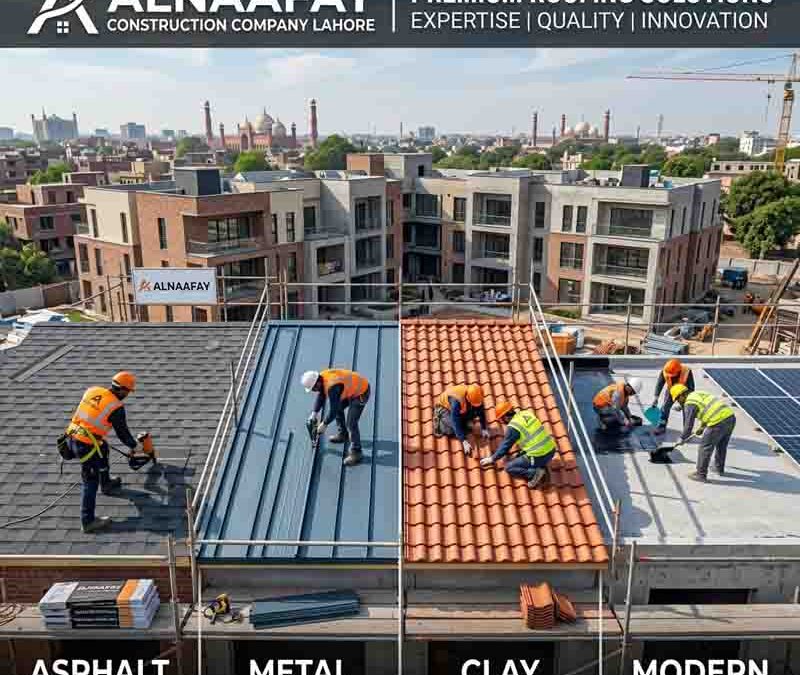
Roofing Material Comparison: Asphalt, Metal, Tile, and More
Picking the wrong roofing material is one of the most expensive mistakes a homeowner or builder can make. Choose a material that cannot handle your local climate and you will face leaks, warping, or premature failure within a few years. Overlook the long-term cost picture and you may save money upfront only to spend far more on replacements over the next three decades. The right roofing material protects your property, controls your energy costs, and holds its value — for decades, not just a few seasons.
This roofing material comparison covers everything you need to make a confident, informed decision. We break down each major option by cost, lifespan, durability, climate suitability, and maintenance demands — so you understand exactly what you are getting before a single nail goes into your roof deck.
Table of Contents
- What Is a Roofing Material Comparison?
- Asphalt Shingles
- Metal Roofing
- Tile Roofing
- Other Roofing Materials
- Roofing Material Comparison: Cost
- Roofing Material Comparison: Durability
- Roofing Material Comparison: Climate Suitability
- How to Choose the Right Roofing Material
- Construction Company Lahore
- FAQs
- Conclusion
1. What Is a Roofing Material Comparison?
A roofing material comparison is a side-by-side evaluation of the major roofing options available to homeowners and builders. It measures each material across the factors that matter most to a real project: upfront cost, lifespan, durability, energy performance, environmental impact, maintenance requirements, and suitability for local climate conditions.
Without a proper roofing material comparison, most people default to what is most familiar or cheapest at the point of purchase. That approach misses the bigger picture. A material that costs less today may need to be replaced two or three times over the life of a building, while a higher-cost option installed once may outlast the structure itself.
There are five primary roofing materials in widespread use today:
- Asphalt Shingles — the most common choice in North America
- Metal Roofing — the fastest-growing segment, valued for longevity and energy efficiency
- Tile Roofing — clay and concrete options prized for their lifespan and visual appeal
- Slate Roofing — a premium natural stone product with an unmatched lifespan
- Wood Shakes — a natural, rustic option suited to specific climates and styles
Each of these materials has a distinct performance profile. The sections below cover all five in detail.
2. Asphalt Shingles: America's Most-Used Roofing Material
Asphalt shingles account for approximately 80% of residential roofs in North America. Their dominance comes down to affordability, ease of installation, and wide availability — any licensed roofing contractor can work with them. However, affordability at the point of purchase does not always mean the lowest total cost over the life of a building, and this roofing material comparison will explain exactly why.
Types of Asphalt Shingles
There are three main varieties of asphalt shingles, each with a different cost, lifespan, and visual profile:
3-Tab Shingles
- Cost: $90 to $150 per square (100 sq ft)
- Lifespan: 15 to 20 years
- Appearance: Flat and uniform
- Best for: Rental properties and tight budgets
Architectural (Dimensional) Shingles
- Cost: $120 to $250 per square
- Lifespan: 25 to 30 years
- Appearance: Textured and dimensional, more visual depth than 3-tab
- Best for: Most standard residential homes
Luxury or Premium Shingles
- Cost: $200 to $400 per square
- Lifespan: 30 to 50 years
- Appearance: Mimics the look of slate or natural tile
- Best for: High-end homes where aesthetics are a priority
Strengths of Asphalt Shingles
- Lowest upfront cost of any major roofing material — total installed cost of $5,000 to $12,000 for a typical 2,000 sq ft home
- Fast, straightforward installation that keeps labor costs down
- Available in more than 50 standard colors to match any home exterior
- Most architectural shingles carry a lifetime or 30-year manufacturer warranty
- Class A fire rating when installed with the correct underlayment
Limitations of Asphalt Shingles
- Shorter lifespan than premium alternatives — typically 15 to 30 years depending on shingle grade
- Susceptible to wind uplift, hail damage, and granule loss over time
- Petroleum-based composition makes them one of the least eco-friendly roofing options, with an estimated 11 million tons ending up in U.S. landfills annually
- Prone to algae and moss growth in humid climates, which requires maintenance to manage
- Darker shingles absorb heat, increasing attic temperatures and raising cooling costs
Best Uses for Asphalt Shingles
Asphalt shingles are a practical choice for homes with standard roof pitches (4:12 to 8:12), budgets under $15,000, and climates without extreme weather conditions. They also work well for homeowners who plan to sell within 10 to 15 years and do not need the long-term value offered by metal or tile.
Pro Tip: If you go with asphalt, invest in architectural shingles with algae-resistant granules. The additional cost of $20 to $30 per square pays dividends in appearance and longevity, particularly in humid regions.
3. Metal Roofing: The Long-Term Value Leader
Metal roofing is the fastest-growing segment of the residential roofing market, currently holding approximately 15% market share and rising steadily. Its growth reflects a broader shift in how homeowners think about roofing — not as a recurring expense, but as a long-term investment. This roofing material comparison consistently shows metal performing well across lifespan, energy efficiency, and total cost of ownership when measured over 50 or more years.
Types of Metal Roofing
Standing Seam Metal
- Cost: $400 to $700 per square
- Lifespan: 50 to 70 years
- Appearance: Clean, modern vertical panels with concealed fasteners
- Best for: Contemporary homes and high-snow regions
Metal Shingles and Tiles
- Cost: $350 to $600 per square
- Lifespan: 40 to 60 years
- Appearance: Designed to mimic traditional shingles or slate, with the durability of metal underneath
- Best for: Traditional homes that want the performance of metal without the industrial look
Corrugated Metal Panels
- Cost: $200 to $400 per square
- Lifespan: 40 to 50 years
- Appearance: Agricultural or industrial aesthetic
- Best for: Barns, modern architectural designs, and budget-conscious metal installations
Metal Material Options
Different metals offer distinct trade-offs between cost, durability, and corrosion resistance:
Metal Type | Relative Cost | Lifespan | Key Advantage |
|---|---|---|---|
Galvalume Steel | Low | 40+ years | Budget metal option with good corrosion resistance |
Galvanized Steel | Low | 50+ years | Strong and cost-effective for most climates |
Aluminum | Moderate | 50+ years | Rust-proof — best for coastal environments |
Zinc | High | 100+ years | Self-healing surface; excellent longevity |
Copper | Very High | 100+ years | Unmatched lifespan; develops distinctive patina |
Strengths of Metal Roofing
- Exceptional lifespan of 40 to 70 years, with premium metals lasting 100 years or more
- Reflects solar heat, reducing cooling costs by 10 to 25% — a meaningful annual saving in hot climates
- Class A fire rating across virtually all metal products
- Lightweight at approximately 50 lbs per square, compared to 200 to 300 lbs per square for tile — no structural reinforcement required
- Contains 25 to 95% recycled content and is 100% recyclable at the end of its life
- Resists rot, mold, and insect damage entirely
- Highest resale value ROI of any roofing material, at 85 to 95%
Limitations of Metal Roofing
- Higher upfront cost than asphalt shingles — $10,000 to $25,000 installed for a typical home
- Can be noisier during heavy rain or hail if installed without solid sheathing or adequate insulation; modern installation methods largely address this
- Softer metals such as aluminum can dent from large hail, though this is typically cosmetic rather than structural
- Matching panels for repairs years after installation can be challenging if the product has been discontinued
- Expands and contracts with temperature changes — systems must be designed to accommodate this movement
Best Uses for Metal Roofing
Metal roofing is the right choice for long-term homeowners who plan to stay in a property for 20 or more years, properties in high-snow regions where shedding is critical, fire-prone areas where a Class A rating is essential, and anyone prioritizing energy efficiency or low maintenance over the life of the building.
4. Tile Roofing: Exceptional Lifespan and Distinctive Style
Tile roofing — whether clay or concrete — occupies a distinct position in any roofing material comparison. Its lifespan rivals or exceeds that of metal, its visual appeal is unmatched in specific architectural styles, and its thermal mass properties provide genuine energy performance benefits. However, it is heavy, expensive, and requires a roof structure designed to handle the load.
Tile commands approximately 5% of the national roofing market overall, but in the Southwest United States its market share rises to over 20% — a reflection of how well it performs in hot, dry climates.
Types of Tile Roofing
Clay Tile
- Cost: $600 to $1,200 per square
- Weight: 800 to 1,000 lbs per square
- Lifespan: 50 to 100 years
- Appearance: Traditional terracotta and glazed finishes; associated with Spanish, Mediterranean, and Mission-style architecture
Concrete Tile
- Cost: $400 to $800 per square
- Weight: 800 to 1,100 lbs per square
- Lifespan: 40 to 75 years
- Appearance: Can mimic clay, slate, or wood shake; broader color availability than clay
Slate Tile (covered in more detail in Section 5)
- Cost: $1,000 to $2,500 per square
- Lifespan: 75 to 200 years
- Appearance: Natural stone texture with unmatched visual depth
Strengths of Tile Roofing
- Among the longest lifespans of any roofing material — clay tiles commonly last 50 to 100 years
- Class A fire rating; clay and concrete are inherently non-combustible
- High thermal mass regulates interior temperature by absorbing heat slowly and releasing it gradually, which reduces peak cooling demand in hot climates
- Resistant to rot, insects, and decay — no organic material in the tile itself
- Color permanence that asphalt cannot match; clay tile in particular holds its color for decades without fading
- Total 60-year cost comparable to asphalt when replacement cycles are factored in
Limitations of Tile Roofing
- One of the highest upfront costs of any residential roofing material — $15,000 to $35,000 for a typical home
- Extremely heavy; structural reinforcement is often required, which adds to total project cost
- Individual tiles can crack if walked on improperly, making maintenance work and future inspections more complicated
- The underlayment beneath tile typically needs replacement every 20 to 30 years — before the tiles themselves — which is a significant mid-life cost
- Installation requires specialized knowledge; not every roofing contractor has experience with tile
Best Uses for Tile Roofing
Tile is the right material for Spanish, Mediterranean, and Southwestern architectural styles; properties in hot, dry climates such as Arizona, Southern California, and Florida; luxury or high-end builds where aesthetics and permanence are priorities; and long-term ownership situations where a 50-year-plus investment horizon makes the upfront cost rational.
Pro Tip: Concrete tile costs 30 to 40% less than clay tile while offering similar performance and a wider range of color options. For homeowners who want the tile look on a more controlled budget, concrete is the practical alternative.
5. Other Roofing Materials: Slate, Wood Shakes, and Synthetic Options
Beyond the three dominant categories above, several additional roofing materials deserve a place in any thorough roofing material comparison.
Slate Roofing
Slate is a natural stone product and represents the premium end of the roofing material spectrum. Its cost is the highest of any standard roofing material, but so is its lifespan — 75 to 200 years, with some historic installations lasting well beyond that.
- Cost: $25,000 to $50,000 or more for a typical home
- Lifespan: 75 to 200 years
- Resale ROI: 80 to 90%
- Best for: Historic homes requiring original material replacement, high-end custom builds, and multi-generational properties where cost is not the primary constraint
The key limitations of slate are its weight (800 to 1,500 lbs per square, which nearly always requires structural reinforcement), its fragility when walked on, the scarcity of qualified installers, and the difficulty of matching old slate panels when repairs are needed years later.
Wood Shakes and Shingles
Wood shakes offer a natural, rustic aesthetic that no synthetic material fully replicates. However, their suitability is narrowing as fire codes tighten across the United States and other markets.
- Cost: $12,000 to $20,000 installed for a typical home
- Lifespan: 20 to 40 years with regular maintenance
- Best for: Mountain and cabin aesthetics in dry climates; areas without fire restrictions
Wood shakes require treatment every 3 to 5 years to maintain water resistance and prevent rot. In humid climates, they are susceptible to mold and algae growth. Additionally, they carry higher homeowner insurance premiums in many regions due to elevated fire risk — a factor that narrows their practical applicability considerably.
Synthetic Roofing Materials
Synthetic options — manufactured by companies such as DaVinci, EcoStar, and Brava — are composite products engineered to mimic the appearance of natural slate, wood shake, or tile.
- Cost: $400 to $900 per square
- Lifespan: 30 to 50 years
- Key advantages: Lighter than natural slate or tile (no structural reinforcement required), good impact resistance, 50-year warranties on premium products
- Key limitations: Still more expensive than asphalt shingles, a shorter track record than natural materials, and an appearance that most discerning homeowners can distinguish from the real thing
6. Roofing Material Comparison: Cost
Cost is the factor that most homeowners focus on first — and the one that most often leads to regret when viewed in isolation. A complete roofing material comparison accounts for three distinct cost dimensions: upfront installation cost, annual maintenance cost, and total lifetime cost.
Upfront Installation Cost (2,000 sq ft home)
Material | Total Installed Cost Range |
|---|---|
3-Tab Asphalt Shingles | $5,000 – $8,000 |
Architectural Asphalt Shingles | $7,000 – $12,000 |
Metal Roofing | $10,000 – $25,000 |
Concrete Tile | $15,000 – $28,000 |
Clay Tile | $20,000 – $35,000 |
Wood Shakes | $12,000 – $20,000 |
Slate | $25,000 – $50,000+ |
Material Cost Per Square Foot
Material | Low | Average | High |
|---|---|---|---|
3-Tab Asphalt | $2.50 | $3.50 | $4.50 |
Architectural Asphalt | $4.00 | $5.50 | $7.50 |
Metal (Steel) | $5.00 | $8.00 | $12.00 |
Metal (Aluminum) | $6.00 | $9.00 | $14.00 |
Concrete Tile | $7.00 | $10.00 | $14.00 |
Clay Tile | $10.00 | $15.00 | $20.00 |
Slate | $12.00 | $18.00 | $25.00 |
Wood Shakes | $6.00 | $9.00 | $12.00 |
Lifetime Cost Analysis Over 60 Years
When replacement cycles are factored in, the picture changes significantly. Asphalt shingles — the cheapest upfront option — typically require two to three full replacements over a 60-year period.
Material | Initial Install | Replacements Needed | Total 60-Year Cost | Annual Cost |
|---|---|---|---|---|
Architectural Asphalt | $9,000 | 2 (years 25 and 50) | $27,000 | $450 |
Metal Roofing | $18,000 | 0 | $18,000 | $300 |
Tile Roofing | $25,000 | 0 (minor repairs only) | $27,000 | $450 |
Metal roofing is, over a 60-year horizon, the most cost-effective option — despite having more than double the upfront cost of asphalt shingles. Furthermore, metal's energy savings of 10 to 25% on cooling costs add a financial benefit that is not even captured in the table above.
7. Roofing Material Comparison: Durability
A roofing material comparison would be incomplete without a direct evaluation of how each material performs against the forces that degrade it: wind, hail, rain, fire, and pests.
Lifespan by Material
Material | Average Lifespan |
|---|---|
3-Tab Asphalt Shingles | 15 – 20 years |
Architectural Asphalt Shingles | 25 – 30 years |
Metal Roofing | 40 – 70 years (copper and zinc: 100+) |
Concrete Tile | 40 – 75 years |
Clay Tile | 50 – 100 years |
Wood Shakes | 20 – 40 years |
Slate | 75 – 200 years |
Resistance to Common Threats
Resistance Factor | Metal | Asphalt Shingles | Clay/Concrete Tile | Slate |
|---|---|---|---|---|
Wind | Excellent (140+ mph rated) | Fair to Good | Very Good (150+ mph rated) | Excellent |
Hail | Good (dents but rarely leaks) | Poor to Fair | Fair to Good (can crack) | Good |
Rain and Snow | Excellent (sheds easily) | Good | Good (underlayment critical) | Excellent |
Fire | Excellent (Class A) | Good (Class A with underlayment) | Excellent (inherently non-combustible) | Excellent |
Pests | Excellent | Poor (susceptible to damage) | Good (gaps can allow entry) | Excellent |
Maintenance Demands by Material
Metal: Low maintenance. Annual inspections for sealant integrity around penetrations and fastener tightness. Modern coatings resist fading and chalking for decades.
Asphalt Shingles: Moderate to high maintenance. Regular checks for granule loss, curling, cracking, missing shingles, and algae or moss growth. Gutters must be kept clear to prevent water infiltration.
Tile: Moderate maintenance. Individual tiles can crack under foot traffic or severe impact and must be replaced. The underlayment may require replacement around years 20 to 30. Mortar in some clay tile installations needs periodic re-pointing.
Slate: Low maintenance on the tiles themselves, though broken tiles must be individually replaced and matching old slate can be difficult. Very few contractors are qualified to work on slate roofs, which makes repairs more expensive when they are needed.
Wood Shakes: High maintenance. Treatment every 3 to 5 years is required. Without consistent care, rot, mold, and insect damage will significantly shorten the material's lifespan.
8. Roofing Material Comparison: Climate Suitability
Climate is one of the most decisive factors in any roofing material comparison. A material that performs flawlessly in the dry heat of Arizona may fail prematurely in the humid monsoon conditions of South Asia, or in the freeze-thaw cycles of the northern United States. Below is a climate-by-climate breakdown of which materials perform best and why.
Hot and Dry Climates (Arizona, Nevada, New Mexico, and similar)
Best choice: Clay or concrete tile
Clay and concrete tile have high thermal mass, meaning they absorb heat slowly and release it gradually rather than allowing it to transfer directly into the building. In hot, dry climates, this property meaningfully reduces peak indoor temperatures without relying entirely on air conditioning. Furthermore, tile is highly resistant to intense UV exposure, which degrades asphalt shingles significantly faster in high-sun environments. Metal roofing is also a strong performer in hot climates due to its reflective coatings, and it offers superior energy savings over the long term.
High-Snow and Cold Climates (Colorado, Minnesota, Vermont, and similar)
Best choice: Standing seam metal roofing
Metal's smooth, continuous surface sheds snow and ice efficiently, preventing the buildup that leads to ice dams — one of the most damaging and expensive winter roofing problems. Asphalt shingles are particularly vulnerable to ice dam damage, as water can back up under shingles and infiltrate the roof deck. Metal eliminates this risk almost entirely when properly installed.
Hurricane and High-Wind Zones (Florida, Gulf Coast, and similar)
Best choice: Metal roofing or high-wind-rated architectural asphalt shingles
Standing seam metal systems are rated for winds of 140 miles per hour or more. Tile systems also offer strong wind resistance — some rated for 150 mph or higher — though individual tiles can become projectiles if they crack under extreme impact. Asphalt shingles are the weakest performer in high-wind environments, particularly lower-grade 3-tab products, which are susceptible to wind uplift even at moderate speeds.
Hot and Humid Climates (Southeastern United States, South Asia, and similar)
Best choice: Metal roofing or algae-resistant architectural asphalt shingles
Humidity and sustained moisture promote algae, moss, and mold growth on roofing surfaces. Metal is inherently resistant to all three. Moreover, its reflective properties reduce heat gain in hot, humid climates where both heat and moisture management are ongoing concerns. If asphalt shingles are used in humid climates, selecting products with built-in algae-resistant granules is essential — standard shingles will require frequent cleaning and may show visible discoloration within a few years.
Moderate and Temperate Climates (Pacific Northwest, Mid-Atlantic, and similar)
Best choice: Architectural asphalt shingles or metal roofing
In temperate regions without temperature extremes, both asphalt and metal perform reliably. Architectural asphalt shingles represent a cost-effective option in these climates, where the accelerated degradation caused by intense UV or freeze-thaw stress is less pronounced. Metal, however, remains the superior long-term investment in any climate due to its lifespan and lower total cost over time.
9. How to Choose the Right Roofing Material
A thorough roofing material comparison is the foundation of a good decision, but the final choice also depends on your specific property, budget, and priorities. Work through the following questions to identify the right material for your project.
Question 1: How long will you own the property?
- Less than 10 years: Architectural asphalt shingles are the practical choice. There is no financial case for investing in a 50-year material if you will sell in a decade.
- 10 to 20 years: Architectural asphalt or entry-level metal roofing both make sense depending on budget.
- 20 years or more: Metal roofing, tile, or slate deliver the best long-term value. The higher upfront cost pays for itself through avoided replacement and lower maintenance.
Question 2: What is your budget?
- Under $10,000: Asphalt shingles are your only realistic option at this price point.
- $10,000 to $20,000: Premium architectural asphalt or entry-level metal roofing.
- $20,000 to $35,000: Quality metal roofing or concrete and clay tile.
- Over $35,000: Slate, premium metal, or high-end tile systems.
Question 3: What does your local climate demand?
Refer to the climate suitability section above. In hot and humid climates, prioritize materials that resist algae and heat gain. In snow regions, prioritize shedding performance. In hurricane zones, prioritize wind resistance ratings.
Question 4: What is your maintenance tolerance?
- Minimal maintenance: Metal, tile, or slate
- Moderate maintenance: Architectural asphalt shingles
- High maintenance: Wood shakes (only appropriate if you commit to the upkeep)
Question 5: What does your home's architecture call for?
- Traditional or Colonial: Asphalt or slate
- Spanish or Mediterranean: Clay or concrete tile
- Modern or Contemporary: Standing seam metal
- Rustic or Cabin: Wood shakes or metal panels
- Historic: Slate or material matching the original roof
Quick Reference: Roofing Material by Priority
Primary Priority | Recommended Material |
|---|---|
Lowest upfront cost | 3-Tab or Architectural Asphalt |
Lowest lifetime cost | Metal Roofing |
Longest lifespan | Slate |
Best energy efficiency | Metal Roofing |
Best for hot, dry climates | Clay or Concrete Tile |
Best for snow regions | Standing Seam Metal |
Best curb appeal (Mediterranean style) | Clay Tile |
Most eco-friendly | Metal Roofing |
Best resale ROI | Metal Roofing (85–95%) |
10. Construction Company Lahore
The construction industry in Lahore is one of the most active in South Asia. Rapid urban expansion, a surge in commercial development, and rising standards for residential quality mean that contractors and property owners across the city face increasingly complex material decisions — and the roofing material comparison is at the center of many of them.
We understand that a roofing material comparison for a Lahore project involves considerations that go beyond product specifications alone. Local supply chain availability, compliance with applicable building standards, climate-specific performance requirements, and project budget all factor into the decision. Lahore's specific climate — defined by extreme summer heat, an intense monsoon season, and moderate winters — makes the roofing material comparison more nuanced here than in many other markets.
Here is what property owners and construction professionals in Lahore need to know:
Heat reflection is a critical performance requirement. Lahore regularly experiences summer temperatures above 40°C (104°F). Consequently, roofing materials that absorb and retain heat — including standard asphalt shingles without reflective granules — increase indoor cooling loads significantly and raise operating costs year after year. Metal roofing with reflective coatings can reduce cooling costs by 10 to 25%, which translates into measurable savings across the full summer season. Tile's thermal mass also provides meaningful heat regulation, particularly in residential buildings where air conditioning capacity is a concern.
Monsoon conditions make algae and mold resistance essential. Lahore's monsoon season brings sustained high humidity and frequent rainfall over an extended period. Standard asphalt shingles installed in these conditions will develop algae and mold growth within a few years without regular treatment. Metal roofing is inherently resistant to both. For tile, the underlayment selection and drainage design are critical — a well-installed tile system handles monsoon rainfall effectively, but a poorly installed one will suffer water infiltration through cracked tiles or failed underlayment.
Metal roofing offers the best combination of performance factors for Lahore's climate. It reflects summer heat, sheds monsoon rainfall efficiently, resists biological growth, and requires minimal maintenance once installed. For commercial buildings, industrial facilities, and long-term residential investments in Lahore, metal roofing provides the strongest overall case in a direct roofing material comparison.
Tile is a strong choice for high-end residential construction. Clay and concrete tile perform well in hot climates, carry a lifespan that justifies the upfront cost over a long ownership horizon, and deliver the premium visual quality that higher-end residential buyers in Lahore expect. The critical requirement is that the structural design accounts for tile's weight — 800 to 1,100 lbs per square — from the outset.
Asphalt shingles remain viable for budget-conscious projects with appropriate product selection. Where budget constraints make premium materials impractical, architectural asphalt shingles with algae-resistant granules represent a workable choice. However, we want to be direct with you: in Lahore's climate, the maintenance demands and shorter lifespan of asphalt shingles mean that the gap between asphalt's low upfront cost and metal's higher upfront cost narrows considerably when total lifetime costs are accounted for.
We work with construction companies, developers, and individual property owners in Lahore to identify the right roofing material for each project's climate exposure, budget, structural conditions, and long-term ownership goals. We stand behind every material recommendation we make with specific data — not general claims — so you can make your decision with full confidence.
11. FAQs
What is the best roofing material overall?
There is no single best material in an honest roofing material comparison — the right choice depends on your climate, budget, lifespan expectations, and architectural style. That said, metal roofing offers the best overall combination of long-term value, energy performance, durability, and low maintenance across most climates. Architectural asphalt shingles are the best choice for standard suburban homes on a budget. Clay or concrete tile is the best choice for hot, dry climates and Mediterranean or Spanish architectural styles.
How long does each roofing material last?
- 3-Tab Asphalt Shingles: 15 to 20 years
- Architectural Asphalt Shingles: 25 to 30 years
- Metal Roofing: 40 to 70 years (copper and zinc: 100+ years)
- Concrete Tile: 40 to 75 years
- Clay Tile: 50 to 100 years
- Wood Shakes: 20 to 40 years with maintenance
- Slate: 75 to 200 years
Which roofing material is the most energy-efficient?
Metal roofing is the most energy-efficient option in this roofing material comparison. Its reflective coatings reduce solar heat gain and can lower cooling costs by 10 to 25% annually. Clay tile is the second-strongest performer in this regard, due to its thermal mass properties. Asphalt shingles — particularly dark-colored varieties — absorb heat and typically increase cooling demand.
Can tile or slate be installed on any home?
Not without a structural assessment. Clay tile weighs 800 to 1,000 lbs per square, concrete tile 800 to 1,100 lbs per square, and slate 800 to 1,500 lbs per square. Many standard residential roof structures are not designed to carry these loads. Before installing tile or slate, a structural engineer must evaluate whether the existing framing is adequate or whether reinforcement is required. Skipping this step risks structural damage and code violations.
Is metal roofing noisy during rain or hail?
Modern metal roofing systems installed over solid sheathing and with appropriate insulation are generally no noisier than other roofing materials. The association of metal roofing with drumming rain noise comes primarily from agricultural installations on open framing — barns and outbuildings — not from contemporary residential or commercial applications where solid decking and underlayment are standard.
What roofing material offers the best resale value?
Metal roofing has the highest return on investment at resale, estimated at 85 to 95% by current market data. Buyers recognize and value the long remaining lifespan and low future maintenance cost of a metal roof. Tile roofing offers a resale ROI of 70 to 80%, while architectural asphalt shingles return 60 to 68%.
What is the most eco-friendly roofing material?
Metal roofing is the strongest performer in environmental terms. It contains 25 to 95% recycled content depending on the product and is 100% recyclable at the end of its long service life. By comparison, asphalt shingles are petroleum-based, difficult to recycle, and contribute approximately 11 million tons of landfill waste annually in the United States alone. Slate and clay tile are made from natural earth materials and can be repurposed, though their manufacturing processes are energy-intensive.
How do I decide which roofing material is right for my project?
Work through five questions in sequence: How long will you own the property? What is your total budget, including long-term costs? What does your local climate demand? How much ongoing maintenance are you willing to manage? What does your home's architectural style call for? Use the answers to those questions alongside the roofing material comparison tables in this guide, and the right choice will become clear. If you remain uncertain, consult a licensed roofing contractor who can assess your roof structure, local climate conditions, and project-specific requirements in person.
12. Conclusion
Choosing a roofing material is not a minor decision. It is one of the largest single investments most property owners make, and it affects structural performance, energy costs, maintenance demands, and resale value for decades. The right choice, made with full information, protects your building and your budget for the full life of the material. The wrong choice — made primarily on upfront cost or habit — often costs far more over time.
This roofing material comparison has covered the five major categories in detail: asphalt shingles, metal roofing, tile roofing, slate, and wood shakes. It has measured each against cost, lifespan, durability, and climate suitability — and the picture that emerges is clear. No single material wins on every dimension, but each material has a specific set of conditions under which it is the right call.
Asphalt shingles are the rational choice for standard homes on a budget with a short ownership horizon. Metal roofing is the best long-term investment for anyone planning to stay in a property for 20 or more years, particularly in climates where energy efficiency and low maintenance are priorities. Tile is the right material for hot, dry climates and Mediterranean architectural styles where its lifespan and thermal performance justify the upfront cost. Slate is the premium option for historic homes and long-term legacy builds where permanence outweighs budget constraints.
Apply the information in this guide room by room, project by project — and your roof will perform exactly as intended for the life of the building. If you are ready to move forward and want expert guidance on selecting and installing the right material for your specific conditions, contact our team. We specify and install the correct product for every environment, we back every recommendation with verifiable data, and we stand behind every installation we complete.
