
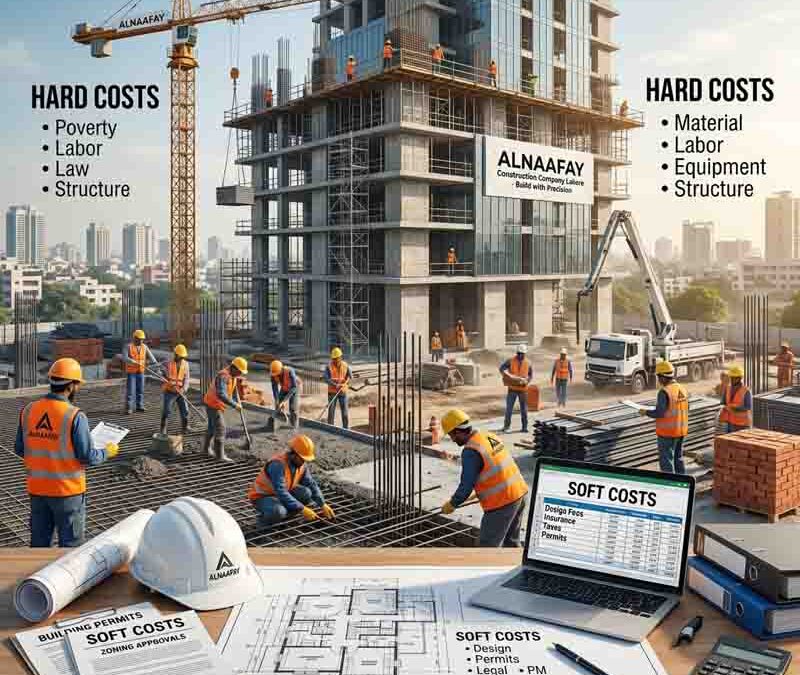
Hard Costs vs Soft Costs in Construction: What's the Difference?
Managing a construction budget without understanding hard costs vs soft costs is like navigating a build site without a blueprint. You might get somewhere, but you will not get where you planned. Whether you are a property developer, a first-time homeowner, or a contractor, knowing the difference between these two cost categories can determine whether your project finishes on budget or spirals into financial trouble.
This guide breaks down hard costs and soft costs in plain language. We cover what they are, how they differ, what they look like in real projects, and how to manage them effectively. By the end, you will have a clear framework for building a complete and realistic construction budget.
Table of Contents
- What Are Hard Costs in Construction?
- What Are Soft Costs in Construction?
- Key Differences Between Hard Costs and Soft Costs
- Examples of Hard Costs in a Construction Project
- Examples of Soft Costs in a Construction Project
- Why Understanding Hard Costs vs Soft Costs Matters
- How Hard Costs and Soft Costs Affect Your Construction Budget
- Tips for Managing Hard Costs and Soft Costs Effectively
- Construction Company Lahore
- Frequently Asked Questions
- Conclusion
1. What Are Hard Costs in Construction?
Hard costs are the direct, physical expenses involved in building a structure. These are the costs tied to labor, materials, and equipment that go into the actual construction work. If you can see it or touch it in the finished building, it is almost certainly a hard cost.
Construction professionals also refer to hard costs as "brick-and-mortar costs" because they represent the tangible elements of a project. Therefore, when a contractor submits a bid, the bulk of that number is made up of hard costs.
Hard costs are generally easier to estimate than soft costs. Because materials have market prices and labor rates are well-established, project teams can calculate hard costs with reasonable precision — especially when detailed plans and specifications are in place. Furthermore, hard costs follow a predictable pattern across the project timeline: they start low during site preparation, spike sharply during active construction, and taper off as finish work wraps up.
According to industry benchmarks, hard costs typically account for 70 to 80 percent of the total project budget. That proportion makes them the dominant cost category in almost every type of construction project.
Hard Cost Breakdown by Category
- Materials: 40 to 50 percent of hard costs. This includes everything from concrete and steel to drywall, flooring, and paint.
- Labor: 30 to 40 percent of hard costs. This covers general laborers, skilled trades such as electricians and plumbers, and associated wages and benefits.
- Equipment: 5 to 10 percent of hard costs. This includes crane rentals, scaffolding, temporary power, and heavy machinery.
- Site work: Excavation, grading, utility connections, and landscaping all fall under this category.
- Building systems: HVAC, plumbing, fire protection, electrical infrastructure, and security systems.
2. What Are Soft Costs in Construction?
Soft costs are the indirect, non-physical expenses required to plan, finance, administer, and legally deliver a construction project. You cannot see soft costs in the finished building, but without them, the project simply cannot happen.
Understanding the full soft costs meaning is important because many property owners focus only on the construction contract number. As a result, they are often blindsided by the cumulative weight of all the additional charges that appear before, during, and after construction.
Soft costs typically represent 20 to 30 percent of the total project budget. However, that percentage varies significantly depending on the type and scale of the project.
Soft Cost Breakdown by Category
- Design and engineering fees: Architectural services, structural engineering, MEP consulting, and specialty consultants typically account for 8 to 15 percent of total project costs.
- Permits and regulatory fees: Building permits, zoning approvals, environmental reviews, and inspection costs can reach 3 to 5 percent of the project cost in some jurisdictions.
- Land acquisition: The purchase price of the land itself, along with title work and real estate due diligence, is one of the largest soft cost items an owner carries.
- Financing costs: Construction loan interest is among the most overlooked soft costs. On long projects, this interest quietly accumulates month after month throughout the build.
- Legal and accounting services: Contract preparation, dispute resolution, tax planning, and land closing costs all fall here.
- Insurance and bonds: Builder's risk insurance, professional liability coverage, and performance and payment bonds protect the project against unforeseen risks.
- Project management: Owner's representative fees and construction management services fall under soft costs because they support the project without becoming part of the physical structure.
- Marketing and leasing: On commercial projects, advertising costs, broker commissions, and lease-up expenses add to the soft cost total.
3. Key Differences Between Hard Costs and Soft Costs
Now that both categories are defined, it is useful to place hard costs vs soft costs side by side. Doing so clarifies not just what they are, but also how they behave differently across a project's life cycle.
Factor | Hard Costs | Soft Costs |
|---|---|---|
Nature | Tangible and physical | Intangible and indirect |
Visibility | Visible in the finished building | Not visible in the finished building |
Timing | Peak during active construction | Heavy at the start and end of a project |
Estimating difficulty | Relatively straightforward | More variable and harder to predict |
Typical budget share | 70 to 80 percent | 20 to 30 percent |
Examples | Labor, materials, equipment | Design fees, permits, loan interest |
One of the most important distinctions is timing. Hard costs and soft costs do not follow the same schedule. Soft costs are heavily concentrated at the beginning of a project — feasibility studies, design fees, permits, and financing setup all happen before a single shovel hits the ground. Then, as construction enters its active phase, hard costs dominate. Finally, as the project winds down, soft costs return in the form of commissioning, closeout documentation, and for commercial developments, leasing and marketing activities.
Understanding this bookend effect is essential. Soft costs do not pause while construction is underway. Loan interest keeps accruing. Insurance premiums continue. Project management fees run throughout. Consequently, delays in the construction schedule directly inflate soft costs — a dynamic that many first-time owners fail to anticipate.
4. Examples of Hard Costs in a Construction Project
Hard costs show up in every phase of active construction. Below is a practical breakdown of where hard cost dollars typically go on a standard building project.
Foundation and Structure
- Excavation and grading work
- Concrete footings and foundation walls
- Structural steel or wood framing
- Concrete slabs and floor systems
- Waterproofing and drainage systems
These items form the base of the project. Because they are buried or enclosed within finished walls, they must be done correctly the first time. Cutting hard costs in this category almost always leads to larger problems — and larger expenses — later.
Exterior Envelope
- Roofing materials and installation
- Exterior cladding (brick, siding, stucco, panels)
- Windows and exterior doors
- Insulation and weather-resistant barriers
- Flashings and sealants
Interior Finishes
- Drywall installation and taping
- Interior doors and hardware
- Flooring materials (tile, hardwood, carpet, polished concrete)
- Paint and wall finishes
- Cabinetry and built-in millwork
Note that built-in casework is a hard cost, while moveable furniture — often referred to as FF&E (furniture, fixtures, and equipment) — is typically treated as a separate budget line or a soft cost. This distinction trips up many project owners and is important to clarify early.
Mechanical, Electrical, and Plumbing (MEP) Systems
- HVAC equipment, ductwork, and controls
- Electrical panels, wiring, and fixtures
- Plumbing rough-in and fixtures
- Fire sprinkler and suppression systems
- Low-voltage systems (data, security, AV)
MEP work represents a substantial portion of hard costs on most commercial and residential projects. Furthermore, coordination between MEP trades during construction requires careful scheduling to avoid conflicts and costly rework.
Site Work and Landscaping
- Grading and earthwork
- Utility connections (water, sewer, gas, electric)
- Paving, sidewalks, and parking areas
- Retaining walls and drainage
- Landscaping and irrigation systems
5. Examples of Soft Costs in a Construction Project
Soft costs are more varied than hard costs, and they are easier to overlook. The following examples illustrate where soft cost dollars typically flow.
Architectural and Engineering Services
Design fees are among the first soft costs an owner encounters. An architect must be engaged early in the process to produce drawings, coordinate consultants, and guide the project through permitting and construction administration. Architectural fees generally range from 8 to 15 percent of total project costs, depending on the scope and complexity of the work.
In addition, specialized engineers — structural, civil, mechanical, electrical, and plumbing — each add their own fees to the soft cost total. Specialty consultants such as acoustics experts, sustainability advisors, and lighting designers can further increase this category for complex projects.
Permits and Regulatory Approvals
Before construction begins, the project must receive approval from local authorities. Permit fees, plan review fees, zoning approvals, environmental impact assessments, and inspection costs all fall under soft costs. In major urban markets, these fees can reach 3 to 5 percent of total project costs.
Delays in permit approvals extend the project schedule and, consequently, increase other soft costs such as loan interest and project management fees. Experienced professionals who understand the local approval process can significantly reduce this risk.
Financing Costs
Construction loan interest is the most commonly underestimated soft cost. On a large project with a multi-year construction timeline, the interest on a construction loan can amount to hundreds of thousands of dollars — or more. In addition, loan origination fees, appraisal costs, and lender-required financial due diligence all contribute to this category.
Therefore, project owners should include financing costs as a specific line item in their initial budget, not an afterthought. The longer the project runs, the more these costs compound.
Legal and Accounting Fees
Construction projects involve contracts, and contracts require legal review. Legal fees cover contract preparation and negotiation, land acquisition closing costs, dispute resolution, and any required regulatory filings. Accounting costs cover tax planning, financial reporting, and audit requirements for larger developments.
Insurance and Bonds
Builder's risk insurance protects the project during construction against events such as fire, theft, and weather damage. Professional liability insurance covers design professionals against claims arising from errors and omissions. Performance bonds and payment bonds protect the owner against contractor default and ensure subcontractors are paid.
All of these protections are classified as soft costs because they support the project without becoming part of the physical building.
Project Management and Owner's Representative Fees
On larger projects, owners often engage an owner's representative or a construction manager to oversee the project on their behalf. These professionals coordinate among the design team, the contractor, and the owner, managing schedules, budgets, and communications. Their fees are a soft cost — and they often save owners far more than they cost by catching problems early and preventing costly mistakes.
Surveys and Geotechnical Reports
Before design begins, a licensed surveyor must establish the boundaries and topography of the site. Geotechnical engineers conduct soil tests to determine the ground's load-bearing capacity and any special foundation requirements. These reports directly influence hard cost decisions, making them a critical investment despite their classification as soft costs.
6. Why Understanding Hard Costs vs Soft Costs Matters
Many construction projects run over budget not because hard costs are underestimated, but because soft costs are ignored altogether. A property owner who receives a contractor's bid — which covers hard costs — may assume that number represents their total financial exposure. In reality, the contractor's bid is only part of the picture.
Misjudging soft costs, even by a small margin, can disrupt a project's financial viability. According to Procore, a leading construction management platform, inaccurate soft cost estimates have cascading financial effects: initial budget overruns compound as the project progresses, eventually forcing owners to divert funds from critical construction activities, compromise on quality, or pause the project entirely to secure additional financing.
The Impact on Project Decision-Making
Understanding hard costs vs soft costs also shapes critical decisions throughout the project. For instance:
- Value engineering decisions must account for both cost categories. Cutting architectural fees (a soft cost) may seem like a smart economy, but it often leads to design errors that generate expensive hard cost changes during construction.
- Project scheduling decisions have a direct impact on soft costs. Every additional month of construction means more loan interest, more insurance premiums, and more project management fees.
- Site selection decisions affect soft costs significantly. A site with complex zoning, environmental constraints, or poor soil conditions will generate higher regulatory and geotechnical soft costs than a straightforward site.
- Contract structure decisions influence how both hard and soft costs are controlled, allocated, and tracked throughout the project.
7. How Hard Costs and Soft Costs Affect Your Construction Budget
A complete construction budget must account for both hard costs and soft costs from the very beginning. The ratio of each category shifts depending on the type and scale of the project.
Budget Ratios by Project Type
Residential projects tend to have lower soft costs relative to total project cost — typically 10 to 20 percent. Residential projects generally involve simpler regulatory requirements, shorter timelines, and smaller project teams. However, custom high-end homes with complex designs can push soft costs toward the higher end of this range.
Commercial projects carry soft costs in the range of 20 to 30 percent. More complex regulatory requirements, longer financing periods, and marketing and leasing expenses all increase the soft cost share on commercial developments.
Institutional projects — hospitals, schools, government buildings — see the highest soft cost ratios, often reaching 25 to 35 percent. These projects involve multiple stakeholder groups, lengthy approval processes, specialized consultants, and extensive commissioning requirements that all add to the soft cost total.
How the Budget Shifts Across Project Phases
The distribution of hard and soft cost spending changes dramatically depending on where a project is in its lifecycle.
Pre-construction phase: Spending is almost entirely soft costs. Design fees, feasibility studies, permit applications, land acquisition, and financing setup all occur before construction begins. At this stage, no hard costs have been incurred because the physical building does not yet exist.
Active construction phase: Hard costs dominate. Materials, labor, and equipment all peak during this period. The construction cost curve follows an S-curve pattern — starting slowly during site preparation, climbing sharply during structural and systems work, then easing off during finish work and closeout.
Closeout and occupancy phase: Soft costs return. Commissioning, warranty administration, closeout documentation, and legal finalization all happen at the end of the project. For commercial developments, leasing and marketing costs also peak during this phase.
Planning for Contingencies
A realistic construction budget includes contingency allocations for both cost categories. Industry practice suggests:
- 5 to 10 percent contingency on hard costs for new construction
- 10 to 20 percent contingency on hard costs for renovation projects, where unknowns are more frequent
- A separate soft cost contingency for design revisions, additional permitting rounds, and administrative uncertainties
Critically, hard cost and soft cost contingencies should be tracked separately. They behave differently, arise from different sources, and need to be managed through different processes.
8. Tips for Managing Hard Costs and Soft Costs Effectively
Knowing the difference between hard costs and soft costs is only the first step. Managing both categories throughout a project requires deliberate planning, clear communication, and consistent tracking.
Tip 1: Build a Complete Budget from Day One
Do not start a project with only a contractor's estimate in hand. From the very beginning, your budget must include all anticipated soft costs — design fees, permits, financing, insurance, legal, and project management. Build the full picture before you commit to a site, a design, or a construction contract.
A useful approach is to categorize each cost item and assign it to either the hard or soft cost bucket. By doing this, owners can anticipate expenses that might otherwise be overlooked, such as additional rounds of permitting or the cost of a geotechnical investigation.
Tip 2: Engage Experienced Professionals Early
Experienced architects, project managers, and construction managers bring more than technical skills to a project. They bring knowledge of local regulatory environments, established relationships with permitting authorities, and a practical understanding of what projects actually cost. That knowledge directly translates into more accurate soft cost estimates and fewer costly surprises.
For example, a seasoned project manager who has worked in a specific city knows how long the permit approval process typically takes. Consequently, they can build that timeline into the schedule and the budget before financing is secured — rather than scrambling to cover added costs after the fact.
Tip 3: Track Both Cost Categories in Real Time
Modern construction management software gives project teams the tools to monitor hard and soft cost expenditures in real time. These platforms allow stakeholders to compare actual spending against the budget at any point in the project, forecast final costs based on current data, and identify cost issues before they compound into serious problems.
Furthermore, tracking both cost categories on a single dashboard prevents the common mistake of focusing exclusively on the construction contract while soft costs drift upward unnoticed.
Tip 4: Write Clear Contracts That Define Scope and Responsibility
Ambiguous contracts are among the leading causes of soft cost overruns. When the scope of architectural services is not clearly defined, owners end up paying for additional design rounds they did not anticipate. When protocols for change orders are not established, administrative costs multiply. When liability for permit acquisition is not assigned to a specific party, delays and disputes follow.
A well-drafted construction contract defines the scope of work in precise detail, establishes clear protocols for changes and approvals, and allocates responsibility for regulatory compliance to named parties. This clarity reduces the risk of unexpected soft costs arising from contractual gaps.
Tip 5: Hold Regular Budget Review Meetings
Construction budgets are not set-and-forget documents. As the project progresses through design and construction, new information emerges that requires budget adjustments. Regular budget review meetings — attended by the owner, architect, and contractor — keep all parties aligned and allow course corrections before costs get out of hand.
During these meetings, it is important to review both hard and soft costs together. Reviewing only the contractor's hard cost expenditures without also reviewing design fees, loan interest, and administrative costs gives an incomplete picture of the project's financial health.
Tip 6: Plan for Soft Costs That Continue During Construction
Many owners assume that soft costs are front-loaded — paid during design and permitting, then finished by the time construction starts. In fact, several soft cost categories continue to accumulate throughout the entire construction phase.
Construction loan interest accrues every month until the project is refinanced or sold. Builder's risk insurance premiums run for the duration of construction. Project management fees continue as long as someone is overseeing the work. Therefore, any schedule delay extends these ongoing soft costs and reduces the project's financial return.
9. Construction Company Lahore
We are a construction company based in Lahore, and we have built our practice around one principle: your project should finish on budget and on time, with no surprises along the way. That outcome does not happen by accident. It happens because we manage both hard costs and soft costs with the same level of discipline and transparency.
We provide full-service construction across Lahore, including residential builds, commercial developments, and renovation projects in areas such as DHA Lahore, Bahria Town, Lake City, and Etihad Town. Our team includes in-house architects, structural engineers, and experienced site managers who coordinate every phase of the project under a single roof.
How We Handle Hard Costs
We price every project with detailed material takeoffs and accurate labor estimates. Before you sign a contract, we give you a line-by-line hard cost breakdown — materials, labor by trade, equipment, site work, and building systems. We do not give round-number estimates and call it a budget. We provide itemized figures you can verify and compare.
Our procurement relationships with local and national suppliers allow us to secure competitive material pricing without compromising on quality. Furthermore, our in-house construction teams follow standardized checklists at every stage of the build, which reduces waste, rework, and schedule delays that drive up hard costs.
How We Handle Soft Costs
We include all anticipated soft costs in your initial project budget. That means design fees, permit costs, structural and MEP engineering, geotechnical reports, and insurance are all presented upfront — not added as surprises after you have committed to the project.
Our team has an established working relationship with local regulatory authorities in Lahore. As a result, we know the permit process, the required documentation, and the typical approval timelines. We start permit applications early, follow up proactively, and build approval time into the project schedule so that regulatory delays do not extend your construction loan period or inflate your financing costs.
What You Can Expect When You Work With Us
- A complete project budget that accounts for both hard costs and soft costs from day one
- A dedicated project manager assigned to your build from design through completion
- Regular budget review meetings where we walk you through actual versus projected costs for both categories
- Transparent change order processes with written approvals before any scope changes are executed
- A clear project schedule with milestones tracked and reported throughout construction
Understanding hard costs vs soft costs is not just useful knowledge for construction professionals. It is essential information for every property owner in Lahore who wants to build or renovate with confidence. We walk every client through both cost categories at our first meeting, because we believe informed clients make better decisions — and better-informed decisions lead to better projects.
Contact us today to schedule a consultation and receive a full project cost assessment that covers every hard cost and soft cost item specific to your build.
10. Frequently Asked Questions
What is the difference between hard costs and soft costs in construction?
Hard costs are the direct, physical expenses involved in building a structure — including materials, labor, equipment, and site work. Soft costs are the indirect, non-physical expenses required to plan, finance, and administer the project — including design fees, permits, loan interest, legal services, and insurance. Together, hard costs and soft costs make up the total project cost.
What percentage of a construction budget are soft costs?
Soft costs typically represent 20 to 30 percent of the total project budget on most construction projects. However, this percentage varies by project type. Residential projects tend to run closer to 10 to 20 percent, while institutional projects such as hospitals and schools can reach 25 to 35 percent due to their complex design requirements and lengthy approval processes.
Are architect fees a hard cost or a soft cost?
Architect fees are a soft cost. All design and engineering fees are classified as soft costs because they represent professional services rather than physical construction work. Architectural fees typically range from 8 to 15 percent of the total project cost, depending on the project's complexity and the scope of services provided.
Is construction loan interest a hard cost or a soft cost?
Construction loan interest is a soft cost. It is an indirect financing expense that supports the project without becoming part of the physical building. On long-duration projects, loan interest can accumulate to a significant amount — making it one of the most important soft cost items to estimate accurately at the start of a project.
Is insurance a hard cost or a soft cost?
Insurance is a soft cost. Builder's risk insurance, professional liability insurance, and surety bonds are all classified as soft costs because they protect the project rather than contribute to its physical construction. These premiums continue throughout the project and should be included as ongoing line items in the soft cost budget.
Why do soft costs often get underestimated?
Soft costs are often underestimated because many property owners focus on the contractor's construction bid — which covers hard costs — and assume it represents the full project cost. Furthermore, soft costs such as loan interest and project management fees continue to accrue over time, making them difficult to quantify precisely at the beginning of a project. Additionally, first-time owners are frequently unfamiliar with the full scope of permitting, legal, and administrative expenses involved in a construction project.
Can soft costs be reduced without affecting the quality of a project?
Some soft costs can be controlled through early planning, efficient permitting processes, and clear contract management. However, attempting to cut soft costs by eliminating essential services — such as construction administration, geotechnical reports, or proper insurance — almost always leads to larger costs later. For example, skipping construction administration to save on architectural fees can result in undetected errors that require expensive hard cost corrections during construction.
How do hard costs and soft costs differ in residential vs. commercial projects?
In residential projects, soft costs tend to be lower as a percentage of the total budget — typically 10 to 20 percent — because the regulatory requirements are simpler and the financing structures are less complex. In commercial projects, soft costs rise to 20 to 30 percent because of more rigorous permitting processes, higher financing costs, longer project timelines, and additional expenses such as marketing and leasing. Institutional projects carry the highest soft cost ratios, often exceeding 25 percent.
What is a contingency, and does it apply to both hard and soft costs?
A contingency is a budget reserve set aside to cover unexpected costs that arise during a project. Both hard and soft costs should carry their own separate contingencies. For new construction, a hard cost contingency of 5 to 10 percent is standard. Renovation projects typically require a higher contingency of 10 to 20 percent because unknown conditions are more likely to arise once work begins. A separate soft cost contingency should be maintained to cover additional design revisions, extended permit timelines, and administrative uncertainties.
11. Conclusion
Hard costs vs soft costs are two sides of the same construction budget. Neither tells the complete story on its own. Hard costs build the physical structure. Soft costs make that structure legal, manageable, and financially viable. Both categories are essential, and both require careful planning, accurate estimation, and active management throughout the project.
The most common and most costly mistake in construction budgeting is treating hard costs as the whole budget and soft costs as an afterthought. When soft costs are not accounted for from the beginning, project owners face unexpected expenses, financing gaps, and schedule overruns that could have been avoided with better upfront planning.
To build successfully — whether in Lahore or anywhere else — start every project with a complete budget that covers every hard cost and soft cost item. Engage experienced professionals who understand both categories. Track actual spending against your budget in real time. And plan for contingencies in both buckets, because construction projects rarely go exactly as planned.
If you are planning a construction project in Lahore and want a project team that manages every cost category with full transparency, contact us today. We will walk you through a complete hard cost and soft cost breakdown from the very first meeting — so you know exactly what your project will cost and why.
