
Augmented Reality (AR) Tools for Construction Planning: The Complete Guide
Construction planning has always been complicated. Coordinating teams, interpreting blueprints, managing timelines, and communicating with clients — it is a lot to keep track of. Errors made during the planning phase are often the most expensive, because they tend to compound as a project progresses. That is precisely why augmented reality tools for construction planning are rapidly gaining traction across the industry.
AR technology is no longer limited to gaming or retail. It has become a serious, practical tool that helps construction professionals visualize projects before a single brick is laid, identify potential design conflicts early, and communicate more clearly with clients and teams. Whether you are running a large commercial development or managing residential builds in a growing city like Lahore, AR tools can fundamentally change how you plan and execute projects.
In this guide, you will learn exactly what augmented reality tools are, how they are used in construction planning, which tools are worth your attention, and how to choose the right solution for your company.
Table of Contents
- What Are Augmented Reality (AR) Tools?
- How AR Tools Are Used in Construction Planning
- Key Augmented Reality Tools for Construction Planning
- Benefits of Using AR Tools in Construction
- How AR Tools Help Construction Companies in Lahore
- AR Tools and Construction Safety
- AR Tools for Design Visualization and Client Communication
- Challenges of Adopting Augmented Reality Tools in Construction
- How to Choose the Right AR Tools for Your Construction Company
- Construction Company Lahore and AR Technology
- FAQs
- Conclusion
What Are Augmented Reality (AR) Tools?
Augmented reality is a technology that overlays digital information — such as 3D models, data, or graphics — onto the real world through a device like a smartphone, tablet, or AR headset. Unlike virtual reality, which replaces your surroundings entirely, augmented reality enhances what you already see by adding a digital layer on top of it.
In simple terms, you point your device at a real space, and the software shows you a digital version of something that does not yet exist there. For construction professionals, this means you can walk through a building that has not been built yet — all while standing on an empty plot of land.
Augmented reality tools for construction planning take this concept and apply it directly to the challenges that architects, engineers, and project managers face every day. As a result, these tools help bridge the gap between design and execution in a way that traditional blueprints and 2D drawings simply cannot.
Furthermore, AR tools are increasingly accessible. What once required expensive hardware and specialist software is now available on standard mobile devices, making it practical for construction companies of all sizes to adopt.
How Augmented Reality Tools Are Used in Construction Planning
The applications of augmented reality in construction planning are broad and genuinely useful. Below are the most common and impactful ways these tools are being used on real projects today.
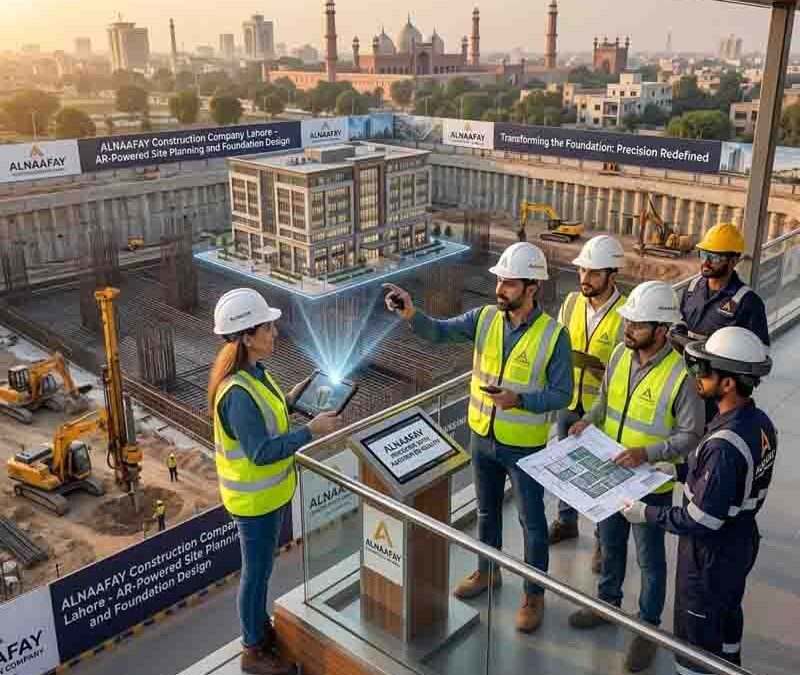
Visualizing Designs On-Site: One of the most powerful uses of AR in construction is the ability to project a 3D model of a building onto its actual site. Project managers and architects can walk around the virtual structure, assess how it fits within the landscape, and identify any immediate concerns. This is far more intuitive than reading a technical drawing, and it significantly reduces the risk of planning errors.
Clash Detection: Clash detection refers to identifying conflicts between different building systems — for example, where a structural beam might intersect with a plumbing pipe. Augmented reality tools allow engineers to visualize these overlapping systems in three dimensions, making it much easier to spot and resolve conflicts before construction begins. Consequently, costly rework is avoided.
Progress Monitoring: AR tools can be used to compare the current state of a construction site against the original design model. By overlaying the planned design onto the real environment, project managers can quickly identify deviations from the plan and take corrective action.
Worker Training and Onboarding: New workers can use AR to familiarize themselves with a site, understand safety protocols, and learn how to operate equipment — all in a safe, guided digital environment before they set foot on an active construction site.
Quantity Takeoffs and Measurements: Some augmented reality platforms allow users to measure spaces and calculate material quantities directly from the AR view, speeding up the estimation process and reducing manual calculation errors.
Key Augmented Reality Tools for Construction Planning
Several platforms have established themselves as leaders in the AR space for construction. Each offers a distinct set of features, so understanding what they do well is important before making a decision.
Trimble SiteVision: Trimble SiteVision is a widely respected augmented reality tool specifically designed for construction and engineering. It allows users to overlay georeferenced 3D models onto actual construction sites using a handheld device. Because the digital model is anchored to real-world GPS coordinates, the overlay is highly accurate. Teams can use it to visualize underground utilities, check structural alignments, and verify that construction matches the design intent.
Bentley iTwin: Bentley's iTwin platform combines digital twin technology with augmented reality capabilities, offering construction professionals a powerful way to manage and visualize infrastructure projects. The platform is particularly strong for large-scale civil and infrastructure projects, where precise coordination across many systems is critical.
Autodesk Construction Cloud with BIM 360: Autodesk's suite of construction tools includes AR capabilities that integrate directly with Building Information Modeling (BIM) data. By connecting AR visualization to live BIM models, teams can ensure that every decision on site is informed by the most up-to-date project data. This integration is particularly valuable during the planning and design review phases.
Scope AR WorkLink: Scope AR WorkLink is an enterprise-grade AR platform that enables real-time remote assistance and guided work instructions. On a construction site, this means an expert in one location can guide a worker in another by overlaying instructions directly onto their field of view. As a result, errors are reduced and knowledge transfer happens in real time.
PTC Vuforia: PTC Vuforia is a flexible AR development platform used across many industries, including construction. It allows companies to build custom AR experiences tailored to their specific workflows. For construction firms with specialized needs, Vuforia offers a high degree of customization.
DAQRI Smart Helmet: Although the DAQRI Smart Helmet has been discontinued as a product, its influence on the industry helped establish AR wearables as a viable category for construction. Several successor products have since filled this space, offering hands-free AR experiences for site workers. These wearables allow workers to access instructions and overlay design data without putting down their tools.
Benefits of Using Augmented Reality Tools in Construction
The case for adopting augmented reality in construction planning is compelling. When used correctly, these tools deliver measurable improvements across multiple areas of a project.
Fewer Design Errors: Because AR tools allow teams to visualize the full design in context before construction begins, many errors that would otherwise only be discovered on-site are caught much earlier. Early detection is dramatically cheaper than late-stage rework. According to McKinsey & Company, rework accounts for up to 30% of construction costs on some projects — a figure that AR tools can help reduce significantly.
Faster Decision-Making: When a project manager can see a 3D model overlaid on the actual site, decisions about design, placement, and sequencing become much easier. Rather than spending hours interpreting drawings and running through hypothetical scenarios, teams can evaluate options visually and reach consensus faster.
Improved Collaboration: Augmented reality tools create a shared visual reference point for all project stakeholders. Architects, engineers, subcontractors, and clients can all look at the same AR model and discuss it in the same language. Consequently, miscommunications that lead to delays are less likely to occur.
Cost Savings: The time saved through better planning and fewer errors translates directly into cost savings. Additionally, AR tools reduce the need for physical mockups and prototypes, which can be expensive to produce. Over the life of a large project, these savings can be substantial.
Enhanced Client Satisfaction: Clients who can see a realistic visualization of their project — rather than a flat drawing — are better equipped to give meaningful feedback early. This reduces the likelihood of expensive late-stage change orders and leads to a more satisfying client experience overall.
How Augmented Reality Tools Help Construction Companies in Lahore
Lahore is one of Pakistan's most dynamic urban centers, with a construction sector that has seen remarkable growth over recent years. Large residential developments, commercial towers, mixed-use projects, and infrastructure initiatives are all active across the city. However, many construction companies in Lahore still rely on traditional planning methods that can slow down projects and increase the risk of errors.
Augmented reality tools for construction planning offer a direct solution to many of the challenges that Lahore-based firms face. For example, a construction company in Lahore managing a large housing scheme could use AR tools to walk clients through the planned development before a single foundation is poured. Instead of presenting floor plans and 3D renders on a screen, the team could take clients to the actual site and show them a life-size, accurate representation of their future home.
Furthermore, the ability to detect clashes and design conflicts in the AR environment — rather than on the physical site — is particularly valuable in complex projects. In Lahore, where multi-story residential and commercial developments are increasingly common, coordinating structural, mechanical, electrical, and plumbing systems is a significant challenge. AR-assisted clash detection makes this process far more reliable.
Additionally, the competitive nature of the Lahore construction market means that firms willing to invest in advanced technology have a genuine advantage. Clients are becoming more sophisticated in their expectations, and a company that can offer AR-based project visualization is likely to stand out during the bidding process. As a result, early adoption of these tools can directly support business development efforts.
Augmented Reality Tools and Construction Safety
Safety is one of the most critical concerns on any construction site. Globally, the construction industry has one of the highest rates of workplace injuries and fatalities. Augmented reality tools are increasingly being used to address this challenge in practical, effective ways.
One of the most impactful safety applications of AR in construction is hazard identification. Before workers enter a new area of a site, AR tools can overlay digital safety information — such as the location of underground utilities, structural load limits, or areas where fall protection is required — directly onto their view of the space. This means workers are informed before they are at risk, rather than after.
AR is also being used to improve safety training. Traditional safety briefings rely heavily on verbal instruction and printed materials, which can be difficult to retain. Augmented reality, by contrast, allows workers to experience safety scenarios in a simulated but realistic environment. Studies have shown that experiential learning leads to significantly better retention rates, meaning AR-trained workers are more likely to apply what they have learned on the job.
Moreover, remote assistance tools like Scope AR WorkLink allow safety supervisors to monitor workers in real time and provide immediate guidance if a hazardous situation is developing. Because the supervisor can see exactly what the worker sees, interventions are faster and more precise. Consequently, the window of time in which a minor issue can escalate into a serious incident is reduced.
Finally, AR tools can support post-incident analysis by creating accurate records of site conditions. If an incident occurs, investigators can reference AR data to understand the environment in which it happened and identify contributing factors. This helps companies improve their safety systems over time.
Augmented Reality Tools for Design Visualization and Client Communication
One of the most immediately impactful uses of augmented reality in construction is design visualization. Traditionally, communicating a design to a client required a combination of technical drawings, 3D renders, and scale models. Each of these methods has limitations — they require significant imagination on the client's part, and they do not always convey the full experience of being inside or around a completed structure.
Augmented reality tools remove these limitations entirely. With AR, a client can stand in the physical location where their building will be constructed and see a full-scale, realistic model of the finished design superimposed on that space. They can walk through it, look up at the ceiling height, and get a true sense of how the spaces relate to each other. This is an experience that no 2D drawing or screen-based render can replicate.
The practical benefits for client communication are significant. First, clients who can see their project in context are far more likely to identify concerns early. If a window placement does not feel right, or a room seems smaller than expected, they can raise these issues before construction begins. As a result, costly late-stage changes become less common.
Second, AR-based presentations are memorable and impressive. For construction companies competing for contracts, the ability to offer an AR walkthrough of a proposed design is a meaningful differentiator. It signals investment in quality, attention to detail, and a commitment to client experience.
Third, AR tools support more iterative and collaborative design processes. Instead of waiting weeks for a revised render, a design team can update a BIM model and immediately see the changes reflected in the AR environment. This speeds up the design review cycle considerably and keeps projects moving forward.
Challenges of Adopting Augmented Reality Tools in Construction
Despite the clear benefits, adopting augmented reality tools in construction is not without its challenges. Understanding these obstacles is important for any company considering this technology, because doing so helps set realistic expectations and supports better planning.
Upfront Cost: While AR technology has become more affordable, the initial investment — including hardware, software licenses, and training — can still be significant, particularly for smaller firms. However, it is worth noting that many providers offer subscription-based pricing models that reduce the upfront burden. Moreover, the long-term savings in rework and delays typically outweigh the initial cost.
Learning Curve: Introducing any new technology requires time and effort. Workers who are accustomed to traditional methods may initially resist AR tools or struggle to use them effectively. Therefore, investing in thorough training and change management is essential. A phased rollout — starting with one team or one project — can also help ease the transition.
Hardware Requirements: Some AR applications require specialized hardware, such as headsets or high-powered tablets. Ensuring that the right devices are available on-site, and that they are maintained and charged, adds a layer of logistical complexity. Additionally, construction sites are physically demanding environments, and not all hardware is built to withstand dust, moisture, or impact.
Integration with Existing Systems: For AR tools to deliver their full value, they need to integrate with the design and project management systems a company already uses. If integration is incomplete or unreliable, teams may end up working with inconsistent data — which defeats the purpose. Consequently, evaluating integration capabilities before selecting a platform is critical.
Connectivity on Site: Many AR platforms rely on cloud connectivity to access and update project data. On construction sites with poor internet connectivity, this can be a practical limitation. Some platforms offer offline modes, but not all do, so this is worth investigating during the evaluation process.
How to Choose the Right Augmented Reality Tools for Your Construction Company
Selecting the right augmented reality tools for construction planning requires a structured approach. Because the market is growing quickly, there are many options available — and not all of them will be the right fit for every company.
Start by Identifying Your Core Use Cases: Before you evaluate any platform, be clear about the specific problems you are trying to solve. Are you primarily interested in design visualization for client presentations? Do you need clash detection capabilities? Is worker safety training a priority? Different AR tools have different strengths, and aligning your use cases with platform capabilities will help you narrow down your options quickly.
Evaluate Ease of Use: The best AR tool is one that your team will actually use. Therefore, prioritize platforms with intuitive interfaces and strong onboarding support. Where possible, request a demo or a trial period so you can assess the real-world usability of the software before committing.
Check Integration Capabilities: If your team already uses BIM software, project management platforms, or other digital tools, make sure the AR platform you choose can integrate with them smoothly. Seamless data flow between systems is essential for maintaining accuracy and avoiding duplicate work.
Consider Hardware Requirements: Evaluate what hardware the platform requires and whether it is practical for your site conditions. A platform that works well on standard tablets may be more pragmatic than one that requires expensive proprietary headsets, especially if your team is using the tools across multiple sites.
Assess Vendor Support: Because AR tools are still relatively new to many construction companies, the quality of vendor support is particularly important. Look for providers that offer responsive customer service, detailed documentation, and ongoing training resources.
Think About Scalability: Choose a platform that can grow with your business. A tool that works well for one project should also be capable of supporting your entire portfolio as you scale.
Popular augmented reality tools worth evaluating include Trimble SiteVision, Autodesk Construction Cloud, Bentley iTwin, and Scope AR WorkLink. Each platform has distinct strengths, so comparing them directly against your specific requirements is the most effective approach.
Construction Company Lahore and AR Technology
For any construction company in Lahore looking to remain competitive in an increasingly demanding market, embracing AR technology is a strategic move worth serious consideration. The city's construction sector is evolving quickly, and the expectations of clients — both residential and commercial — are rising accordingly.
Currently, a relatively small number of construction companies in Lahore are using augmented reality tools. This means that early adopters have a genuine first-mover advantage. By offering AR-based design visualization, clash detection, and safety training, Lahore-based firms can differentiate themselves in ways that matter to clients and help win more competitive tenders.
Additionally, digital transformation in Lahore's construction industry is being driven by broader economic pressures. Rising material costs, tighter margins, and more demanding project timelines mean that efficiency is no longer a nice-to-have — it is a necessity. Augmented reality tools, by reducing errors and improving planning accuracy, directly support the kind of operational efficiency that construction companies need to stay profitable.
The transition does not need to happen all at once. A construction company in Lahore might start by using AR tools for client presentations on a flagship project, then gradually expand their use to include site planning and safety training. This phased approach reduces risk, builds internal expertise, and creates measurable proof points that can justify further investment.
Furthermore, as more international construction firms enter the Pakistani market and bring advanced technologies with them, local companies that have already built AR capabilities will be far better positioned to compete. Those that continue to rely on manual planning methods may find themselves at a significant disadvantage in the years ahead.
Training is, of course, an important consideration. Introducing AR tools requires buy-in from leadership and a genuine commitment to supporting staff through the learning process. However, the long-term payoff — in terms of projects delivered more accurately, more safely, and more efficiently — makes the investment well worthwhile.
FAQs
What are augmented reality tools for construction planning?
Augmented reality tools for construction planning are software platforms and hardware systems that allow construction professionals to overlay digital 3D models onto real-world environments. These tools are used for design visualization, clash detection, progress monitoring, safety training, and client communication — helping teams plan and execute projects more accurately and efficiently.
How do AR tools improve construction planning?
AR tools improve construction planning by making it possible to visualize a completed design in its actual physical context before construction begins. This helps teams identify errors and conflicts early, reduces the likelihood of costly rework, speeds up decision-making, and improves communication between all project stakeholders.
Are augmented reality tools expensive?
The cost of AR tools varies depending on the platform, the hardware required, and the scale of implementation. While some enterprise-grade solutions require significant upfront investment, many cloud-based and mobile-first platforms are available at more accessible price points. Additionally, the cost savings generated by fewer errors and less rework typically outweigh the initial investment over the course of a project.
Can small construction companies use AR tools?
Yes, absolutely. While large firms have historically been the earliest adopters of AR technology, the growing availability of mobile-based AR tools means that smaller companies can access many of the same capabilities without requiring expensive specialist hardware. Platforms like Autodesk Construction Cloud, for example, are designed to be scalable and accessible for companies of different sizes.
How can a construction company in Lahore benefit from augmented reality tools?
A construction company in Lahore can benefit from AR tools in several ways: offering AR-based design presentations to clients, detecting design conflicts before construction begins, improving site safety through AR-assisted training, and monitoring construction progress against the original design. Because adoption is still relatively low among Lahore-based firms, early movers also gain a competitive advantage in the market.
What hardware do augmented reality tools require?
Hardware requirements vary by platform. Some AR tools run on standard smartphones or tablets, making them easy to deploy without additional hardware investment. Others require dedicated AR headsets, such as the Microsoft HoloLens, which offer a hands-free experience but come at a higher cost. When evaluating AR platforms, it is important to consider whether the required hardware is practical for your site conditions and budget.
How long does it take to implement AR tools on a construction project?
Implementation timelines depend on the complexity of the platform and the level of integration required with existing systems. Simple mobile AR tools can often be deployed within a matter of days. More complex integrations with BIM software or custom workflows may take several weeks to configure properly. Most providers offer onboarding support to help teams get started as efficiently as possible.
Are AR tools suitable for construction safety management?
Yes. Augmented reality tools have strong applications in construction safety management, including hazard visualization, immersive safety training, real-time remote assistance, and post-incident analysis. By helping workers understand risks before they encounter them, AR tools can contribute meaningfully to a safer site environment.
Conclusion
Augmented reality tools for construction planning represent one of the most significant technological shifts the construction industry has seen in decades. By enabling teams to visualize designs in context, detect conflicts before they become costly problems, communicate more clearly with clients, and train workers more effectively, AR technology addresses many of the most persistent challenges in construction.
The construction industry has traditionally been slow to adopt new technology. However, the firms that move early and build genuine expertise in AR tools will be far better positioned to deliver projects on time, on budget, and to a higher standard of quality. For construction companies in Lahore and beyond, the opportunity to lead through technology is real and available right now.
Getting started does not require a wholesale transformation of your business. Begin by identifying one or two use cases where AR could make an immediate difference — perhaps a client presentation or a design review meeting. From there, build internal confidence and expand your use of the tools as your team becomes more comfortable.
If you are ready to explore how AR tools can improve your construction planning process, reach out to your preferred technology partner and request a demonstration. The sooner you see these tools in action, the sooner you will understand just how transformative they can be.
