
A Builder's Guide to Insulation Types and Their R-Values
Comfort inside a building rarely happens by accident. Behind every cool summer room and every cozy winter space sits a hidden hero: insulation. While most people never see it, this quiet material shapes how much you pay for energy, how comfortable you feel, and how long your structure performs at its best. For builders, homeowners, and developers alike, understanding insulation is one of the smartest investments you can make.
The challenge, however, is that insulation comes in many forms. Each type offers a different price, a different performance level, and a different ideal use. To make sense of it all, you need to understand a single, powerful number: the R-value. Furthermore, the guidance of a skilled Construction Company Lahore can help you match the right insulation to your specific project and climate.
In this detailed guide, we will walk through everything you need to know about insulation and R-values. You will learn what insulation does, how R-values work, the main types available, and the pros and cons of each. By the end, you will feel confident choosing the right insulation for your next build.
Table of Contents
- Introduction to Insulation
- What Is Insulation and What Are R-Values?
- Types of Insulation and Their R-Values
- How a Construction Company in Lahore Chooses the Right Insulation
- Factors to Consider When Choosing Insulation
- Advantages and Disadvantages of Each Insulation Type
- Insulation Standards and Regulations
- Frequently Asked Questions (FAQs)
- Conclusion
1. Introduction to Insulation
Buildings consume a surprising share of the world's energy. In fact, the global building sector accounts for roughly 35 percent of total energy use, and a large portion of that goes toward heating and cooling. Because so much energy slips away through poorly insulated walls and roofs, insulation has become a top priority for builders everywhere.
The numbers in Pakistan make this point even clearer. Domestic cooling alone accounts for nearly 37 percent of the country's total power capacity, largely because many buildings use thermally conductive materials with little to no insulation. As a result, homes turn into ovens during summer and iceboxes during winter, which sends energy bills soaring.
Smart insulation flips this story around. Building envelopes alone can save up to 40 percent of the energy a structure consumes, and a well-insulated home can cut annual energy use by as much as 65 percent when paired with other efficiency measures. Clearly, the right insulation is not a luxury but a necessity.
This growing awareness explains why insulation matters so much today. A forward-thinking Construction Company Lahore now treats insulation as a core part of every design rather than an afterthought. Throughout this article, we will unpack exactly how to choose and use it wisely.
2. What Is Insulation and What Are R-Values?
Before exploring the different types, let us first define the basics clearly. After all, understanding how insulation works helps you appreciate why some products outperform others.
Insulation is any material that slows the flow of heat between two spaces. Because heat always moves from warmer areas to cooler ones, your home constantly loses heat in winter and gains it in summer. Good insulation places a barrier in the path of that heat, which keeps indoor temperatures steady and reduces the load on your heating and cooling systems.
Heat actually travels in three different ways, and insulation must deal with each one. First, conduction moves heat directly through solid materials, much like a metal spoon heating up in a hot cup of tea. Second, convection carries heat through liquids and gases, which is why warm air rises and cool air sinks. Third, radiation sends heat in straight lines through the air. Most common insulation materials fight conduction and convection, while reflective barriers tackle radiation.
Understanding R-Values
So how do you measure how well an insulation material performs? The answer lies in the R-value. In simple terms, the R-value rates a material's resistance to heat flow. The higher the R-value, the better the material insulates. Therefore, a product with an R-value of 6 per inch will resist heat far better than one rated at R-3 per inch.
Several factors affect an R-value, including the type of material, its thickness, and its density. Moreover, temperature, moisture, and even age can change how a material performs over time. When you stack different layers together, you simply add their R-values to find the total resistance of the assembly.
One important detail often gets overlooked. Installation quality matters enormously. Even the best insulation will underperform if it is compressed, poorly fitted, or installed with gaps. Because of this, a careful Construction Company Lahore pays close attention to proper installation rather than relying on the product label alone.
3. Types of Insulation and Their R-Values
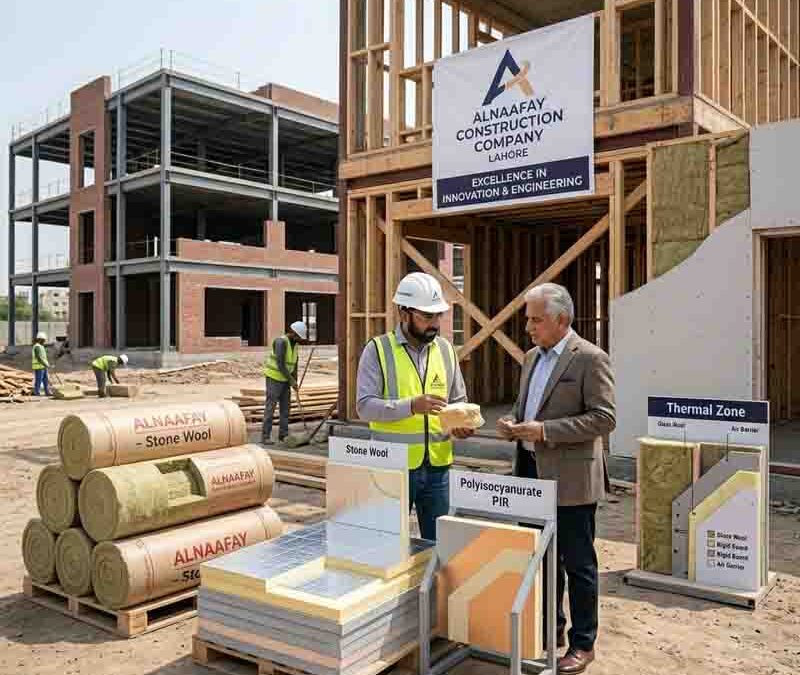
Insulation is not a single product but a broad family of materials. Each type suits certain applications, budgets, and climates better than others. Let us walk through the most common varieties so you can understand what each one offers.
Fiberglass Insulation
Fiberglass is perhaps the most familiar insulation material on the market. Manufacturers make it by spinning molten glass into extremely fine fibers, which trap pockets of air that slow heat flow. Builders can buy it as batts, rolls, or loose-fill, which makes it incredibly versatile.
In terms of performance, fiberglass typically offers an R-value of R-3.0 to R-4.3 per inch. High-density batts can reach R-15 in a standard 2-by-4 wall and R-21 in a 2-by-6 wall. Because it is affordable and widely available, fiberglass remains a popular choice for walls, attics, and floors.
Mineral Wool Insulation
Mineral wool, sometimes called rock wool or slag wool, is made from natural minerals like basalt or from recycled industrial slag. Notably, it contains around 75 percent recycled content and resists fire without any added chemicals. As a result, it has become a favorite for projects that demand safety and soundproofing.
Mineral wool delivers an R-value of roughly R-4.0 per inch. Beyond its thermal performance, it excels at blocking sound and withstanding high temperatures. Therefore, builders often choose it for interior walls, fire-rated assemblies, and noisy environments.
Cellulose Insulation
Cellulose stands out as one of the greenest options available. Manufacturers produce it from recycled paper, primarily newsprint, giving it an impressive recycled content of 82 to 85 percent. To make it safe, they treat the material with borate, which adds resistance to fire and insects.
When it comes to performance, cellulose offers an R-value of R-3.2 to R-3.8 per inch. Because it packs tightly into building cavities, it fills gaps well and reduces air leakage. Consequently, it works beautifully for both attics and existing walls.
Spray Foam Insulation
Spray foam represents the high-performance end of the market. Applied as a liquid, it expands rapidly to fill every gap, crack, and crevice before hardening into a solid layer. This expansion gives it an unmatched ability to seal air leaks, which many other materials cannot match.
Performance-wise, closed-cell spray foam delivers an R-value of R-6.0 to R-6.5 per inch, the highest among common materials. Open-cell foam offers a lower R-value but costs less and remains more flexible. Although spray foam carries a higher price, its superior sealing often justifies the expense in demanding projects.
Rigid Foam Board Insulation
Rigid foam boards provide a strong, stable insulation option for many parts of a building. They come in three main varieties: expanded polystyrene (EPS), extruded polystyrene (XPS), and polyisocyanurate (polyiso). Each one offers excellent resistance to heat and, in many cases, moisture as well.
These boards deliver an R-value of R-5.0 to R-6.5 per inch, with polyiso leading the pack. XPS holds its R-5 per inch even in wet conditions, which makes it ideal for basements and below-grade walls. Because they are durable and efficient, rigid foam boards suit exterior walls, roofs, and foundations well.
Natural Fiber Insulation
For clients who want eco-friendly materials, natural fibers offer an appealing path. This category includes cotton, sheep's wool, hemp, and straw. Cotton insulation, for instance, often uses recycled denim, while sheep's wool is treated with borate to resist pests and fire.
Natural fibers generally provide R-values similar to other fibrous materials, with sheep's wool reaching R-13 in a 2-by-4 wall. Although these products can cost more, they appeal strongly to environmentally conscious buyers. For green building projects, a thoughtful Construction Company Lahore may recommend them as a sustainable alternative.
Reflective and Radiant Barriers
Reflective insulation works differently from the bulky materials above. Instead of slowing conductive heat, radiant barriers reflect radiant heat away from living spaces. Made from highly reflective foils, they shine in hot, sunny climates where cooling loads dominate.
Importantly, radiant barriers have no inherent R-value because they reflect heat rather than resist it. Even so, when installed correctly facing an air space, they can dramatically reduce heat gain through roofs. For a sun-soaked city, this benefit can be substantial.
4. How a Construction Company in Lahore Chooses the Right Insulation
Lahore presents a unique set of challenges for builders. With scorching summers, monsoon rains, and chilly winter nights, the city demands insulation that performs across a wide range of conditions. Let us explore how a skilled Construction Company Lahore approaches this important decision.
Matching Insulation to the Local Climate
Lahore sits in a hot, semi-arid zone where cooling needs dominate for much of the year. Because of this, reducing heat gain through roofs and walls becomes the top priority. A smart Construction Company Lahore often combines high R-value roof insulation with reflective barriers to keep interiors cool during punishing summers. Meanwhile, adequate wall insulation helps maintain comfort during cooler months.
Choosing the Right Product for Each Area
Different parts of a building call for different solutions. For roofs and attics, where heat gain is greatest, builders may select rigid foam boards or spray foam for maximum resistance. For walls, fiberglass or mineral wool often strikes the right balance of cost and performance. By tailoring each choice to its location, an experienced Construction Company Lahore avoids waste and improves overall results.
Balancing Performance and Budget
Every project operates within a budget, and insulation is no exception. While spray foam offers the best performance, it also costs the most. Therefore, a practical Construction Company Lahore weighs the long-term energy savings against the upfront cost. In many cases, a thoughtful mix of materials delivers excellent value without breaking the bank.
Considering Moisture and Humidity
Monsoon season brings heavy rain and high humidity to Lahore, which can ruin the wrong insulation. Some materials absorb moisture and lose their effectiveness, while others resist it well. By selecting moisture-appropriate products like closed-cell spray foam or XPS in vulnerable areas, a careful Construction Company Lahore protects both the building and its occupants.
Meeting Local Codes and Standards
Finally, compliance matters more than ever. Pakistan now requires new buildings to meet the Energy Conservation Building Code, which sets minimum insulation standards. A responsible Construction Company Lahore stays current with these rules, ensuring that every project passes inspection and performs efficiently for years to come.
5. Factors to Consider When Choosing Insulation
Selecting insulation involves more than picking the highest R-value. Several factors work together to determine the best choice for your project. Below are the key considerations you should weigh carefully.
Climate Zone
Your local climate plays the biggest role in your decision. Hot regions need insulation that blocks heat gain, while cold regions demand high R-values to retain warmth. Because Lahore leans hot for much of the year, reducing summer heat usually takes priority over winter heat retention.
Location in the Building
Where you install insulation matters just as much as what you install. Roofs and attics typically need the highest R-values because heat rises and the sun beats down from above. Walls require moderate resistance, while floors and basements have their own specific needs. Matching each product to its location delivers the best results.
R-Value Targets
Naturally, the R-value you aim for depends on your climate and the area you are insulating. Hotter zones often require less attic insulation than colder ones, but they still benefit from strong roof protection. Knowing your target R-value before you shop helps you avoid both under-insulating and overspending.
Budget and Long-Term Savings
Cost always factors into the equation. Fiberglass sits at the affordable end, while spray foam commands a premium. However, the cheapest option is not always the smartest one. Higher-performing insulation may cost more upfront yet save far more on energy bills over the building's lifetime.
Fire and Moisture Resistance
Safety and durability deserve serious thought. Mineral wool resists fire naturally, while certain foam products handle moisture exceptionally well. Depending on the application, these properties can outweigh raw R-value. A wise builder considers the whole picture rather than a single number.
Environmental Impact
Sustainability has become a major concern for many clients. Materials like cellulose, mineral wool, and natural fibers use high levels of recycled content and reduce waste. For green-minded projects, these options offer both performance and peace of mind.
Installation Method
Finally, consider how the material gets installed. Some products, like fiberglass batts, are simple enough for skilled DIYers. Others, such as spray foam, require professional equipment and expertise. Because poor installation ruins even the best insulation, professional help often pays for itself.
6. Advantages and Disadvantages of Each Insulation Type
No insulation material is perfect, and honesty matters when you are making big decisions. Therefore, let us compare the strengths and weaknesses of each type so you can choose wisely.
Fiberglass: Pros and Cons
On the plus side, fiberglass is affordable, widely available, and easy to install. It also resists moisture reasonably well and does not burn easily. On the downside, its R-value per inch is lower than foam options, and it can irritate skin and lungs during installation. Gaps and compression can also reduce its effectiveness significantly.
Mineral Wool: Pros and Cons
Mineral wool shines when it comes to fire resistance and soundproofing. Additionally, it contains high recycled content and resists moisture well. However, it costs more than fiberglass and weighs more, which can make installation slightly harder. Even so, its safety benefits often justify the extra expense.
Cellulose: Pros and Cons
Cellulose offers excellent eco-credentials, strong soundproofing, and good air-sealing when densely packed. Furthermore, it fits well into existing walls without major demolition. On the negative side, it can settle over time, absorb moisture if exposed to leaks, and create dust during installation. Proper installation density helps prevent settling.
Spray Foam: Pros and Cons
Spray foam delivers the highest R-value and unmatched air sealing, which makes it incredibly effective. It also strengthens structures and blocks moisture in its closed-cell form. The main drawback is cost, since it is far pricier than other options. Moreover, it requires professional installation and cannot be removed easily once applied.
Rigid Foam Boards: Pros and Cons
Rigid foam boards provide high R-values, excellent moisture resistance, and great durability. They work especially well for exterior walls, roofs, and foundations. However, they cost more than fiberglass, and some types lose a little R-value over time as gases escape. Careful sealing of joints is also necessary to maximize performance.
Natural Fibers: Pros and Cons
Natural fibers appeal strongly to eco-conscious buyers because they use renewable and recycled materials. They also handle moisture reasonably well and feel safer to install. Unfortunately, they often cost more and may not be as widely available. For the right client, though, the trade-off feels worthwhile.
Reflective Barriers: Pros and Cons
Reflective barriers excel at reducing radiant heat in hot climates, which makes them a smart addition in sunny regions. They are also lightweight and relatively affordable. Their main limitation is that they only address radiant heat, so they cannot replace bulk insulation entirely. Instead, they work best alongside other materials.
7. Insulation Standards and Regulations
Rules and standards exist to make buildings safer, healthier, and more efficient. Because energy waste carries such a high cost, governments around the world have tightened insulation requirements in recent years. Let us look at the standards that shape construction today.
International Standards
Globally, organizations like ASHRAE set widely respected guidelines for energy-efficient buildings. In the United States, the International Energy Conservation Code (IECC) recommends specific R-values based on climate zones. For hot regions similar to Lahore, attic insulation recommendations often fall in the R-30 to R-49 range. These benchmarks give builders a reliable starting point.
Pakistan's Energy Conservation Building Code
Closer to home, Pakistan has taken major steps toward energy efficiency. The National Energy Efficiency and Conservation Authority (NEECA) approved the Energy Conservation Building Code (ECBC) 2023, which sets minimum requirements for new and renovated buildings. Notably, compliance became mandatory for all new buildings by the end of 2024.
The ECBC 2023 covers far more than insulation alone. It addresses building envelopes, passive design, retrofitting, renewable energy, and energy management systems. By following these guidelines, builders can reduce a building's energy demand dramatically. In fact, implementing the code can capture up to half of a building's energy-saving potential.
Why Compliance Matters
Meeting these standards brings real benefits beyond simply following the law. Compliant buildings cost less to run, feel more comfortable, and command higher value in the market. Furthermore, they produce fewer emissions, which helps the environment. For these reasons, a responsible Construction Company Lahore treats code compliance as a baseline rather than a goal.
The Bigger Picture
Pakistan's push toward efficiency reflects a wider global movement. With energy demand rising and the climate changing, efficient buildings have become essential rather than optional. By embracing strong insulation standards now, builders position themselves and their clients for a more sustainable future.
8. Frequently Asked Questions (FAQs)
What is the best type of insulation for a hot climate like Lahore?
For hot climates, reducing heat gain is the top priority. Reflective barriers combined with high R-value roof insulation, such as rigid foam or spray foam, work especially well. Walls often do well with fiberglass or mineral wool. Ultimately, the best choice depends on your budget and the specific area you are insulating.
How much R-value do I actually need?
The answer depends on your climate and where you are installing the insulation. Hot regions like Lahore generally need strong roof insulation but can use moderate amounts in walls. As a rough guide, attics in hot zones often target R-30 or higher. Consulting a local expert helps you hit the right number.
Is spray foam worth the extra cost?
In many cases, yes. While spray foam costs more upfront, it delivers the highest R-value and seals air leaks better than any other material. Over time, the energy savings often make up for the initial expense. For projects where performance matters most, it is frequently worth the investment.
Can I install insulation myself?
Some types, like fiberglass batts, are simple enough for confident DIYers. Others, such as spray foam, require professional equipment and training. Because poor installation drastically reduces effectiveness, hiring a professional often saves money in the long run. When in doubt, ask an expert first.
Does insulation help with both heat and cold?
Absolutely. Insulation slows the flow of heat in both directions, which means it keeps your home cool in summer and warm in winter. This dual benefit makes it valuable year-round, especially in a city like Lahore that experiences both hot and cold seasons.
How long does insulation last?
When installed correctly and kept dry, most insulation lasts for decades. Materials like rigid foam and mineral wool are particularly durable. However, moisture damage or settling can shorten its life, so proper installation and maintenance remain essential.
Why should I hire a Construction Company in Lahore for insulation work?
Choosing the right material, sizing it correctly, and installing it properly all require real expertise. A trusted Construction Company Lahore understands the local climate, building codes, and best practices. As a result, you get better performance, full code compliance, and longer-lasting comfort.
9. Conclusion
Insulation may be one of the most overlooked parts of any building, yet it ranks among the most important. By slowing the flow of heat, the right insulation keeps your home comfortable, slashes your energy bills, and protects the environment all at once. From fiberglass and mineral wool to cellulose, spray foam, rigid foam, and natural fibers, this versatile family of materials offers a solution for nearly every need.
The key to success lies in understanding R-values and matching them to your climate, your budget, and the specific area you are insulating. Of course, each material brings its own strengths and weaknesses, so there is no single perfect answer. Instead, the smartest builds combine the right products in the right places, all installed with care.
For anyone planning a project in Lahore, the message is clear. With hot summers, humid monsoons, and cool winters, the city demands thoughtful insulation choices and strict attention to local codes. To get the most from your investment, partner with an experienced Construction Company Lahore that understands these materials and conditions inside and out.
Ready to build a cooler, more comfortable, and more efficient space? Reach out to a trusted local construction expert today and give your next project the strong foundation it deserves.
