Crush Stone (Aggregate) Lahore, Pakistan
Introduction
In construction, every material plays an important role in building strength and durability. Just like cement, sand, and steel, crush stone (aggregate) is one of the most essential materials used in almost every construction project. Without good quality aggregate, concrete cannot achieve its required strength.
In Lahore, Pakistan, thousands of construction projects are active, including houses, commercial plazas, high-rise towers, and infrastructure projects. All of these require crush stone (aggregate) in large quantities.
In this blog, we will cover:
What is crush stone (aggregate)?
Why is it important in construction?
Types of aggregates available in Lahore, Pakistan
Uses of crush stone in different construction works
Sizes of aggregates and their applications
Comparison between natural river stone and crushed stone
Quality checks for aggregates
Prices and suppliers in Lahore
Environmental concerns and future of aggregate in Pakistan
Keyword focus will remain on Crush Stone (Aggregate) Lahore Pakistan.
What is Crush Stone (Aggregate)?
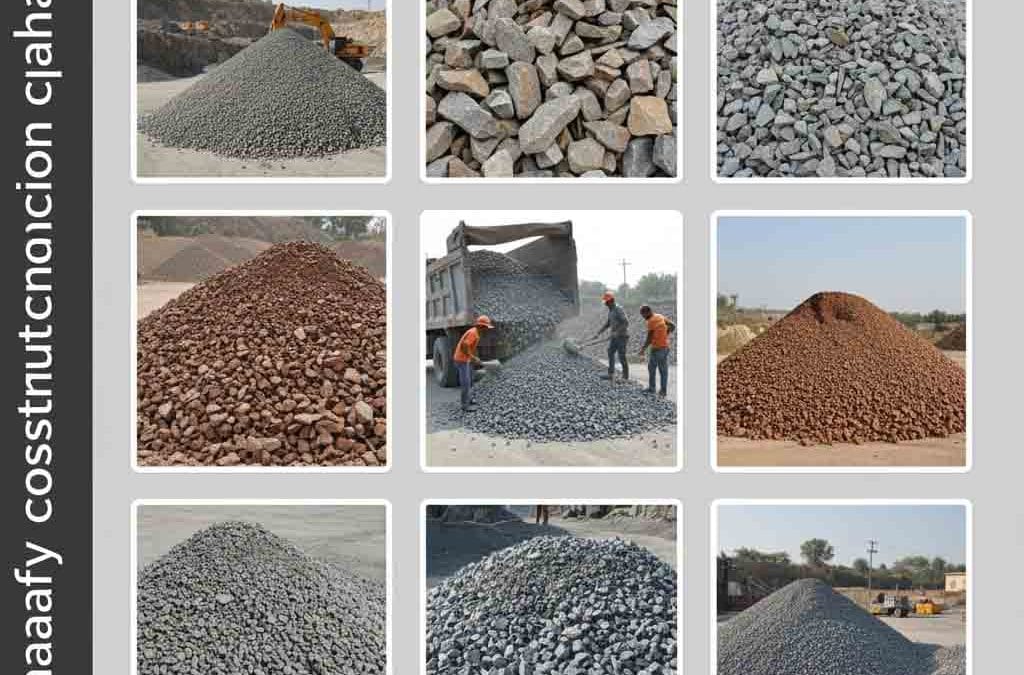
Crush stone, also called aggregate, is a material made by crushing large rocks into smaller pieces. These stones are then used in construction for making concrete, road base, and building foundations.
Main properties of aggregate:
Hard and durable
Angular in shape
Different sizes available (from small gravel to large boulders)
Strong bonding with cement and sand
In Lahore, crush stone (aggregate) comes from quarries in Margalla Hills, Sargodha, Dina, and other nearby regions. These stones are transported by trucks and supplied to construction sites.
Importance of Crush Stone (Aggregate) in Construction
Concrete is made of three main ingredients: cement, sand, and aggregate. Out of these, aggregate covers about 60–70% of the total concrete volume. This means the strength of any concrete structure depends heavily on the quality of aggregate.
Main roles of aggregate:
Strength – Aggregate increases the compressive strength of concrete.
Durability – Prevents cracks and shrinkage in structures.
Economy – Reduces the amount of cement needed, making concrete cost-effective.
Workability – Helps in better mixing and finishing of concrete.
Stability – Provides a strong base for roads, pavements, and foundations.
Types of Aggregates Available in Lahore, Pakistan
In Lahore, builders use different types of aggregates depending on project requirements and budget. Let’s discuss the main ones:
1. Margalla Crush
Comes from Margalla Hills (near Islamabad).
Very strong and durable.
Color: Grey.
Best for: RCC (reinforced concrete), high-rise buildings, bridges.
Widely used in Lahore.
2. Sargodha Crush
Extracted from Sargodha quarries.
Color: Light grey to whitish.
Slightly softer than Margalla crush.
Best for: House construction, flooring, normal structures.
Very popular in Lahore due to price and availability.
3. Dina Crush
Comes from Dina region near Jhelum.
Hard and durable stone.
Used in both small and large projects.
4. Local River Shingle
Natural round stones collected from rivers.
Less common now because crushed stone is stronger.
Used in some rural areas or low-cost construction.
Aggregate Sizes and Their Uses
In Lahore, different sizes of aggregates are used for different purposes.
| Aggregate Size | Local Name (in Pakistan) | Use |
|---|---|---|
| 3/8 inch (10 mm) | Sotra | Plaster, flooring, small concrete jobs |
| 1/2 inch (12 mm) | Baji Crush | Normal house construction, lintels |
| 3/4 inch (19 mm) | Margalla/Sargodha Standard | RCC, slabs, beams, columns |
| 1.5 inch (37 mm) | Bara Crush | Heavy foundations, road base |
| 2 inch+ | Boulder | Road works, base filling |
Uses of Crush Stone (Aggregate) in Construction
Concrete Production – Main ingredient for RCC structures.
Road Construction – Used in base layers, asphalt mix.
Railway Ballast – Provides stability for railway tracks.
Drainage Works – Larger aggregates used in water drainage.
Foundations – Provides solid base under footings.
Landscaping – Decorative stone in gardens, pathways.
Quality Checks for Crush Stone
Before using aggregate, it is important to check its quality. Poor quality crush stone can reduce concrete strength.
Common tests:
Impact Test – Checks toughness.
Crushing Test – Checks compressive strength.
Sieve Analysis – Checks particle size distribution.
Water Absorption Test – Good aggregate absorbs less than 2% water.
Crush Stone in Lahore Markets
In Lahore, aggregate is supplied from:
Margalla Hills (Islamabad) – Best quality.
Sargodha – Popular due to cost.
Dina/Jhelum – Medium quality.
Main suppliers in Lahore operate in areas like:
Shahdara
Thokar Niaz Baig
Defence Road
Raiwind Road
Prices of Crush Stone (Aggregate) in Lahore (Approximate)
(Prices change according to market demand, fuel cost, and distance)
Sargodha Crush (½ inch / ¾ inch): PKR 110 – 130 per cubic foot
Margalla Crush (¾ inch): PKR 140 – 160 per cubic foot
Dina Crush: PKR 120 – 135 per cubic foot
Local Shingle: PKR 90 – 100 per cubic foot
Large projects buy in bulk (per trolley or per dumper) which reduces cost.
Crush Stone vs Natural River Stone
| Feature | Crush Stone | River Stone |
|---|---|---|
| Shape | Angular | Rounded |
| Strength | High | Medium |
| Bonding | Strong with cement | Weak due to smooth surface |
| Cost | Slightly higher | Cheaper |
| Use | RCC, roads, bridges | Low-cost construction |
Clearly, crush stone (aggregate) is better for modern construction compared to river stone.
Challenges of Aggregate in Pakistan
Over-mining in Margalla Hills causing environmental damage.
Rising fuel costs increasing transport prices.
Shortage during peak construction seasons.
Fake suppliers mixing low-quality stone.
Future of Crush Stone (Aggregate) in Lahore
With Lahore’s fast urban growth, demand for crush stone (aggregate) will keep increasing. New crushing plants and suppliers are being developed to meet this demand. Builders are also shifting to mechanically tested aggregates for better quality control.
Quick Links
Social Icons
Contact Us Information
443 J3 Johar Town Lahore near Expo Center Lahore
