
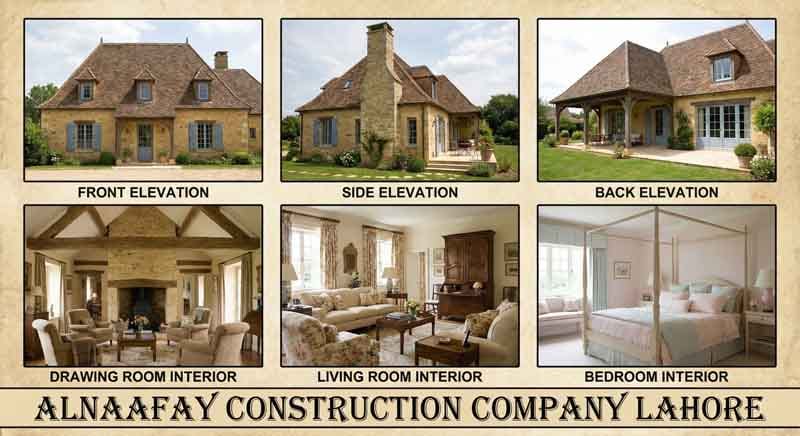
French Country House
A Home Full of Charm, Calm, and Nature
Have you ever walked into a house and immediately felt peace everywhere? The air smells of bread, the walls are full of sun, and every chair invites you to sit and stay a while. That’s the quiet magic of a French Country House.
This house style doesn’t shout. It tells its story slowly, with soft colors, natural light, wooden doors, and village warmth. In this blog, we will explore every corner of a French countryside home — from its rooftops to its rustic floors. You don’t need to be an architect to understand this article. Everything is written in very easy English, so even younger readers can follow along.
The only rule? Read slowly. This house is built with patience.
Where Is the French Country House Style Most Popular?
The name gives us a clue. This design started in rural France, mostly in the south, near the Provence, Loire Valley, and Normandy regions. Over time, people in other countries also fell in love with its soft look and natural soul.
Today, French Country House design is very popular in:
- 🇫🇷 France – Its true home, where this style began
- 🇺🇸 United States – Especially in states like Virginia, Texas, and California
- 🇨🇦 Canada – In countryside areas and nature-loving houses
- 🇦🇺 Australia – Frequently built in hilly, rural zones
- 🇮🇳 🇵🇰 India & Pakistan – Used for villas or farmhouses in peaceful outskirts (Islamabad, Gurgaon, Lahore, Bangalore, etc.)
Across the world, when someone wants beauty without showing off — they often turn to this design.
What Makes a French Country House So Special?
A French Country House isn’t about perfection. In fact, it celebrates the imperfections of nature. Peeling paint, aged wood, loose stones — all of them are part of the poetry of this house.
Here are the things that make this design unforgettable:
1. Soul Over Style
Modern houses focus on shape and steel. French houses focus on feelings. They tell family stories through textures, colors, and silence.
2. Inspired by Farms and Fields
The original French country homes were built by farmers. Because of that, everything inside has a purpose — and yet it looks beautiful without trying too hard.
3. Built for Long Days and Slow Living
There’s no rush inside this house. Every chair, every basin, every stone asks you to stay a little longer and listen to the birds outside.
Understanding the Structure of a French Country House
To truly understand a house, we need to understand its bones. What’s it made of and how does it flow?
Inside a typical French Country House, you will find:
- Stone or brick walls with some plaster
- Wooden beams across the ceiling
- Large windows that open wide
- Soft sloped roofs with terra-cotta tiles
- Natural walkways or outdoor patios
- Gardens with herbs like lavender, basil, thyme
Everything feels aged, soft, and in balance with wind, water, grass, and light.
Floor Plan Ideas for a French Country House
Thinking of building one? Let’s look at a common layout for a one-kanal plot.
A layout could include:
- Entrance porch with wooden door
- Large living room with center fireplace
- Open dining+kitchen area
- 3 or 4 bedrooms with arched wooden windows
- Library or reading room
- One outdoor sitting corner with pebbled floor
- Courtyard or herb garden in the center or side
French homes are more horizontal than vertical. They stretch across the garden — not climb high into the sky.
Outdoor Features – Garden of Light, Not Just Grass
The garden of a French house is not a fancy lawn. It’s a living painting where nature is free to express itself.
Included features might be:
- Gravel walkways
- Stone fencing or handmade iron gates
- Trees like olive, fig, orange, or almond
- Fragrant herbs like lavender, marjoram, rosemary
- Climbing vines over windows
A small ceramic fountain in the middle can add birdsong and coolness.
You’re not just building a garden. You’re building a moment, where time slows down.
Key Elements of a French Country House (Inside & Out)
Let’s now explore the main parts of this house style in a step-by-step guide.
1. Exterior Walls – Rough Beauty
- Often made of stone or stucco-plastered bricks
- Uneven texture is normal — even good!
- Light colors: warm white, light grey, soft beige
- Sometimes painted in gentle pastel tones
2. Roofing – Sloped, Simple, Sunny
- Made from terra cotta clay tiles or shingle stone
- Slight curves or slopes to let water flow during rain
- Sometimes has dormer windows opening to the roof
Looks not just nice, but very practical in countryside weather.
3. Doors – Wooden and Welcoming
- Entry door often painted in a warm bold color — like green, red, or ocean blue
- Made of natural oak or pine
- Frame includes stone or exposed brick arching over it
This door must not just open, it must say, “Come in. Take a breath.”
4. Windows – Let the Light Stay
- Long arched or rectangular windows
- Open wide, not sliding
- Framed in wood, sometimes painted white or dusty blue
- Divided into panes with old-style iron bars
These windows are not only for the view. They’re for sunlight, air, and joy.
5. Fireplace – Not Just for Warmth
- Often placed at the heart of the living room
- Built with natural stone or brick
- May include mantel with vintage clock or mirror
- Used in all seasons as a visual center of the house
Even in modern homes, this gives coziness, especially on rainy days.
6. Ceilings with Beams – A Crown of Wood
- Lines of exposed wooden beams on ceilings
- Painted dark for contrast or whitewashed for a cleaner look
- Makes the house feel wide, historic, grounded
This is not just structure — it’s natural decor.
Furniture and Decoration – How Simplicity Brings Life
Furniture must feel “used” but loved. Old is treasured here.
Let’s discover interior suggestions:
Beds:
Made of iron or wood, simple in design.
Covered with soft cotton sheets, linen, and wool throws.
Add hand-knit blankets or vintage cushions.
Sofas and Chairs:
Soft forms — not sharp, boxy shapes.
Think of floral fabric or pastel shades.
A gentle armchair with a lamp makes a perfect reading nook.
Tables:
Long wooden farm tables in dining areas
Painted legs, natural wooden top
Fresh flowers and a candle for everyday beauty
Colors & Paint:
Earthy tones > Bright colors
Choose taupe, dusty rose, cream, olive, pale yellow
Paint should look slightly faded, never sharp
Lighting:
Worn metal lamps, iron chandeliers, or wall lanterns
Use soft warm bulbs
Let natural light be the hero during the day
Kitchen – The Heart of the French Country House
French people love food and family. Their kitchens show it.
Must-have features include:
- Stone or wooden counters
- Racks with hanging pans
- Vintage gas stove or look-alike modern version
- Clay jars of herbs and pickles
- Open shelves with copper and clay utensils
- Wooden cutting boards
A well-used kitchen here is more important than a well-polished one.
Bathrooms – Fresh, Natural, Soft
No need for glittery marble. Instead, go with:
- Stone or ceramic sinks
- Wall hooks for towels
- Simple round mirror
- Handmade soaps
- Woven baskets for storage
Quiet beauty and function go hand in hand.
Can Children Enjoy This Home Design?
Absolutely. Children can do more here than in boxed apartments.
They can:
- Play among plants
- Read near the window
- Pick mint leaves from garden
- Plant trees for next year
- Sleep under safe wooden beams
The house doesn’t limit childhood. It encourages it.
Smart Additions to a Traditional French House
You might worry: “I love the look, but I also want technology.”
Don’t worry. They can live together.
- Use solar panels, hidden on back rooftops
- Allow smart lighting but hide the switches inside wooden covers
- Use remote air cooling that stays tucked into ceiling corners
French countryside charm never has to exclude your lifestyle.
Seasonal Joy in a French Country House
What’s it like living here through the seasons?
- Spring: Birds return, lavender grows, open windows all day
- Summer: Breakfast in the garden, naps after lunch
- Autumn: Warm pies in the oven, golden leaves outside
- Winter: Fire crackles, wool blankets, soup with bread
Each weather becomes more than weather. It becomes a living poem.
How Much Does It Cost to Build a French Country House?
Cost depends on size, material, and location.
Here are some budget-saving tips:
- Use local stone or tile instead of imported material
- Buy antique-style items from second-hand markets
- Use earth plaster & whitewash instead of acrylic paints
- Grow your own herbs to save and decorate
- Use multi-use furniture (like a bench with storage)
This house doesn’t need gold. It just needs heart and planning.
Summary Table — French Country House Essentials
| Element | Detail/Benefit |
|---|---|
| Stone walls | Bring nature indoors |
| Arched doors/windows | Add countryside feel |
| Fireplace | Warmth and visual harmony |
| Wooden beams | Rustic ceiling drama |
| Open kitchen | Heart of home and comfort |
| Garden with herbs | Fresh food, fresh air |
| Soft color scheme | Soothes the eye and heart |
| Iron and wood furniture | Vintage touch with strong use |
| Natural lighting | Saves power, boosts joy |
Quick Links
Social Icons
Contact Us Information
443 J3 Johar Town Lahore near Expo Center Lahore
