
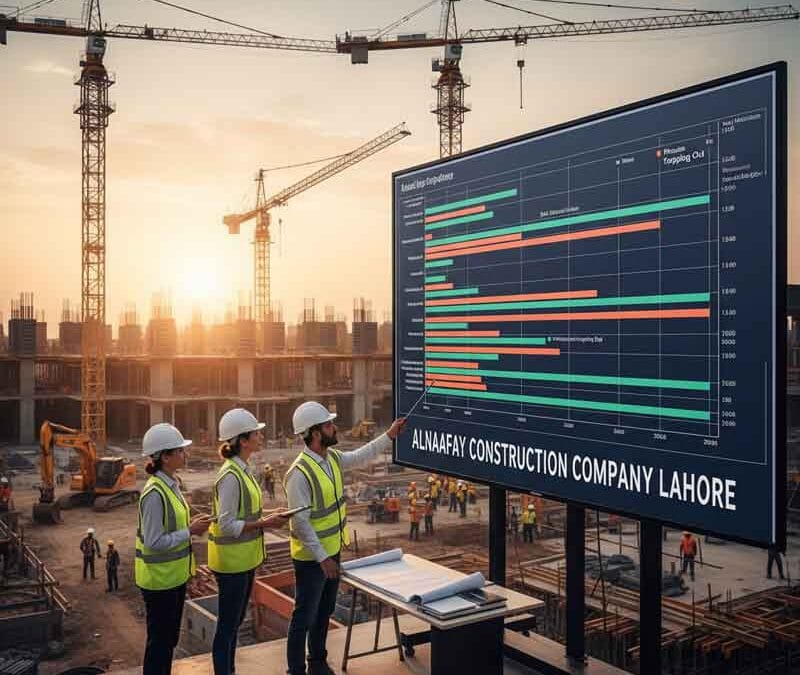
Gantt Charts for Construction
The Ultimate Planning Tool
Introduction
In the complex world of building, organization is the key to success. Without a clear plan, a project can quickly spiral into chaos, leading to lost money and wasted time. Therefore, builders and project managers need reliable tools to keep everything on track. One of the most powerful tools available is the Gantt chart. Specifically, Gantt charts for construction act as a visual roadmap, guiding a project from the initial design phase to the final coat of paint.
Many people struggle to visualize how different tasks connect. For instance, you cannot install the roof until the walls are up. Consequently, understanding these dependencies is crucial. A Gantt chart makes these connections obvious. It displays tasks as horizontal bars across a timeline, showing exactly when each activity starts and ends. This visual representation helps everyone involved understand the schedule at a glance.
In this comprehensive guide, we will explore why these charts are essential. We will look at their benefits, how to create them, and how they apply to specific architectural styles. Additionally, we will discuss their use in local contexts like Lahore. By the end of this post, you will understand how to use Gantt charts for construction to deliver successful projects.
What Are Gantt Charts for Construction?
A Gantt chart is a type of bar chart that illustrates a project schedule. Named after its inventor, Henry Gantt, it has become a staple in project management. In the context of building, Gantt charts for construction list all the tasks required to complete a building on the vertical axis. Meanwhile, the horizontal axis represents time.
Visualizing the Timeline
Each task is represented by a bar. The position and length of the bar reflect the start date, duration, and end date of the task. As a result, you can instantly see which tasks are long, which are short, and where they overlap. This visual clarity is vital for coordinating the hundreds of moving parts in a construction site.
Tracking Progress
Moreover, modern Gantt charts do more than just plan; they track. You can shade the bars to show the percentage of work completed. If a task is behind schedule, it becomes immediately apparent. This allows project managers to take corrective action before a small delay becomes a major problem. Therefore, these charts are dynamic tools that evolve with the project.
Benefits of Using Gantt Charts for Construction
Why should you use this specific tool over a simple to-do list? The advantages are numerous and significant.
Improved Communication
First and foremost, a Gantt chart serves as a central source of truth. Everyone, from the architect to the electrician, can look at the chart and understand the plan. Consequently, misunderstandings are reduced. Ideally, this clarity keeps the entire team aligned and moving in the same direction.
Better Resource Management
Construction projects require various resources, including labor, equipment, and materials. Gantt charts for construction help you see when these resources are needed. For example, if you see that the plumbing and electrical work are scheduled for the same week, you can ensure you have enough space and resources for both teams. This prevents overcrowding and resource conflicts.
Enhanced Time Management
Time is money in construction. By visualizing the critical path—the sequence of tasks that determines the project's finish date—you can focus on what matters most. If a critical task is delayed, you know immediately that the project end date is at risk. Thus, you can prioritize resources to get that specific task back on track.
Defining the Style: The Bauhaus Movement
When discussing project management and efficiency, the Bauhaus architectural style is a perfect parallel. It emphasizes function, rationality, and mass production.
What is the Bauhaus Style?
The Bauhaus style is characterized by simple geometric shapes like rectangles and spheres. It features open floor plans and lacks elaborate decoration. The focus is on functionality and the honest use of materials. There is no hiding the structure; the design celebrates the construction itself.
Which Country is Famous for This Design?
Germany is the birthplace and most famous home of the Bauhaus style. Founded in the early 20th century by Walter Gropius, the Bauhaus school sought to unify art, craft, and technology. Germany's industrial capabilities and cultural focus on precision and efficiency made it the ideal breeding ground for this movement. Even today, German engineering and construction are synonymous with the rigorous planning that Gantt charts for construction facilitate.
Benefits for Scheduling
How does Bauhaus relate to scheduling? The style's emphasis on modularity and standard components makes it incredibly easy to schedule. Because the design avoids complex, custom ornamentation, the construction tasks are predictable. As a result, creating accurate Gantt charts for construction for a Bauhaus-style home is straightforward, reducing the risk of schedule overruns.
Material Options and Project Timelines
The materials you choose have a direct impact on your schedule. Some materials are quick to install, while others require long curing or preparation times. Your Gantt chart must reflect these realities.
Concrete and Curing Times
Concrete is a staple material. However, it requires time to cure (dry and harden) before you can build on top of it. A Gantt chart must include these "wait times" as distinct periods. Ignoring this can lead to structural failures or schedule clashes. Therefore, when planning Gantt charts for construction, always account for the chemical realities of your materials.
Prefabricated Steel
In contrast to concrete, steel structures can be erected very quickly. If you choose a steel frame, your schedule for the structural phase will be much shorter. This is often why commercial buildings use steel; the speed of construction offers a better return on investment.
Brick vs. Drywall
For interior walls, the choice between brick and drywall affects the timeline significantly. Brick walls take days to build and plaster. Drywall, conversely, can be installed in hours. If your schedule is tight, opting for drywall partitions is a strategic move that should be reflected in your planning.
Climate Suitability and Scheduling
The weather is an external factor that can wreck a schedule. Gantt charts for construction must account for the local climate to be realistic.
Building in Hot Climates
In regions with extreme heat, labor productivity drops during the afternoon. Additionally, concrete can dry too fast, leading to cracks. Your schedule might need to reflect split shifts, where work happens early morning and late evening. This extends the calendar duration of tasks but ensures quality and safety.
Managing Monsoon Seasons
Rain is the enemy of excavation and exterior painting. If you are building in a region with a distinct rainy season, your Gantt chart needs to schedule outdoor tasks around it. For instance, you should aim to have the building "dried in" (roof and windows installed) before the rains begin. This allows interior work to continue regardless of the weather outside.
Regional Focus: Using Gantt Charts for Construction in Lahore
Lahore is a bustling metropolis with a vibrant real estate market. However, building here presents unique challenges that your schedule must address.
DHA (Defence Housing Authority)
DHA has strict regulations regarding construction hours and material storage. You cannot work late into the night. Your Gantt charts for construction must be based on limited working hours. Furthermore, inspections by DHA authorities are mandatory at various stages. You must add buffer time to your schedule to account for these inspections and approvals.
Bahria Town
Located on the outskirts, Bahria Town faces logistical challenges. Transporting materials from the city center takes time. Delays in material delivery are common. Therefore, your schedule should include lag times for logistics. Conversely, the organized nature of the society allows for smoother on-site operations once materials arrive.
Lake City and Valencia
These societies are growing rapidly. The demand for labor in these specific areas can sometimes outstrip supply. If you can't find masons because they are all busy on other projects, your schedule slips. Smart planning involves securing your labor force in advance or scheduling tasks during off-peak times.
Wapda Town and Johar Town
These are mature, densely populated areas. Space is a major constraint. You cannot dump all your materials on site at once. You must schedule "just-in-time" deliveries. This requires a highly detailed Gantt chart that coordinates supplier deliveries precisely with construction needs.
Model Town and Gulberg
Traffic congestion is a significant issue in these central areas. Concrete mixer trucks or steel deliveries can get stuck for hours. Scheduling deliveries for early mornings or weekends is a necessary strategy. Your Gantt chart should reflect these logistical constraints to avoid downtime.
Askari and Cantt
Security protocols are strict. Getting passes for laborers and vehicles takes time. Often, trucks are only allowed entry during specific hours. These administrative hurdles act as dependencies in your schedule. You cannot start a task until the labor pass is issued.
How to Create Effective Gantt Charts for Construction
Creating a useful chart requires more than just software; it requires a logical process.
Step 1: Work Breakdown Structure (WBS)
Before drawing bars, you must list every task. This is called the Work Breakdown Structure. Break the project down into major phases: Foundation, Structure, MEP (Mechanical, Electrical, Plumbing), and Finishing. Then, break these down further. For example, "Foundation" includes excavation, steel fixing, and pouring concrete.
Step 2: Sequence the Activities
Once you have the list, determine the order. What must happen first? You cannot paint before you plaster. Establish the dependencies. This logic is the backbone of Gantt charts for construction.
Step 3: Estimate Durations
How long will each task take? Be realistic. Ask your contractors for their estimates. It is better to overestimate and finish early than to underestimate and cause delays.
Step 4: Input into Software
Now, put this data into a scheduling tool. Microsoft Project, Primavera, or even Excel can be used. The software will generate the visual chart, showing the critical path and the overall timeline.
Mistakes to Avoid with Gantt Charts for Construction
Even with a chart, things can go wrong if you fall into common traps.
The "Set It and Forget It" Mentality
A Gantt chart is a living document. Construction is unpredictable. If it rains for a week, your schedule is wrong. You must update the chart regularly to reflect actual progress. If you don't, the chart becomes a useless piece of paper.
Over-Complicating the Chart
While detail is good, too much detail can be overwhelming. A chart with 5,000 lines for a simple house is unreadable. Group minor tasks under broader headings. Keep the chart simple enough that everyone on the team can understand it quickly.
Ignoring Resource Constraints
Your chart might say you can paint 10 rooms in two days. However, if you only have two painters, that is impossible. Ensure your schedule aligns with the actual resources available. Gantt charts for construction must be reality-based, not fantasy-based.
Budget Tips Linked to Scheduling
Your schedule and your budget are twins. Managing one helps manage the other.
Cash Flow Planning
Use your Gantt chart to predict cash flow. If you know the roof is finishing in October, you know you need to pay the roofer in October. This prevents liquidity crises.
Avoiding Rush Charges
If your schedule slips, you might be tempted to pay extra for rush deliveries or overtime labor to catch up. A well-monitored Gantt chart gives you early warnings, allowing you to adjust without incurring these expensive rush charges.
Rental Equipment Efficiency
Don't rent a crane for a month if your Gantt chart shows you only need it for three days in week one and two days in week four. Coordinate rentals precisely with the schedule to save money.
Maintenance of the Schedule
Maintaining the schedule is as important as creating it.
Weekly Review Meetings
Hold a weekly meeting with your team to review the Gantt chart. Ask specific questions: "Did we finish the plumbing on Tuesday as planned?" "Is the electrician ready to start on Monday?" These meetings keep everyone accountable.
Adjusting for Delays
When a delay happens (and it will), update the chart immediately. See how it affects the end date. Can you move other tasks around to recover the time? For example, can the landscaper start while the interior is delayed? This dynamic adjustment is the power of Gantt charts for construction.
Transitioning to a Successful Project
The ultimate goal of all this planning is a successful build. It requires a holistic approach. With patient planning, respect for local climate and codes, and good teamwork with experts, you can navigate the complexities of construction. This collaborative spirit, guided by a clear schedule, ensures that everyone reaches the finish line together.
The Human Element
Remember that a chart is just a tool. People build houses. Use the chart to support your team, not just to pressure them. A clear schedule reduces stress because everyone knows what is expected of them.
Detailed Breakdown: Phases in a Gantt Chart
Let’s look at how specific phases look in Gantt charts for construction.
Phase 1: Pre-Construction
This phase often gets ignored but is crucial.
- Tasks: Site survey, soil testing, architectural design, structural design, permit application.
- Dependencies: You cannot apply for a permit without the design. You cannot design the foundation without the soil test.
- Duration: This phase is often administratively heavy and can take months, especially in bureaucratic environments.
Phase 2: Excavation and Foundation
This is where physical work begins.
- Tasks: Site clearing, excavation, termite treatment, pouring footings, curing concrete.
- Dependencies: Termite treatment must happen after excavation but before pouring concrete.
- Risk: Weather is the biggest risk here. Rain can fill excavated trenches, causing delays.
Phase 3: Grey Structure
The skeleton of the building rises.
- Tasks: Brickwork, lintel pouring, roof slab pouring, installation of electrical and plumbing conduits.
- Dependencies: Conduits must be placed inside walls before plastering.
- Key Scheduling Note: This is often the longest phase. Monitoring progress here is critical.
Phase 4: MEP Rough-Ins
Mechanical, Electrical, and Plumbing work.
- Tasks: Running water pipes, gas pipes, electrical wires, HVAC ducting.
- Dependencies: This must be done before walls are closed up or plastered.
- Conflict: This is where clashes happen. The plumber and electrician often need to work in the same space. The Gantt chart should sequence them carefully.
Phase 5: Finishing
Making it look like a home.
- Tasks: Plastering, flooring, painting, woodwork, installing fixtures.
- Dependencies: Flooring usually comes after plastering but before the final coat of paint.
- Detail: This phase requires meticulous attention to detail and often involves many different subcontractors.
Software Options for Gantt Charts
You don't need to draw these by hand. Several tools make it easy.
Microsoft Project
The industry standard for large projects. It is powerful but can be complex and expensive. It allows for detailed resource tracking and critical path analysis.
Primavera P6
Used for massive infrastructure projects. It is very robust but has a steep learning curve. It is likely overkill for a single home build.
Excel or Google Sheets
For a simple home project, a spreadsheet is often enough. You can use conditional formatting to create bar charts. It is free and flexible, though it lacks automatic dependency updates.
Online Project Management Tools
Tools like Asana, Monday.com, or Trello have Gantt chart views. These are user-friendly and great for collaboration. They allow you to share the schedule easily with your contractor.
Advanced Project Scheduling Techniques
Once you master the basics, you can use advanced techniques.
Crashing the Schedule
If you are behind, you can "crash" the schedule. This means adding resources to the critical path tasks to finish them faster. For example, paying for overtime or hiring a second crew. Gantt charts for construction help you identify exactly which tasks to crash for maximum impact.
Fast-Tracking
This involves doing tasks in parallel that would normally be done in sequence. For example, starting the electrical rough-in while the framing is still finishing up in another part of the house. This increases risk (of mistakes) but saves time.
The Role of the Project Manager
A Gantt chart needs a driver. The Project Manager (PM) is the person who owns the schedule.
Daily Monitoring
The PM should be on site daily, checking progress against the chart. They are the ones who spot that the cement delivery is late and update the schedule accordingly.
Communication Hub
The PM uses the chart to communicate with stakeholders. They send the updated chart to the client to show progress. They use it to tell the subcontractors when to show up.
Common Scheduling Pitfalls in Lahore
Specific local issues can derail your plans.
Festival Holidays
Eid holidays in Pakistan can last for days, and labor often travels back to their villages. This can result in a site shutdown for a week or more. Your Gantt charts for construction must account for these predictable pauses.
Political Rallies and Road Closures
Lahore occasionally sees political activity that blocks major roads. This stops material deliveries. While hard to predict, having a buffer in your schedule helps absorb these one-off delays.
Load Shedding
While less of an issue now, power outages can still disrupt work that requires electricity, like welding or cutting tiles. Ensuring you have a generator on site is a mitigation strategy that keeps the schedule moving.
FAQs regarding Gantt Charts for Construction
Q: Can I build a house without a Gantt chart?
A: Yes, but it will likely be stressful, take longer, and cost more. You rely on memory and verbal agreements, which are prone to failure.
Q: How detailed should my chart be?
A: It should be detailed enough to track key handoffs between trades. You don't need to list "pick up hammer," but you do need "install kitchen cabinets."
Q: What if my contractor refuses to use a Gantt chart?
A: This is a red flag. However, you can create one yourself based on their verbal estimates and use it to hold them accountable.
Q: Is the Critical Path always the same?
A: No. If a non-critical task is delayed long enough, it can become critical. The chart updates dynamically to show this.
Q: Can I use a Gantt chart for renovation projects?
A: Absolutely. Renovations often have tighter constraints and more surprises than new builds, making a schedule even more important.
Conclusion
The construction of a building is a symphony of logistics, labor, and engineering. To conduct this symphony effectively, you need a score. Gantt charts for construction provide that score. They translate complex, interdependent activities into a clear, visual timeline that everyone can understand.
Whether you are managing a high-end build in Gulberg or a commercial plaza in Johar Town, the principles remain the same. Visualize the work. Identify the dependencies. Track the progress. By adopting these charts, you move from a reactive mode of management—constantly fighting fires—to a proactive mode, where you anticipate challenges and solve them before they impact your bottom line.
Do not let the apparent complexity of the tool scare you. Start simple. List your tasks. Guess the dates. Refine as you go. The act of planning itself is invaluable. It forces you to think through the project in detail, uncovering potential issues on paper before they become expensive problems on the site. Embrace the Gantt chart, and build with confidence.
Appendix: Useful Terms for Scheduling
- Float (Slack): The amount of time a task can be delayed without delaying the project.
- Milestone: A zero-duration point that marks a significant achievement.
- Dependency: A logical relationship between two tasks.
- Lead Time: The amount of time a successor activity can advance with respect to a predecessor activity.
- Lag Time: The amount of time a successor activity will be delayed with respect to a predecessor activity.
Understanding these terms will help you utilize Gantt charts for construction to their full potential, ensuring your project is a resounding success.
Final Thoughts on Teamwork
Ultimately, a schedule is a communication tool. Use it to foster collaboration.
Share the Vision
Print the Gantt chart large and hang it in the site office. Let the workers see the big picture. When they see how their work fits into the whole, they are often more motivated to hit their deadlines.
Celebrate Milestones
When you hit a major milestone on the chart, celebrate. Buy lunch for the crew. Acknowledge the progress. Positive reinforcement keeps the momentum going, ensuring that the bars on your chart keep turning from "planned" to "completed."
Quick Links
Social Icons
Contact Us Information
443 J3 Johar Town Lahore near Expo Center Lahore
