
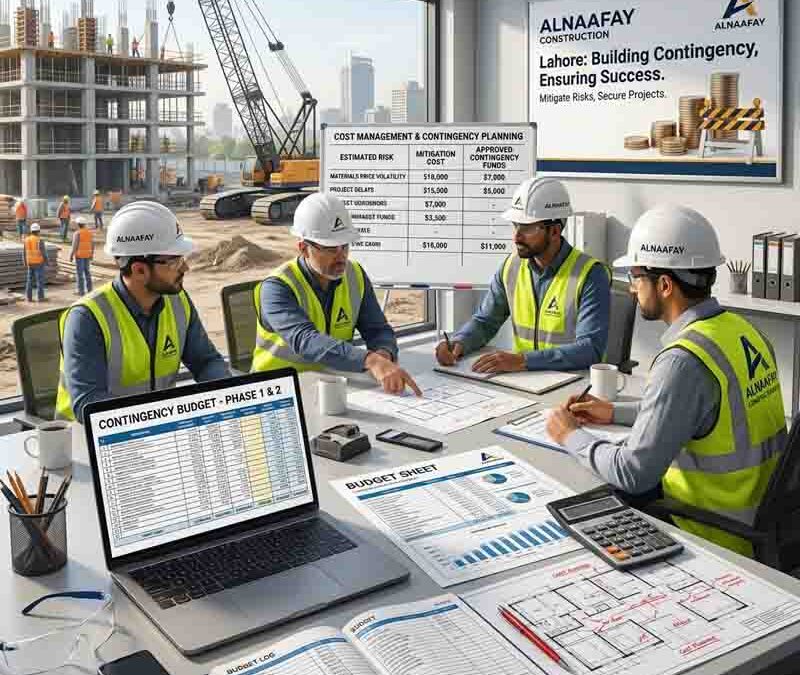
How to Build a Construction Contingency Budget
Every construction project carries risk. Materials cost more than expected. Hidden conditions show up behind walls. Schedules slip. When any of these things happen without a financial buffer in place, the entire project is in jeopardy. That is where a construction contingency budget becomes essential.
A well-built contingency budget does not signal poor planning. It signals realistic planning. It tells every stakeholder on the project that the team has thought carefully about what could go wrong and set aside the resources to handle it. Without one, a single unexpected cost can derail a project that was otherwise on track.
This guide walks you through every aspect of building a solid contingency reserve for your construction project. From understanding what a contingency budget actually covers, to calculating the right amount, to avoiding the mistakes that cause most budgets to fail — you will find clear, practical information organized in a way that is easy to apply.
Table of Contents
- What Is a Construction Contingency Budget?
- Why a Construction Contingency Budget Matters
- Types of Contingency in Construction
- How Much Contingency Should You Set Aside?
- How to Calculate a Construction Contingency Budget
- What Costs Should Be Covered by a Construction Contingency Budget?
- How to Manage and Track Your Construction Contingency Budget
- Common Mistakes When Building a Construction Contingency Budget
- Construction Contingency Budget for Different Project Types
- Tips for Reducing the Need for a Large Contingency Budget
- Construction Company Lahore
- Frequently Asked Questions
- Conclusion
1. What Is a Construction Contingency Budget?
A construction contingency budget is a financial reserve set aside at the beginning of a project to cover costs that were not anticipated when the original budget was created. It is not assigned to any specific trade, material, or finish. Instead, it sits as a separate fund that the project team can draw from when something unexpected comes up.
The simplest way to understand it: a contingency budget is the money you hope you never need but will be very grateful to have when something goes wrong — and something almost always goes wrong.
Construction projects involve real buildings, real sites, and real decisions that evolve as work progresses. Even the most thorough planning cannot account for every variable. Hidden structural conditions, rising material prices, design modifications, permitting delays — these are not signs of a poorly managed project. They are realities of the construction process. The contingency budget exists to absorb these realities without putting the overall project at risk.
It is also important to distinguish a contingency budget from two related concepts:
- An allowance is money set aside for a known item with an unknown cost — for example, light fixtures the client has not yet selected. The item is expected; only the price is uncertain.
- A change order is a documented change to project scope, cost, or schedule after the original agreement is in place. Change orders often pull from the contingency fund, but they are a separate administrative process.
A contingency budget covers what you cannot predict at all. An allowance covers what you can predict but have not yet priced. Understanding that distinction is critical when reviewing any construction estimate.
2. Why a Construction Contingency Budget Matters
A construction contingency budget protects your project from the financial shock of unexpected events. Without one, a single unforeseen cost can force a choice between cutting quality, seeking additional funding, or halting work entirely. None of those outcomes serve the project.
Beyond protecting the budget, a contingency reserve also protects relationships. When unexpected costs arise on a project with no financial buffer, the instinct is often to assign blame — to the contractor, the designer, or the owner. When a contingency fund exists, the team can address the problem immediately and move on, rather than spending time and energy arguing over who pays for it.
There are three primary reasons why a construction contingency budget matters on every project:
First, unforeseen conditions are common. According to industry data, cost overruns affect the majority of construction projects. A contingency reserve is the direct financial response to that reality. It does not prevent overruns from happening; it ensures they do not stop the project when they do.
Second, scope and design changes are often unavoidable. As a project moves from planning into construction, owners frequently identify opportunities to adjust finishes, layouts, or features. Each of those changes carries a cost. The contingency budget absorbs those costs without requiring a full budget revision.
Third, construction costs are volatile. Material prices fluctuate. Labor shortages push up subcontractor rates. Supply chain disruptions affect delivery timelines and pricing. A contingency reserve gives the project team room to respond to these fluctuations without crisis-level decisions.
3. Types of Contingency in Construction
Not every contingency fund is the same. In practice, multiple parties on a construction project each carry their own contingency, and each one serves a different purpose. Understanding the distinctions matters because it affects who controls the funds, when they can be accessed, and what they cover.
Owner's Contingency
The owner's contingency is the financial reserve that the project owner maintains to cover unexpected costs that fall outside the original scope. It typically covers scope changes, design modifications, unforeseen site conditions, and general budget overruns.
For new construction projects, the owner's contingency typically ranges from 10 to 15 percent of the total construction budget. For renovation projects — where concealed conditions are far more common — that range rises to 15 to 25 percent. Many owners keep the exact amount of their contingency private, since making it visible can influence how contractors and designers approach project decisions.
Contractor's Contingency
The contractor's contingency is built directly into the contractor's bid. It covers cost fluctuations, material delays, items that may have been missed during the estimating process, and other risks the contractor is responsible for managing. Experienced contractors treat this contingency as an accepted part of project reality — a financial acknowledgment that no estimate is perfect and that field conditions always introduce some degree of uncertainty.
Design Contingency
The design contingency sits within the architect's or designer's fee structure. It covers unexpected redesign work, consultant coordination issues, additional permitting rounds, and minor errors or omissions in the construction documents. This contingency typically runs between 3 and 10 percent of the design fee, depending on the project's complexity.
Schedule Contingency
Contingency does not only apply to money. A schedule contingency is a time buffer built into the project timeline to absorb delays caused by weather, inspection backlogs, late material deliveries, or other disruptions. If a school must open in September, for example, the construction schedule might set a July completion target — giving the team two months of schedule contingency before the real deadline is affected.
Hard Cost vs. Soft Cost Contingency
A hard cost contingency covers unexpected expenses tied to physical construction work — material price increases, unforeseen structural conditions, or site complications. A soft cost contingency covers unexpected expenses on the administrative and professional services side — permitting delays, extended consultant fees, or additional regulatory review rounds. Both need to be planned for and tracked separately.
4. How Much Contingency Should You Set Aside?
The right contingency percentage depends on how much is known about the project at any given point. As a general principle, the more uncertain the project, the higher the contingency needs to be. As information increases and risks are confirmed or eliminated, the contingency can be reduced accordingly.
As a starting framework, most construction projects use the following risk-based ranges:
- Low-risk projects: 5 to 10 percent of the total construction budget
- Medium-risk projects: 10 to 15 percent
- High-risk projects: 15 to 20 percent or more
For projects at different stages of design, typical contingency percentages shift as follows:
- Early conceptual or feasibility phase: 15 to 25 percent (sometimes higher for complex or unusual projects)
- Schematic design: 10 to 15 percent
- Design development: 7 to 10 percent
- Construction documents: 5 to 10 percent
- During active construction: 3 to 5 percent
The logic behind these ranges is straightforward: at the conceptual phase, almost everything is unknown. Materials have not been selected, site conditions have not been fully assessed, and the design is still fluid. As each of these variables is confirmed, the contingency percentage can be reduced to reflect the reduced risk.
A renovation project with an older building, incomplete drawings, and specialty equipment may need a contingency well above these ranges. A straightforward new commercial build with clear documents and a well-understood site may be on the lower end. The right amount always depends on the specific project.
5. How to Calculate a Construction Contingency Budget
Calculating your construction contingency budget follows a straightforward formula. The basic approach is to multiply your estimated total project cost by the appropriate contingency percentage, then add any known high-cost risks that you want to plan for specifically.
Basic Formula:
Contingency = (Estimated project costs × risk factor %) + Known high-cost risks
Worked example:
Your total estimated project cost is $500,000. After reviewing the project risks, you determine a 7 percent contingency is appropriate. You also know that the site has existing underground utilities that may require adjustment, and you estimate that work at $15,000.
- $500,000 × 7% = $35,000
- $35,000 + $15,000 = $50,000 total contingency
That $50,000 sits as a separate line in your budget, not assigned to any specific scope of work, and available to cover unexpected costs as they arise.
If you prefer a simpler calculation, you can apply a flat percentage directly to the total project cost. For a project with a $400,000 budget and a 10 percent contingency:
- $400,000 × 10% = $40,000 total contingency
The more rigorous method — identifying known high-cost risks separately and adding them to the percentage-based calculation — produces a more accurate and defensible number. It is the approach we recommend for any project with clearly identifiable risk factors.
6. What Costs Should Be Covered by a Construction Contingency Budget?
A contingency reserve is not a catch-all fund for routine project costs. Consequently, it is important to define what it is — and is not — intended to cover. The following categories represent the most common and legitimate uses of contingency funds.
Concealed Conditions
Concealed conditions are issues hidden from view until work begins — old plumbing, damaged framing, outdated electrical wiring, asbestos, or unstable soil. These are especially common in renovation projects and older buildings. Since these conditions cannot be identified through standard pre-construction inspection, they are appropriate uses of the contingency fund when discovered.
Utility Adjustments
Utility adjustments include added electrical capacity, plumbing rerouting, HVAC modifications, or new service requirements that were not fully apparent at the time of original pricing. For commercial projects — restaurants, dental offices, medical facilities — these needs often become clearer once equipment selections and operational requirements are finalized.
Permitting and Inspection Changes
Permitting delays, code updates, accessibility requirements, and agency review comments can all introduce costs that were not included in the original budget. Even thorough pre-construction planning cannot always anticipate every jurisdictional requirement. The contingency fund provides the resources to respond without disrupting the project schedule.
Owner-Requested Changes
Owner-requested changes — upgraded finishes, layout refinements, added features, or equipment changes — are a legitimate use of the owner's contingency. As construction progresses and the physical space takes shape, owners often identify improvements they want to incorporate. The contingency budget funds these decisions without requiring a full budget revision.
Scope Gaps and Documentation Issues
Scope gaps occur when items were unclear, incomplete, or not fully captured in early drawings or pricing documents. Even well-prepared construction documents contain some level of ambiguity. The contingency reserve covers the cost of resolving those gaps when they arise in the field.
Labor and Material Fluctuations
Material prices can shift significantly between the time an estimate is produced and the time materials are actually purchased. Similarly, labor shortages can push subcontractor rates above the figures used during bidding. The contingency fund absorbs these fluctuations without requiring the project team to absorb a loss or request additional funding from the owner.
7. How to Manage and Track Your Construction Contingency Budget
Setting aside a contingency fund is only the first step. How you manage and track that fund throughout the project determines whether it actually protects the budget — or quietly disappears into routine costs before the project is finished.
The following practices form the foundation of effective contingency management:
Establish a formal approval process from day one. Define in writing who has authority to approve contingency draws, what documentation is required, and what threshold triggers a higher level of review. Without this process, contingency funds are easily accessed for the wrong reasons.
Document every draw with a clear justification. Each time contingency funds are used, record the specific issue that triggered the draw, the amount accessed, and the remaining balance. This documentation protects the project team and provides clear accountability to all stakeholders.
Review the contingency balance regularly. A mid-project review should assess whether the remaining contingency is sufficient given the risks that remain. If the balance has been drawn down significantly and major risks are still unresolved, an early conversation about additional funding is far better than a crisis conversation later.
Do not use contingency for predictable costs. Routine project expenses, known scope items, and budgeted allowances should never draw from the contingency fund. Contingency is specifically reserved for genuine unknowns — not for covering costs that were already anticipated and should have been included in the base budget.
Track separately from the main project budget. Combining contingency with the general project budget makes it difficult to monitor and easy to access informally. Keep it as a distinct line item with its own transaction log.
Communicate clearly with all stakeholders. The owner, contractor, and design team should all understand the contingency balance, how it is being used, and what the current risk profile looks like. Transparency about contingency status prevents misunderstandings and builds trust.
8. Common Mistakes When Building a Construction Contingency Budget
Most contingency budgets fail for predictable reasons. Recognizing these mistakes early gives you the opportunity to avoid them before they affect your project.
Starting with Too Little
The most common and most damaging mistake is setting the contingency too low at the start. Teams often underfund contingency because they want the project's overall budget to look as favorable as possible. The result is a fund that runs out before the project is finished, leaving the team with no financial buffer for the risks that remain.
The right approach is to start with a contingency percentage that honestly reflects the project's actual risk level — even if that makes the initial budget number less attractive.
Cutting Contingency to Stay Within Budget
When a project estimate comes in over budget, the contingency is often the first line item cut. This is a critical error. Reducing the contingency does not reduce the project's risk. It simply removes the money that was set aside to manage that risk. The better approach is to review the project scope, priorities, and specifications to identify real cost reductions — not to eliminate the financial buffer that protects the project from overruns.
Treating Contingency as a General Spending Fund
Contingency funds that are accessed for routine costs or minor scope items are quickly depleted, leaving nothing for genuine emergencies. Specifically, this means every draw from the contingency fund should require a documented justification, an approval from the designated authority, and a clear record of the remaining balance.
Failing to Establish an Approval Process
Without a defined process for accessing contingency funds, draws happen informally, without documentation, and often for the wrong reasons. The approval process does not need to be complex. It does need to be clear, consistent, and enforced from the start.
Not Revisiting the Contingency as the Project Progresses
A contingency percentage that was appropriate at the design development stage may be too high or too low by the time construction is underway. As risks are resolved, the contingency can be reduced. As new risks emerge, it may need to be supplemented. Regular review is essential.
Ignoring Soft Costs
Many construction contingency budgets focus exclusively on hard construction costs and overlook the soft cost contingency — the funds needed to cover unexpected design fees, permitting delays, additional engineering reviews, or extended project administration. Both categories of cost need to be covered.
9. Construction Contingency Budget for Different Project Types
The right contingency approach varies meaningfully depending on the type of project. Risk profiles, site conditions, and the level of design certainty all differ significantly across project categories.
New Residential Construction
New residential construction on a clear site with well-developed drawings typically carries the lowest contingency requirement. For straightforward new builds, a contingency of 5 to 10 percent of the total construction cost is generally appropriate. The primary risk categories are material price fluctuations, weather delays, and labor availability.
Residential Renovation
Renovation projects carry significantly higher contingency requirements than new construction. Concealed conditions — old wiring, outdated plumbing, hidden structural damage, hazardous materials — are far more common once walls and floors are opened. For residential renovation, a contingency of 10 to 20 percent is typical, with older or more complex properties requiring the upper end of that range.
Commercial Construction
Commercial construction projects typically plan for a contingency of 5 to 10 percent of the total construction budget. However, projects with specialty equipment — commercial kitchens, medical suites, dental offices — often require higher contingency to account for the complexity of utility coordination and equipment integration.
Renovation and Adaptive Reuse
Renovation and adaptive reuse projects — converting existing buildings for entirely new purposes — carry the highest contingency requirements of any project type. Existing conditions are frequently unknown until demolition begins, and the integration of modern systems into older structures often introduces significant complications. Contingencies of 15 to 25 percent are common for these projects.
Infrastructure and Civil Projects
Infrastructure projects — roads, bridges, drainage systems — carry contingency requirements that reflect the complexity of site conditions and the scale of the work involved. Early-phase contingency on major infrastructure projects can exceed 25 percent, reflecting the significant unknowns around geotechnical conditions, utility conflicts, and regulatory requirements.
10. Tips for Reducing the Need for a Large Contingency Budget
A larger contingency is not inherently bad — it reflects an honest assessment of project risk. However, reducing the need for a large construction contingency reserve means reducing the underlying risks that make contingency necessary. The following practices consistently reduce project risk and, therefore, the size of the contingency required.
Invest in thorough preconstruction planning. The more information the project team has before construction begins, the fewer surprises will arise once work is underway. Detailed site investigations, geotechnical studies, and utility mapping all reduce the likelihood of concealed conditions driving unexpected costs.
Involve contractors early in the design process. Contractors who participate in design review before drawings are finalized can identify constructability issues, flag scope gaps, and highlight specifications that are difficult or expensive to build. Changes made at this stage cost very little. Changes made during construction can cost significantly more.
Complete design documents thoroughly before construction begins. Incomplete or ambiguous drawings are one of the leading causes of contingency draws. Investing in complete, well-coordinated construction documents reduces the scope gaps and field conflicts that drive unexpected costs.
Conduct a formal risk assessment before setting the contingency. Rather than applying a percentage based on habit or convention, analyze the project's specific risks. Identify the most likely and most costly risks, assign a probability and cost impact to each, and set the contingency to reflect that analysis.
Maintain clear communication between all project parties throughout. Many contingency draws arise from communication failures — design intent that was not conveyed to the contractor, owner preferences that were not captured in the drawings, coordination issues between trades that were not resolved early. Regular communication reduces these gaps.
Use construction management software to track costs in real time. Integrated project management platforms allow the team to monitor budget performance, flag emerging risks, and track contingency draws with accuracy. Early visibility into cost trends gives the team time to respond before a situation becomes a crisis.
11. Construction Company Lahore
We are a construction company based in Lahore, and we build contingency planning into every project we manage — not as an afterthought, but as a core component of responsible project delivery. We hold this position because we have seen, across hundreds of projects, what happens when contingency is underfunded, mismanaged, or treated as optional. The outcomes are always the same: budget overruns, strained relationships, and difficult conversations that could have been avoided.
Our team includes in-house estimators, site managers, and project coordinators who work together to assess project risks before a single rupee of contingency is set. We do not apply a standard percentage to every project and call it done. Instead, we conduct a project-specific risk review at the preconstruction stage — identifying the most likely sources of unexpected cost, quantifying their potential financial impact, and building a contingency fund that reflects the actual risk profile of your project.
How We Assess Contingency for Your Project
Before we recommend a contingency amount, we carry out four specific steps:
- Site investigation: We conduct a thorough on-site review to identify visible risk factors — existing conditions, utility access points, structural concerns, and anything else that could introduce unexpected costs once construction begins.
- Document review: We review all available drawings, specifications, and survey data to identify gaps or ambiguities that could lead to scope changes during construction.
- Risk classification: We classify identified risks by probability and cost impact, which allows us to prioritize where contingency funds are most likely to be needed.
- Contingency calculation: We apply the basic formula — estimated project costs × risk factor % + known high-cost risks — to produce a specific, defensible contingency amount that we present to you with full supporting documentation.
What You Receive When You Work With Us
When you engage us for a project in Lahore, you receive:
- A written contingency plan that identifies the specific risks the fund is designed to cover
- A formal approval process for contingency draws, with defined authority levels and documentation requirements
- Regular contingency status reports throughout the project, so you always know the current balance and how it has been used
- A post-project review that compares actual contingency use against the initial risk assessment, providing a clear record for future reference
We serve clients across Lahore, including projects in DHA Lahore, Bahria Town, Lake City, and Johar Town. Our project types include residential construction, commercial build-outs, renovation projects, and adaptive reuse developments. Regardless of the project size or type, we apply the same disciplined contingency planning process from the first design meeting through final handover.
Contact us today to schedule a consultation. We will assess your project's risk profile, walk you through the contingency calculation process, and ensure your budget is built on a realistic financial foundation from the start.
12. Frequently Asked Questions
What is a construction contingency budget?
A construction contingency budget is a financial reserve set aside within a project's total budget to cover unexpected costs that arise during construction. It is not allocated to any specific trade or scope item. Rather, it acts as a financial buffer that allows the project to respond to unforeseen conditions, design changes, permitting complications, and cost fluctuations without disrupting the overall budget.
How much contingency should a construction project have?
The appropriate contingency percentage depends on the project type, complexity, and level of design completeness. As a general framework, low-risk projects typically use 5 to 10 percent of the total construction cost. Medium-risk projects use 10 to 15 percent. High-risk or complex projects — particularly renovation and adaptive reuse — may require 15 to 25 percent or more. The key principle is that contingency should reflect actual project risk, not convention.
Who controls the construction contingency budget?
Control depends on the contract structure. Owner contingency is controlled by the project owner and is typically used for scope changes and unforeseen conditions. Contractor contingency is built into the contractor's bid and is controlled by the contractor for their own risk management. Both parties may have separate contingency funds operating simultaneously on the same project.
When should contingency funds be accessed?
Contingency funds should be accessed only when a genuine unexpected cost arises that was not anticipated in the original budget and cannot be addressed through other means. Routine project expenses, known scope items, and budgeted allowances should be covered from the base budget — not from contingency. Every draw should require documented justification and formal approval.
Is it acceptable to cut contingency if the project is over budget?
Cutting contingency is not an effective way to resolve a budget overrun. Removing the contingency makes the budget number look better on paper, but it does not reduce the project's actual risk. Consequently, the better approach is to review the project scope, specifications, and priorities to identify real cost reductions. The contingency exists to protect the project from financial shocks — removing it simply removes the protection.
What happens to unused contingency at the end of a project?
What happens to unused contingency depends on the terms of the project agreement. For the owner's contingency, unused funds typically remain with the owner or are reallocated. For the contractor's contingency, unused funds generally become additional profit for the contractor. These terms should be clearly defined in the contract before the project begins.
How is a contingency budget different from a management reserve?
A contingency budget covers identified risks — issues you can anticipate even if you cannot predict exactly when or how they will occur. A management reserve covers unidentified risks — surprises that no one on the project team saw coming. On smaller projects, the owner's contingency often serves both purposes. On larger projects, they may be separate budget line items with different approval requirements for access.
Can contingency be used for owner-requested changes?
Yes, owner-requested changes are a legitimate use of the owner's contingency. However, these draws should be evaluated carefully in the context of remaining project risk. If significant risks are still unresolved — particularly on renovation projects with concealed conditions — prioritizing contingency for those risks is generally the more prudent approach before allocating funds to discretionary improvements.
13. Conclusion
A construction contingency budget is one of the most important financial tools in any project. It does not reflect pessimism or poor planning. Instead, it reflects a clear-eyed understanding of how construction projects actually work — with variables, unknowns, and conditions that cannot always be fully predicted before work begins.
Building the right contingency reserve requires honest risk assessment. It also requires discipline in how that fund is managed, documented, and protected throughout the project. The teams that handle contingency well finish projects closer to budget, resolve unexpected issues without crisis, and maintain stronger relationships across all project parties.
The mistakes that undermine contingency planning — starting with too little, cutting it under budget pressure, using it for routine costs, and failing to track it carefully — are all avoidable. Avoiding them is a matter of process and commitment, not luck.
For construction projects in Lahore, we apply a structured, documented contingency planning approach to every project we manage. We assess risk before we recommend a contingency amount. We establish a clear approval process before a single draw is made. Furthermore, we report on contingency status throughout the project so you always know exactly where you stand.
If you are planning a construction project and want a realistic, well-structured contingency budget from the start, contact our team today. We will walk you through the risk assessment process, produce a documented contingency plan specific to your project, and ensure your budget is built to handle what construction projects always deliver — the unexpected.
