
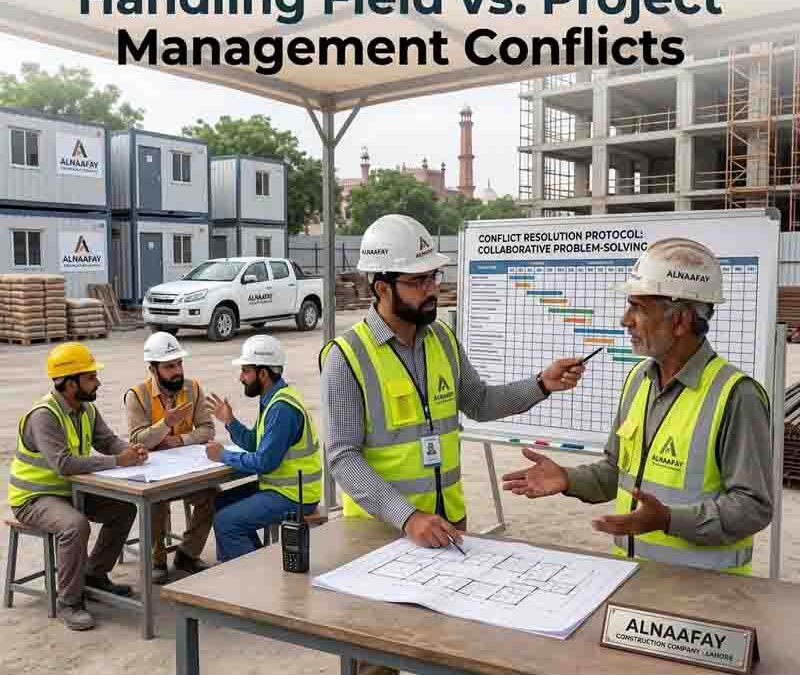
How to Handle Conflicts Between Field Workers and Project Managers
Construction sites are busy, high-pressure environments. Deadlines are tight, budgets are stretched, and the stakes are high. Under these conditions, tensions can rise quickly — and conflicts between field workers and project managers are not just common, they are almost inevitable.
However, the way a construction team handles those conflicts makes all the difference. Left unresolved, workplace disputes can slow down projects, damage team morale, and cost companies significant amounts of money. Addressed effectively, they can actually strengthen communication, improve processes, and build a more resilient team.
This guide walks you through everything you need to know about managing conflicts between field workers and project managers — from understanding why they happen to applying practical strategies that actually work.
Table of Contents
- What Are Conflicts Between Field Workers and Project Managers?
- Why Conflicts Between Field Workers and Project Managers Happen
- Common Types of Conflicts on Construction Sites
- The Impact of Unresolved Conflicts on Construction Projects
- How to Handle Conflicts Between Field Workers and Project Managers
- Communication Strategies to Prevent and Resolve Conflicts
- Role of Leadership in Managing Field Worker and Project Manager Conflicts
- Construction Company Lahore: Handling Conflicts in a Local Context
- FAQs
- Conclusion
What Are Conflicts Between Field Workers and Project Managers?
At their core, conflicts between field workers and project managers are disagreements, tensions, or clashes that arise from differences in perspective, expectations, responsibilities, or communication styles. These disputes can range from minor misunderstandings to serious, ongoing friction that disrupts entire projects.
Field workers are the people who physically build things — carpenters, electricians, plumbers, laborers, equipment operators, and other tradespeople who work directly on the job site. Project managers, on the other hand, are responsible for planning, organizing, budgeting, and overseeing the overall progress of a construction project. They typically work from an office or spend time moving between sites and administrative tasks.
Because these two groups operate in such different environments and carry such different responsibilities, it is natural that their priorities and viewpoints sometimes conflict. A field worker might be focused on doing a task safely and correctly, while a project manager is under pressure to meet a deadline. A project manager might change the scope of work at short notice, while the field crew is already deep into a different plan. These differences, if not managed carefully, quickly turn into open conflict.
Understanding the nature of these disputes is the first and most important step toward resolving them.
Why Conflicts Between Field Workers and Project Managers Happen
Knowing why conflicts occur helps you address them at the root, rather than simply putting out fires after they start. Several key factors consistently drive friction between field workers and project managers.
Poor Communication
Poor communication is, without question, the most common cause of workplace conflicts on construction sites. When instructions are unclear, incomplete, or delivered at the wrong time, workers end up confused or frustrated. Similarly, when field workers raise concerns and feel that no one is listening, resentment builds quickly. Effective two-way communication is essential, yet it is often one of the first things to break down under project pressure.
Unrealistic Expectations
Project managers are often under pressure from clients, executives, or contracts to deliver results on a tight timeline. As a result, they sometimes set deadlines or productivity targets that field workers consider unrealistic given the actual conditions on the ground. Workers who feel pushed to cut corners — or who simply cannot physically meet the pace being demanded — will eventually push back, leading to direct conflict.
Lack of Respect and Recognition
Construction work is physically demanding and highly skilled. Field workers who feel undervalued, ignored, or talked down to by management are far more likely to become disengaged and confrontational. Respect, therefore, is not just a social nicety — it is a practical necessity for maintaining a functional team.
Unclear Roles and Responsibilities
When workers are unsure who is in charge of what, or when managers overstep into areas that workers consider their domain, confusion and resentment follow. Clear role definitions reduce the likelihood of territorial disputes and help everyone understand where their authority begins and ends.
Safety Concerns
Safety is a particularly sensitive area on construction sites. When field workers feel that a project manager is pressuring them to work in unsafe conditions or skip safety protocols, the resulting conflict can be intense — and entirely justified. Workers have both a legal right and a moral responsibility to refuse unsafe work, and managers must understand that safety-related disputes are fundamentally different from other disagreements.
Cultural and Generational Differences
Construction teams are often diverse, bringing together workers from different cultural backgrounds and age groups. These differences can sometimes create misunderstandings around communication styles, work ethics, hierarchy, and expectations. While diversity is a strength, it requires deliberate effort to manage well.
Common Types of Conflicts on Construction Sites
Not all workplace disputes are the same. Understanding the most common types of conflict helps managers and workers recognize them early and respond appropriately.
Task-Related Conflicts
These arise when workers and managers disagree about how a specific task should be performed, who should perform it, or what the end result should look like. For example, a project manager might insist on a particular method for laying foundations, while experienced field workers believe a different approach would be safer and more efficient.
Process Conflicts
Process conflicts center on how work gets organized and managed. Workers might feel that the scheduling system is chaotic, that materials are not arriving on time, or that instructions change too frequently. These issues create bottlenecks on the job site and lead to significant frustration on both sides.
Interpersonal Conflicts
Sometimes, conflicts are personal. Individual workers and managers may simply clash due to personality differences, past grievances, or perceived favoritism. These disputes can be harder to resolve because they are rooted in emotions rather than facts or procedures.
Structural Conflicts
Structural conflicts stem from the way an organization is set up. If a construction company has overlapping management roles, unclear chains of command, or inconsistent policies, workers and managers will inevitably come into conflict over authority and accountability.
Resource Conflicts
When tools, materials, equipment, or labor are in short supply, competition for those resources creates tension. Field workers who cannot do their jobs because resources have been allocated elsewhere will direct their frustration at whoever they hold responsible — usually the project manager.
The Impact of Unresolved Conflicts on Construction Projects
Ignoring disputes between field workers and project managers is never a neutral decision. Unresolved conflict carries real and measurable costs for construction projects.
Project Delays: When workers are arguing instead of working, or when communication has broken down to the point where instructions are no longer being followed effectively, progress slows down. Even minor disputes, if left to fester, can cause significant schedule overruns.
Cost Overruns: Delays, rework, and reduced productivity all drive up project costs. Additionally, conflicts that result in worker turnover force companies to recruit and train replacement staff — an expensive process that disrupts project continuity.
Safety Risks: A team that is distracted by conflict is a team that is more likely to make mistakes. On a construction site, mistakes can be fatal. The relationship between poor team dynamics and increased accident rates is well documented across the industry.
Damaged Reputation: Word travels quickly in the construction industry. A company known for poor labor relations will struggle to attract skilled workers and may find that clients are reluctant to award future contracts.
Legal Exposure: In serious cases, unresolved conflicts between field workers and project managers can escalate into formal grievances, labor disputes, or legal claims. These proceedings are expensive, time-consuming, and damaging to a company's standing.
The bottom line is straightforward: addressing conflicts early and effectively is not just good people management — it is good business.
How to Handle Conflicts Between Field Workers and Project Managers
Handling conflicts between field workers and project managers effectively requires a combination of practical skills, clear processes, and a genuine commitment to fairness. The following steps provide a proven framework for managing these disputes.
Step 1: Acknowledge the Conflict Early
The first rule of conflict management is simple — do not pretend the problem does not exist. When tension becomes visible between a worker and a manager, the worst response is to ignore it and hope it resolves itself. Instead, acknowledge the situation quickly and signal that it will be addressed. Early intervention almost always makes resolution easier.
Step 2: Create a Safe Space for Open Dialogue
Before any resolution can happen, both parties need to feel safe enough to speak honestly. Managers should arrange a calm, private setting for initial discussions — not a confrontation in front of the whole crew. Workers need to feel confident that speaking up will not result in retaliation or dismissal. When both sides feel heard, the conversation becomes productive rather than defensive.
Step 3: Listen Actively to Both Sides
Active listening means giving your full attention to the speaker, asking clarifying questions, and reflecting back what you have heard to confirm understanding. Critically, it means resisting the urge to form judgments before both parties have fully explained their perspective. Field workers often have insights about practical realities on the job site that managers simply cannot see from a distance. At the same time, project managers are often dealing with pressures and constraints that workers may not be fully aware of. Hearing both sides completely is essential.
Step 4: Identify the Root Cause
Many conflicts that appear to be about one thing are actually driven by something deeper. A dispute about a deadline may really be about workers feeling that their safety concerns have been dismissed. A disagreement about methods may stem from workers feeling that their experience and expertise are not respected. Therefore, take time to dig beneath the surface and identify the true source of the conflict. Addressing the root cause, rather than just the symptom, leads to lasting resolution.
Step 5: Work Together on a Solution
Effective conflict resolution is collaborative, not dictatorial. Rather than imposing a solution from above, involve both the field worker and the project manager in developing the path forward. When people participate in creating a solution, they are far more likely to commit to it. Ask both parties what they need, what they are willing to compromise on, and what a fair outcome looks like from their perspective.
Step 6: Document the Agreement
Once a resolution has been reached, put it in writing. Document what was agreed upon, who is responsible for what, and by when. This record protects everyone involved and provides a reference point if similar issues arise in the future. Documentation also signals that the organization takes these matters seriously.
Step 7: Follow Up
Resolution does not end when the meeting is over. Check in with both parties in the days and weeks following the discussion to confirm that the agreement is being honored and that the working relationship is improving. Following up demonstrates genuine commitment to resolution and allows you to address any lingering issues before they re-ignite.
Communication Strategies to Prevent and Resolve Conflicts
While effective conflict resolution skills are valuable, prevention is always better than cure. Strong communication practices can dramatically reduce the frequency and severity of disputes between field workers and project managers.
Hold Regular Briefings
Start each day or each week with a brief team meeting. These sessions give project managers the opportunity to share updates, set expectations, and address concerns before they escalate. Equally important, they give field workers a structured opportunity to raise issues and ask questions. Consistent briefings build the habit of open communication and reduce the likelihood of costly misunderstandings.
Use Clear, Written Instructions
Verbal instructions are easily misremembered or misinterpreted — particularly on noisy construction sites. Wherever possible, back up verbal communication with written instructions, checklists, or task cards. When workers have a clear written reference, disputes about what was or was not said become far less common.
Establish an Open-Door Policy
Project managers who are accessible and approachable invite early communication of concerns. When workers feel they can walk up to a manager and raise an issue without fear, small problems get addressed before they become large ones. An open-door policy does not mean a manager must be available at every moment; it means creating a genuine culture of approachability.
Use Digital Communication Tools
Modern construction sites increasingly rely on project management software, mobile apps, and digital communication platforms to keep teams connected. Tools that allow workers to report issues, log progress, and communicate in real time can significantly reduce the communication gaps that so often trigger conflict.
Train Everyone in Conflict Communication Skills
Both field workers and project managers benefit from training in basic communication and conflict resolution skills. Topics such as active listening, giving and receiving feedback, and de-escalation techniques are practical and immediately applicable. Investment in this kind of training pays dividends across the entire project lifecycle.
Role of Leadership in Managing Field Worker and Project Manager Conflicts
Leadership plays a decisive role in shaping how conflicts between field workers and project managers unfold. The culture of a construction company starts at the top, and the behaviors that senior leaders model and reward will ripple through every level of the organization.
Set a Clear Conflict Resolution Policy
Every construction company should have a documented conflict resolution policy that clearly explains how disputes should be reported, who is responsible for managing them, and what the escalation process looks like. When workers and managers know that a fair, consistent process exists, they are more likely to engage with it constructively rather than resorting to informal confrontation.
Train Project Managers as Conflict Leaders
Project managers are not just project administrators — they are team leaders. As a result, training them in conflict management should be as much a priority as training them in scheduling, budgeting, or site safety. Managers who are equipped with strong interpersonal skills are far more effective at preventing conflicts from escalating and at reaching resolutions that both parties accept as fair.
Promote a Culture of Mutual Respect
Ultimately, the most powerful conflict prevention tool is a culture in which every person on the job site — regardless of their role or experience level — feels respected and valued. Leaders set this tone through their own behavior. When senior managers visibly respect field workers, listen to their concerns, and act on their feedback, they demonstrate that respect is a core organizational value rather than an empty promise.
Recognize and Reward Good Conflict Management
When a project manager or a field worker handles a difficult situation with maturity and professionalism, acknowledge it. Recognition reinforces the behaviors that the organization wants to see and signals to the entire team that constructive conflict management is appreciated and expected.
Construction Company Lahore: Handling Conflicts in a Local Context
For any construction company in Lahore, the challenge of managing conflicts between field workers and project managers takes on a unique dimension shaped by local culture, labor market conditions, and the rapid pace of urban development.
Lahore is one of Pakistan's fastest-growing cities. Infrastructure projects, commercial developments, housing schemes, and government-funded public works are transforming the city's landscape at a remarkable pace. Consequently, construction companies in Lahore are managing large, diverse workforces under significant time and budget pressure — conditions that naturally increase the potential for workplace conflict.
Cultural Dynamics on Lahore Construction Sites
Construction teams in Lahore are often drawn from a wide range of regional backgrounds, with workers migrating from rural areas of Punjab, Khyber Pakhtunkhwa, and beyond. These workers bring with them a variety of cultural norms around authority, communication, and workplace hierarchy. Project managers who are sensitive to these dynamics — and who take time to build trust with their crews — are significantly more effective at preventing and resolving disputes.
In particular, the concept of hierarchy carries considerable weight in many Pakistani workplace cultures. Field workers may be reluctant to challenge a project manager's instructions directly, even when those instructions are unclear or problematic. As a result, conflict on Lahore construction sites sometimes surfaces not as open disagreement but as passive non-compliance, reduced productivity, or unexplained absenteeism. Recognizing these indirect signals is an important skill for project managers working in this context.
Communication in a Multilingual Environment
Another factor that a construction company in Lahore must navigate is the diversity of languages spoken on its sites. While Urdu serves as a common language, workers from different regions may be more comfortable communicating in Punjabi, Pashto, Sindhi, or other regional languages. Misunderstandings rooted in language barriers are a frequent driver of conflict, and companies that invest in clear, accessible communication across language differences gain a meaningful operational advantage.
Practical steps include using visual instructions and diagrams wherever possible, employing bilingual supervisors or team leaders who can bridge communication gaps, and ensuring that safety briefings are delivered in a language that every worker clearly understands.
Labor Rights and Formal Dispute Mechanisms
Pakistan's labor laws provide a framework for addressing workplace disputes, including mechanisms for filing formal grievances and accessing labor courts. A construction company in Lahore that is serious about managing conflicts responsibly should be familiar with these mechanisms and should communicate them clearly to workers. When workers know that formal channels exist and are accessible, they are less likely to resort to work stoppages or informal confrontation.
Additionally, as international investment in Lahore's construction sector continues to grow, project developers increasingly expect contractors to demonstrate robust labor management practices — including documented conflict resolution processes. Companies that build these systems now position themselves strongly for future opportunities.
Building Trust Through Consistent Leadership
Perhaps the most important insight for a construction company in Lahore is this: trust is the foundation of effective conflict management, and trust is built through consistent, fair leadership over time. When workers see that project managers follow through on commitments, treat everyone with equal respect, and take safety concerns seriously, the frequency of serious conflicts drops significantly. Conversely, when leadership is inconsistent or perceived as favoring certain workers over others, tensions run high and disputes become chronic.
For construction companies operating in Lahore's competitive and fast-growing market, investing in the leadership development of project managers is not a luxury — it is a strategic necessity.
FAQs
What is the most common cause of conflict between field workers and project managers?
Poor communication is consistently the most common cause of conflict on construction sites. When instructions are unclear, expectations are not set properly, or workers feel that their concerns are being ignored, tensions escalate quickly. Establishing clear, regular communication practices is the single most effective preventive measure.
How should a project manager approach a field worker who is visibly angry?
The first priority is de-escalation. A project manager should remain calm, avoid matching the worker's emotional level, and acknowledge that the person is upset. Arranging a private setting for the conversation, away from the broader crew, is important. The manager should then listen without interrupting, give the worker space to express their concerns fully, and only then move toward problem-solving. Responding defensively or dismissively will almost always make the situation worse.
When should a conflict be escalated to senior management?
Escalation is appropriate when a conflict cannot be resolved between the two parties directly involved, when the dispute involves serious allegations such as harassment or discrimination, when safety is at risk, or when the conflict is significantly affecting project progress or team morale. Having a clear escalation policy in place ensures that these situations are handled consistently and fairly.
Can conflicts between field workers and project managers ever be beneficial?
Yes, in some cases, conflict can be productive. Disagreements that are handled constructively often surface important issues — such as flawed processes, unrealistic timelines, or safety risks — that might otherwise go unaddressed. The key distinction is between destructive conflict, which creates hostility and disruption, and constructive conflict, which challenges ideas and leads to better outcomes. Good conflict management focuses on channeling disagreements toward positive change.
How can a construction company reduce the overall frequency of conflicts on its sites?
Several strategies are effective. Clear communication systems, well-defined roles and responsibilities, regular team briefings, accessible grievance mechanisms, and strong leadership all contribute to a lower-conflict work environment. Additionally, investing in training for both project managers and field workers builds the interpersonal skills needed to navigate tensions before they escalate into formal disputes.
Are there legal obligations related to workplace conflict management in the construction industry?
Yes. Construction companies have legal obligations under occupational health and safety laws, labor relations legislation, and anti-discrimination regulations that are directly relevant to workplace conflict. Specifically, companies must provide a safe working environment free from harassment and intimidation, must have mechanisms for workers to report concerns, and must respond to formal grievances within prescribed timeframes. Failure to meet these obligations can result in regulatory penalties and legal liability.
How should a construction company document conflict resolution outcomes?
Documentation should include a clear record of the nature of the dispute, the date and context in which it arose, the parties involved, the steps taken to resolve it, the agreed outcome, and any follow-up actions. Both parties should ideally acknowledge the documented resolution in writing. These records protect the company in the event of future disputes or formal complaints and help identify patterns that may indicate systemic issues requiring attention.
Conclusion
Conflicts between field workers and project managers are a reality of the construction industry. Rather than treating them as crises to be avoided or suppressed, the most effective construction companies treat them as challenges to be managed — and opportunities to build stronger, more communicative teams.
The approach outlined in this guide — from acknowledging conflicts early and listening actively, to building a culture of respect and investing in leadership development — is practical, proven, and applicable regardless of whether you are managing a small residential project or a large-scale infrastructure development.
Furthermore, the principles of fair communication, mutual respect, and systematic conflict resolution apply equally whether you are operating in North America, Europe, or running a construction company in Lahore's rapidly expanding urban market. The specifics of local culture and labor law vary, but the fundamentals of good people management remain consistent across contexts.
Conflict will happen. What separates high-performing construction teams from struggling ones is not the absence of disagreement, but the presence of the skills, systems, and leadership needed to navigate that disagreement constructively. Start applying these strategies on your sites today — and build not just better structures, but better teams.
