
How to Run Effective Construction Progress Meetings: A Complete Guide for Lahore Builders
Construction progress meetings keep a project on track. They bring the right people together at the right time, so problems get solved before they grow into delays. For any construction company in Lahore, these meetings are not a formality. They are the engine that drives a project from foundation to handover, on time and on budget.
In this guide, we walk you through how to run effective construction progress meetings step by step. We cover why they matter, what makes them work, and how to prepare for them properly. Moreover, we show you the common mistakes to avoid, the tools that make the job easier, and the specific ways a construction company in Lahore can benefit. By the end, you will know exactly how to turn a routine meeting into a tool that protects your schedule and your bottom line.
Table of Contents
- Introduction to Construction Progress Meetings
- Why Construction Progress Meetings Matter
- Key Elements of an Effective Construction Progress Meeting
- How to Prepare for a Construction Progress Meeting
- How to Run Effective Construction Progress Meetings Step by Step
- Common Mistakes to Avoid in Construction Progress Meetings
- Tools and Templates for Construction Progress Meetings
- How a Construction Company in Lahore Can Benefit from Progress Meetings
- Conclusion
- Frequently Asked Questions
Introduction to Construction Progress Meetings {#introduction}
A construction progress meeting is a regular gathering where the project team reviews what has been done, what comes next, and what stands in the way. Typically, it happens weekly, and it brings together the project manager, the site engineer, key subcontractors, and often the client or their representative. The goal is simple. Everyone leaves the room knowing the true status of the project and exactly what they need to do next.
These meetings have one job above all others: to surface problems early. On a busy site in Lahore, dozens of things happen at once. Steel arrives late, a labor crew shifts to another job, or a sudden smog ban halts work for days. Without a structured way to catch these issues, they pile up quietly until they become expensive. Construction progress meetings give your team a fixed, reliable point to spot trouble and fix it.
Furthermore, these meetings create a written record. Every decision, every delay, and every change gets logged in the minutes. That record protects you later, especially when questions or disputes arise about who agreed to what and when. Throughout this guide, we break down how to make that record useful rather than a box-ticking chore.
Why Construction Progress Meetings Matter {#why-they-matter}
Construction progress meetings matter because construction is complex, and complexity creates risk. A single commercial build in Gulberg or DHA Lahore can involve dozens of subcontractors, hundreds of tasks, and thousands of documents. Managing all of that without a regular check-in leaves far too much room for error.
Consider the cost of poor coordination. A KPMG global construction survey found that only 25% of projects finish within 10% of their original budget. Meanwhile, a joint study by Autodesk and FMI found that 52% of construction rework, costing over $31 billion a year in the U.S. alone, traces back to poor project data and miscommunication. These problems do not appear out of nowhere. Instead, they grow from information that gets lost, delayed, or misunderstood. Effective construction progress meetings attack that root cause directly.
Here is what well-run construction progress meetings do for your project:
- Catch delays early so a one-day slip does not become a two-week problem.
- Keep everyone aligned so the field and the office work from the same information.
- Document decisions so you have a clear record when disputes arise.
- Hold people accountable so every action item has a name and a deadline attached.
- Protect your budget by flagging cost issues while you can still act on them.
For a construction company in Lahore, the stakes climb even higher. Material prices swing with inflation and the exchange rate. Regulatory bodies like the Lahore Development Authority can halt construction during smog season with little notice. Consequently, a missed update or an unrecorded decision can cost real money. Regular progress meetings give you the structure to manage that uncertainty rather than react to it.
Key Elements of an Effective Construction Progress Meeting {#key-elements}
Effective construction progress meetings share a common set of building blocks. When all of these are present, the meeting runs smoothly and produces clear results. When even one is missing, the meeting tends to drift. Below, we break down each element so you know exactly what to put in place.
A Clear Agenda
Every effective construction progress meeting starts with a written agenda shared in advance. The agenda tells everyone what will be discussed and in what order. As a result, no one shows up unprepared, and the meeting stays focused. A strong agenda covers the schedule, the budget, safety, quality, open issues, and action items from the last meeting.
The Right People
A meeting only works when the people who can make decisions are in the room. Therefore, your attendee list should include the project manager, the site engineer, relevant subcontractors, and the client or their representative. At the same time, keep the list tight. Too many people slows the meeting down and dilutes accountability.
A Project Dashboard
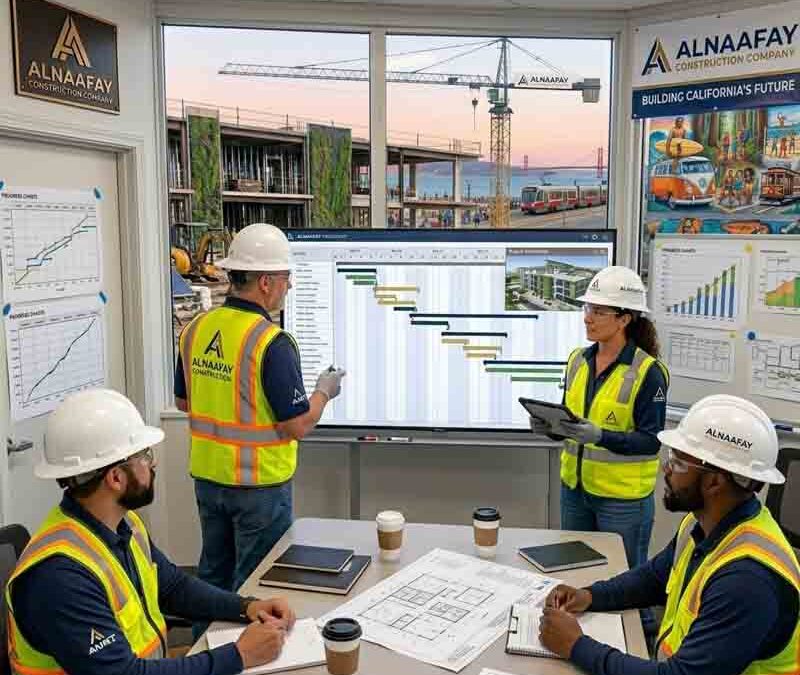
Numbers tell the truth faster than words. A simple dashboard shows planned progress against actual progress, the budget status, and key milestones. With this visual in front of everyone, the conversation stays grounded in facts rather than opinions or guesswork.
Updated Logs and Records
Bring the documents that the team needs to make decisions. These include the submittal log, the procurement log, the request for information (RFI) log, and any open change orders. When these records are current, the meeting moves quickly because no one wastes time chasing missing information.
Action Items With Owners
Every issue raised needs an owner and a deadline. Otherwise, the same problem reappears week after week. A good meeting ends with a clear list of action items, each one assigned to a specific person with a date attached. This single habit separates productive meetings from circular ones.
Written Minutes
Finally, someone must capture the minutes and circulate them promptly. The minutes record what was decided, who is responsible, and by when. We treat minutes as the backbone of the whole process, because they turn talk into a documented commitment everyone can refer back to.
How to Prepare for a Construction Progress Meeting {#how-to-prepare}
Preparation determines whether a meeting succeeds or wastes everyone's time. A meeting that starts with people scrambling for numbers loses momentum before it begins. We never leave that to chance, and neither should you. Below is exactly how we prepare for every construction progress meeting.
- Send the agenda 24 to 48 hours ahead. Give attendees time to gather their updates and prepare their questions before they walk in.
- Update the project dashboard. Pull the latest schedule and budget figures so the data reflects the true status, not last week's numbers.
- Review last meeting's action items. Check what was completed and what still hangs open, so you can hold people accountable from the first minute.
- Collect site reports and photos. Gather daily reports, progress photos, and any incident records that show what actually happened on-site.
- Confirm attendance. Make sure the people who can make decisions will be present, whether in person or by video call.
- Prepare the open-issues list. List every unresolved problem, from a delayed cement delivery to a pending LDA approval, so nothing slips through.
Good preparation also means anticipating the questions that will come up. For a Lahore project, that often means having the latest material price quotes ready, since steel and cement rates can shift week to week. It also means knowing the status of any regulatory approvals, because a stalled permit can derail a schedule fast. When you walk in with answers already prepared, the meeting becomes a tool for decisions rather than a search for information.
How to Run Effective Construction Progress Meetings Step by Step {#step-by-step}
Now we get to the heart of the guide. Here is the step-by-step process we use to run effective construction progress meetings that produce real results rather than wasted hours. Follow these steps in order, and your meetings will stay focused, fair, and productive.
Step 1: Start on Time and Confirm Attendance
Begin the meeting at the scheduled time, every single time. Starting late teaches people that the clock does not matter, and discipline erodes quickly. First, confirm who is present and note anyone absent in the minutes. A quick sign-in keeps a clear record of who took part in each decision.
Step 2: Review the Previous Meeting's Action Items
Before you look forward, look back. Go through every action item from the last meeting and confirm its status. Mark each one complete, in progress, or overdue. Consequently, people learn that their commitments will be checked, which raises follow-through across the whole team.
Step 3: Review the Schedule and Progress
Next, walk through the project schedule using your dashboard. Compare planned progress against actual progress, and identify any tasks that have fallen behind. Where there is a delay, dig into the cause right away. For instance, a slow concrete pour might trace back to a labor shortage or a late material delivery, and naming the cause points you toward the fix.
Step 4: Discuss the Budget and Costs
After the schedule, turn to the money. Review the current budget status, flag any overruns, and discuss any cost changes since the last meeting. On a Lahore project, this is where you address rising material prices head-on. When you catch a cost issue early, you still have room to adjust before it damages the bottom line.
Step 5: Cover Safety and Quality
Then move to safety and quality, and never skip this part. Review any incidents, near-misses, or quality concerns from the past week. Address them openly and agree on corrective steps. A strong safety record protects your people, and it also protects your reputation and your timeline.
Step 6: Work Through Open Issues
Now tackle the open-issues list one by one. For each item, decide on a clear next step, assign an owner, and set a deadline. Keep this part moving. If a single issue starts to swallow the meeting, take it offline and schedule a separate discussion with only the people involved.
Step 7: Confirm New Action Items
Before you close, read back the full list of new action items. Confirm that each one has an owner and a date. This recap removes any doubt about who does what next, and it gives everyone a shared, agreed-upon to-do list to leave with.
Step 8: Set the Next Meeting and Close
Finally, confirm the date and time of the next meeting and close on schedule. Ending on time respects everyone's day and reinforces the discipline of the whole process. Afterward, write up the minutes and circulate them within 24 hours, while the discussion is still fresh.
Common Mistakes to Avoid in Construction Progress Meetings {#common-mistakes}
Even experienced teams fall into bad habits with their meetings. The good news is that these mistakes are easy to fix once you spot them. Below, we name the most common problems and explain how to avoid each one.
Holding a Meeting Without an Agenda
A meeting with no agenda wanders, and it usually runs long. Without a clear plan, the loudest voice sets the direction rather than the project's actual priorities. Always prepare and share an agenda in advance, and stick to it.
Letting the Meeting Run Too Long
A meeting that drags on loses the room. People stop paying attention, and the later items get rushed. Therefore, set a time limit and keep to it. If a topic needs more discussion, take it offline rather than holding the whole group hostage.
Failing to Assign Action Items
Discussion without action is just talk. When no one owns a problem, that problem comes back week after week. Consequently, every issue must end with a named owner and a deadline before you move on.
Skipping the Minutes
A meeting with no written record leaves you exposed. Months later, when a dispute arises over who agreed to what, memory is not enough. We treat minutes as non-negotiable, because they turn every decision into a documented commitment.
Inviting Too Many People
A crowded meeting moves slowly and blurs accountability. When ten people attend a discussion that needs four, the conversation drifts. Keep the list tight, and bring in extra people only when a specific issue requires them.
Ignoring Off-Site Stakeholders
Clients and consultants often cannot attend in person, especially on a fast-moving Lahore project. Skipping their input creates gaps that surface later as expensive surprises. Use a video call or a shared dashboard so off-site stakeholders stay in the loop.
Tools and Templates for Construction Progress Meetings {#tools-and-templates}
The right tools make construction progress meetings faster, clearer, and easier to document. While a notebook and a printed agenda can work, modern software pulls your schedule, documents, and communication into one place. As a result, your meetings rely on live data rather than outdated paper.
A solid construction progress meeting template should always include these sections:
- Meeting details such as project name, date, time, and attendees.
- Previous action items with their current status.
- Schedule review comparing planned progress against actual progress.
- Budget review with any cost changes flagged.
- Safety and quality notes from the past week.
- Open issues with assigned owners and deadlines.
- New action items confirmed before the meeting closes.
- Next meeting date and time.
Beyond the template, the right software platform turns meeting prep into a few clicks. Below are several tools that construction teams rely on to support effective construction progress meetings.
Procore
Procore is one of the most widely used construction management platforms available. It centralizes scheduling, budgeting, RFIs, and documentation, which gives you a ready-made dashboard for every meeting. Because it covers so much ground, it suits mid-sized to large teams managing complex projects. Pricing is custom, and there is no free plan.
Fieldwire
Fieldwire is built for the field first. It helps teams track tasks, view up-to-date plans, and capture progress from any device, even offline. Consequently, it is a strong fit for keeping site updates current ahead of a meeting. Fieldwire offers a limited free plan, with paid plans starting at $44 per user per month.
Autodesk Forma
Autodesk Forma connects design and construction workflows in one platform, including BIM models, RFIs, and field data. For teams already using Autodesk products, it provides a natural way to pull meeting data together. You can start with a free 30-day trial of Forma Build Essentials.
Raken
Raken focuses on daily field reporting, time tracking, and progress photos. Because it makes site updates so easy to capture and share, it feeds your progress meetings with accurate, current information. Pricing starts around $15 per user per month, with a free trial available.
Smartsheet
Smartsheet offers a flexible, customizable platform with Gantt, grid, and calendar views. Although it is not construction-specific, its adaptability lets you build a meeting tracker and action-item log that fit your exact workflow. It works especially well for office-based coordination.
Whichever tool you choose, we recommend running a free trial on a live project first. That way, you see how it performs under real site pressure before you commit.
How a Construction Company in Lahore Can Benefit from Progress Meetings {#lahore-benefits}
A construction company in Lahore faces a specific set of challenges, and effective construction progress meetings address each one directly. We see this on every project we manage in the city. Below, we connect Lahore's most common pressures to the way regular progress meetings solve them.
Managing Volatile Material Prices
Material costs in Pakistan move constantly. Cement, steel, and brick prices respond to inflation, currency devaluation, and import costs, sometimes shifting within a single week. A weekly progress meeting gives you a fixed point to review current rates, adjust procurement plans, and lock in prices before they climb further. Therefore, you protect the budget instead of absorbing surprise increases.
Handling Smog Bans and Regulatory Delays
During smog season, the Lahore Development Authority can impose a temporary ban on construction activity with little warning. Such a halt disrupts schedules and idles crews. A progress meeting lets you plan around these stoppages in advance, reschedule affected tasks, and keep the client informed. As a result, a forced pause becomes a managed delay rather than a chaotic one.
Coordinating Labor and Subcontractors
Labor availability shifts quickly on Lahore job sites, as crews move between projects and seasonal demand changes. Regular meetings keep your subcontractors aligned on what comes next and when they are needed. Consequently, you reduce the gaps and overlaps that waste both time and money.
Keeping Clients Informed
Clients in areas like Bahria Town, DHA Lahore, and Gulberg expect clear, regular updates on their investment. A structured progress meeting, backed by written minutes, gives them confidence that the project is under control. Moreover, that documented record protects both sides if a question or disagreement ever comes up.
Building a Reliable Track Record
Every well-run meeting adds to your reputation. When you consistently deliver projects on time and on budget, clients notice and they refer you to others. We stand behind our work, and our progress meetings are a big part of how we keep that promise on every Lahore project.
Conclusion {#conclusion}
Construction progress meetings are one of the simplest and most powerful tools available to any builder. They catch delays early, keep the field and office aligned, document every decision, and hold people accountable for their commitments. For a construction company in Lahore, where material prices swing and smog bans strike without warning, these meetings turn uncertainty into something you can manage.
The lesson is consistent across every project: teams that prepare properly, follow a clear agenda, assign every action item, and record their minutes are the teams that finish on time and on budget. We do not leave that outcome to chance. Instead, we follow the step-by-step process laid out in this guide on every job, and we back it with software that keeps our data live and our records clean.
Start by building a simple agenda and a meeting template. Then choose a tool that fits your team, run it on a real project, and refine your process meeting by meeting. Do this consistently, and your progress meetings will protect your schedule, your budget, and your reputation on every project you take on.
Frequently Asked Questions {#faq}
What is a construction progress meeting?
A construction progress meeting is a regular gathering, usually weekly, where the project team reviews completed work, upcoming tasks, and any obstacles in the way. It brings together the project manager, site engineer, subcontractors, and often the client. The goal is to surface problems early and keep everyone working from the same information.
How often should construction progress meetings be held?
Most projects benefit from weekly construction progress meetings, since a week is short enough to catch problems early but long enough to show real progress. Larger or more complex projects sometimes meet twice a week. The right frequency depends on the pace and risk of your specific project.
Who should attend a construction progress meeting?
The core attendees are the project manager, the site engineer, key subcontractors, and the client or their representative. Keep the list focused on people who can make decisions or report on progress. Bring in extra specialists only when a specific issue requires their input.
What should be included in construction progress meeting minutes?
Good minutes record the date, the attendees, the status of previous action items, the schedule and budget review, safety and quality notes, open issues, and the new action items with owners and deadlines. Circulate the minutes within 24 hours so the details stay accurate and everyone has a shared record.
How can software help run effective construction progress meetings?
Software pulls your schedule, budget, documents, and communication into one place, which gives you a live dashboard for every meeting. Tools like Procore, Fieldwire, and Raken keep your data current and your records clean. As a result, meetings run on real-time facts rather than outdated paper, and your minutes are easier to capture and share.
How do construction progress meetings help a construction company in Lahore?
They give Lahore builders a fixed point to manage the city's specific challenges. You can review volatile material prices, plan around LDA smog bans, coordinate shifting labor, and keep clients in areas like DHA Lahore and Bahria Town fully informed. The written record from each meeting also protects both you and your client if a dispute arises.
