
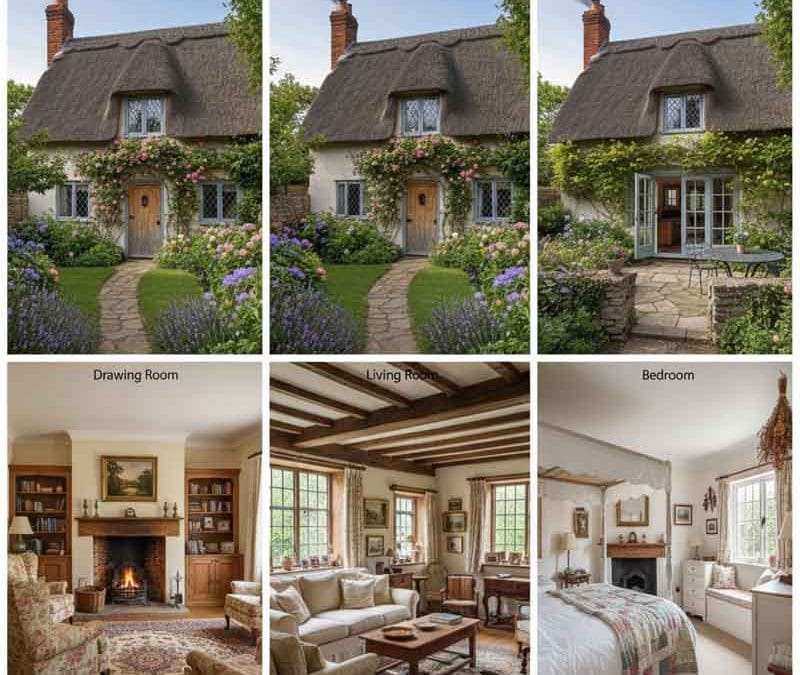
Small English Cottage
A Tale of Timeless Beauty and Gentle Living
Imagine a home that smells of freshly baked bread, where birds sing near your window, and every stone, brick, and bush looks like it belongs in a storybook. That’s the magic of a Small English Cottage.
This type of home may not cover thousands of square feet, but it offers something much greater — peace, joy, imagination, and soul.
In this detailed guide, you’ll discover how these cottages are built, decorated, and loved. You’ll understand what makes them different and why people around the world still dream of owning one. Whether you are a student, teacher, parent, or architect, this blog welcomes you in.
What Is a Small English Cottage?
Let’s begin by explaining what this magical little house truly is.
A Small English Cottage is a cozy, charming house usually found in the countryside of England. Most cottages were originally built many centuries ago. However, even today, people still adore this style for its warmth and simplicity.
They’re famous for:
- Thatched or tiled roofs
- Low ceilings and timber beams
- Bay windows and flower-filled ledges
- Stone or brick exteriors
- Small, neat gardens full of life
- Cosy, natural interiors
Though they are small in size, they hold big stories inside.
Why People Love Living in a Small English Cottage
Out of all the modern homes today — glass villas, smart homes, studio apartments — why does the cottage still win hearts?
Let’s take a closer look.
1. Peaceful and Private
Most cottages are built in quiet settings, away from traffic noise. Therefore, people find peace. These homes are perfect for reading, painting, writing, or just breathing slowly.
2. Beautiful in Every Season
Whether it’s raining, snowing, or the sun is shining bright — the beauty of a Small English Cottage never disappears. Flowers bloom in spring, smoke rises from chimneys in winter, and golden light fills the rooms during summer.
3. Eco-Friendly Living
Since cottages are small and made with natural materials, they often use less energy. Many owners grow their food and keep rainwater tanks or solar lamps — making this lifestyle gentle on the environment.
4. Timeless Design
While new trends rush in and out, English cottages never go out of style. Their natural colors, handmade walls, and fairy-tale shapes stay relevant across generations.
Common Features of a Classic Small English Cottage
Some elements just belong in this design. Let’s explore those must-haves.
1. Thatched or Pitched Roofs
- The roof is usually steep and covered in either thatch, slate, or clay tiles.
- Thatched roofs are made from straw or reeds and are known for their charming, soft shape.
- Tiles give a more updated but still country look.
These roofs protect from weather and provide a cozy view from both inside and outside.
2. Small Windows with Love in Every Corner
- Most cottages have window boxes filled with pansies, daisies, or roses.
- Bay or casement windows open outwards and let in fresh air.
- Windows may be small but are full of charm.
The walls might even feel like they’re hugging the windows gently — nothing feels sharp or cold.
3. Exposed Timber Beams Inside
- Cedar or oak wooden beams run across the ceiling.
- Often, the wood is left natural, showing its true color and age.
- These beams are sometimes over 100 years old.
They hold the past — quite literally — above your head.
4. Nooks, Fireplaces, and Cosy Corners
Every cottage has spaces for feeling warm and safe:
- Built-in book nooks by windows
- Stone fireplaces to gather around
- Low doorways that bend slightly as if they’re bowing
These details create peace that no modern design can copy exactly.
5. A Cottage Garden Full of Joy
Right outside the door, you’ll often find a wild yet lovingly managed garden.
You may see:
- Lavender, thyme, and mint
- Climbing roses over old fences
- Butterflies dancing over sunflowers
Many gardens also have tiny benches, wooden fences, and curving paths made of stone.
Building a Small English Cottage Today – What Does It Take?
If you don’t live in England, can you still build a Small English Cottage?
Absolutely, yes.
Here’s how:
Choose a Quiet Location
- A scenic village, hillside, or green area is ideal.
- Even in a city, look for corners with trees, silence, and nature.
Use Natural Materials
- Stone, brick, wood, lime, and clay are perfect picks.
- Avoid too many plastic or industrial materials if you can.
These natural elements age beautifully — just like old cottages.
Keep It Simple Yet Functional
- One living space
- Two to three small bedrooms at most
- A kitchen with open shelves
- A lounge or reading corner
- Wrap-around garden if possible
Avoid unneeded rooms or complicated roofs.
Small English Cottage Design Ideas (Room by Room)
Let us now walk inside — room by room — and explore lovely cottage layouts and interior design.
Living Room
This is the heart of a Small English Cottage.
- A fireplace stands at one side, either made of stone or brick.
- Two comfy chairs or a fabric sofa often sit in the center.
- Windows bring in a golden light from the garden.
- Books, mugs, soft rugs — everything feels lived in and loved.
The living room may be small, but it always offers space for warm conversation.
Bedrooms
These are often upstairs and may have slanting ceilings.
- Beds are low but strong, with hand-made quilts.
- Wooden chests replace giant wardrobes.
- White curtains float in soft wind.
- Lamps give golden light at night.
If you share this space with someone, you’ll find that quiet becomes louder than noise — in the best way.
Cottage Kitchen
Meals in cottages are made with love, not just recipes.
- Use open shelves instead of closed cabinets.
- Hang ladles, cups, and pans on iron hooks.
- Include a small wooden table near a window.
- Decorate with jars of spices, hand-painted tea sets, and herb pots.
Even if you cook little, the kitchen itself is a warm invitation to slow down.
Bathrooms
These are usually small but full of charm.
- Mini bathtubs or vintage-style sinks
- White tiles, clay pots, linen towels
- Framed mirror with flowers nearby
Sometimes, a skylight above shines light into everything — even the water.
Attic or Loft Space
Many Small English Cottages have hidden attics or lofts.
- These become libraries, prayer rooms, writing areas, or even hidden guest beds.
- Add a ladder or vintage staircase to access them.
This quiet, hidden place can become your secret soul corner.
Can You Mix Modern Elements with English Cottage Style?
You absolutely can, but gently! The balance is important.
Here’s how to do it:
- Keep furniture comfortable, soft, and traditional, even if it has some modern parts.
- Use smart lighting behind old wooden beams.
- Place a flat-screen TV inside a wooden cabinet or disguise it with sliding doors.
- Modern stove? Add a wooden shelf above it with tiny antique pots.
By blending new and old, you build comfort without breaking the magic.
Decorating a Small English Cottage on a Budget
You don’t need to spend a fortune. Cottages actually love budget creativity.
Try These Ideas:
- Old picture frames from family or thrift shops
- Pick fresh flowers and put them in glass bottles
- Use hand-woven floor mats instead of giant carpets
- Pick furniture that’s second-hand but meaningful
- Paint old cupboards in soft pastels — mint green, baby blue, rose, cream
Cottages are about feelings, not price tags. That’s why they always remain special.
Caring for a Cottage-Style Space
Even though it may be small, care makes all the difference.
Tips:
- Keep cobwebs away from ceiling corners (especially low ones)
- Vacuum upholstery gently every week
- Oil the wooden furniture once a year
- Trim plants and clean windows regularly
- Let in fresh air and sunshine every morning
These chores aren’t boring — they’re peaceful. In a way, they remind you to connect with your space.
Can Children Live Happily in a Small English Cottage?
Of course — that’s what they were made for. In fact, many childhood fairy tales were written in such homes.
For kids, cottages offer:
- Comfortable, safe spaces to sleep
- Tiny gardens to explore butterflies and bugs
- Window seats to read or daydream
- Winding stone paths to skip on
Even in a small house, childhood becomes big.
A Cottage Lifestyle Beyond Design
The magic of English cottages doesn’t just live in bricks. It’s in the way of living.
People who live in these homes often:
- Grow their own herbs or tomatoes
- Knit or paint in spare time
- Walk in the nearby field or woods
- Eat together, talk softly, love deeply
So, if you’re searching not just for a house — but for a gentler life — this may be your answer.
Quick Links
Social Icons
Contact Us Information
443 J3 Johar Town Lahore near Expo Center Lahore
