The Rise of Mass Timber: What You Need to Know
Mass timber is changing the way the world builds. From mid-rise offices in the United States to towering residential buildings in Norway, this engineered wood product is becoming one of the most talked-about materials in modern construction. The numbers back this up: the mass timber market is growing at 20 to 30 percent per year in the U.S. alone, and the global market is projected to reach USD 1.8 billion by 2030.
This guide covers everything you need to know — what mass timber is, why it is gaining ground, how it compares to traditional materials, and what challenges still stand in the way. Whether you are an architect, a developer, or simply someone curious about the future of construction, this article gives you a clear, complete picture.
Table of Contents
- What Is Mass Timber?
- Why Mass Timber Is Rising in Popularity
- Key Benefits of Mass Timber Construction
- Types of Mass Timber Products
- How Mass Timber Compares to Concrete and Steel
- Mass Timber and Sustainability
- Challenges of Mass Timber Construction
- Mass Timber in Modern Architecture
- Mass Timber and Construction in Lahore
- The Future of Mass Timber
- FAQs
- Conclusion
1. What Is Mass Timber?
Mass timber refers to a category of engineered wood products made by bonding multiple layers of solid wood together using glue, nails, or wooden dowels. The result is a material that is significantly stronger and more structurally stable than traditional sawn timber, making it suitable for use in large-scale construction projects.
Unlike raw lumber, which is limited in both size and load-bearing capacity, mass timber products can serve as beams, columns, wall panels, and floor slabs. Because the wood is processed and engineered under controlled conditions, designers can rely on consistent strength and performance across every component.
Mass timber construction began in the United States in 2015. Since then, the number of projects has grown steadily. Today, over 2,500 mass timber projects are built or in progress across the U.S., including major corporate offices for companies such as Google, Microsoft, and Under Armour.
The term "mass timber" does not refer to a single product. Rather, it describes a family of engineered wood materials — each with distinct manufacturing methods and structural applications, which we cover in detail in Section 4.
2. Why Mass Timber Is Rising in Popularity
The growth of mass timber is not accidental. Several forces have combined at the same time to create the conditions for rapid adoption.
Building Code Changes Have Opened the Door
For decades, building codes limited the height of timber structures. That changed significantly with the 2021 and 2024 updates to the International Building Code, which now permit mass timber in buildings up to 18 stories tall. These updated codes apply to schools, universities, hospitals, clinics, and government facilities — not just residential or office buildings. More U.S. states are adopting these standards each year, which means more developers can now legally choose mass timber where they could not before.
Government Support Has Accelerated Adoption
Federal programs like the Mass Timber Federal Buildings Act and the USDA's Wood Innovations Grant Program have provided financial support and policy momentum for the mass timber industry. Although broader government funding cuts have created some uncertainty, the programs that directly support mass timber construction continue to move forward.
Corporations Are Choosing Timber for Talent and Aesthetics
Research consistently shows that workers in mass timber buildings report higher levels of well-being. Studies have found that exposure to natural wood surfaces can lower blood pressure and heart rates, reduce stress, and improve overall workplace satisfaction. As a result, companies competing for skilled employees are turning to mass timber as a way to create more attractive workspaces. "We recently interviewed companies in Norway about their use of mass timber buildings," says Edward Becker, associate professor of architecture at Virginia Tech. "They all said they would do it again because of how it makes their employees feel."
Construction Speed Is a Financial Incentive
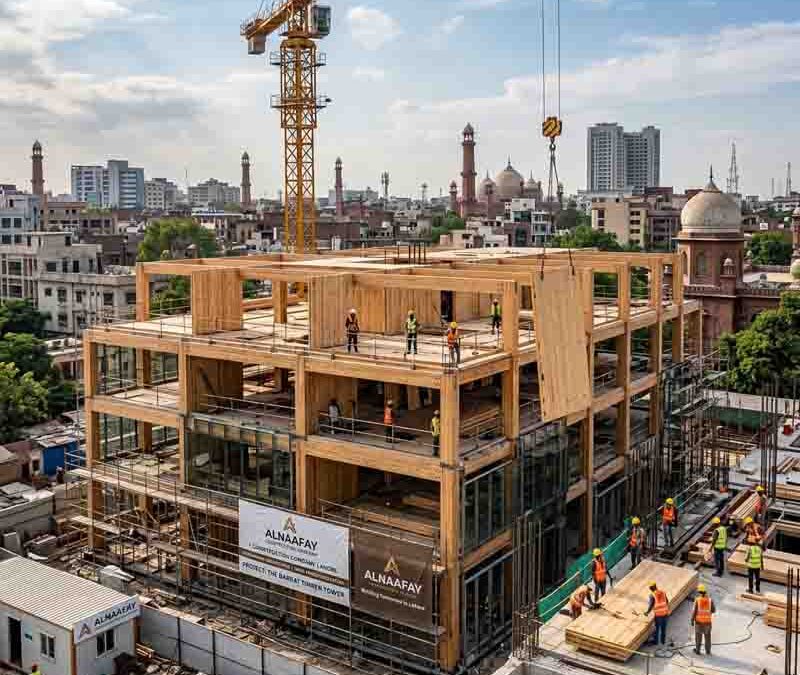
Mass timber components are typically prefabricated off-site and assembled quickly on location. CLT buildings can be erected 25 to 50 percent faster than equivalent steel or concrete structures. This speed translates directly into financial savings — lower labor costs, shorter project timelines, and faster occupancy. For developers, getting tenants into a building sooner means generating rental income sooner.
Sustainability Pressures Are Increasing
Buildings and construction account for 37 percent of global greenhouse gas emissions, according to a 2023 report by the United Nations Environment Program. As governments, investors, and tenants demand lower-carbon buildings, developers are looking for materials that reduce embodied carbon. Mass timber delivers on this front in ways that concrete and steel cannot easily match.
3. Key Benefits of Mass Timber Construction
Mass timber offers several concrete advantages over traditional building materials. These benefits apply across residential, commercial, and institutional projects.
Significant Carbon Reduction
Wood is a natural carbon sink. As trees grow, they absorb carbon dioxide from the atmosphere and store it in their fibers. When trees are harvested and used in construction, that carbon remains locked in the material for the life of the building. Replacing conventional building materials with mass timber has the potential to reduce global emissions by 14 to 31 percent, according to the United Nations. The new Under Armour headquarters in Baltimore, designed by Gensler, saved over 69 percent on embodied carbon by replacing steel and concrete with mass timber.
Faster Construction Timelines
Because mass timber components are cut and shaped in a factory before arriving on site, construction crews spend less time on-site and more time assembling pre-made parts. This prefabrication process reduces waste, lowers labor requirements, and speeds up overall project delivery. Faster delivery means buildings become operational sooner — a measurable financial benefit for any developer.
Lower Foundation Costs
Mass timber is substantially lighter than concrete or steel. A lighter structure places less stress on the ground below, which means foundations can be smaller and less expensive to build. For projects in dense urban areas where soil conditions require careful engineering, this weight reduction can translate into meaningful cost savings.
Improved Occupant Health and Well-Being
Exposure to natural wood surfaces has measurable effects on human health. Research shows that occupants in mass timber buildings report lower stress levels, better mood, and greater productivity. Lease rates in mass timber buildings also tend to be higher, which reflects the premium that tenants place on these environments.
Design Flexibility
Mass timber is available in a range of forms and can be shaped to suit complex architectural designs. Its natural warmth and grain patterns make exposed timber a desirable aesthetic feature. Architects increasingly use it not just as a structural material but as a visible design element that contributes to the character of a space.
End-of-Life Reusability
Unlike concrete, which is typically demolished and landfilled, mass timber structures can be carefully disassembled and the components reused in new buildings. This circular approach reduces waste and extends the value of the material well beyond the first building it serves.
4. Types of Mass Timber Products
Mass timber is not one single product. It is a category that includes several distinct engineered wood systems. Each type has its own manufacturing process, structural properties, and ideal applications.
Cross-Laminated Timber (CLT)
CLT is the most widely recognized mass timber product. It is made by stacking layers of lumber boards in alternating perpendicular directions — similar to the structure of plywood, but much thicker and stronger. Each layer is glued to the next, and the resulting panel is rigid, strong in multiple directions, and suitable for use as walls, floors, and roofs. CLT is especially common in mid-rise and tall timber buildings because of its high structural performance.
Glue-Laminated Timber (Glulam)
Glulam is produced by bonding layers of dimensional lumber together with structural adhesive, with all layers oriented in the same direction. This process creates large, strong beams and columns that can span considerable distances. Glulam is commonly used for structural frames, roof systems, and exposed architectural elements. Because it is manufactured from a special grade of lumber called lamstock, glulam is generally more expensive than CLT.
Nail-Laminated Timber (NLT)
NLT is one of the oldest forms of mass timber. It is made by standing lumber boards on edge and binding them together with nails. The result is a panel that works well as a floor or roof decking system. NLT is less commonly used in new construction today, though it remains relevant in renovation projects involving older industrial buildings.
Dowel-Laminated Timber (DLT)
DLT uses hardwood or softwood dowels to connect layers of lumber without any glue or metal fasteners. This makes it one of the most environmentally pure forms of mass timber, as the final product contains no adhesives. DLT panels are used for floors, walls, and roofs, and they are increasingly popular in projects that prioritize minimal chemical content.
Laminated Veneer Lumber (LVL)
LVL is manufactured by bonding thin layers of wood veneer together with their grain directions aligned in parallel. The resulting material is very consistent in strength and stiffness, making it suitable for use as beams, headers, and columns in a variety of structural applications. LVL is often used alongside other mass timber products in hybrid structural systems.
5. How Mass Timber Compares to Concrete and Steel
Understanding how mass timber stacks up against conventional materials is essential for any developer or builder evaluating their options. The comparison is not simply about cost — it involves carbon footprint, construction speed, structural performance, and long-term durability.
Upfront Cost
Mass timber typically costs 20 to 30 percent more than traditional building materials at the outset, according to research from Virginia Tech and reported by Gensler. However, this premium is partially offset by savings in other areas. Because mass timber is lighter, foundation costs are lower. Because it is prefabricated, labor and schedule costs are reduced. Over the full lifecycle of a building, the cost difference often narrows considerably.
Carbon Footprint
Concrete and steel production are among the most carbon-intensive industrial processes in the world. The cement and steel used in construction accounts for approximately 11 percent of global greenhouse gas emissions. Mass timber, by contrast, stores carbon rather than releasing it. Replacing concrete and steel with mass timber can reduce a building's embodied carbon by 70 to 85 percent, depending on the application.
Structural Performance
Mass timber products like CLT and glulam offer high strength-to-weight ratios that compare favorably with concrete and steel in many applications. However, timber behaves differently under load — it is anisotropic, meaning its strength varies depending on the grain direction. Engineers working with mass timber must account for this through careful structural analysis, connection design, and, in some cases, hybrid construction methods that incorporate steel or concrete elements for specific structural functions.
Fire Resistance
Contrary to common assumption, mass timber performs well in fire conditions. When exposed to flame, the outer surface of a mass timber element chars, and that char layer acts as insulation that slows the spread of heat into the core. This is called predictable char behavior. The structural core of a mass timber beam or column can remain intact and load-bearing for a significant period during a fire event. The International Building Code now reflects this understanding, and fire tests have demonstrated that properly designed mass timber buildings perform comparably to steel and concrete buildings in fire scenarios.
Moisture Vulnerability
Steel and concrete are not affected by moisture in the same way that wood is. Mass timber requires careful detailing to prevent water ingress during construction and over the life of the building. Proper ventilation, water-resistant coatings, overhangs, and vapor barriers are all tools that designers use to manage moisture risk. Prefabrication in controlled factory environments also reduces the amount of time that timber components are exposed to rain on a construction site.
6. Mass Timber and Sustainability
Sustainability is one of the most frequently cited reasons for choosing mass timber, and the environmental case is well-supported by data.
Wood is a renewable resource. When forests are responsibly managed, harvesting timber does not deplete the resource — new trees are planted to replace those that are removed, and over time, healthy forests continue to grow and absorb carbon. In fact, the U.S. has substantial forest resources, and research from the University of Washington projects that national forest cover is expected to grow 18 percent by 2035, even under aggressive harvesting scenarios.
The key to realizing these sustainability benefits is responsible sourcing. The Forest Stewardship Council (FSC) and the Sustainable Forestry Initiative (SFI) both provide certification programs for wood products that come from responsibly managed forests. Architects and builders should verify that mass timber products carry one of these certifications before specifying them in a project. Sourcing from uncertified suppliers risks contributing to deforestation, which undermines the entire environmental case for using wood.
Beyond carbon, mass timber also contributes to sustainability through waste reduction. Factory prefabrication generates less on-site construction waste than conventional building methods. Additionally, the potential for disassembly and reuse at the end of a building's life means that mass timber's environmental value extends across multiple building cycles.
7. Challenges of Mass Timber Construction
Mass timber is a compelling material, but it is not without challenges. Understanding these limitations is important for anyone making decisions about whether and how to use mass timber on a project.
Higher Upfront Costs
As noted earlier, mass timber can cost 20 to 30 percent more than conventional materials on a straight material cost comparison. For developers working with tight margins or financing structures that are sensitive to upfront costs, this premium can be a significant barrier. The lifecycle cost picture is more favorable, but not all project types or financing arrangements allow for that longer-term view.
Fire Safety Regulatory Complexity
While the fire performance of mass timber is well-established through testing, navigating fire safety regulations remains complex. Fire codes vary significantly across jurisdictions. Some require encapsulation of timber surfaces, others permit exposed timber under specific conditions, and requirements for sprinkler systems, fire separation ratings, and allowable building heights differ from one location to another. Designers must work closely with local authorities and, in some cases, submit alternative solutions reports to gain approval for timber structures that fall outside standard code provisions.
High Insurance Premiums
Insurance costs for mass timber buildings can be dramatically higher than for conventional construction. In some markets, premiums for mass timber buildings run up to 800 percent higher than equivalent concrete or steel buildings, according to research from Built by Nature. This cost is driven by insurer concerns about fire and moisture risk. For many developers, the insurance premium alone can tip the financial equation against mass timber, particularly on large commercial projects.
Moisture Management Requirements
Wood is naturally susceptible to moisture damage. Without proper detailing, mass timber can swell, warp, or develop mold and rot over time. Effective moisture management requires careful design work — including overhangs, drainage systems, vapor barriers, and attention to construction sequencing to limit the time that timber is exposed to weather on site. These requirements add design complexity and demand a higher level of precision from the construction team.
Acoustic Performance
Large timber surfaces can create acoustic challenges. Sound can reverberate off exposed wood panels in ways that are not ideal for office environments, classrooms, or residential spaces. Addressing this typically requires the integration of acoustic panels, suspended ceilings, or wood fiber insulation. While solutions exist, they must be planned early in the design process to avoid conflicts with structural elements or aesthetic goals.
Supply Chain Limitations
In North America, the mass timber supply chain is still maturing. The majority of production capacity is concentrated in the Pacific Northwest and a few other regions. Builders in other parts of the country — and particularly outside North America — may face longer lead times, higher transportation costs, and less access to technical support from manufacturers. This supply chain immaturity can create procurement risk, especially for large or complex projects.
8. Mass Timber in Modern Architecture
The most compelling evidence of mass timber's potential is the body of completed buildings that demonstrate what this material can achieve. Several landmark projects around the world are redefining what is possible with engineered wood.
Ascent MKE — Milwaukee, USA
The Ascent MKE building in Milwaukee, Wisconsin, is the tallest mass timber building in both the United States and the world, standing at 284 feet across 25 stories. Designed by Korb + Associates Architects, the building uses sustainably sourced glulam beams and columns alongside CLT floor panels. The wood used throughout the interior is largely left exposed as a testament to biophilic design principles. Because of its extensive use of timber, Ascent is estimated to sequester roughly 7,200 metric tons of CO2. The building's upper 19 floors house 259 luxury apartment units.
Mjøstårnet — Brumunddal, Norway
At 280 feet tall, Mjøstårnet — which translates to "the tower of Lake Mjøsa" — held the title of the world's tallest timber building when it opened in 2019. Designed by Norwegian firm Voll Arkitekter, the structure uses glulam for its load-bearing elements and CLT for all balconies, stairwells, and elevator shafts. Timber used in the building was sourced locally, given the site's proximity to a major forestry hub, which reduced transportation emissions.
HoHo Wien — Vienna, Austria
The HoHo Wien building in Vienna is a 24-floor, 276-foot-tall mixed-use structure in which approximately 74 percent of the construction is sustainably sourced wood. Completed in 2019, it received the City of Vienna Architecture Prize, the Lower Austrian Timber Construction Prize, and the Wienwood Award. The building houses offices, apartments, a hotel, a restaurant, and a wellness area.
Brock Commons Tallwood House — Vancouver, Canada
Located on the University of British Columbia campus, Brock Commons Tallwood House is an 18-story student housing building that was considered the tallest mass timber building in the world when it opened in 2017. The building uses prefabricated engineered timber for its frame, with five-ply CLT panels and glulam columns on every above-grade floor. Its use of lightweight prefabricated elements allowed it to be erected significantly faster than a comparable concrete structure.
T3 Bayside — Toronto, Canada
T3 Bayside is described as North America's tallest mass timber office building, at 138 feet across 10 stories. Designed by Danish firm 3XN in collaboration with WZMH Architects, the project reduces its embodied carbon by an estimated 40 to 50 percent compared to a traditional office building — an amount equivalent to removing approximately 2,700 cars from the road. The project received a 2023 FSC Leadership Award for its use of responsibly sourced glulam beams and CLT panels.
These projects demonstrate that mass timber is not a niche or experimental approach. Rather, it is a viable, proven construction method for large, complex, and high-profile buildings.
9. Mass Timber and Construction in Lahore
The global shift toward mass timber construction is not limited to North America and Europe. As sustainability standards rise and green building certifications become more widely sought, construction companies in emerging markets — including those in Pakistan — are beginning to take notice of the mass timber movement.
Lahore is home to one of Pakistan's most active construction sectors. The city's rapid urban growth, increasing demand for commercial and residential space, and growing awareness of environmental responsibility are all factors that make it a natural fit for exploring newer and more sustainable building approaches.
A forward-thinking construction company in Lahore that understands the principles of mass timber is better positioned to serve clients who want buildings that are durable, energy-efficient, and aligned with global green building standards. While mass timber adoption in Pakistan is still in its early stages, the underlying principles — using renewable materials, reducing embodied carbon, designing for long-term performance — are entirely consistent with responsible construction practice in any market.
Several practical considerations are relevant for construction professionals in Lahore who want to understand or work with mass timber:
- Material sourcing: Mass timber products would likely need to be imported initially, given the current state of engineered wood manufacturing in Pakistan. This adds cost and lead time, and both factors should be accounted for in project planning.
- Structural engineering expertise: Designing with mass timber requires engineers who understand the specific behavior of wood under load, including its anisotropic properties, fire performance requirements, and moisture management needs. Partnering with internationally experienced structural engineers is essential for early projects.
- Regulatory awareness: Building codes in Pakistan do not yet specifically address mass timber in the way that updated codes in the U.S. and Europe do. Any developer or builder pursuing a mass timber project in Lahore would need to work closely with local authorities to establish acceptable engineering standards and fire safety provisions.
- Green building alignment: Mass timber is well-aligned with LEED and other international green building certification standards. For commercial developers in Lahore who are targeting international tenants or investors, mass timber could be a meaningful differentiator.
The global trend is clear: mass timber is moving from experimental to mainstream. Construction professionals in Lahore who develop knowledge and capability in this area now will be well prepared when local demand accelerates.
10. The Future of Mass Timber
The trajectory of mass timber is upward, and the evidence for continued growth is strong.
The global mass timber market was valued at USD 1.185 billion in 2024 and is projected to reach USD 1.814 billion by 2030 at a compound annual growth rate of 7.4 percent. Some projections are more aggressive, with the market potentially surpassing USD 5.7 billion by 2030. Production in Canada and the U.S. has grown from 158,000 cubic meters in 2019 to 393,000 cubic meters in 2023, and the pipeline of projects in design continues to grow.
In 2024, the number of mass timber projects started or completed in the U.S. dipped to approximately 155 — down from 197 in 2023 — largely because high interest rates made development financing more difficult. However, 1,168 additional projects were in the design stage as of December 2024, which signals strong underlying demand waiting for financing conditions to improve.
New manufacturing capacity is coming online. SmartLam North America opened a state-of-the-art glulam manufacturing facility in Dothan, Alabama, and invested an additional USD 24 million to automate its CLT facilities. Timberlab acquired glulam production facilities in Oregon and broke ground on a new CLT facility in Millersburg in early 2025, with operations expected to begin in 2027.
The future of the industry is likely to involve more hybrid buildings — structures that combine mass timber with steel and concrete in ways that maximize the benefits of each material. As Nick Milestone, chief operations officer at Mercer Mass Timber, put it: "I believe that the symbiotic nature of steel and mass timber represents the future of construction in North America."
Additionally, innovations in mass timber products, connection systems, digital fabrication, and moisture protection are reducing the barriers to adoption. As the supply chain matures and more engineers and contractors develop hands-on experience with mass timber, costs will continue to fall and project delivery will become more predictable.
11. FAQs
What is mass timber made from?
Mass timber is made from layers of solid wood bonded together using glue, nails, or wooden dowels. The resulting products — including CLT, glulam, NLT, and DLT — are engineered to provide consistent strength and structural performance across large spans and loads.
Is mass timber safe in a fire?
Yes. Mass timber has inherent fire resistance because it chars slowly and predictably when exposed to flame. The charred outer layer acts as insulation that slows heat penetration into the structural core. Updated international building codes reflect this performance and permit mass timber in buildings up to 18 stories in many jurisdictions. Advanced fire modeling and sprinkler systems provide additional layers of protection where required.
How does mass timber compare to concrete and steel in terms of cost?
Mass timber typically costs 20 to 30 percent more than concrete or steel on a direct material cost basis. However, savings on foundations, reduced labor costs due to prefabrication, and shorter construction schedules offset a significant portion of that premium. Over the full lifecycle of a building, the total cost difference is often narrower than the initial comparison suggests.
Is mass timber sustainable?
Yes, when sourced responsibly. Wood is a renewable resource that sequesters carbon throughout the life of a building. Provided that the timber is certified by organizations like the FSC or SFI — confirming it comes from responsibly managed forests — mass timber is one of the most sustainable structural materials available. End-of-life reusability further strengthens its environmental credentials.
What are the main challenges of building with mass timber?
The primary challenges include higher upfront material costs, complex fire safety regulatory requirements that vary by jurisdiction, significantly higher insurance premiums (up to 800 percent higher in some markets), moisture management requirements, acoustic performance considerations, and a supply chain that is still maturing in many regions.
Can mass timber be used for tall buildings?
Yes. The tallest mass timber building in the world is the Ascent MKE building in Milwaukee, which stands at 284 feet and 25 stories. Buildings like Mjøstårnet in Norway (280 feet) and HoHo Wien in Austria (276 feet) demonstrate that mass timber is viable for significant building heights. Updated building codes in many countries now permit mass timber in structures up to 18 stories tall.
How is mass timber different from regular wood framing?
Regular wood framing — sometimes called stick framing — uses standard dimensional lumber assembled piece by piece on site. Mass timber uses large engineered wood components, manufactured in a factory under controlled conditions, to create structural elements like beams, columns, and panels that perform at a much higher level than standard framing lumber. Mass timber is used in large commercial, institutional, and multi-story residential projects, while stick framing is typically used in low-rise residential construction.
12. Conclusion
Mass timber is not a passing trend. It is a well-supported, technically sound, and increasingly mainstream approach to construction that addresses several of the most pressing challenges facing the building industry — carbon emissions, construction speed, occupant well-being, and material efficiency.
The evidence is clear: over 2,500 projects in the United States alone, a global market growing at 7.4 percent annually, landmark buildings on every continent, and building codes that now formally accommodate timber construction at meaningful scale. The material has earned its place alongside concrete and steel as a serious structural option for major projects.
At the same time, mass timber is not without complications. Higher upfront costs, insurance barriers, moisture management requirements, and supply chain gaps all require careful planning and experienced partners. Developers and construction professionals who understand both the strengths and the limitations of mass timber are best positioned to make informed decisions.
Whether you are designing a commercial office building, planning a residential tower, or simply trying to understand where the construction industry is heading, mass timber is a subject worth knowing well. The foundations of this industry are already in place — and they are made of wood.
