
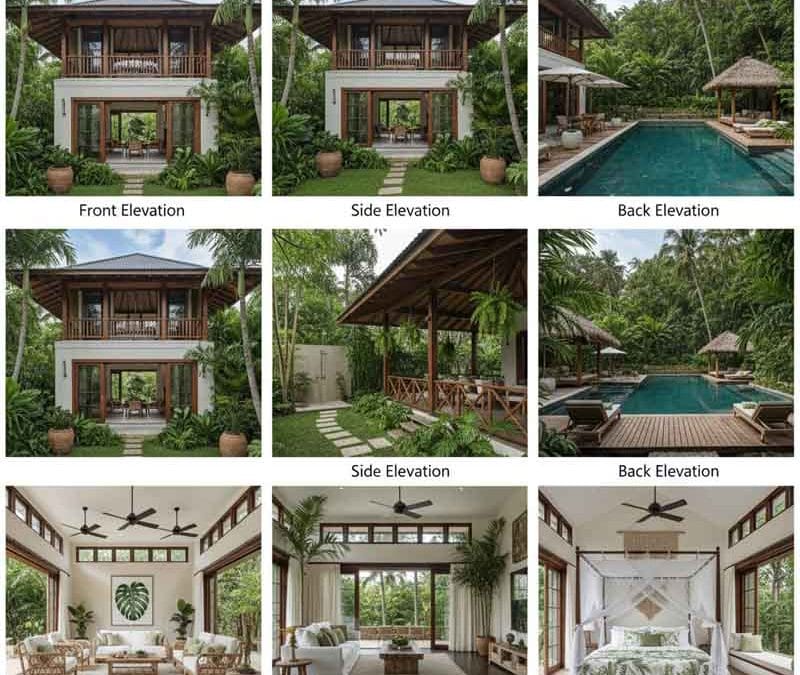
Tropical House Design
A Home Inspired by Rain, Sun, and Green Dreams
Have you ever stood under a coconut tree with cool wind brushing your cheeks and sunlight dancing between the leaves? That little moment of joy, light, and breeze is what Tropical House Design is all about. It’s not just a way of building houses. It is like bringing a peaceful jungle, a beautiful beach, and fresh countryside all into one friendly home.
In this blog, we will explore what makes tropical homes so special. We’ll learn how these homes are built, where they are best suited, and how you can design one—even if you live far from the sea. Along the way, we’ll use simple words so that even a curious child can follow every idea. So, let’s take a walk through paradise—one room at a time.
Understanding the Beauty of Tropical House Design
Before we go deeper, let’s first ask a simple question: What does “tropical” mean?
The tropical region includes countries near the equator — such as Thailand, Indonesia, Sri Lanka, Brazil, the Philippines, and even southern parts of India and Pakistan. These places often have:
- Bright sunshine
- Heavy rains
- Warm air throughout the year
- Lush green trees and plants
So, a Tropical House Design is made to enjoy this type of weather — not fight it. Instead of shutting out the sunlight or hiding from the rain, these homes welcome nature with open arms.
Why Choose Tropical House Design Over Other Styles?
There are many ways to build a house — modern, classic, rustic, colonial, or futuristic. However, tropical homes have a special charm, and not just because of their looks.
Let’s look at a few strong reasons to choose this design:
1. Tropical Houses Stay Cool Naturally
Because tropical homes use smart ventilation, they stay cool without needing heavy air conditioning. Large windows, tall ceilings, and special roof styles allow hot air to escape while fresh air flows in.
2. Close Connection with Nature
Tropical House Design brings people closer to greenery, water, and sunlight. You may find an indoor courtyard, an open shower under the sky, or even a garden inside your house!
3. They Are Good on the Eyes and the Soul
With wooden beams, stone paths, palm trees, and natural walls, tropical homes feel alive. They don’t look artificial or cold. Instead, they feel warm, free, and welcoming.
4. Perfect for Rainy Climates
The shapes of roofs and choices of materials work well in places with a lot of rain. These homes drain water easily and dry up fast — no leaks, no damage.
Planning a Tropical House Design – Start with the Basics
Designing a tropical-style house is not about copying pictures from the internet. Instead, it’s about understanding your space, the climate, and your life.
Let’s walk through the main steps of planning a real tropical home.
Location: Where Does Tropical House Design Work Best?
- Tropical or Subtropical Climates: Warm and humid places where rains can be heavy but regular.
- Near Forest, Sea, or Mountains: Homes surrounded by nature look and feel better in this theme.
- Even in a city, if designed properly, a tropical-style home can still feel fresh.
Layout: Open, Airy, and Easy to Walk Through
Start with an open floor plan. This allows air and light to move freely from one room to the next.
Examples:
- Combine living and dining areas
- Add wide windows in every room
- Make space for a central indoor garden or water feature
- Use corridors and breezeways that aren’t narrow or closed
You don’t want to feel boxed in — instead, your home must breathe.
Materials Used in Tropical House Design
What a house is made of decides how it feels. In tropical homes, natural materials are key. These are both beautiful and practical.
Here are some commonly used materials:
Wood
Used for beams, windows, doors, furniture, ceilings, and floors. Teak, bamboo, rosewood—all give warmth and charm.
Stone
Tropical homes often include rough-cut stones for paths, corners, and flooring. They also keep rooms cooler.
Thatched Roof or Tiles
Old tropical designs used palm leaves. Now, people use clay tiles with slopes for rain to drain quickly.
Rattan and Cane
Found in furniture and baskets, these add texture and softness to living rooms and patios.
Open Spaces and Natural Light in Tropical Home Design
Sunlight is precious. So in these homes, you don’t lock it out — you invite it in.
Ways to bring light inside:
- Skylights
- Glass walls or sliding doors
- Large windows with bamboo blinds
- Mirrors that reflect sunshine to darker corners
At the same time, don’t forget shade. You can use verandas, pergolas, or shades to prevent the space from becoming too hot.
Nature Inside a Tropical House – Not Just Outside!
One of the most special things about Tropical House Design is how it blends the inside space with the world outside.
Here’s how it’s done:
Indoor Gardens
Have a tiny jungle inside your home. Use a raised soil patch or pots to grow ferns, mini palms, or even bananas.
Water Features
You can have a small fish pond, a stone water fountain, or a long water path running across open courtyards.
Open-Air Bathrooms
Shower under the sky! Use partial roofs, stone flooring, bamboo fences, and lots of leafy plants.
Plant Walls
Cover one wall with climbers or grow plants in built-in boxes. This “green wall” keeps the home cooler too.
Furnishing and Decor in Tropical House Design
Furniture and decoration must match the theme: Earthy, Natural, and Breezy.
Here’s what works best:
- Wooden furniture with curves—not sharp or boxy designs
- Cane or wicker chairs
- Cotton curtains that wave gently with the wind
- Floor cushions and bean bags
- Patterned throw pillows in colors of leaves, flowers, or sea
Avoid plastic or highly polished things. Instead, go for handwoven, handmade, or clay-based items.
Colors That Sing in a Tropical Home
Color plays a big role in how a home feels. Tropical homes use joyful and calming colors both.
Most common shades include:
- Soft whites and light beiges for walls
- Leafy greens and aqua blues for cushions and decor
- Deep browns from wood
- Sunset oranges and floral pinks as highlights
- Natural grays in stone and pebbles
These colors reflect summer vibes and bring a happy yet peaceful energy to the space.
Roofs in Tropical House Design: Built for Rain and Beauty
Tropical homes must survive rain, wind, and sunlight. So the roof design is very important.
Good tropical roofs:
- Are angled or sloped, never flat
- Use clay tiles that cool down fast
- Sometimes have overhanging eaves to protect walls and windows
- Can be double-layered to trap heat and improve airflow
This kind of roof gives the house a unique look as well as practical strength.
Outdoor Living is a Key Part of Tropical House Design
Tropical life is meant to be lived half inside, half outside.
Here’s how to create that vibe:
Verandas and Sit-outs
Add wooden benches, indoor plants, fairy lights, or hanging lanterns.
Deck or Patio
Use stone or wood flooring. Include a dining table or swing bench outside.
Garden Path
Use pebbles, stepping stones, or wooden boards between flowerbeds or grassy patches.
Tropical House Ventilation: Letting the House Breathe
Hot areas need good cross-ventilation. If not managed well, your house may become too warm and uncomfortable.
Ideas that help:
- Build windows across from each other in every room
- Use vent blocks or wooden slats under ceilings
- Add oblong gaps above indoor doors
- Plant trees that allow breeze under but give shade on top
This keeps the air fresh and light moving — even when it’s hot outside.
Room by Room – Tropical House Design Layout Ideas
Let’s go room by room to build your perfect tropical paradise.
Living Room
- Open to nature
- Rattan sofas with soft cushions
- Wooden coffee table
- Ceiling fans with leaf-shaped blades
- Jute rug or mat on the floor
Kitchen
- Open kitchen and dining area
- Brick or tile wall behind stove
- Hanging baskets with herbs
- Wooden cabinets
- Long windows above the sink
Bedroom
- Poster bed with netting (mosquito nets look dreamy too)
- Soft pastel or floral bedsheets
- Foldable chairs or reading bench
- Shelves with shell or stone decor
Bathroom
- Indoor plants near sink
- Open-roof part above shower
- Stone or bamboo ladder to hold towels
- Use water-resistant lighting
How to Care for a Tropical Style Home
Like every good thing, tropical homes need love and care.
- Clean large windows and glass walls every week
- Trim indoor and outdoor plants carefully
- Keep roofs clear of leaves to prevent leaks
- Oil and polish wooden parts twice a year
- Dust ventilator grilles and fan blades often
These steps will keep your home clean and natural, all year round.
Is Tropical House Design Expensive? Let’s Talk Budget
A tropical-style home doesn’t have to cost more than others.
In fact, it can save you money in energy bills by staying cooler naturally.
How to reduce cost:
- Use local wood and stone
- Buy handcrafted decor at local markets
- Create plant-based walls and roofs
- Avoid too many machines (like air conditioners or heaters)
When designed right, a tropical house gives more value for less spending — offering beauty and comfort.
Who Should Choose a Tropical House Design?
This home style is perfect for those who:
- Love nature and greenery
- Want fresh air and natural light
- Prefer calm over clutter
- Live in warm climates with heavy rain
- Enjoy open living and outdoor life
If this sounds like you, Tropical House Design will feel just right.
Quick Links
Social Icons
Contact Us Information
443 J3 Johar Town Lahore near Expo Center Lahore
