
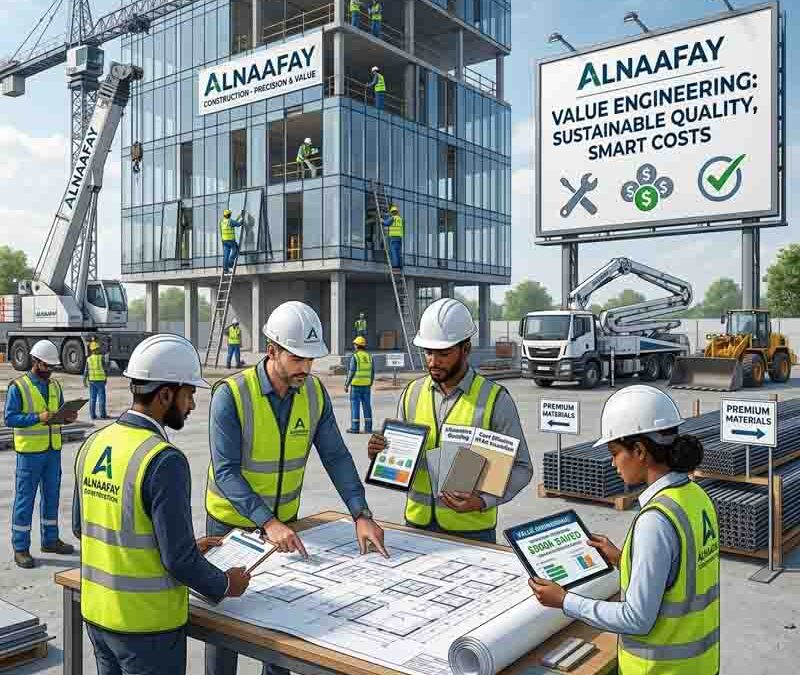
Value Engineering: How to Cut Costs Without Cutting Corners
Every construction project faces the same pressure: deliver quality results without exceeding the budget. That tension is real, and it is where value engineering becomes one of the most important tools a project team can use. Rather than slashing costs blindly, value engineering takes a structured, methodical approach to reducing expenses while preserving — and often improving — project quality and performance.
This guide covers everything you need to know about value engineering in construction. From its origins and core principles to practical strategies for materials, design, and construction methods, you will find clear, actionable information you can apply to your next project. By the end, you will understand exactly how value engineering works, when to use it, and how to avoid the mistakes that prevent it from delivering real results.
Table of Contents
- What Is Value Engineering?
- The History and Origin of Value Engineering
- Key Principles of Value Engineering
- When Should You Apply Value Engineering?
- Value Engineering vs. Cost Cutting: What Is the Difference?
- How to Apply Value Engineering in Construction
- Value Engineering Strategies for Materials
- Value Engineering Strategies for Design
- Value Engineering Strategies for Construction Methods
- How Value Engineering Affects Project Quality
- Common Mistakes to Avoid in Value Engineering
- Construction Company Lahore
- Frequently Asked Questions
- Conclusion
1. What Is Value Engineering?
Value engineering is a systematic method for analyzing a construction project's components, functions, and costs to identify opportunities for cost savings or performance improvements — without reducing the quality of the final product.
The core idea behind value engineering is straightforward: every element of a project exists to perform a specific function. If that function can be achieved at a lower cost through a different material, a modified design, or a more efficient construction method, then the project gains value. The formula that captures this concept is simple:
Value = Function ÷ Cost
When the function stays the same and the cost decreases, value increases. When function improves and cost stays the same, value also increases. Value engineering pursues both outcomes simultaneously through a disciplined, team-based process.
Value engineering is not about spending less on everything. Instead, it is about spending smarter — making deliberate choices that maintain the project's intended performance while eliminating waste, redundancy, and unnecessary expense.
2. The History and Origin of Value Engineering
Value engineering originated during World War II, and its roots are surprisingly practical. Lawrence Miles was working as a purchasing engineer for General Electric at the time, responsible for sourcing raw materials for manufacturing. Because the war created severe material shortages, Miles was forced to find alternative materials that could serve the same function as the originals.
What he discovered changed the way engineers thought about cost and function. Some of the substitutes he found were not only cheaper — they actually performed better than the materials they replaced. This realization led Miles to develop a formal method he called "value analysis," which later became known as value engineering.
Since its introduction in the late 1940s, value engineering has expanded well beyond manufacturing. The construction industry adopted it widely, and today it is used across commercial, residential, and institutional projects around the world. The Society of American Value Engineers International (SAVE International) now defines value engineering as a "function-oriented, systematic, team approach to providing value in a product, system, or service."
The method has been refined considerably since Miles first applied it at General Electric. However, the core insight remains the same: before you spend money on any element of a project, make sure it is the most cost-effective way to deliver the required function.
3. Key Principles of Value Engineering
Effective value engineering rests on four core principles. Each one shapes how the process works in practice, and together they distinguish value engineering from simple budget cutting.
Function Over Cost
The starting point in value engineering is always function, not price. Before evaluating any alternative, the team must fully understand what each project element is supposed to do. Only once the required function is clearly defined can the team explore lower-cost alternatives that deliver the same — or better — performance.
For example, if a design calls for a custom-fabricated steel component, the first question is: what must this component do? If standard prefabricated steel serves the same structural function at a lower price, then the substitution makes sense. Critically, the decision is driven by function — not by cost alone.
Systematic Approach
Value engineering follows a defined sequence of phases: information gathering, function analysis, creative speculation, evaluation, cost analysis, and development. Each phase builds on the previous one. This structure prevents the team from jumping to solutions before fully understanding the problem, and it ensures that every proposed change is evaluated rigorously before it is approved.
Without a systematic approach, cost-saving discussions tend to become reactive and unfocused. The structured process keeps the team disciplined and the decisions defensible.
Stakeholder Collaboration
Value engineering is a team effort. Architects, engineers, contractors, cost estimators, project managers, and clients all bring different perspectives to the process. Architects may identify design adjustments that reduce complexity without sacrificing aesthetic quality. Contractors may spot construction methods that reduce labor time. Cost estimators can quantify the financial impact of each proposed change.
Projects that conduct value engineering in silos — with only one discipline involved — miss the cross-functional insights that produce the best results. Broad collaboration is not optional; it is fundamental to the method.
Psychological Safety
For value engineering to generate creative solutions, team members need to feel comfortable proposing ideas without fear of criticism. Unconventional suggestions often lead to the most significant cost savings, but they only surface when people feel free to speak openly.
At the same time, psychological safety does not mean accepting every idea without scrutiny. The structured evaluation phases ensure that every proposal is tested against cost, feasibility, and performance standards before it moves forward.
4. When Should You Apply Value Engineering?
Timing matters enormously in value engineering. The earlier in a project the process begins, the greater the potential for meaningful cost savings. Conversely, the later value engineering is introduced, the less impact it can have — and the more disruption it causes.
Conceptual Design Phase
The conceptual design phase offers the highest return from value engineering. At this stage, the design is still flexible. Major decisions about layout, structural systems, and building materials have not yet been locked in, so alternatives can be explored without triggering expensive redesigns. Teams that begin value engineering here can shape the project's fundamental approach rather than simply adjusting details later.
Schematic Design Phase
The schematic design phase is still an effective time for value engineering. The broad design direction has been established, but detailed specifications have not yet been finalized. During this phase, value engineering can refine material selections, streamline structural approaches, and eliminate design elements that add cost without adding meaningful function.
Preconstruction Phase
During preconstruction, value engineering shifts toward finalizing specifications and procurement decisions. The team can compare suppliers, evaluate prefabricated alternatives, and negotiate contracts that reflect the most cost-effective approach for each scope of work. This phase also allows contractors to offer practical input on construction methods before they are committed to.
During Construction
Value engineering can still be applied during the construction phase, though its impact is more limited. Unexpected site conditions, material availability issues, or budget pressure may create opportunities for mid-project substitutions or method changes. These decisions must be handled carefully to avoid delays and rework.
The key rule: if applying value engineering at a given stage causes more disruption and cost than it saves, it is no longer serving its purpose. Safety is never a valid area for compromise, regardless of when value engineering takes place.
5. Value Engineering vs. Cost Cutting: What Is the Difference?
Value engineering and cost cutting are frequently confused, but they are fundamentally different approaches. Understanding that distinction is essential for anyone who wants to use value engineering effectively.
Factor | Value Engineering | Cost Cutting |
|---|---|---|
Primary goal | Maximize value (function ÷ cost) | Reduce expenditure |
Effect on quality | Maintains or improves quality | Often reduces quality |
Process | Systematic and structured | Reactive and unstructured |
Focus | Function and performance | Price and budget |
Typical timing | Early in design and planning | During or after construction |
Stakeholder involvement | Broad, collaborative team | Often unilateral decisions |
Cost cutting starts with a budget target and works backward, reducing expenses wherever possible to meet that number. Quality is frequently sacrificed in the process. Cost cutting tends to be reactive — it happens when a project is already over budget, and decisions are made quickly under pressure rather than through careful analysis.
Value engineering, by contrast, starts with function. The question is not "how do we spend less?" but rather "how do we deliver the required function at the lowest possible cost?" This distinction means value engineering can actually lead to better outcomes than the original design, not just cheaper ones.
A useful way to think about it: cost cutting removes value from a project. Value engineering restructures how value is delivered.
6. How to Apply Value Engineering in Construction
Value engineering in construction follows a six-phase methodology. Each phase produces a specific output that feeds into the next. Teams that follow this process consistently are far more likely to achieve meaningful, sustainable cost savings than teams that skip steps or rush through the analysis.
Phase 1: Information Gathering
The first phase involves collecting all available project data. This includes drawings and specifications, material takeoffs, cost estimates, schedule information, and a clear statement of the client's goals and expectations. The objective at this stage is to develop a thorough understanding of every element of the project before any changes are proposed.
Phase 2: Function Analysis
In the function analysis phase, the team examines each project component and identifies what it must do. Functions are classified as either primary — essential to the project's purpose — or secondary — desirable but not critical. This classification helps the team prioritize where to focus value engineering efforts. Elements with high cost and secondary functions are the best candidates for alternatives.
Phase 3: Creative Speculation
During this phase, the team generates as many alternative solutions as possible. No idea is eliminated at this stage. The goal is to produce a broad range of options — different materials, design configurations, and construction methods — that could potentially deliver the required function at a lower cost. Brainstorming sessions that include multiple disciplines tend to produce the most innovative options.
Phase 4: Evaluation
The evaluation phase applies practical criteria to the ideas generated during brainstorming. Each alternative is assessed for technical feasibility, compliance with building codes and safety standards, impact on schedule, and overall effect on the project. The weakest options are eliminated, and the strongest candidates are carried forward for detailed cost analysis.
Phase 5: Cost Analysis
This phase answers two critical questions for each remaining alternative: what will it cost today, and what will it cost over the life of the building? Initial cost savings that lead to high maintenance or operating costs over time do not represent genuine value. Accurate cost data — ideally from a current, localized cost database — is essential for making reliable comparisons at this stage.
Phase 6: Development and Presentation
In the final phase, the selected alternatives are developed into detailed, actionable recommendations. The team prepares drawings, specifications, cost estimates, and implementation plans for each recommendation. These are then presented to the project owner and other stakeholders for review and approval. Clear, persuasive communication is critical here — decision-makers need to understand not just what is being proposed, but why it represents better value than the original design.
7. Value Engineering Strategies for Materials
Material selection is one of the most productive areas for value engineering because materials typically represent 40 to 50 percent of hard construction costs. Small changes in material specifications can produce significant savings without any reduction in structural performance or durability.
Material Substitution
Substituting one material for another that performs the same function at a lower cost is the most direct form of value engineering. For example, replacing custom-fabricated steel components with standard prefabricated steel sections can reduce both material costs and the labor required for installation. The key is verifying that the substitute material meets the same structural and performance requirements as the original.
Similarly, using modular metal framing in place of custom-fabricated alternatives can deliver equivalent structural integrity at a meaningfully lower price point — particularly when combined with off-the-shelf connection details that reduce field labor.
Lifecycle Cost Evaluation
Not all material substitutions that appear cheaper upfront represent genuine savings. A material that costs less to purchase but requires frequent maintenance, replacement, or specialist repair can cost more over the life of the building than a more durable alternative. Therefore, value engineering for materials must account for lifecycle cost — not just the initial purchase price.
For instance, a higher-grade roofing material that costs 20 percent more to install but lasts twice as long typically delivers better lifecycle value than a cheaper option that requires replacement within half the time.
Local Sourcing
Sourcing materials locally reduces transportation costs, shortens delivery lead times, and supports schedule reliability. In many markets, locally produced materials are competitively priced compared to imported alternatives. Furthermore, local suppliers are often easier to coordinate with when substitutions or urgent deliveries are needed mid-project.
8. Value Engineering Strategies for Design
Design decisions establish the framework for all costs that follow. Consequently, value engineering applied to the design phase tends to produce larger savings than changes made at later stages. The goal is not to compromise the building's appearance or function, but to eliminate over-engineering and unnecessary complexity.
Simplifying Design Elements
Complex architectural features add cost in two ways: the materials themselves cost more, and the labor required to install them is more expensive. Value engineering examines which design elements contribute meaningfully to the building's function and aesthetic, and which add cost without proportional benefit.
Redesigning a building layout to reduce the amount of cut-and-fill required on a sloped site, for example, can minimize earthmoving activities that carry significant cost. Similarly, standardizing window sizes across a facade allows for off-the-shelf units rather than custom-fabricated ones — a change that can reduce both material and installation costs without affecting the building's performance.
Eliminating Over-Engineering
Over-engineering occurs when a structural system is designed with more capacity than the project actually requires. This is common when early design estimates are conservative, and those conservative assumptions are not revisited as the design develops. Value engineering identifies these situations and right-sizes the structural approach to match actual load requirements.
For example, if a structural analysis confirms that a lighter steel section meets all code requirements, there is no functional reason to use a heavier section. The function is identical; the cost is lower.
Design for Constructability
Some design decisions that look efficient on paper are difficult and expensive to build in practice. Value engineering that involves the contractor early in the design process — a practice sometimes called design-assist — allows the team to identify constructability issues before they become field problems. Changes made during design are far less expensive than changes made during construction.
9. Value Engineering Strategies for Construction Methods
Construction methods — how a building is assembled on site — represent a third major area for value engineering. Advances in prefabrication, modular construction, and energy-efficient systems have significantly expanded the range of available alternatives.
Prefabrication and Modular Construction
Prefabrication involves manufacturing building components in a controlled factory environment and then transporting them to the site for installation. Because factory conditions allow for tighter quality control and more efficient production, prefabricated components often cost less to produce and take less time to install than site-built alternatives.
Modular bathroom pods, for instance, are prefabricated off-site as complete, finished units and then installed in a single operation. Compared to building bathrooms trade-by-trade on site, modular pods can reduce installation time significantly — cutting both labor costs and schedule duration.
Energy-Efficient Systems
Implementing energy-efficient building systems such as LED lighting, high-performance insulation, and advanced HVAC equipment represents a form of value engineering that delivers savings over the building's operating life. Although these systems may carry a higher upfront cost in some cases, the reduction in long-term energy expenditure often justifies the initial investment.
Value engineering for energy efficiency therefore requires lifecycle cost analysis, not just a comparison of initial installation costs. Projects that account for operating costs in their analysis consistently make better decisions about mechanical and electrical systems.
Alternative Structural Systems
The structural system chosen for a building has a direct impact on material costs, construction speed, and long-term maintenance requirements. Value engineering examines whether alternative structural approaches — such as composite decking, cross-laminated timber, or post-tensioned concrete — can deliver the required structural performance at a lower total cost than the originally specified system.
Each alternative carries its own set of tradeoffs in terms of span capability, fire resistance, acoustic performance, and construction complexity. Therefore, thorough evaluation is essential before any structural substitution is confirmed.
10. How Value Engineering Affects Project Quality
One of the most persistent misconceptions about value engineering is that it reduces quality. In practice, well-executed value engineering maintains quality and frequently improves it. Understanding why requires a clear distinction between cost and quality.
Cost and quality are not the same thing. A high-cost material is not automatically a high-quality material. Similarly, a lower-cost alternative is not automatically inferior. Value engineering evaluates materials and methods based on their functional performance — durability, structural integrity, maintenance requirements, and compliance with applicable standards — not their price tag alone.
When value engineering is applied correctly, it removes expenditure that does not contribute to functional performance. Unnecessary complexity, over-specified materials, and redundant structural capacity all cost money without adding quality. Eliminating them improves cost efficiency without affecting the building's performance.
There is, however, a clear boundary. Value engineering must never compromise building safety. Any proposed change that would violate building codes, reduce structural capacity below code minimums, or otherwise jeopardize the health and safety of the building's occupants must be rejected immediately. Safety is not a variable in the value formula — it is a fixed constraint that the entire value engineering process operates within.
In addition, value engineering can drive quality improvements when it identifies better-performing alternatives that happen to cost less. Lawrence Miles discovered this at General Electric during World War II: some substitute materials were not just cheaper, they were better. The same dynamic applies in construction, particularly as new materials and construction technologies continue to develop.
11. Common Mistakes to Avoid in Value Engineering
Value engineering is a powerful process, but it only delivers results when it is applied correctly. Several common mistakes consistently limit its effectiveness — or undermine it entirely.
Starting Too Late
The most damaging mistake is introducing value engineering after the design is largely complete. At that point, the team is not engineering value into the project — it is scrambling to recover budget. Late-stage changes typically trigger redesign costs, schedule delays, and contractor disruption that consume much of whatever savings were identified. Value engineering at the schematic stage produces far greater returns than value engineering at 90 percent construction documents.
Treating It as Simple Cost Cutting
When project teams approach value engineering as a budget-reduction exercise rather than a function-analysis process, the results are predictable: quality suffers, disputes arise, and the savings claimed on paper do not materialize in practice. Value engineering must begin with a clear understanding of what each project element needs to do. Without that foundation, the process is just cost cutting with better branding.
Excluding Key Stakeholders
Value engineering conducted by a single discipline — or by the project owner alone without input from the design and construction team — misses the cross-functional insights that make the process effective. Contractors know what is difficult and expensive to build. Engineers know what is structurally necessary. Architects know what design elements can be modified without affecting the project's intent. All of these perspectives are necessary for value engineering to work.
Ignoring Lifecycle Costs
Focusing exclusively on initial construction costs is a common and costly error. A material or system that costs less to install but more to maintain, replace, or operate over time often delivers negative total value. Every value engineering proposal must be evaluated for its full lifecycle cost — not just its impact on the current project budget.
Failing to Document Decisions
Value engineering generates a significant volume of proposals, evaluations, and decisions. Without clear documentation, approved changes can be lost in communication, and rejected alternatives can resurface later in ways that cause confusion and rework. Every decision made during the value engineering process should be recorded in writing, with the rationale clearly stated and communicated to all relevant parties.
Compromising on Safety
No cost saving justifies a reduction in structural safety or a violation of applicable building codes. Any value engineering proposal that affects safety-related elements must be reviewed by qualified engineers and verified against regulatory requirements before it is considered. This is not a procedural formality — it is a fundamental constraint that protects the building's occupants and the project team's liability.
12. Construction Company Lahore
We are a construction company based in Lahore, and value engineering is a core part of how we manage every project we take on. We do not treat it as an emergency measure when budgets run over. We apply it systematically from the earliest stage of design, because that is when it delivers the most return.
Our team includes in-house architects, structural engineers, cost estimators, and experienced site managers who collaborate on value engineering decisions throughout the project lifecycle. That in-house structure matters. When your architect, engineer, and contractor are all working under one roof, the cross-disciplinary collaboration that effective value engineering requires happens naturally — rather than being forced through formal meetings between separate firms.
How We Apply Value Engineering to Materials
We evaluate material specifications on every project using both initial cost and lifecycle cost. When a substitute material meets the same functional and performance requirements at a lower price, we present that option to you with a clear comparison — including installation cost, expected service life, and maintenance requirements — so you can make an informed decision.
Our procurement relationships with local and regional suppliers across Lahore allow us to source competitive pricing without compromising on material quality. Additionally, we prioritize locally available materials where they meet project specifications, which reduces transportation costs and delivery lead times.
How We Apply Value Engineering to Design
We involve our contractors and estimators in the design review process before drawings are finalized. This allows us to identify constructability issues and over-engineered elements early — when changes cost very little — rather than discovering them during construction, when changes are expensive and disruptive.
Specifically, we look for structural systems that can be right-sized to actual load requirements, design details that can be simplified without affecting performance, and layout configurations that reduce earthwork or complex trades coordination. Every recommended change is documented with a cost comparison and a functional performance assessment before it is presented to you for approval.
How We Apply Value Engineering to Construction Methods
We evaluate prefabrication and modular alternatives on every eligible project. Where factory-produced components offer equivalent performance at lower total cost — accounting for both material price and installation labor — we recommend them with full supporting documentation. We also assess energy-efficient mechanical and electrical systems using lifecycle cost analysis, not just upfront pricing, so your building's long-term operating costs are factored into the decision from the start.
What You Can Expect When You Work With Us
- A value engineering review integrated into every design phase, not added as an afterthought
- Written documentation of every value engineering proposal, including the functional performance assessment, cost comparison, and recommended decision
- Cross-disciplinary collaboration among architects, engineers, and contractors throughout the design and preconstruction process
- Material recommendations supported by lifecycle cost analysis, not just initial price
- Clear boundaries around safety: no proposed change that affects structural integrity or code compliance moves forward without full engineering verification
We serve clients across Lahore, including projects in DHA Lahore, Bahria Town, Lake City, and Etihad Town. Whether your project is residential, commercial, or mixed-use, we apply the same structured value engineering process from the first design meeting through final handover.
Contact us today to schedule a consultation. We will walk you through how value engineering applies to your specific project and show you where the real opportunities for cost savings exist — without cutting corners.
13. Frequently Asked Questions
What is value engineering in construction?
Value engineering in construction is a systematic process for analyzing a project's components, functions, and costs to identify ways to reduce expenses without compromising quality or performance. It uses the formula Value = Function ÷ Cost as its guiding principle and follows a structured, multi-phase methodology that involves architects, engineers, contractors, and project owners working collaboratively.
How is value engineering different from value management?
Value engineering focuses specifically on analyzing and optimizing individual project components and functions. Value management is a broader strategic process that addresses overall project goals, program objectives, and client priorities. Value engineering is often conducted as part of a value management program, but the two are not the same thing. Value engineering is more technical and component-focused; value management is more strategic and goal-focused.
When is the best time to start value engineering on a construction project?
The best time to begin value engineering is during the conceptual or schematic design phase, before detailed specifications have been finalized. Research consistently shows that the potential savings from value engineering decrease as a project progresses through design and into construction. Changes made during early design cost little to implement; changes made during construction can trigger significant rework costs that offset whatever savings were identified.
Does value engineering reduce the quality of a project?
Not when it is applied correctly. Properly executed value engineering maintains or improves project quality by eliminating waste, over-engineering, and unnecessary cost — not by reducing performance or durability. However, value engineering that is applied as simple cost cutting, without rigorous function analysis, can result in quality reductions. The distinction lies in the process: function-based analysis protects quality; reactive budget cutting does not.
What types of projects benefit most from value engineering?
Value engineering delivers meaningful results across all project types, but the largest savings tend to occur on larger, more complex projects where material costs and construction methods carry significant financial weight. Commercial buildings, institutional facilities, infrastructure projects, and large residential developments are all strong candidates. That said, even smaller residential projects can benefit from value engineering applied to material selection and construction method decisions.
Who should be involved in the value engineering process?
Effective value engineering requires input from multiple disciplines. The core team typically includes architects, structural and MEP engineers, cost estimators, contractors, project managers, and the project owner or client representative. Value engineering specialists or facilitators are often engaged to lead the process and ensure that the structured methodology is followed. The broader and more collaborative the team, the more comprehensive the analysis.
Can value engineering be applied during construction?
Yes, although its impact is more limited once construction is underway. During the construction phase, value engineering is most useful for responding to unexpected site conditions, material availability issues, or emerging budget pressures. Any changes made during construction must be carefully evaluated to ensure they do not disrupt the schedule, trigger costly rework, or compromise structural performance. Written documentation and formal change management processes are essential for mid-construction value engineering decisions.
Is safety ever compromised in value engineering?
No. Safety is a non-negotiable constraint in value engineering. Any proposed change that would reduce structural capacity below code requirements, violate building regulations, or otherwise jeopardize the health and safety of the building's occupants must be rejected — regardless of the potential cost saving. All value engineering proposals affecting structural or safety-related elements must be reviewed and verified by qualified engineers before they are considered.
How do you measure the success of a value engineering process?
The success of value engineering is measured against several criteria: the cost savings achieved relative to the original budget, the degree to which the project's functional requirements were maintained or improved, the absence of quality deficiencies or safety issues in the finished building, and the extent to which the changes were implemented without disrupting the project schedule. Post-project reviews that compare actual outcomes against value engineering objectives are the most reliable way to assess whether the process delivered genuine value.
14. Conclusion
Value engineering is not about spending less on everything. It is about making deliberate, well-analyzed decisions that deliver the required function at the lowest responsible cost. When applied early, applied systematically, and applied through genuine cross-disciplinary collaboration, value engineering consistently produces better outcomes than the original design — for cost, efficiency, and often quality as well.
The mistakes that limit value engineering are predictable and avoidable. Starting late, treating the process as simple cost cutting, excluding key stakeholders, and ignoring lifecycle costs all prevent the method from working as intended. Avoiding those mistakes requires discipline and a commitment to following the structured process — from information gathering through function analysis, creative speculation, evaluation, and development.
For construction projects in Lahore, the application of value engineering is particularly relevant. Material prices, labor costs, and regulatory requirements all create genuine opportunities for cost optimization when approached through a structured, function-first analysis. Projects that invest in value engineering early — and apply it rigorously — consistently finish closer to budget and with fewer costly surprises than projects that treat cost management as an afterthought.
If you are planning a construction project and want to apply value engineering from the first stage of design, contact our team today. We will walk you through a structured cost and function analysis specific to your project — and show you exactly where the savings are, before a single decision is locked in.
