

Zaha Hadid Architect
The Queen of the Curve
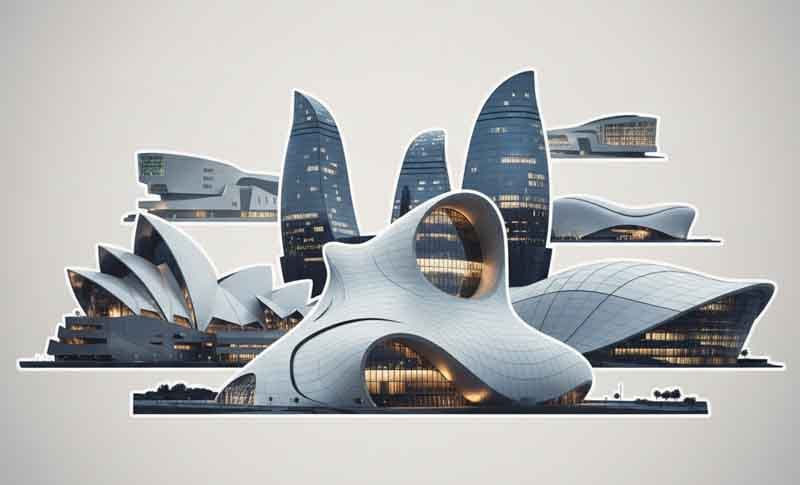
Imagine a building that looks like a spaceship has just landed, or a giant wave frozen in time. This is the world of Zaha Hadid, Architect, a visionary who changed how we see cities forever. Her designs are not just buildings; they are works of art that seem to defy gravity.
Born in Baghdad, Iraq, in 1950, Zaha Hadid had an early exposure to architecture through her father, a politician and industrialist, and her mother, an artist. Her upbringing was filled with intellectual debate and artistic appreciation, which helped spark her fascination with design and form. After attending school in Baghdad and later studying mathematics at the American University of Beirut, she moved to London in 1972 to pursue her true calling—architecture.
Initially, she attended the prestigious Architectural Association School of Architecture in London. Even as a student, Zaha stood out for her daring ideas and theoretical approach. After graduation, she joined the avant-garde Office for Metropolitan Architecture (OMA), working closely with Rem Koolhaas. However, her desire to develop her own voice led her to establish Zaha Hadid Architects in 1979.
Professional success did not come overnight. Many of her early projects remained as bold, abstract drawings and models, which were sometimes deemed too futuristic or challenging to build. Despite these hurdles, her persistence paid off with her first major built project: the Vitra Fire Station in Weil am Rhein, Germany, completed in 1993. This building captured the world’s attention with its sharp angles, unexpected forms, and minimalist use of materials.
From there, her portfolio grew to include internationally acclaimed structures like the London Aquatics Centre for the 2012 Olympic Games, the MAXXI National Museum of 21st Century Arts in Rome, and the stunning Heydar Aliyev Center in Baku. Throughout her career, Zaha broke numerous barriers. She became the first woman and the first non-European to receive the Pritzker Architecture Prize, the highest honor in the field, in 2004.
Her professional life was marked by constant travel and creative collaboration. Known for her relentless drive, Zaha was both admired and sometimes feared for her high standards. Team members describe her as demanding, yet deeply loyal and passionate about mentoring young architects and bringing out their best. Anecdotes from her colleagues tell of late-night design sessions in her London studio, where Zaha’s energy would light up the room long after midnight.
Despite her fame, she experienced decades of resistance before gaining widespread acceptance. Some critics initially dismissed her work as too peculiar or impossible to build. Yet, Zaha’s determination and vision gradually turned skepticism into admiration. She became an inspiration worldwide, especially to women in the field of architecture, often speaking at events about breaking gender barriers.
Personally, Zaha Hadid never married and often said that her buildings were her children. She had a distinctive sense of style, known for bold clothing and dramatic jewelry, echoing the innovative spirit of her architecture. During her free moments, Zaha enjoyed painting and drawing, which were essential parts of her design process. Her early abstract paintings became blueprints for many of her later buildings.
Even after her untimely passing in 2016, the legacy of Zaha Hadid, Architect endures. Her firm continues to realize her ambitious projects globally, and her life story remains a testament to creativity, perseverance, and challenging the limits of what architecture can achieve.
However, understanding her style requires looking beyond the concrete and glass. It is about seeing movement in stillness. Therefore, this blog will explore the fascinating world of her architecture. We will look at her unique style, the materials she used, and how her influence has reached corners of the globe you might not expect.
Additionally, we will discuss practical aspects of modern architecture inspired by her. From maintenance tips to budget advice, we will cover it all. So, let’s dive into the fluid, futuristic world of Zaha Hadid, Architect.
Defining the Style of Zaha Hadid, Architect
When people talk about Zaha Hadid, Architect, they often use words like "fluid," "dynamic," and "futuristic." Her style is known as Deconstructivism. This means she took traditional shapes and broke them apart to create something new.
The Power of Curves
In contrast to most buildings that are made of boxes and straight lines, Hadid loved curves. She believed that there are no straight lines in nature, so why should there be in buildings? As a result, her structures often look like flowing water or wind-swept sand dunes.
For example, the Heydar Aliyev Center in Azerbaijan has almost no sharp angles. It flows from the ground up, blurring the line between the building and the landscape. This creates a sense of endless motion.
Benefits of this Dynamic Design
Why choose such a complex style? First, it creates landmarks. A building by Zaha Hadid, Architect instantly makes a city famous. It attracts tourists and businesses. Moreover, these designs can be surprisingly functional. The open, flowing interiors allow for flexible spaces that can change as needs change.
Additionally, the use of natural light is a key benefit. Large glass curves let sunlight flood in, reducing the need for artificial lighting. This makes the spaces feel open, airy, and connected to the outside world.
Materials and Climate Suitability
To build these impossible shapes, you need special materials. You cannot just use bricks and mortar. Zaha Hadid, Architect pushed the boundaries of engineering.
Innovative Material Options
Concrete was a favorite material. However, it wasn't just ordinary concrete. She often used Glass Fibre Reinforced Concrete (GFRC). This material is strong but light, allowing it to be molded into wild, curving shapes.
Similarly, steel frames are essential. They act as the skeleton, holding up the heavy curves. Furthermore, vast amounts of glass are used. These are often custom-made, curved panels that fit together like a giant puzzle. Using these materials makes the building look sleek and modern.
Is it Suitable for Your Climate?
You might think these glass buildings would get too hot. However, smart design solves this. Modern glass technology can block heat while letting in light. Additionally, the shape of the building can provide its own shade.
In hot climates, the curves can be designed to block the high midday sun. Meanwhile, in colder areas, the large windows capture the sun's warmth. Therefore, with the right engineering, this style works anywhere. With patient planning, respect for local climate and codes, and good teamwork with experts, a Turkish stone house can become a comfortable home, and similarly, a Hadid-inspired structure can adapt to its environment.
Where is Zaha Hadid, Architect Most Famous?
While she built all over the world, one country holds a special place for her designs. China is perhaps the most famous location for the work of Zaha Hadid, Architect.
Why China Loves Her Designs
China has been growing very fast. Consequently, they wanted buildings that showed their modernization and ambition. Hadid’s futuristic style was a perfect match.
For example, the Galaxy SOHO in Beijing is a stunning complex of four domed structures connected by bridges. It looks like something from a science fiction movie. Similarly, the Guangzhou Opera House looks like two pebbles washed up by the river.
The reason for this popularity is the scale. China offers the massive spaces and budgets needed for these grand projects. As a result, some of her most iconic and largest works are found there.
The Lahore Connection: Modern Architecture Rising
Now, let's look at Lahore, Pakistan. While there isn't a direct project by Zaha Hadid, Architect here yet, the influence of modern, fluid architecture is growing. People are starting to look for unique, alluring designs.
Top Societies Embracing Modern Design
In Lahore, several housing societies are seeing a shift towards more daring architecture.
- DHA Lahore: Known for its strict rules, but within those rules, architects are experimenting with modern facades and glass.
- Bahria Town Lahore: This area loves grandeur. You can find many large, custom homes that try to mimic the curves and grandeur of famous architects.
- Lake City: A peaceful area where modern villas with clean lines are becoming popular.
- Valencia Town: Homeowners here are increasingly renovating to add modern touches.
- Wapda Town: A well-established society where older homes are being updated.
- Johar Town: A busy hub where commercial buildings are starting to use glass and steel more creatively.
- Model Town: With its large plots, it is perfect for sprawling, modern bungalows.
- Gulberg: The commercial heart, full of plazas that aim for a futuristic look.
- Askari: Secure and organized, with a preference for sturdy, modern construction.
- Lahore Cantt: The historic area where old meets new in fascinating ways.
While you might not see a full Deconstructivist building, the spirit of Zaha Hadid, Architect inspires local designers to break away from the boxy norm.
Mistakes to Avoid When Aiming for This Style
If you are inspired by Zaha Hadid, Architect and want to build something similar, be careful. It is easy to get confused.
1. Ignoring Function for Form
The biggest mistake is making something look cool but making it hard to use. A curved wall is beautiful. However, if you cannot put furniture against it, it becomes annoying. Therefore, always think about how you will live in the space.
2. Underestimating the Cost
Curved glass and custom concrete are expensive. If you try to do it cheaply, it will look bad. It is better to have a simple, well-built house than a cheap copy of a masterpiece. Do not let your budget go out of control.
3. Choosing the Wrong Builder
Not every builder can handle complex shapes. You need a team that understands modern engineering. If they don't, walls might crack, or roofs might leak. Consequently, vet your experts carefully.
Maintenance of Complex Structures
Owning a home inspired by Zaha Hadid, Architect requires work. These are not low-maintenance structures.
Cleaning the Glass
With so much glass, cleaning is a major task. You will need professional cleaners to reach high or curved windows. Dust and water spots show up easily on sleek surfaces. Therefore, a regular cleaning schedule is a must.
Checking the Seams
Because these buildings often use many different materials joined together, leaks can happen where they meet. Regular inspections are vital. You must check the sealants and joints to ensure water stays out.
Surface Care
Materials like GFRC or white concrete can stain. Pollution or rain can leave marks. As a result, you may need to pressure wash the exterior more often than a brick house.
Budget Tips for a Modern Build
Building in the style of Zaha Hadid, Architect is a premium choice. However, there are ways to manage costs.
Prioritize Key Features
You don't need the whole house to be curved. Maybe just make the entrance or the living room the focal point. This creates a "wow" factor without the huge price tag.
Use Alternative Materials
Instead of custom concrete, use plaster or drywall to create curves inside. On the outside, modern composite panels can mimic the look of expensive metal or stone. This can save a significant amount of money.
Plan, Plan, Plan
Changes during construction are the enemy of your budget. Because complex designs are hard to change, you must be 100% sure before you start. This prevents you from being aggravated later on.
Conclusion
The legacy of Zaha Hadid, Architect is one of bravery and imagination. She taught the world that buildings could float, flow, and dance. While her specific style is grand and expensive, the lessons are for everyone.
We can all learn to embrace new shapes and technologies. Whether you are in Beijing or building a dream home in DHA Lahore, her influence is there. By avoiding common mistakes and planning carefully, you can bring a touch of that futuristic magic into your own life.
Architecture is about creating spaces that make us feel something. And no one did that quite like Zaha Hadid, Architect.
Frequently Asked Questions (FAQ)
Q: What is Zaha Hadid's most famous building?
A: It is hard to pick just one. However, the Heydar Aliyev Center in Baku and the Guangzhou Opera House are often cited as her masterpieces.
Q: Is the style of Zaha Hadid, Architect expensive to build?
A: Yes, generally it is. The custom materials and complex engineering required for the curves make it more costly than traditional straight-line building.
Q: Did Zaha Hadid design private houses?
A: Yes, she did. For example, the Capital Hill Residence in Russia is a private home that looks like a spaceship rising above the trees.
Q: Can I use this style for a small renovation?
A: Absolutely. You can add curved furniture, fluid lighting fixtures, or a feature wall inspired by her work to bring a modern touch to any room.
Q: Why is she called the "Queen of the Curve"?
A: She earned this nickname because she liberated architectural geometry, giving it a whole new expressive identity through fluid, sweeping lines.
Quick Links
Social Icons
Contact Us Information
443 J3 Johar Town Lahore near Expo Center Lahore
